Wiese am Waldrand mit Höhenzug in der Ferne — History & Facts
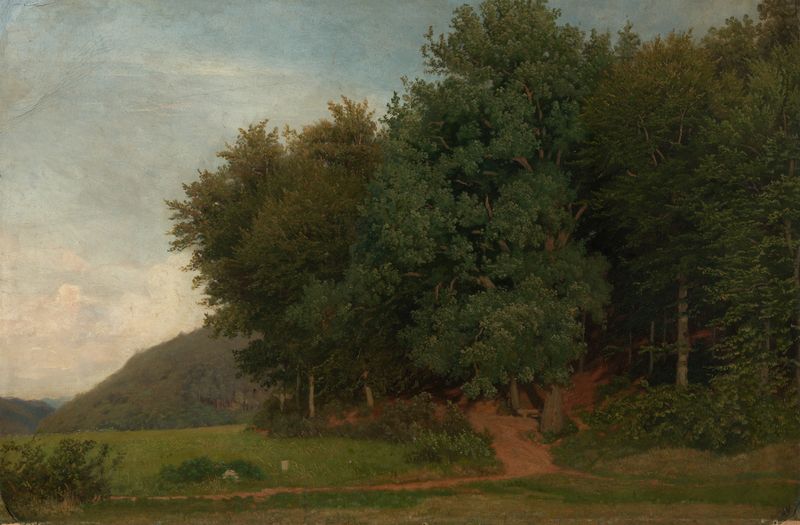
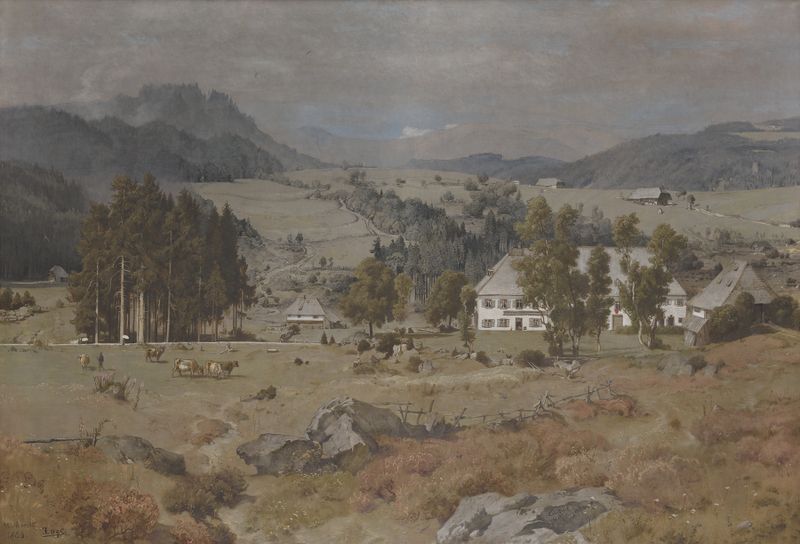
Who listens when art speaks of silence? In the delicate embrace of nature, we find echoes of fragility — moments suspended in time that invite us to reflect and breathe. Look to the foreground, where a gentle meadow stretches across the canvas, dappled with soft greens and yellows. Notice how the light filters through the leaves, creating intricate patterns on the ground, guiding your gaze deeper into the tranquil landscape. The distant heights loom quietly, painted in muted blues and grays, suggesting both mystery and serenity.
Each stroke of the brush reveals the artist's intention to convey harmony, a seamless connection between the earth and sky. Amidst the pastoral beauty, hidden tensions emerge. The contrast between the vibrant foreground and the shadowy background speaks of life's dualities — growth and decay, presence and absence. The fragile wildflowers, vibrant yet fleeting, symbolize the transient nature of beauty, while the vastness of the mountains hints at the permanence of time.
This interplay elicits a soft yearning, inviting viewers to ponder their own place within the vastness of existence. Emil Lugo created this work around 1860, during a time when the Romantic movement was flourishing, emphasizing nature's beauty and emotional depth. Working in Germany, he became known for his landscapes, capturing the essence of the changing natural world. This period in art history was marked by a growing desire to reflect personal experience and emotional resonance, elements that Lugo expertly wove into his captivating scenes.