Wijnstoop — History & Facts
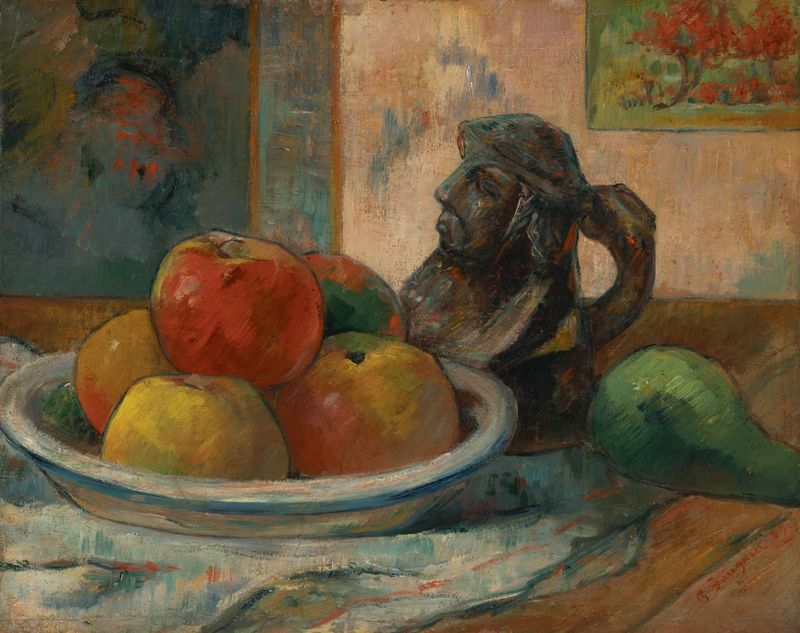
What secret hides in the quiet of the canvas? The stillness envelops us, inviting contemplation and reflection on the profound emptiness that fills the space. Look to the center where an empty wine glass sits, its crystalline surface catching the light, almost echoing the absence of its intended content. The muted palette of browns and greens surrounds it, creating a somber yet intimate atmosphere. Notice how the brushwork conveys a gentle texture, drawing attention to the glass and the elegant folds of the tablecloth beneath it, hinting at the remnants of a gathering long past. Yet, within this seemingly simple still life lies a world of emotion.
The emptiness of the glass speaks to longing, perhaps evoking memories of shared laughter or quiet conversations now lost in time. The shadows play a significant role, casting an air of solitude that invites the viewer to meditate on what was and what remains unspoken. The absence of vibrant color also serves to emphasize the weight of absence, prompting us to consider the void and its significance in our lives. Painted in 1758, this work emerges from an era where still life was a prominent genre, often reflecting the transient nature of existence.
The artist, whose identity remains unknown, likely sought to capture not just objects but the essence of moments that linger in memory. In a world bustling with change, this painting stands as a testament to the beauty—and the melancholy—of what is left behind.
More Artworks by Unknown Artist
Browse all →
Ridder, Dood en Duivel
Unknown Artist

Shiva Nataraja
Unknown Artist

Portrait of Elizabeth I, Queen of England
Unknown Artist

Dolls’ house of Petronella Oortman
Unknown Artist

Shiva Nataraja
Unknown Artist

The Tale of Genji
Unknown Artist

The Tale of Genji
Unknown Artist

Cong
Unknown Artist

The bodhisattva Maitreya
Unknown Artist

Teabowl with a 'hare's fur' glaze
Unknown Artist