
Winter Landscape at Arnhem — History & Facts
In Winter Landscape at Arnhem, the bitter chill of nostalgia whispers through the canvas, revealing the delicate interplay between nature's harshness and the warmth of memory. Start by directing your gaze to the left, where the icy river glimmers under a muted sun, its surface a fragile mirror reflecting the gray sky above. Notice the low-lying clouds that seem to merge with the horizon, casting a soft, diffused light over the snow-laden ground. The skeletal trees stand tall yet desolate, their bare branches stark against the winter's pallor, while a solitary figure trudges through the snow, evoking a sense of quiet resilience amidst the cold. Delve deeper into the intricate contrasts presented: the interplay of light and shadow reveals a world caught between peace and desolation.
The frozen landscape, though still, pulsates with a subtle tension; the joy of nature's beauty is tempered by the harshness of winter's grasp. The muted colors—grays, whites, and hints of ochre—speak to the melancholic reminiscence of past warmth, evoking a longing for the transient joys of life. In 1653, as Jacob Salomonsz. van Ruysdael painted this piece, he was immersed in a vibrant Dutch art scene that celebrated both the beauty of the natural world and the profound emotions it could evoke.
The societal context of post-Reformation Holland, marked by a burgeoning appreciation for landscapes, influenced his focus on capturing the essence of winter. At this time, van Ruysdael was establishing his reputation, deftly intertwining realism with emotional depth in his art.
More Artworks by Jacob Salomonsz. van Ruysdael
Browse all →
River Landscape With Fishermen And Cattle, The Grote Kerk Of Alkmaar Beyond
Jacob Salomonsz. van Ruysdael
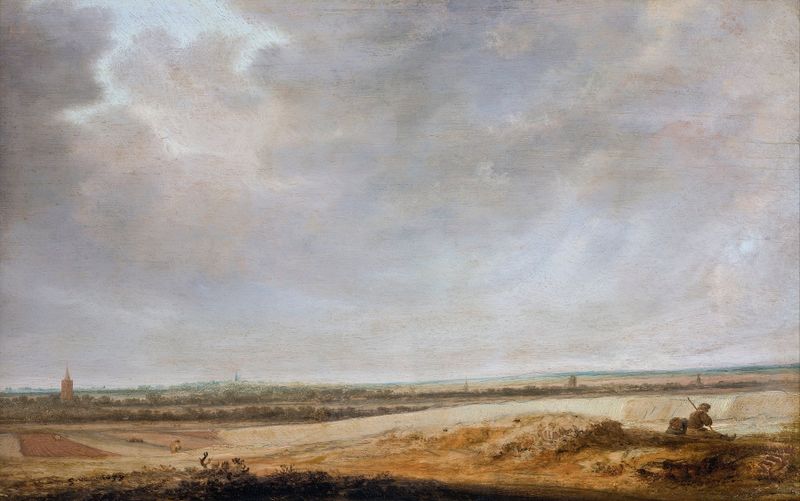
Landscape with Cornfields
Jacob Salomonsz. van Ruysdael

View of Sailing Boats on a Lake
Jacob Salomonsz. van Ruysdael
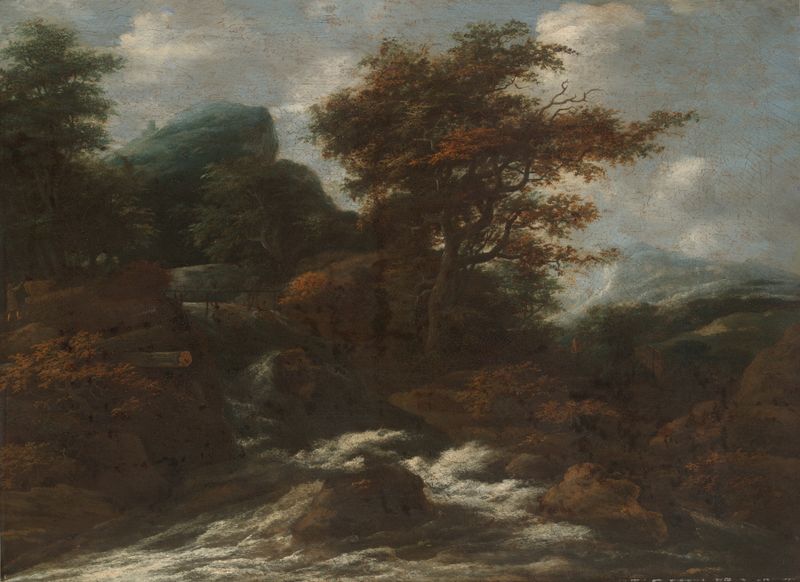
Landscape with Waterfalls
Jacob Salomonsz. van Ruysdael
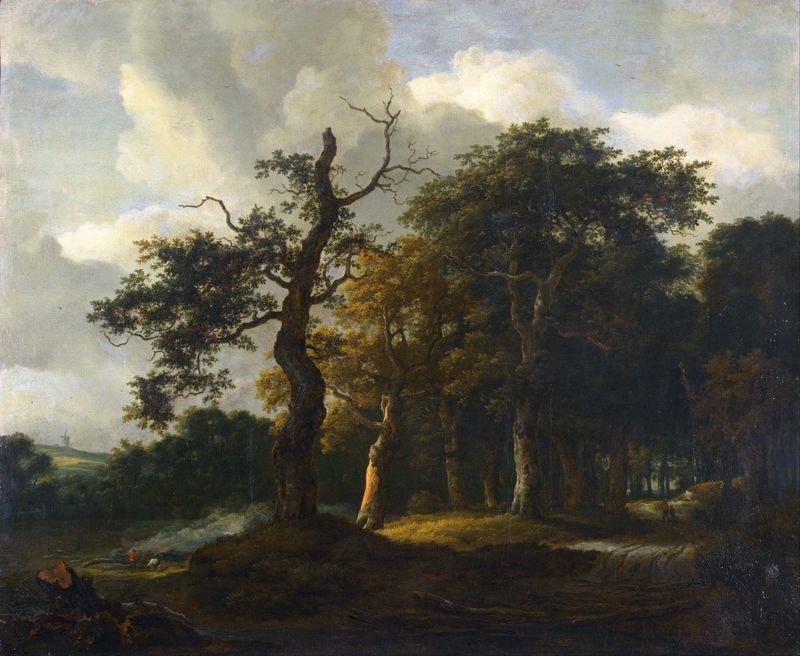
A Road through an Oak Wood
Jacob Salomonsz. van Ruysdael
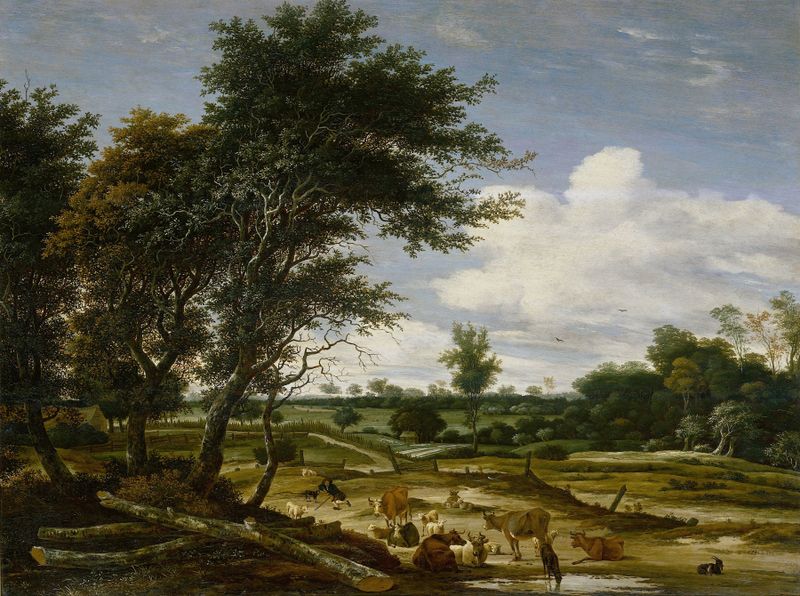
Landscape with herdsmen and cattle
Jacob Salomonsz. van Ruysdael
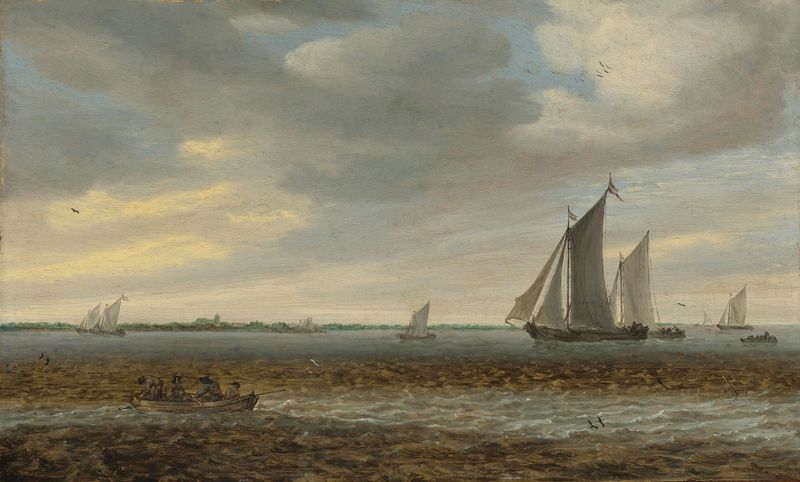
Sailboats And A Rowboat In Coastal Waters
Jacob Salomonsz. van Ruysdael

Marine
Jacob Salomonsz. van Ruysdael

River Landscape
Jacob Salomonsz. van Ruysdael

A Dune Landscape
Jacob Salomonsz. van Ruysdael





