
Wittelsbacher Square in Munich at night. — History & Facts
A single dome looms over the city’s heart, its silhouette swallowing the last light, while below, the square flickers with the restless energy of night. The eye is drawn not to the monument at the center, but to the pools of golden glow spilling from arched windows and streetlamps, their reflections broken on wet cobblestones. Figures drift in and out of the gloom—some huddled beneath umbrellas, others caught mid-stride—each a fleeting presence in the hush of after-dark Munich.
Aleksander Gierymski’s brushwork lingers on the shimmer of rain-soaked stone and the subtle play of artificial light, inviting us to imagine the stories unfolding in the shadows and behind those illuminated panes. Painted in 1890, Wittelsbacher Square in Munich at night belongs to a moment when European artists were captivated by the drama of city life after sunset. The late nineteenth century saw the rise of urban night scenes, as gas and electric lighting transformed public spaces and the rhythms of daily life. For painters like Gierymski, these new illuminations offered both technical challenge and poetic possibility: how to conjure atmosphere, movement, and the quiet anonymity of the crowd.
Now held by the National Museum in Warsaw, this work stands as a rare, atmospheric record of a city—and a world—on the cusp of modernity. Step closer, and let your gaze adjust to the dark: the painting rewards patience, revealing its secrets one glimmer at a time.
More Artworks by Aleksander Gierymski

Piaskarze
Aleksander Gierymski
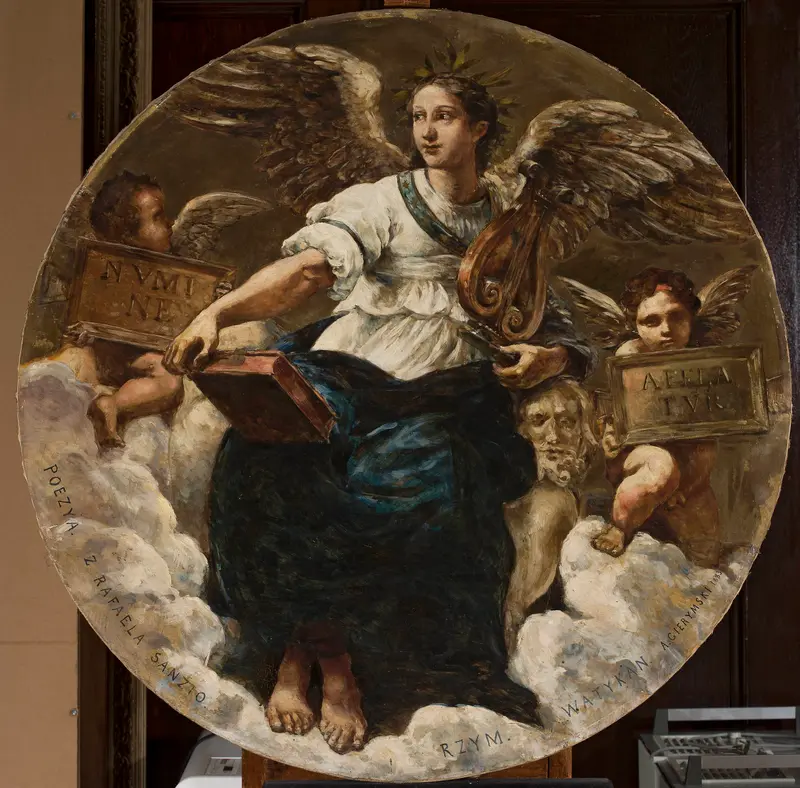
Poetry
Aleksander Gierymski
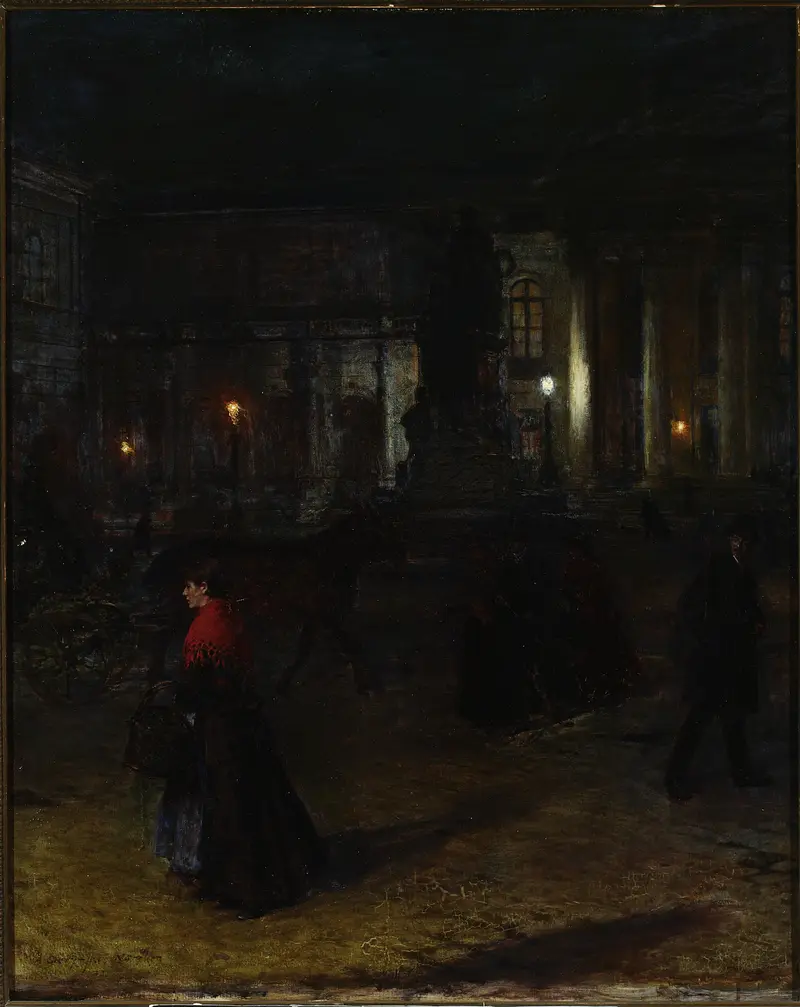
Max-Joseph-Platz in Munich by night.
Aleksander Gierymski
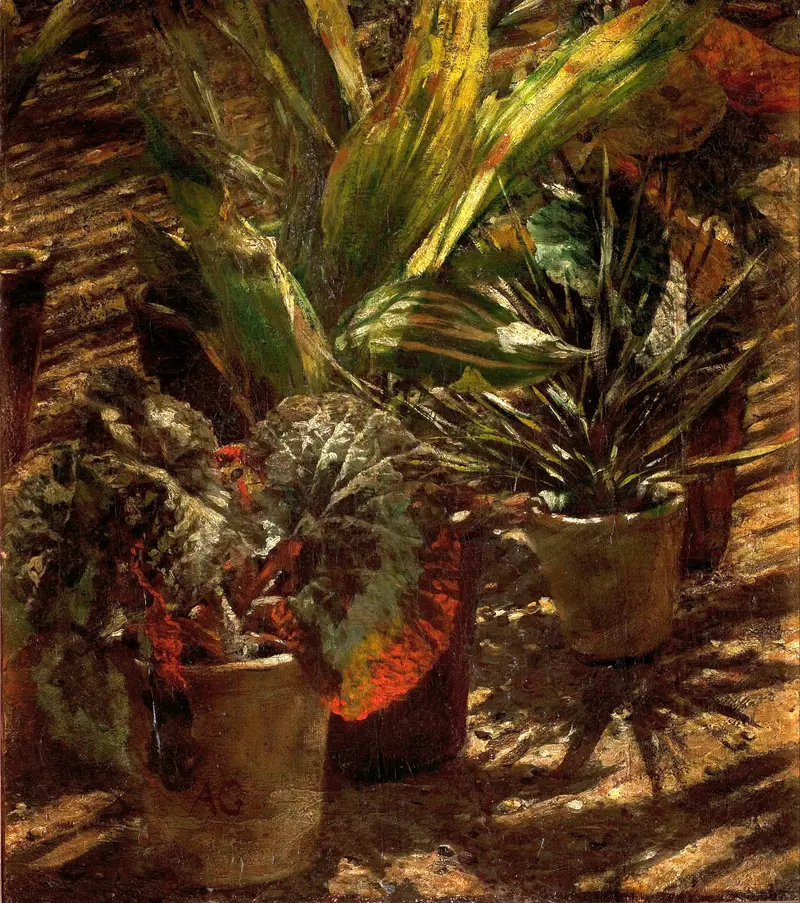
Begonie
Aleksander Gierymski
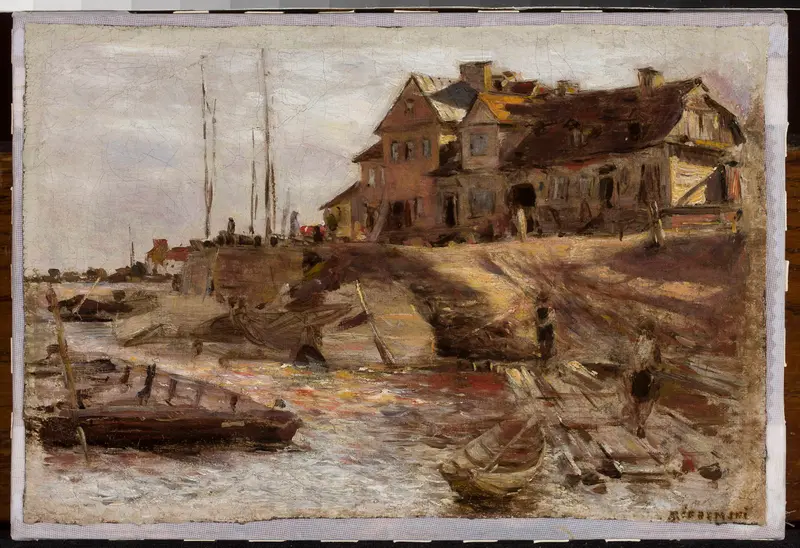
Solec harbour (study).
Aleksander Gierymski
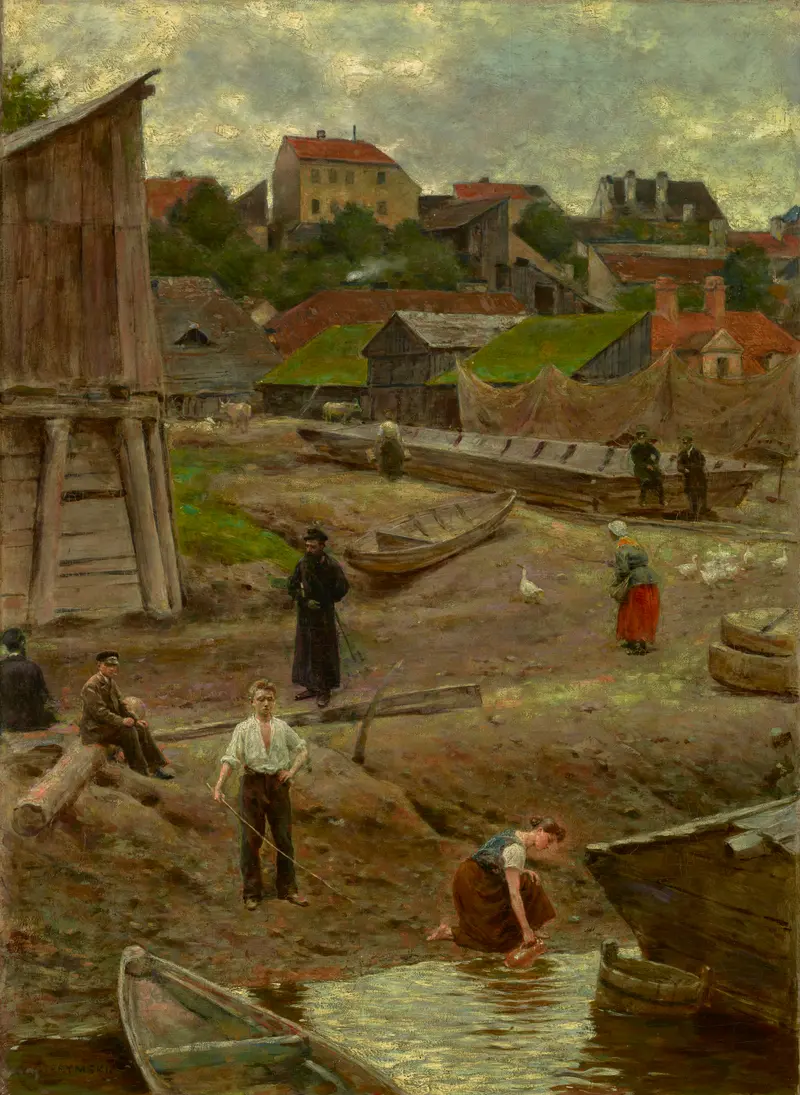
Powiśle (Bank of the Vistula in Warsaw)
Aleksander Gierymski
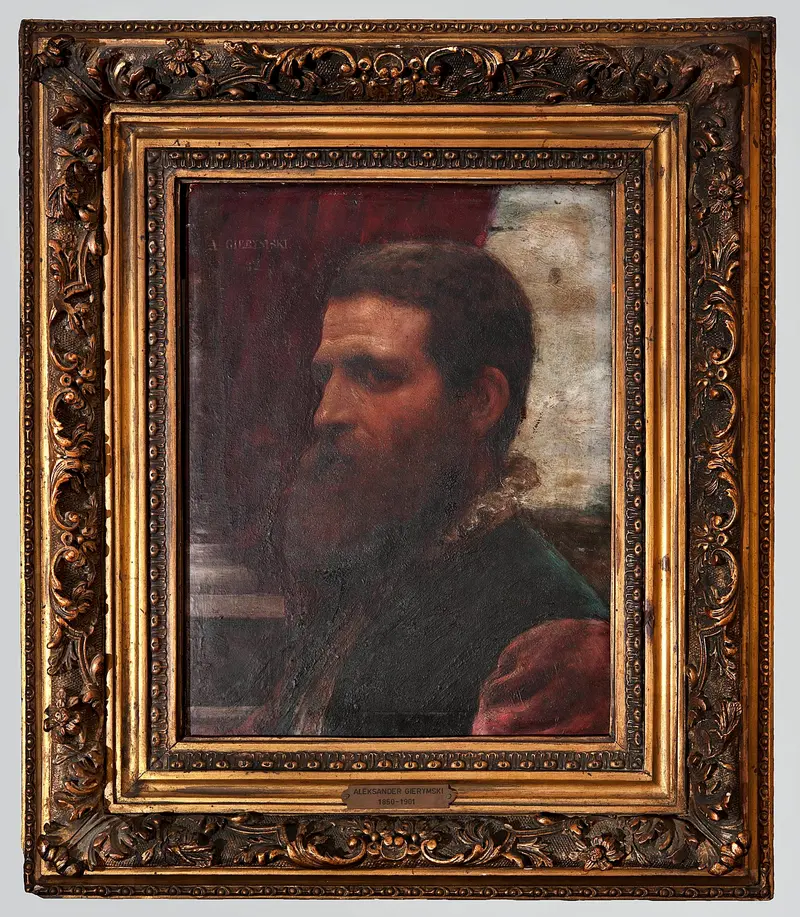
A bust of a man in Renaissance costume.
Aleksander Gierymski
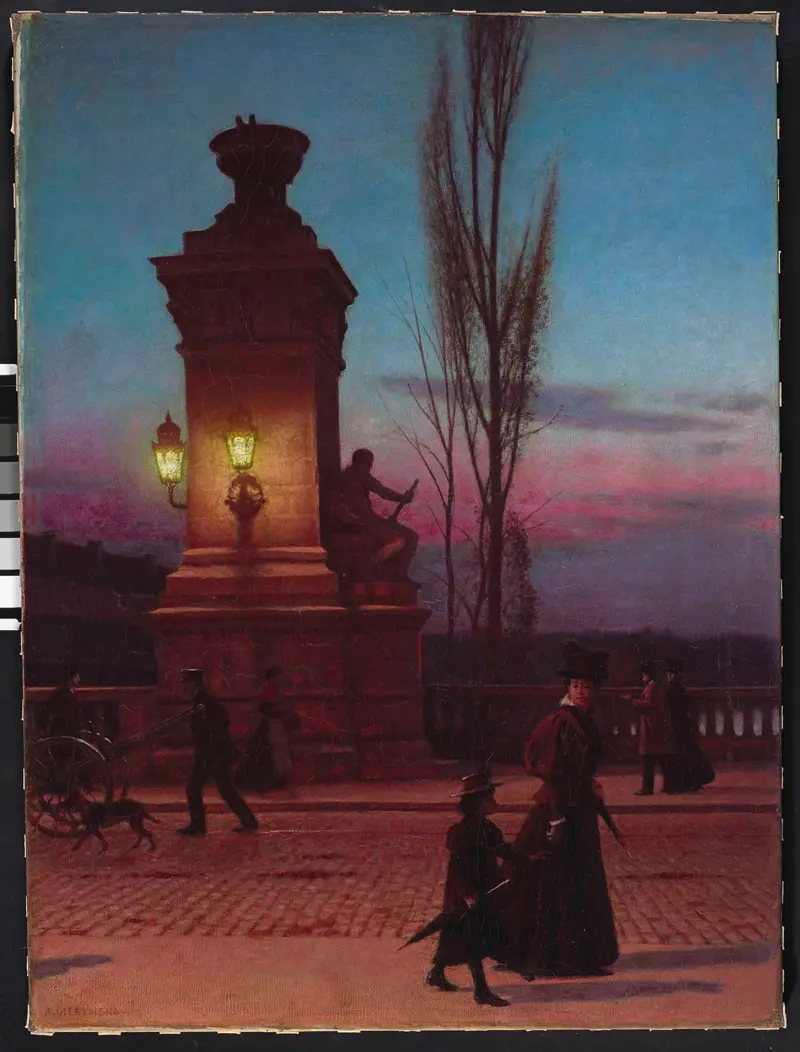
Louis Bridge in Munich.
Aleksander Gierymski
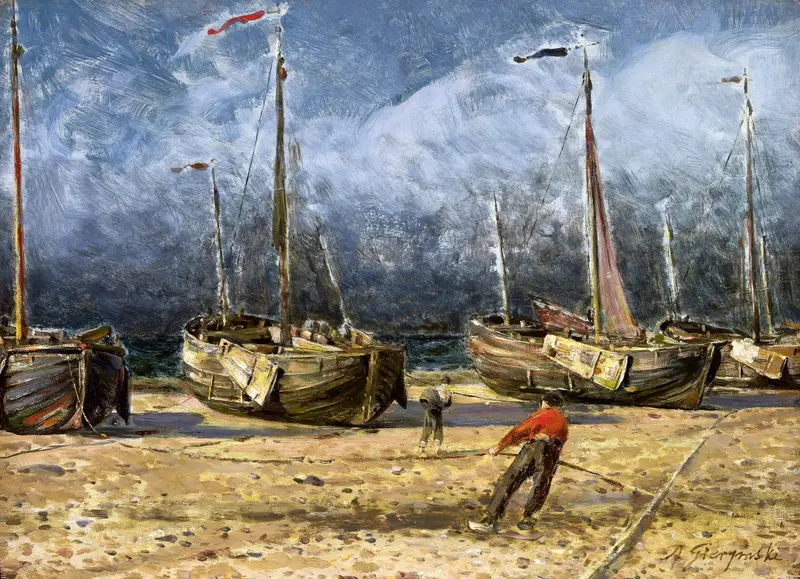
Fishing boats at the shore.
Aleksander Gierymski
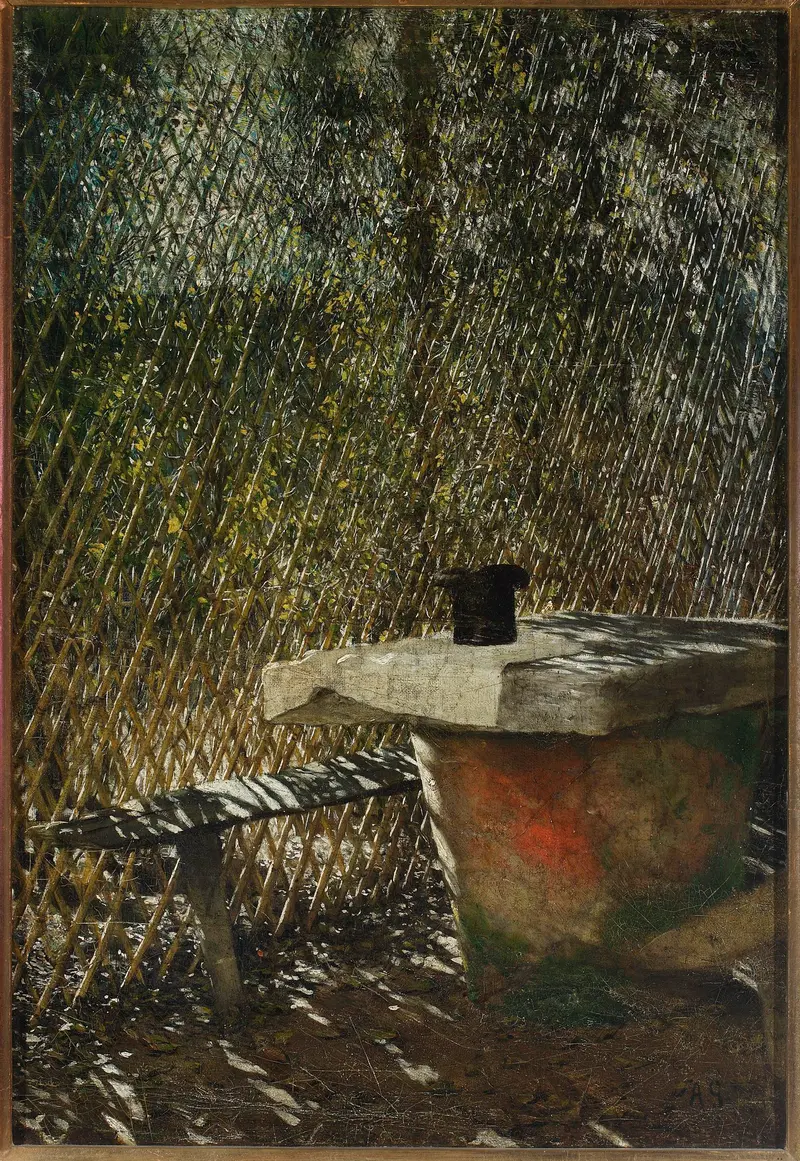
Study with a topper.
Aleksander Gierymski





