
Woman at her Toilet — History & Facts
In Woman at her Toilet, Jan Steen presents a lively domestic scene filled with vibrant colors. The painting features a woman engaged in her morning routine, surrounded by various objects that suggest her daily life. Rich hues of red and gold dominate the composition, creating a warm and inviting atmosphere.
The woman's expression conveys a sense of focus and intimacy with her surroundings. The painting is executed in oil on canvas, a popular medium during the Dutch Golden Age. Steen's technique showcases his ability to capture texture and detail, particularly in the fabrics and objects depicted. The dimensions of the artwork are approximately 70 x 90 cm, making it a substantial piece that draws viewers in.
The careful arrangement of elements reflects Steen's skill in composition and storytelling. Jan Steen was known for his humorous and often chaotic depictions of everyday life. This work, painted in the 1660s, exemplifies his focus on domestic scenes and the lives of women. An interesting fact about this painting is that it reflects the social norms of the time, where women were often portrayed in domestic roles.
Steen's ability to infuse humor and warmth into his subjects makes this piece a notable example of his oeuvre.
More Artworks by Jan Steen

The Family Concert
Jan Steen

The Fish Market at Leyden
Jan Steen
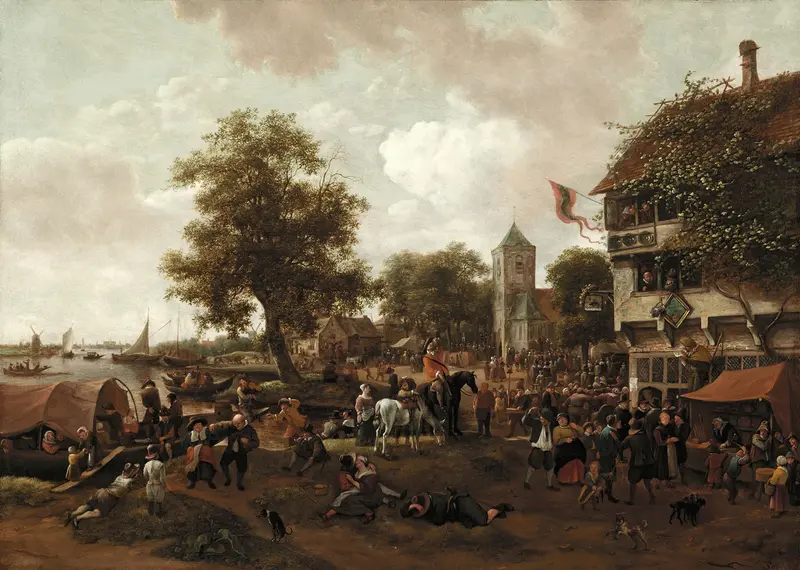
The Fair at Oegstgeest
Jan Steen
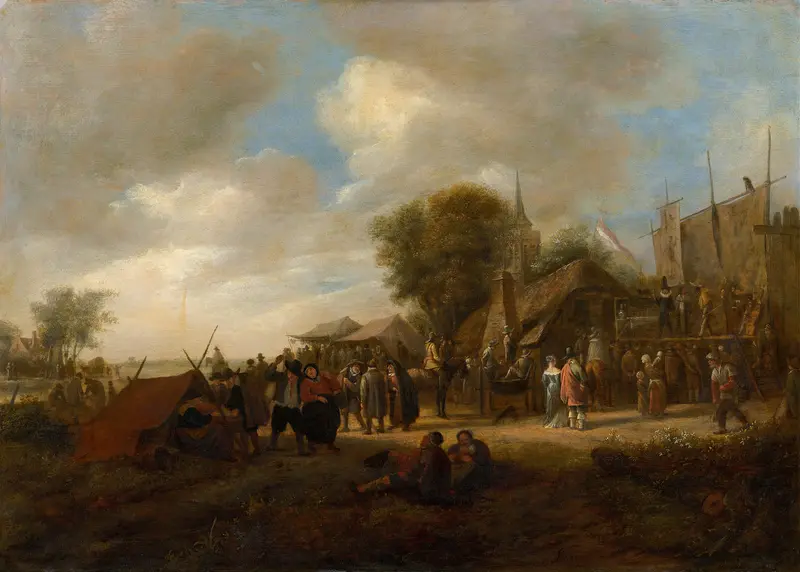
Village Fair
Jan Steen
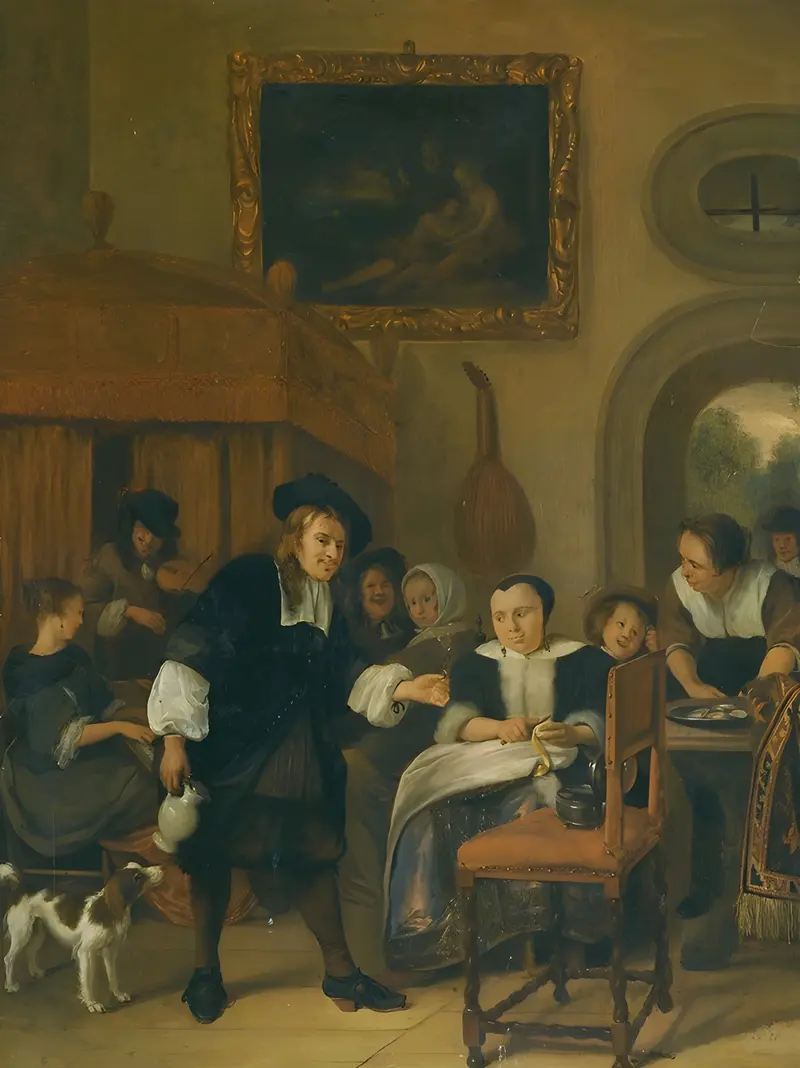
A Gentleman Offering A Lady A Glass Of Wine With A Couple Making Music And Other Townsfolk In An Interior
Jan Steen

The Dancing Lesson
Jan Steen
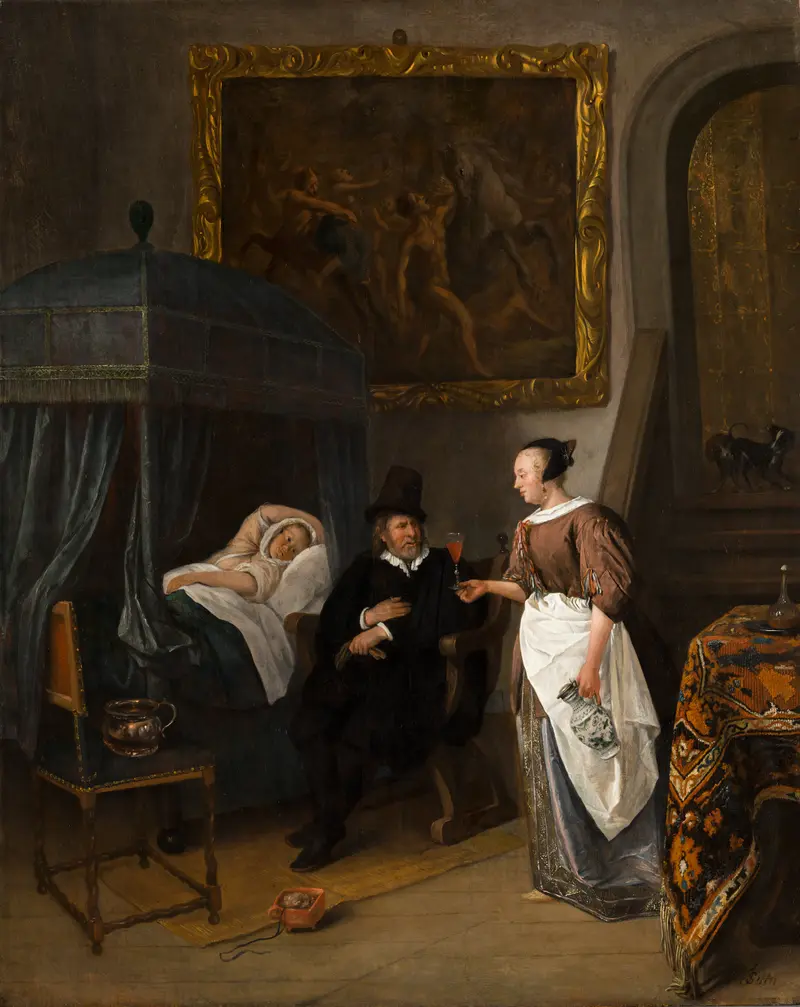
The Doctor’s Visit
Jan Steen
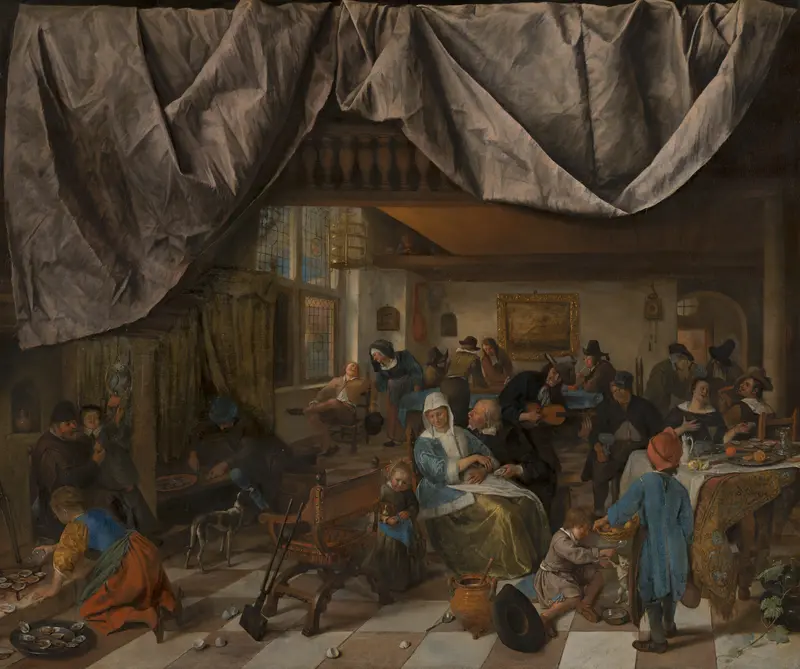
The Life of Man
Jan Steen
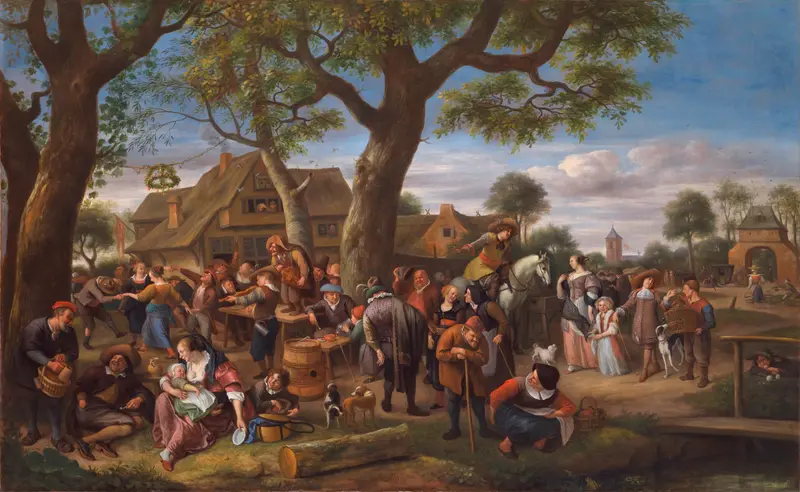
Peasants Merrymaking Outside an Inn
Jan Steen
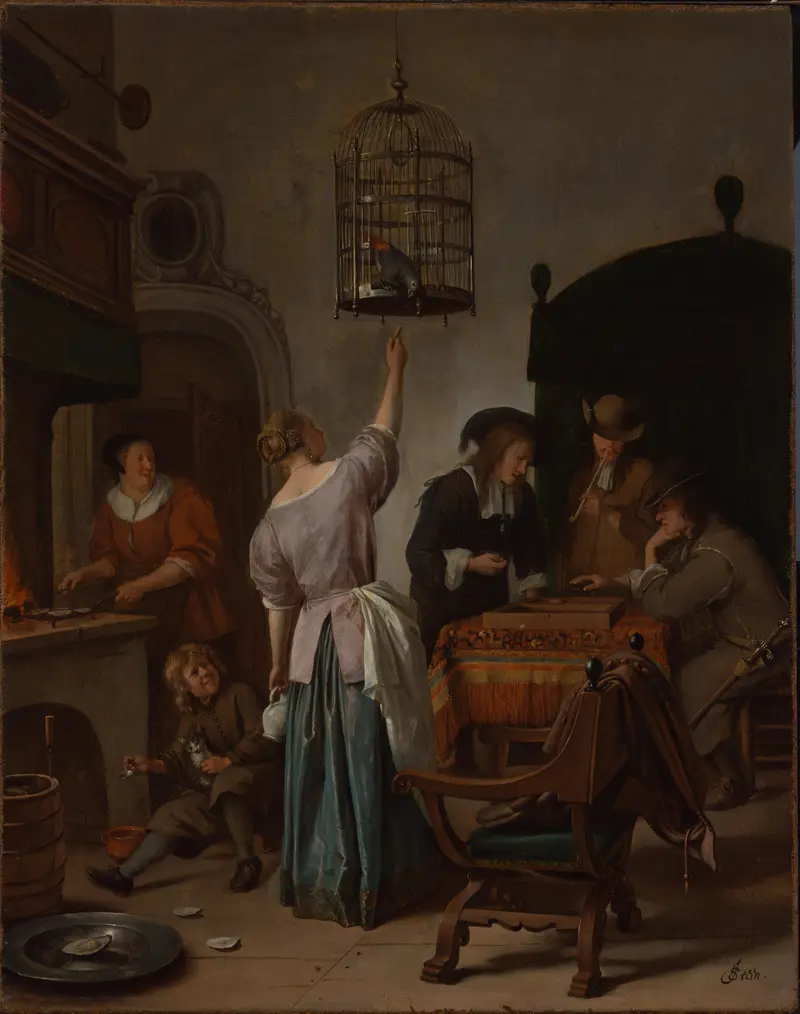
Interior with a Woman Feeding a Parrot, Known as ‘The Parrot Cage’
Jan Steen
More Genre Scene Art

Banquet of the Officers of the St George Civic Guard
Frans Hals

Rembrandt and Saskia in the Scene of the Prodigal Son
Rembrandt van Rijn

Bal du moulin de la Galette
Pierre-Auguste Renoir

Quadrille at the Moulin Rouge
Henri de Toulouse-Lautrec

A Burial at Ornans
Gustave Courbet

When Will You Marry?
Paul Gauguin