
Wooded Hillside — History & Facts
The first thing that catches the eye in Wooded Hillside is the quiet drama of sunlight as it slips across the mossy ground, carving out a path between hulking boulders and slender trunks. The painter’s gaze lingers not on grand vistas, but on the hush and weight of a forest interior, where the play of shadow and light turns ordinary rocks and trees into silent witnesses. The low vantage draws you in, making you almost step onto the soft grass and feel the coolness beneath the trees.
Every detail—down to the dappling of light on stone and the careful layering of green—serves to slow the viewer, to invite a patient wandering of the eye from the dark foreground to the gentle ascent of the hillside beyond. The palette, rich with earthy browns and deep greens, keeps the mood contemplative, as if the forest has secrets that reveal themselves only to those who linger. Painted in the 19th century, this work belongs to an era when American artists like Albert Bierstadt turned to the landscape as both subject and symbol. Such scenes were often commissioned or collected by those eager to possess a fragment of the nation’s wild beauty, at a time when the country’s boundaries and identity were rapidly expanding.
While Bierstadt is best known for sweeping panoramas of the American West, this more intimate forest study—once offered at Sotheby’s New York in 2008—reminds us that the quieter corners of nature held just as much fascination. History has kept few traces of this particular painting’s journey, but its silence and shadow invite us to look again, to imagine the world as it might have seemed before the forest gave way.
More Artworks by Albert Bierstadt

A Storm in the Rocky Mountains, Mt. Rosalie
Albert Bierstadt
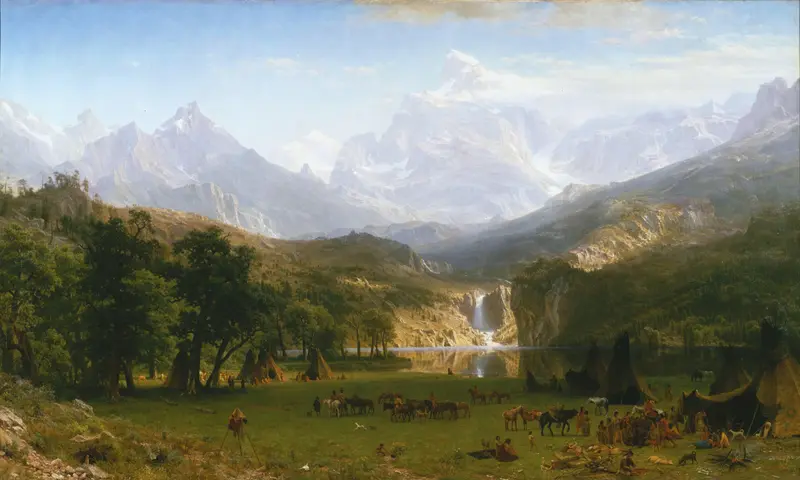
The Rocky Mountains, Lander's Peak
Albert Bierstadt
Niagara from the American Side
Albert Bierstadt
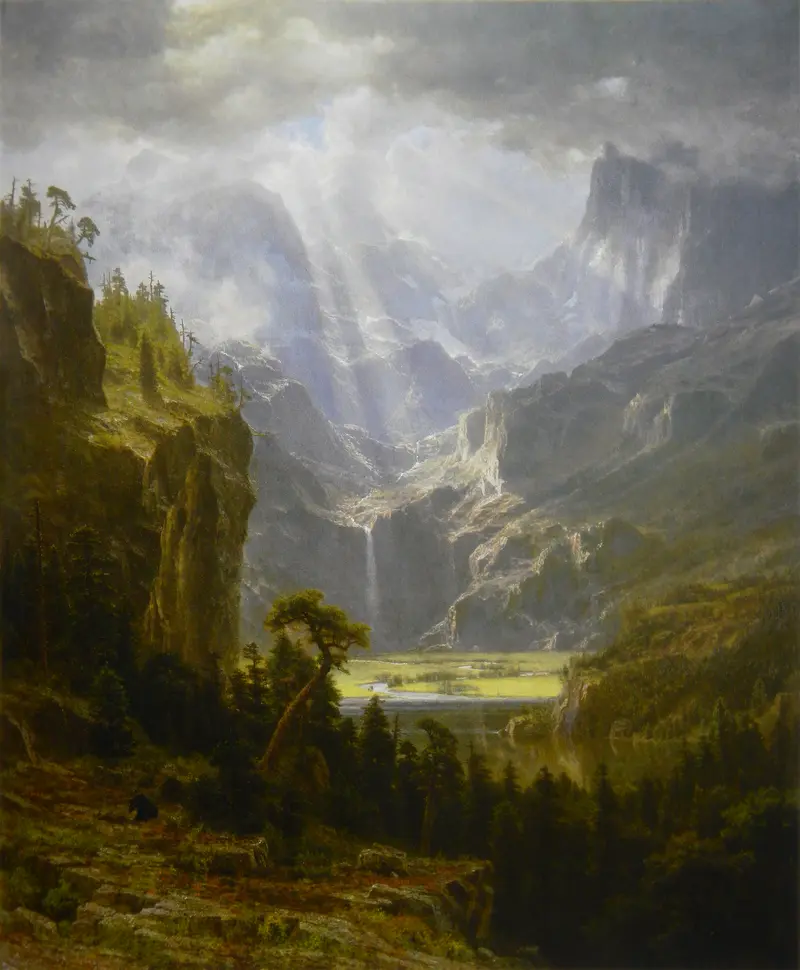
Rocky Mountains, Lander’s Peak
Albert Bierstadt

Valley of the Yosemite
Albert Bierstadt
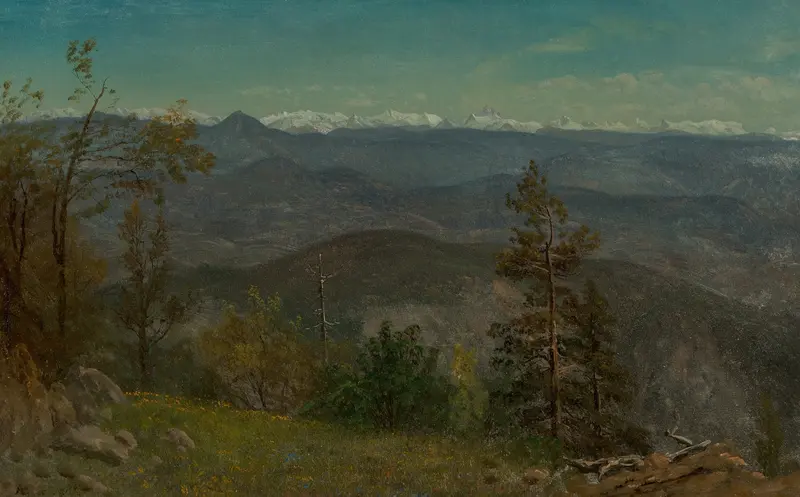
Yosemite Valley, California
Albert Bierstadt
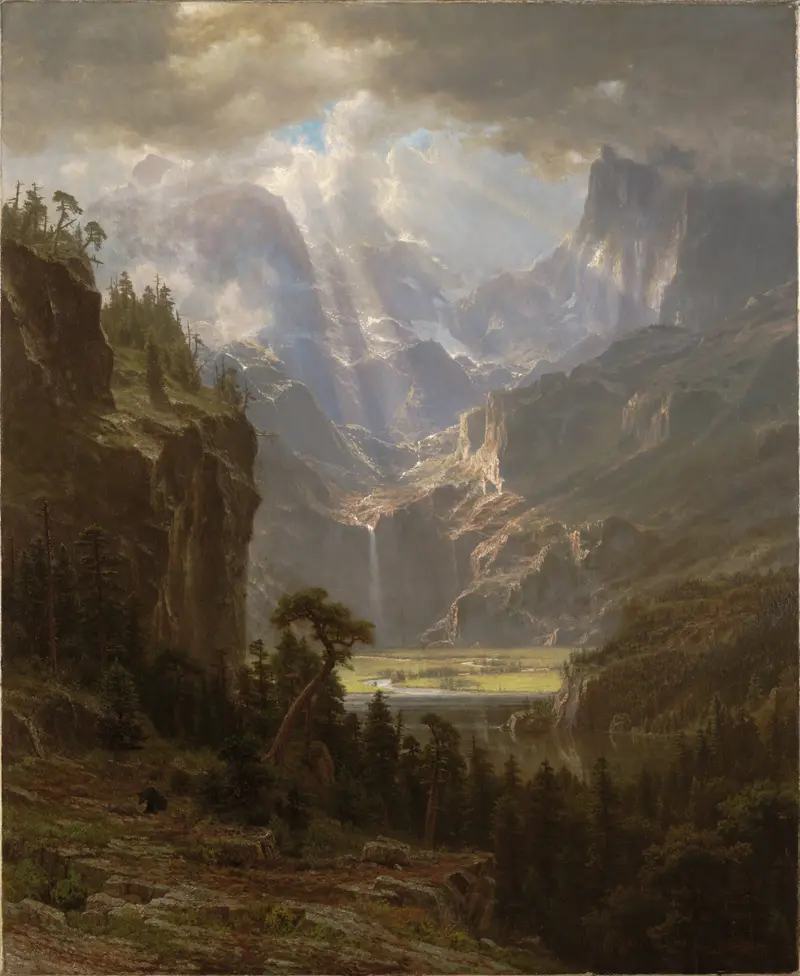
Rocky Mountains, "Lander's Peak"
Albert Bierstadt

Laramie Peak
Albert Bierstadt
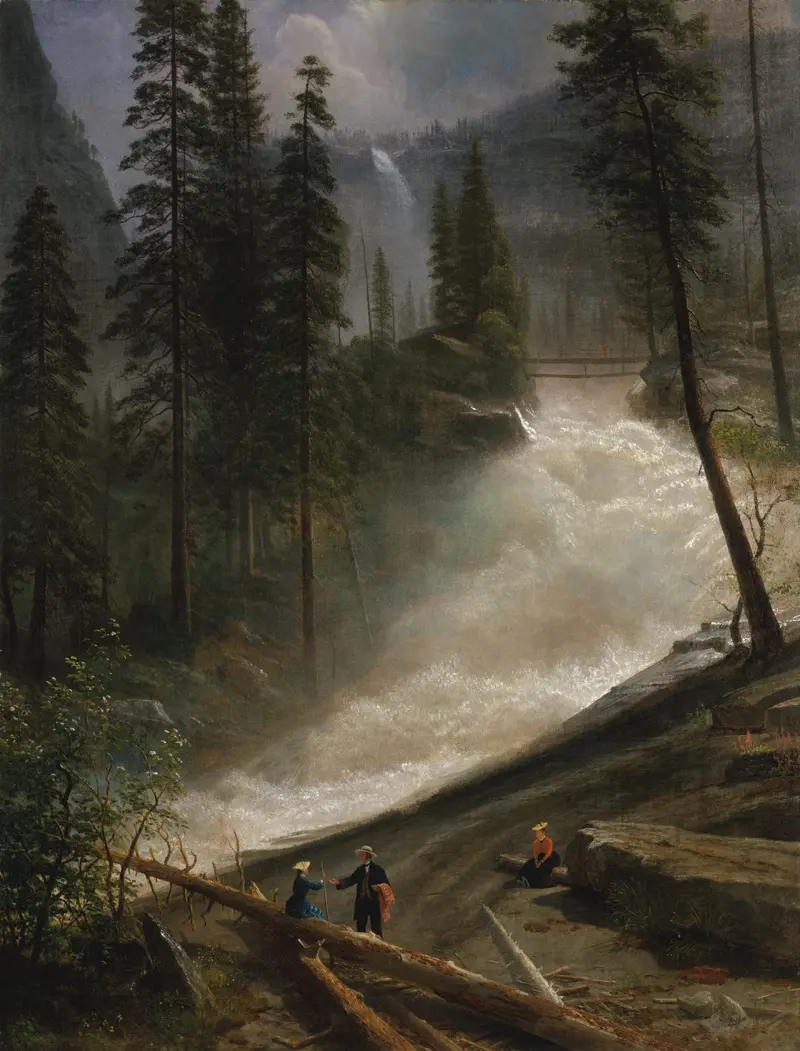
Nevada Falls, Yosemite
Albert Bierstadt
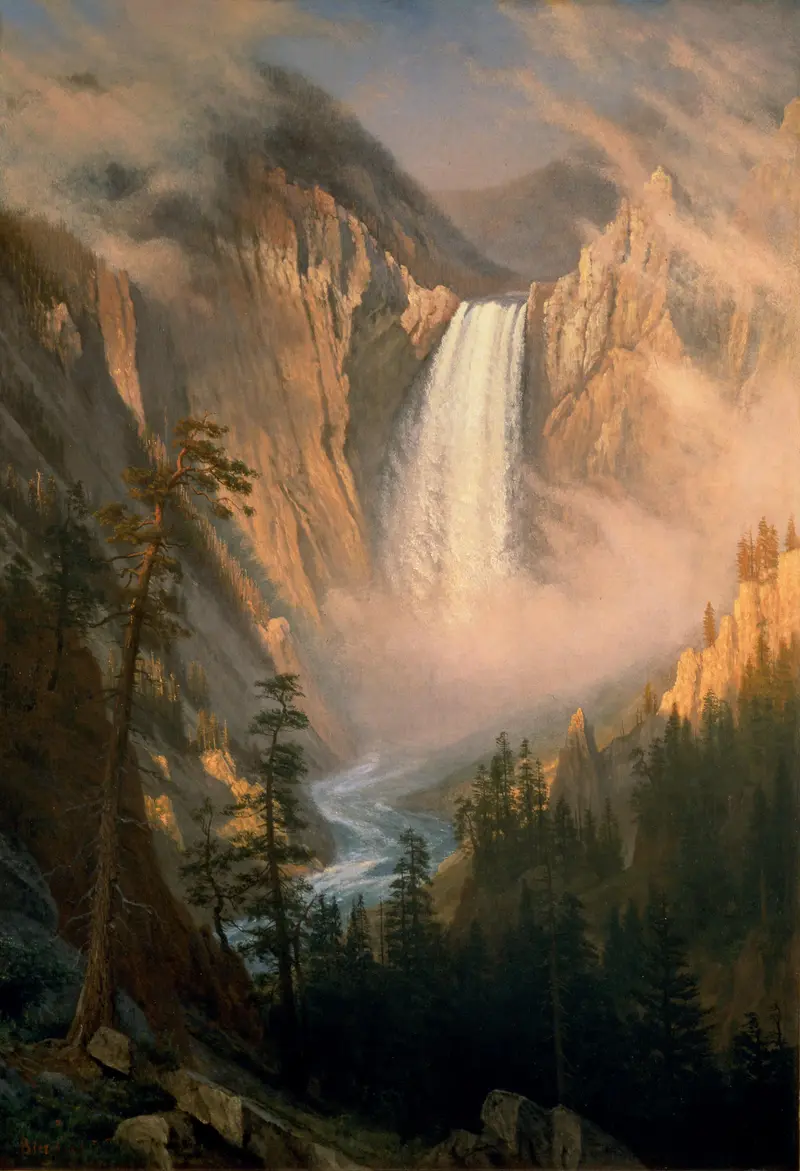
Yellowstone Falls
Albert Bierstadt
More Landscape Art

The Starry Night
Vincent van Gogh

View of Delft
Johannes Vermeer

Water Lilies
Claude Monet

The Grand Canal, Venice, looking north-west from the Ca' Corner to the Ca' Contarini degli Scrigni, with the campanile of Santa Maria della Carità
Canaletto

Windsor Castle
Canaletto

The Grand Canal looking North-East from the Palazzo Dolfin-Manin to the Rialto Bridge
Canaletto