
Woodland Road — History & Facts
Is this a mirror — or a memory? Woodland Road draws us into a serene yet disquieting landscape, inviting contemplation of what lies beneath the surface of calm beauty. Focus first on the winding path that beckons through the verdant trees, leading the eye into the depths of the woods. Notice how the light filters through the canopy, dappling the ground with a mosaic of soft gold and muted greens. The delicate brushwork captures the vivid textures of foliage, while the dark trunks stand as silent sentinels, framing the road as a threshold between the known and the unknown. Yet, beneath this idyllic facade lies a tension, a whisper of madness that stirs in the viewer's heart.
The juxtaposition of light and shadow evokes feelings of both peace and unease, as if the woods guard secrets long forgotten. The figures, small and distant on their journey, serve as a reminder of humanity’s fragile place within nature's vast embrace, suggesting an intimate yet precarious relationship with the wilderness. In 1670, Meindert Hobbema crafted Woodland Road amidst a flourishing period of Dutch landscape painting, where nature was revered and celebrated. Living in Amsterdam, he was influenced by the prevailing Baroque style, which sought to convey not just beauty but the emotional power of the natural world.
In this work, Hobbema captures both the allure and the potential madness of the wilderness, reflecting a society increasingly fascinated by the complexities of nature.
More Artworks by Meindert Hobbema
Browse all →
The Water Mill (The Trevor Landscape)
Meindert Hobbema

Bewaldete Flusslandschaft mit Figuren auf einem Weg
Meindert Hobbema
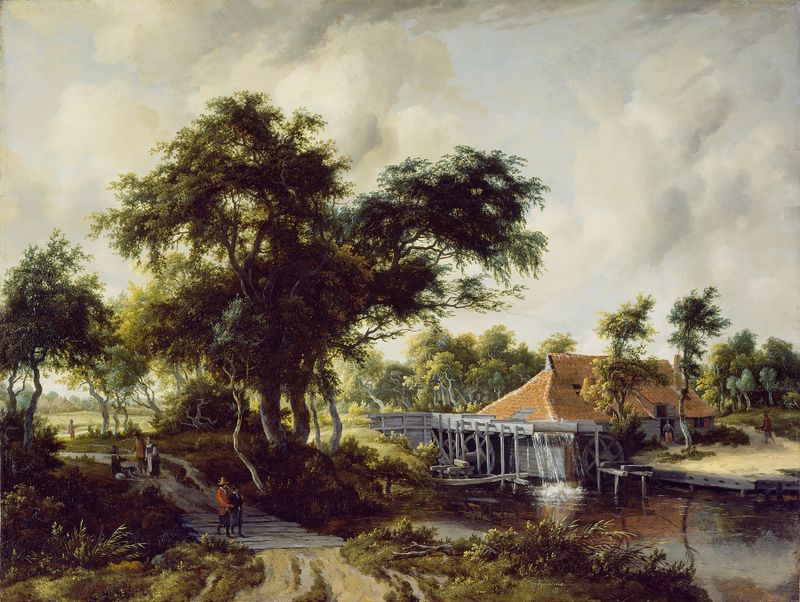
A Watermill
Meindert Hobbema
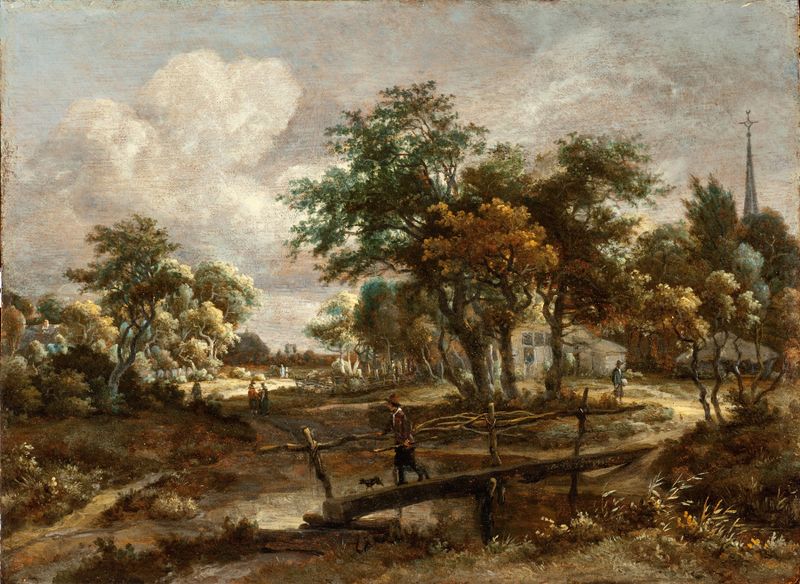
Landscape with a Footbridge
Meindert Hobbema

A Watermill
Meindert Hobbema
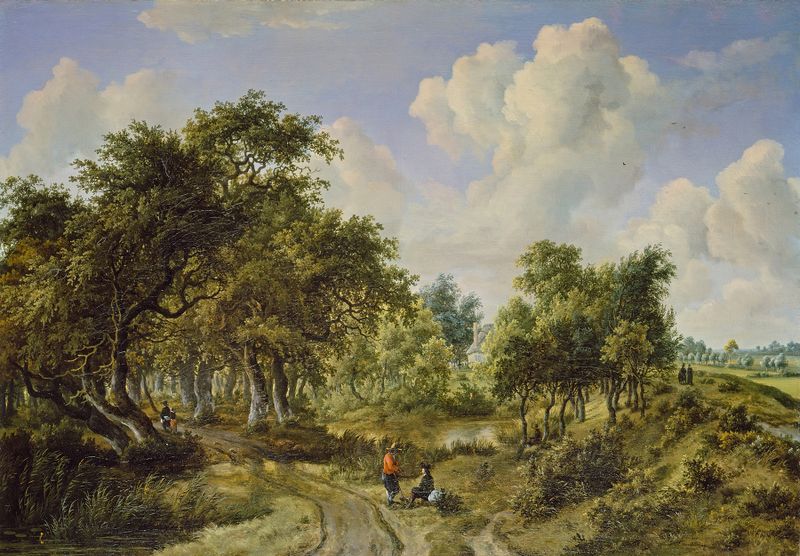
A Wooded Landscape
Meindert Hobbema

A Wooded Landscape
Meindert Hobbema
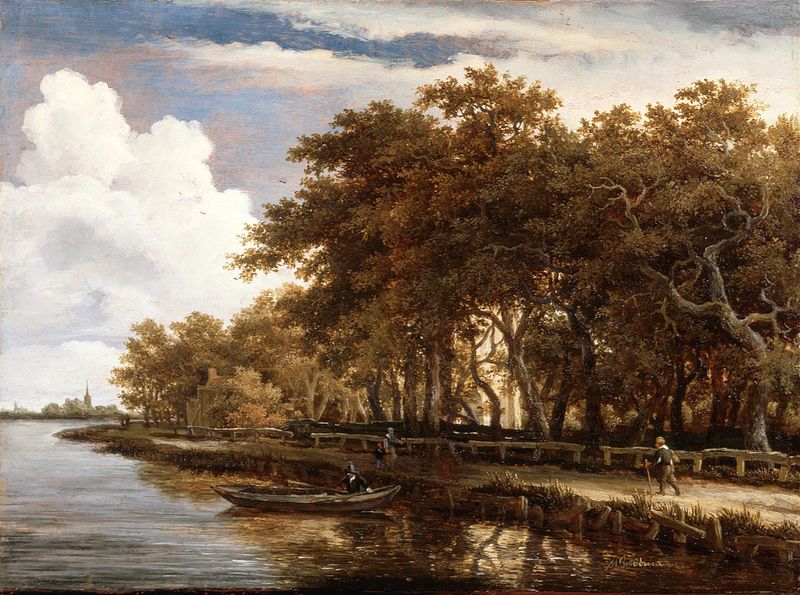
View Along the Amstel
Meindert Hobbema

The Watermill with the Great Red Roof
Meindert Hobbema

Water Mill
Meindert Hobbema





