
World’s Fair, Chicago — History & Facts
In the swirling chaos of existence, madness often finds its way to rest upon moments of grandeur and spectacle, cloaked in shimmering allure. Look to the vibrant colors that dominate the canvas; the bold strokes evoke a sense of joyous frenzy, pulling the eye across the bustling fairground. Notice how the flags flap energetically in a brilliant blue sky, their red and white hues contrasting sharply with the earthy tones of the spectators below. The composition teems with life, yet the figures—though animated—seem lost amidst the festivities, hinting at an underlying disquiet beneath the surface celebration. Delve deeper into the scene's emotional tension.
The jubilant atmosphere juxtaposes the isolation of the individuals, suggesting that amidst collective joy, one can still feel profoundly alone. The artist employs light and shadow to emphasize this contrast, illuminating some figures while shrouding others in obscurity. This interplay reflects the complexity of human experience—where joy can disguise a deeper madness, a relentless search for meaning amidst gaiety. Childe Hassam painted this work during the early 20th century, a time of great change in America and the art world.
The Chicago World’s Fair represented optimism and innovation, yet for the artist, it was also a period marked by personal struggles and a growing fascination with modern life. This painting captures that duality, illustrating both the splendor of progress and the chaos of the human spirit.
More Artworks by Childe Hassam
Browse all →
Beach at Newport
Childe Hassam

Washington Arch, Spring
Childe Hassam

Thaxter’s Garden
Childe Hassam

New England Headlands
Childe Hassam

Rocks At Appledore, Morning
Childe Hassam
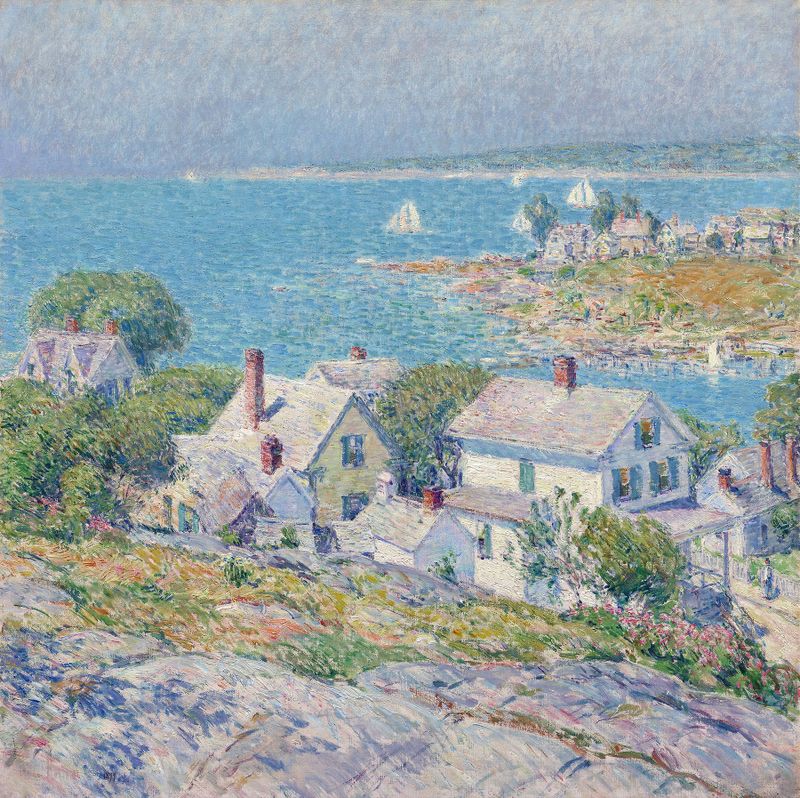
New England Headlands
Childe Hassam
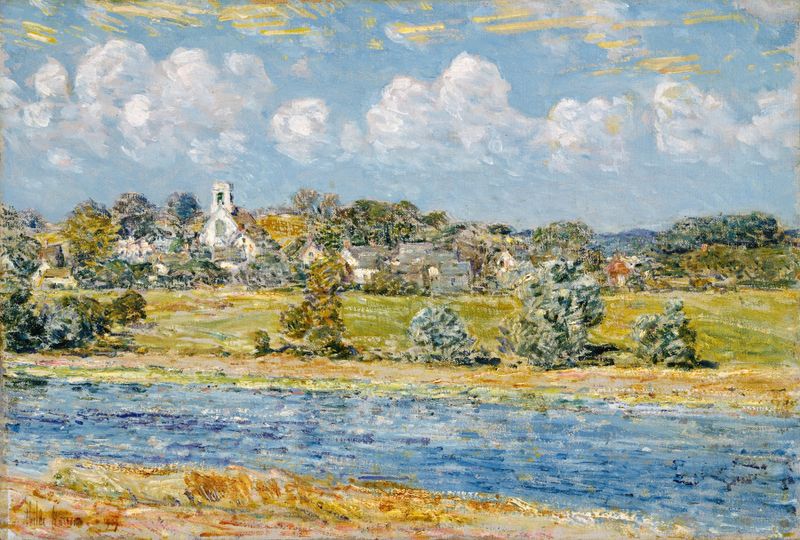
Landscape at Newfields, New Hampshire
Childe Hassam

Piazza di Spagna, Rome
Childe Hassam

The Harbor
Childe Hassam

Late Afternoon, New York, Winter
Childe Hassam





