
Yosemite Falls — History & Facts
What first seizes the eye in Yosemite Falls is the sheer vertical rush of water, a pale ribbon descending from a shrouded height, its force diffused into mist before it ever touches the earth. The painter orchestrates a drama of scale, placing the falls so high and the trees so slender that the viewer feels almost to be lying in the grass by the riverbank, craning upward. Light is handled with a steady hand: the upper falls catch a ghostly glow, while the lower pool is calm, its surface reflecting the sky’s pale wash.
The trees on either side serve as sentinels, framing the spectacle and anchoring the eye, while the haze at the cliff’s base blurs the boundary between water and air, suggesting the constant motion and chill spray. Works like this belong to the era when American painters, especially those of the Hudson River School, sought to capture the grandeur of the continent’s wild places, often as a celebration of the nation’s expanding frontiers. In the mid-nineteenth century, artists such as Albert Bierstadt became known for their large-scale landscapes, which were sometimes exhibited to awe urban audiences and fuel the mythos of the West. This particular image, documented as photographed in 2010, stands as a testament to that tradition, even if its individual journey through history remains obscure.
The painting invites us to linger, to follow the water’s fall from cloud to earth, and to imagine the world as it appeared to those first travelers who stood in awe before such scenes.
More Artworks by Albert Bierstadt

A Storm in the Rocky Mountains, Mt. Rosalie
Albert Bierstadt
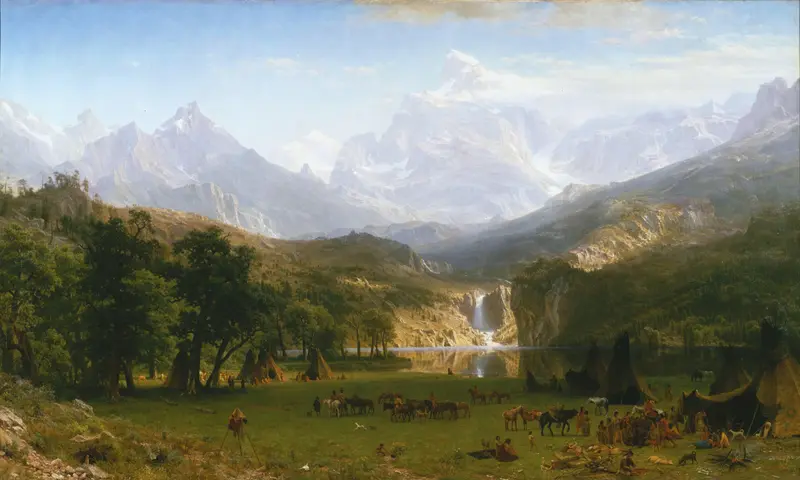
The Rocky Mountains, Lander's Peak
Albert Bierstadt
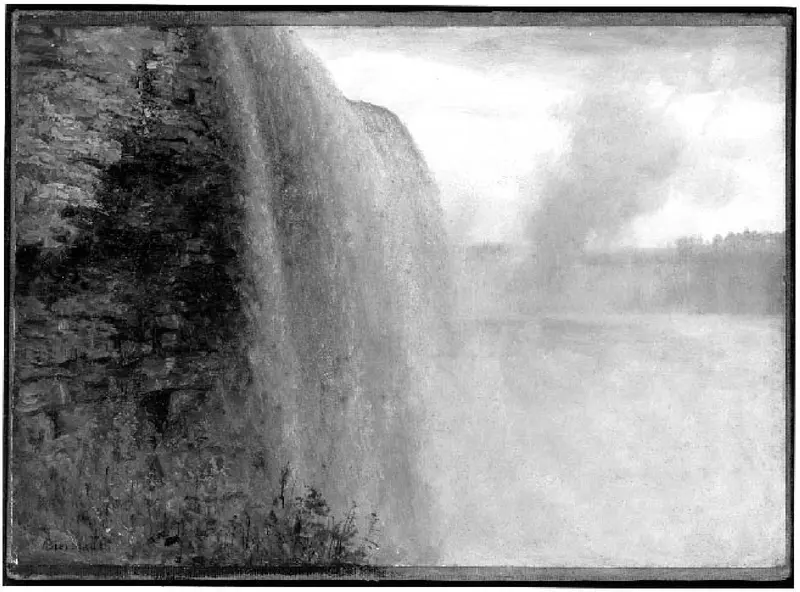
Niagara from the American Side
Albert Bierstadt
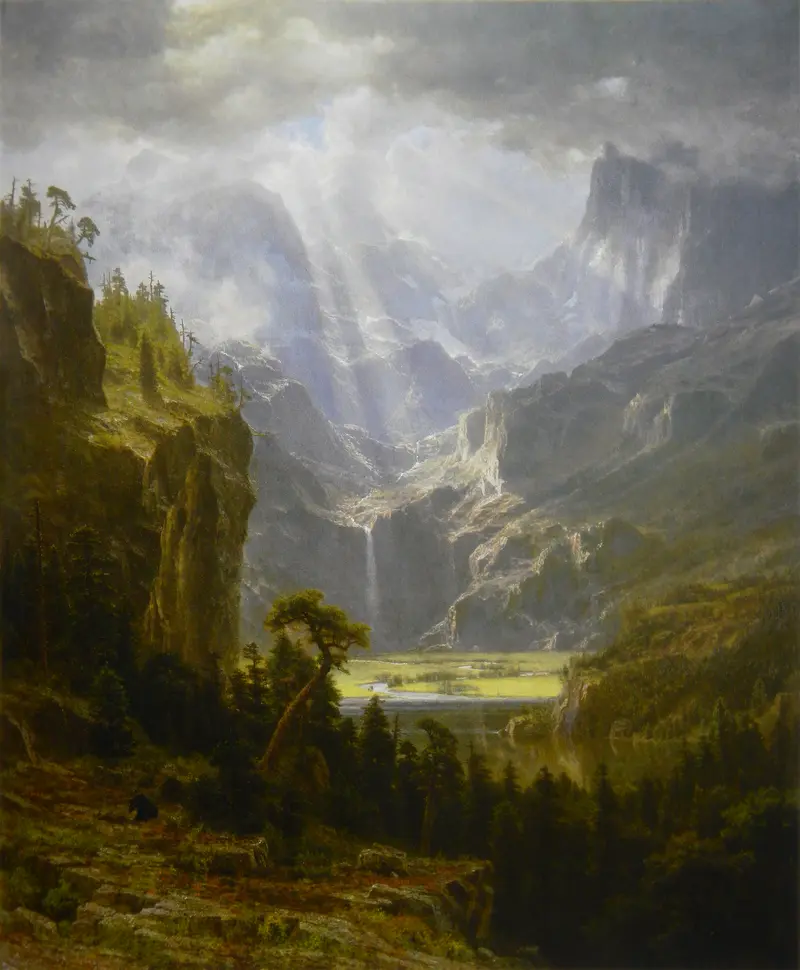
Rocky Mountains, Lander’s Peak
Albert Bierstadt

Valley of the Yosemite
Albert Bierstadt
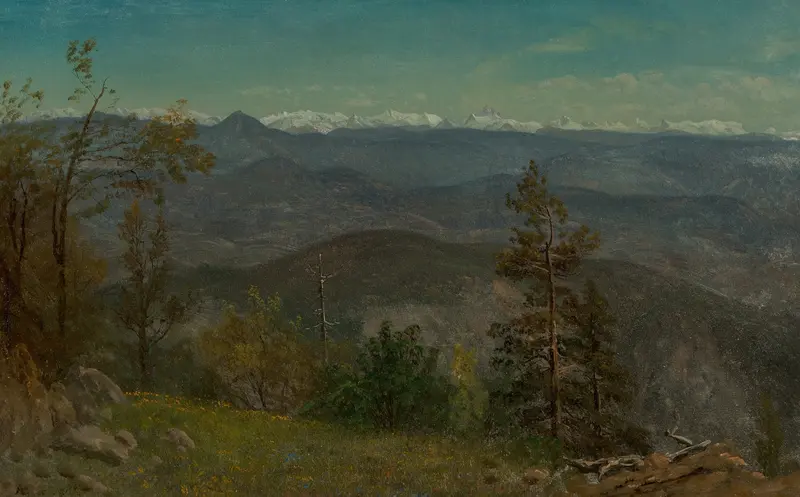
Yosemite Valley, California
Albert Bierstadt
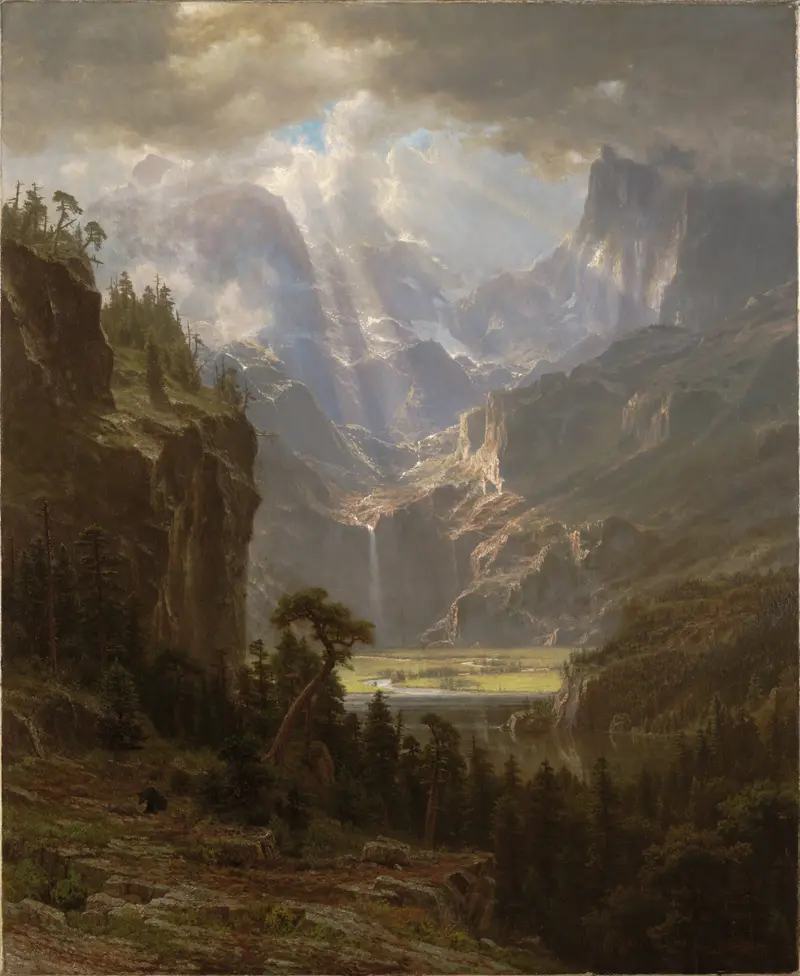
Rocky Mountains, "Lander's Peak"
Albert Bierstadt

Laramie Peak
Albert Bierstadt
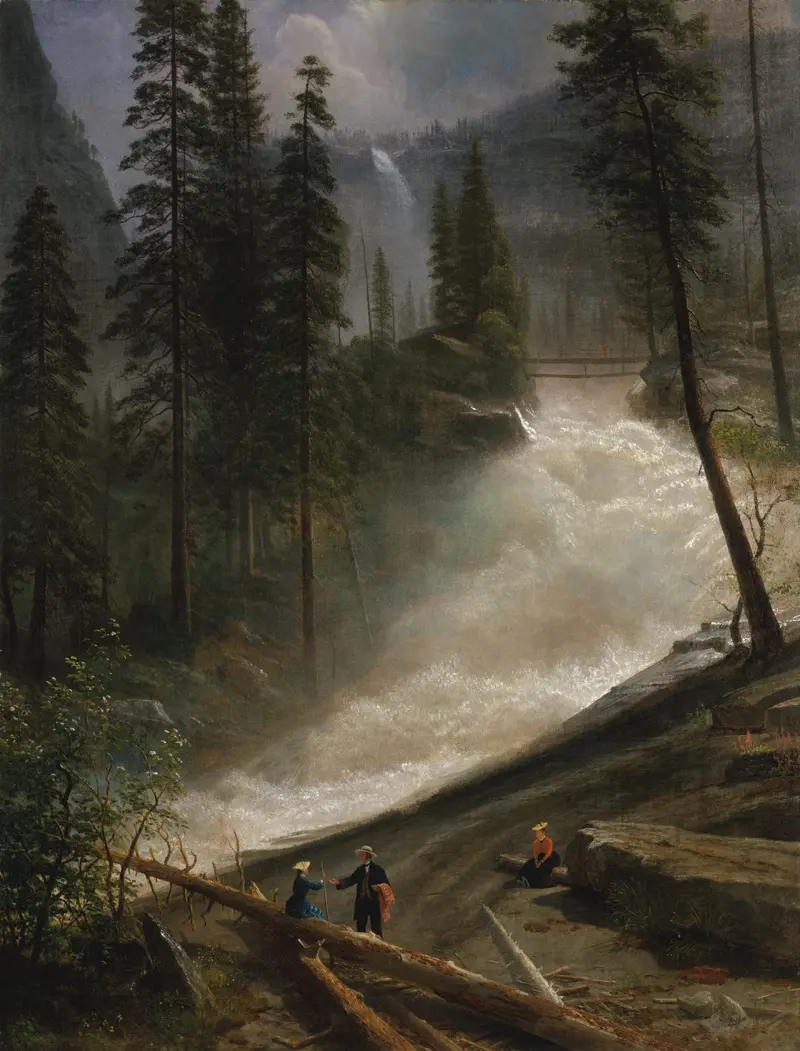
Nevada Falls, Yosemite
Albert Bierstadt
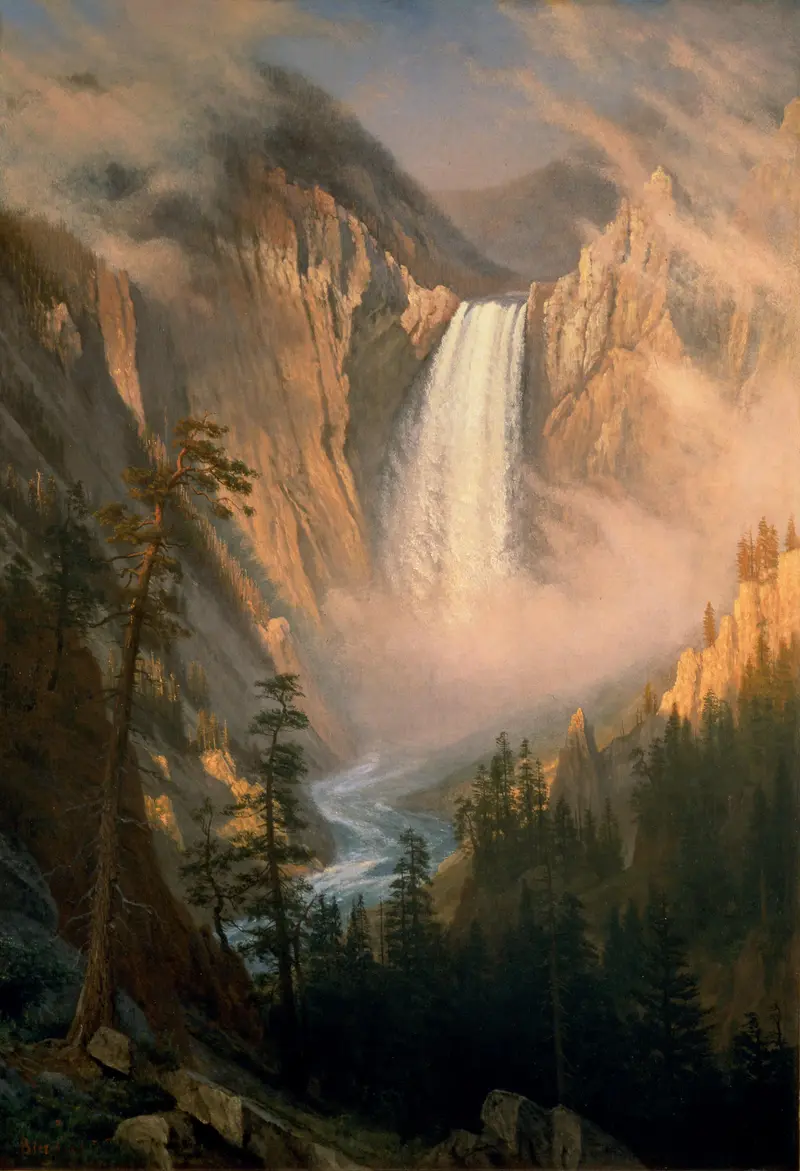
Yellowstone Falls
Albert Bierstadt
More Landscape Art

The Starry Night
Vincent van Gogh

View of Delft
Johannes Vermeer

Water Lilies
Claude Monet

The Grand Canal, Venice, looking north-west from the Ca' Corner to the Ca' Contarini degli Scrigni, with the campanile of Santa Maria della Carità
Canaletto

Windsor Castle
Canaletto

The Grand Canal looking North-East from the Palazzo Dolfin-Manin to the Rialto Bridge
Canaletto