
11 — History & Facts
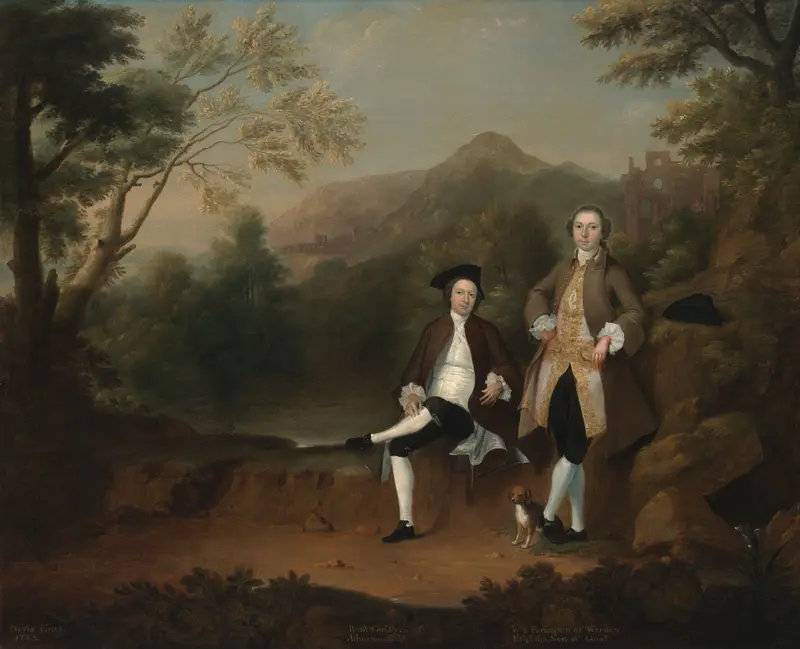
What first catches the eye in 11 by Arthur Devis is the striking composure of the young man, immaculately dressed in blue and gold, set against a vast, rolling landscape that seems to stretch into forever. His relaxed pose, one arm draped over the back of a simple chair and the other holding a tricorn hat, signals both ownership and ease—he is at home here, master of all he surveys. The river curves gently below, drawing the viewer’s gaze into the distance, past wooded banks and up towards a manor perched on a distant hill.
The palette is cool and controlled, the sky a pale wash that gives the land a gentle clarity, while the careful rendering of trees and water suggests a world that is orderly, cultivated, and serene. This painting belongs to the world of mid-eighteenth-century England, when landowners and aspirants alike commissioned portraits that were as much about place as about person. In 1759, when this work was created, the fashion for “conversation pieces” and landscape settings was in full swing—sitters were often shown outdoors, their estates a silent testament to their status and taste. Arthur Devis was known for such scenes, blending portraiture with the language of landscape to create images that spoke of lineage, property, and the new ideals of polite society.
While little is recorded about the specific history of this painting, its presence in a Christie’s sale in London in 2008 reminds us that these images, once declarations of private pride, now invite us all to wander their painted grounds. Look again at the sitter’s steady gaze, and consider what it meant to be both subject and spectator in a world on the cusp of modernity.
More Artworks by Arthur Devis
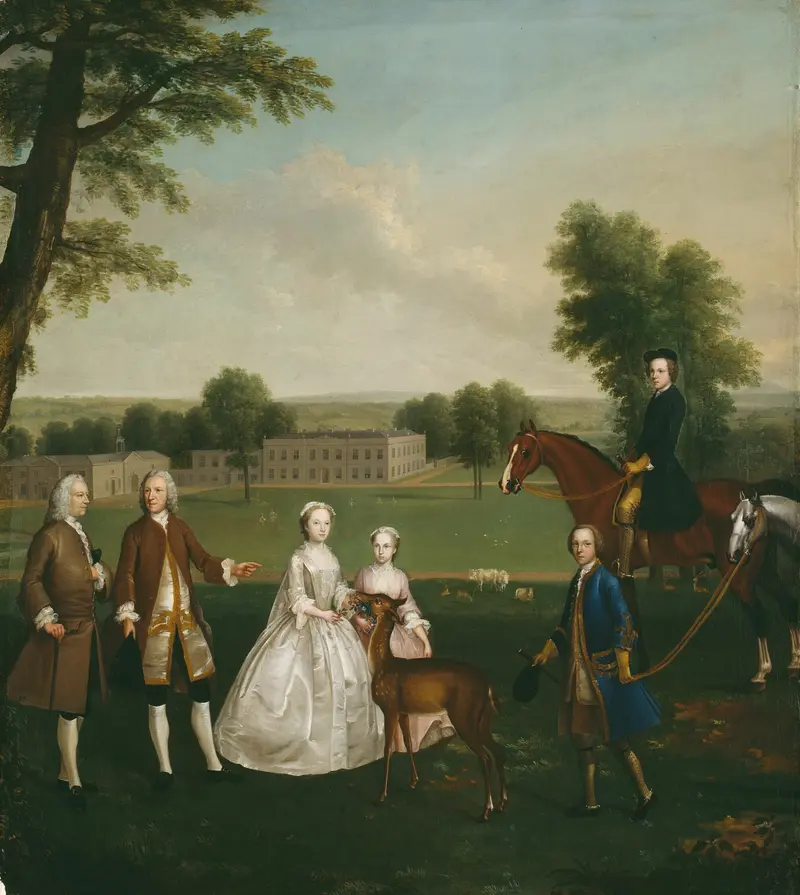
Thomas Lister and Family at Gisburne Park
Arthur Devis

Sir John Shaw and his Family in the Park at Eltham Lodge, Kent
Arthur Devis
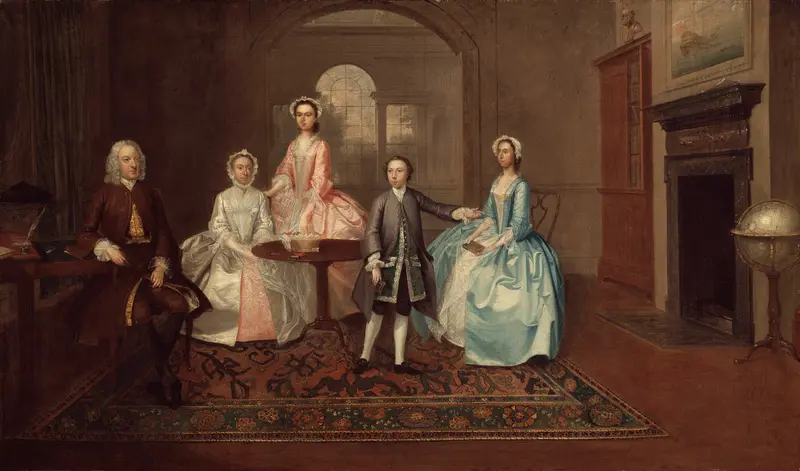
John Thomlinson and His Family
Arthur Devis
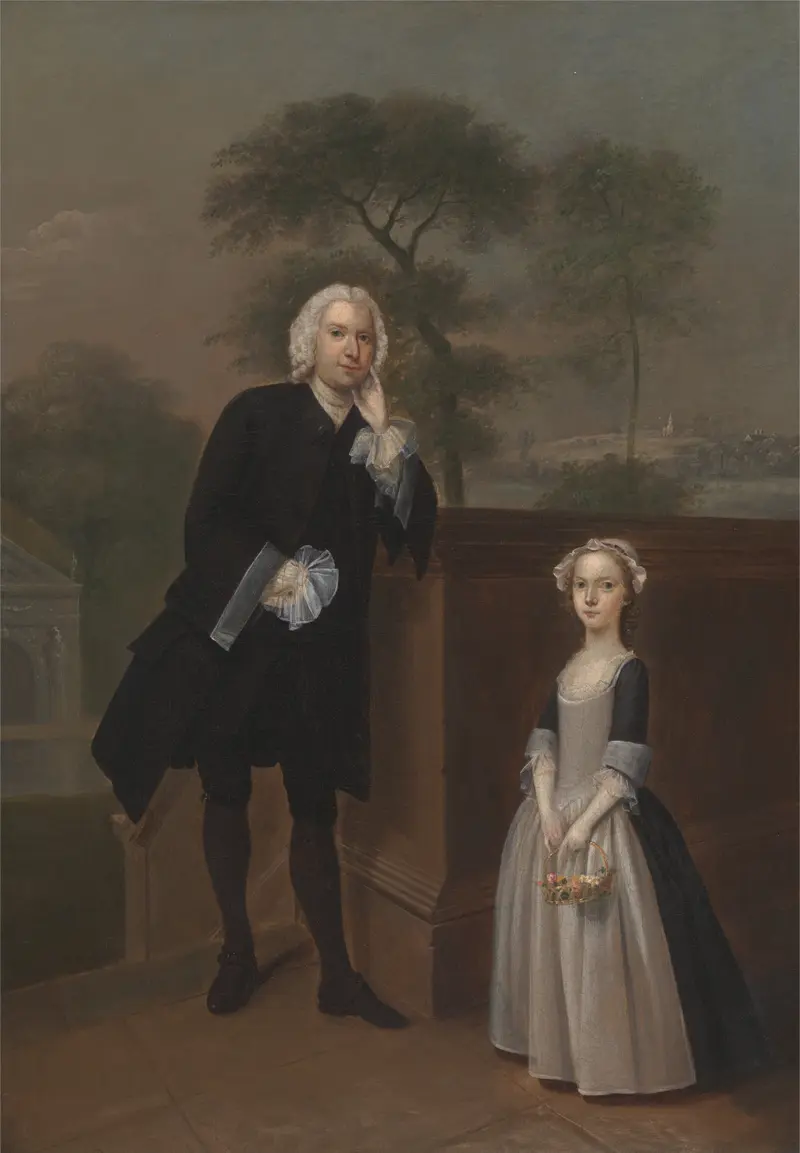
An Unknown Man with His Daughter
Arthur Devis
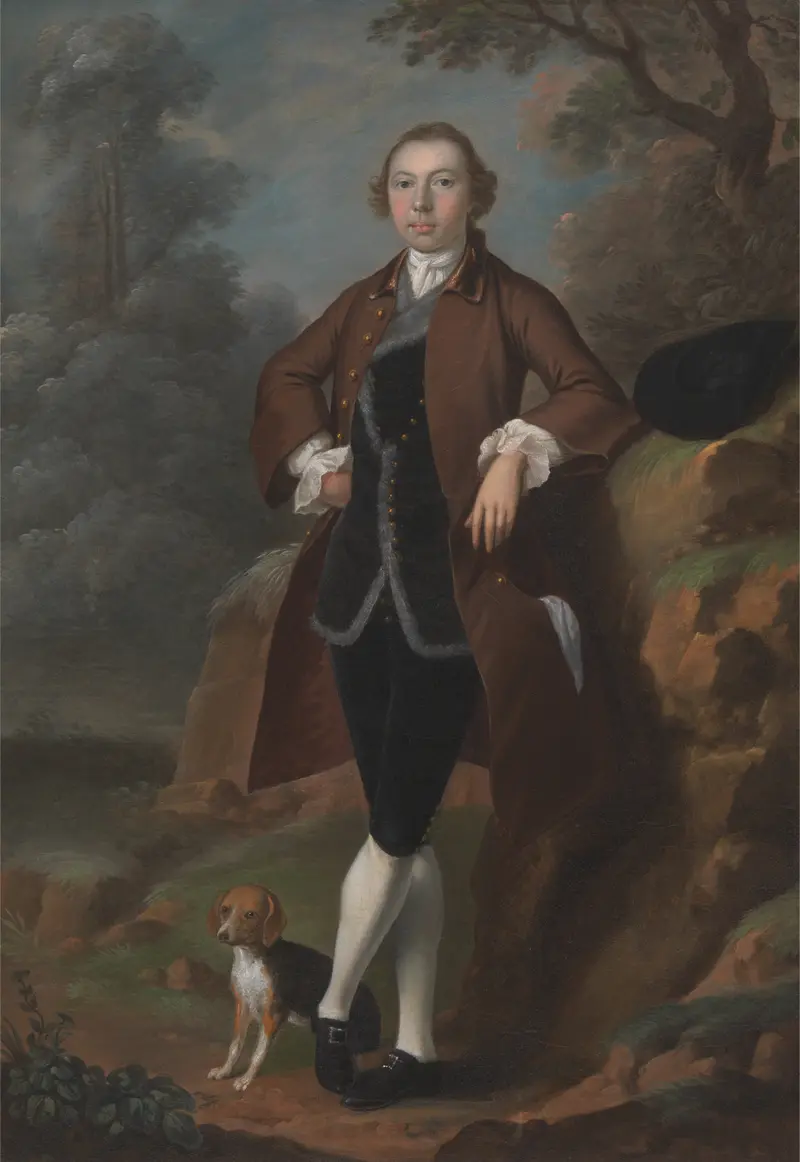
William Farington of Shawe Hall, Lancashire
Arthur Devis
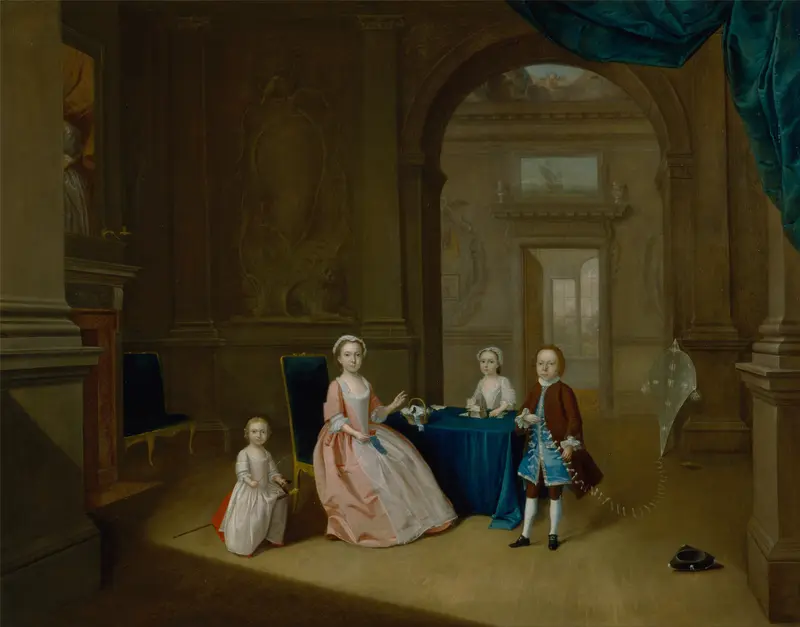
Children in an Interior
Arthur Devis
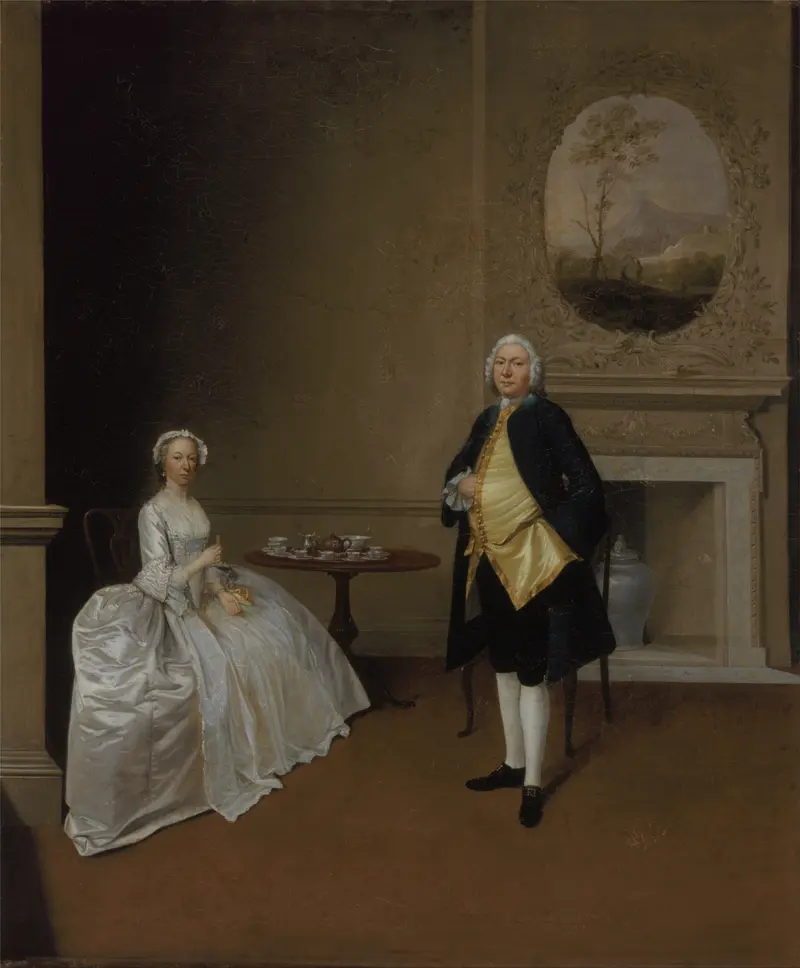
A Couple, Traditionally Identified as Mr. and Mrs. Hill
Arthur Devis
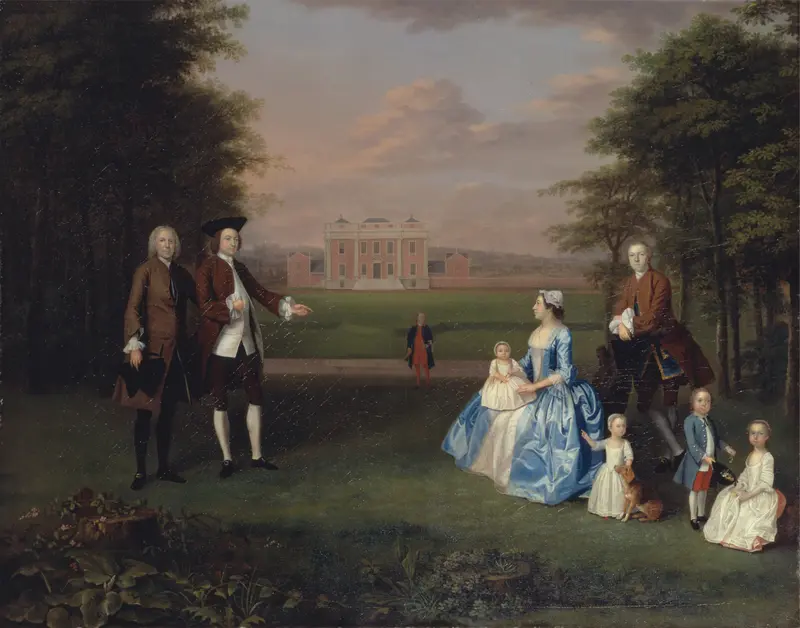
Robert Gwillym, Elizabeth Gwillym (née Atherton), and Their Family
Arthur Devis
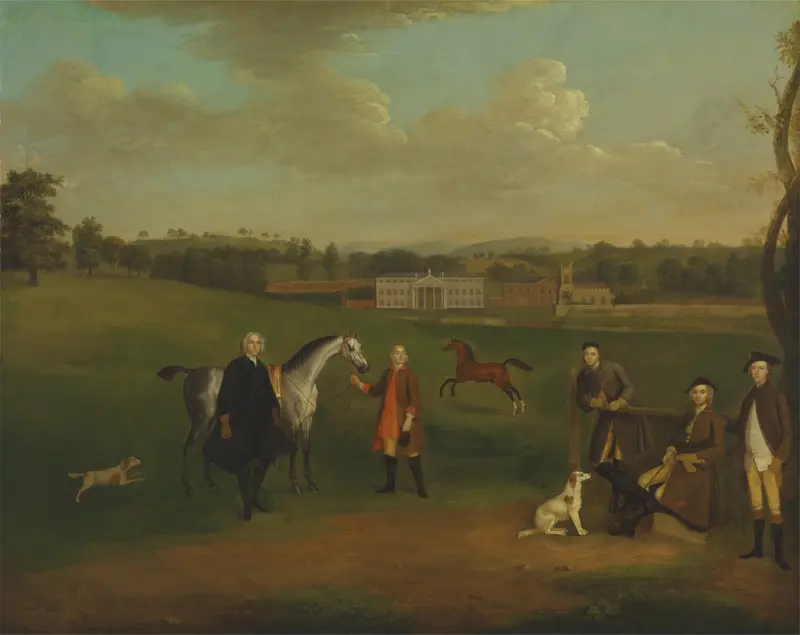
Leak Okeover, Rev. John Allen and Captain Chester at Okeover Hall, Staffordshire
Arthur Devis
Robert Gwillym of Atherton and William Farington of Werden
Arthur Devis





