
A baker blowing his horn — History & Facts
A man leans out over a half-door, his face caught in the effort of blowing a horn, his gaze fixed somewhere beyond the frame. The rough folds of his open shirt and the flush of his cheeks draw us into a moment of working life, while the horn—held with practiced familiarity—becomes both tool and announcement. Sunlight catches on the white of his sleeve and the rim of the horn, guiding the eye to the heart of the action.
To his left, a heavy basket brims with grapevines, a detail that hints at the rhythms of harvest and the mingling of trades in a Dutch village. The palette is warm and earthy, the textures almost tangible; this is not a scene of grandeur, but of everyday labor rendered with dignity and a touch of humor. Works like A baker blowing his horn by Adriaen van Ostade belong to a world where painters turned their attention to the daily lives of ordinary people—a hallmark of Dutch art in the seventeenth century. Scenes of bakers, peasants, and tavern-goers were prized by a new class of urban collectors who saw their own world reflected in these images.
Painted sometime between 1630 and 1685, this piece now resides in the Rijksmuseum collection, a testament to the enduring appeal of such glimpses into the past. History has kept few traces of the specific stories behind these faces, but the immediacy of the moment invites us to linger, to imagine the sound of the horn echoing down a sunlit street.
More Artworks by Adriaen van Ostade

Dans in de herberg
Adriaen van Ostade
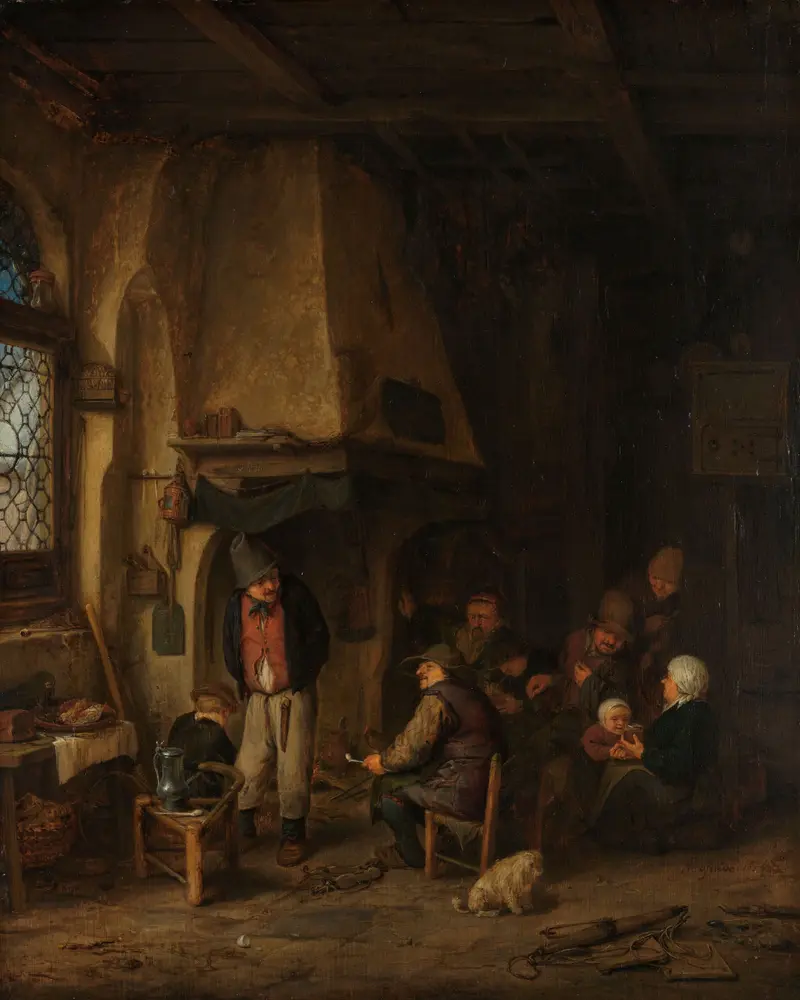
‘The Skaters’: Peasants in an Interior
Adriaen van Ostade
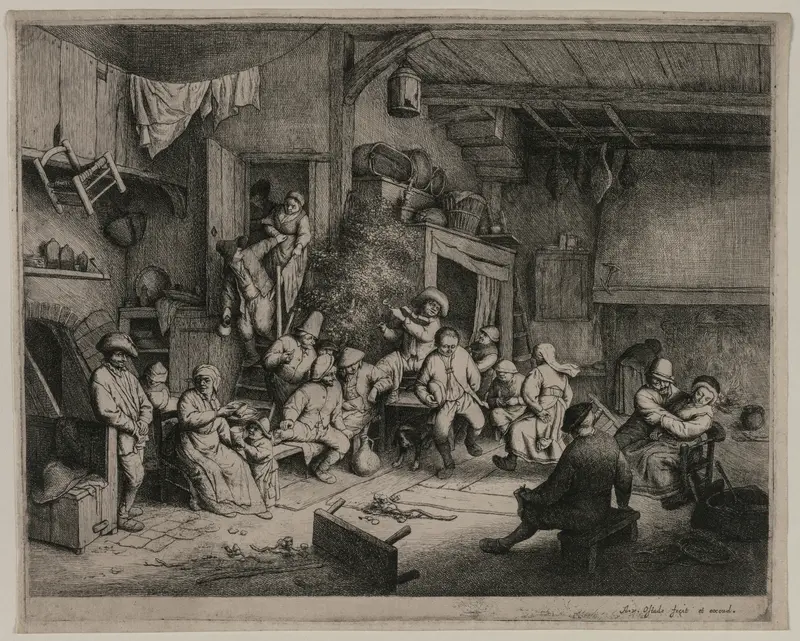
Dance at the Inn
Adriaen van Ostade
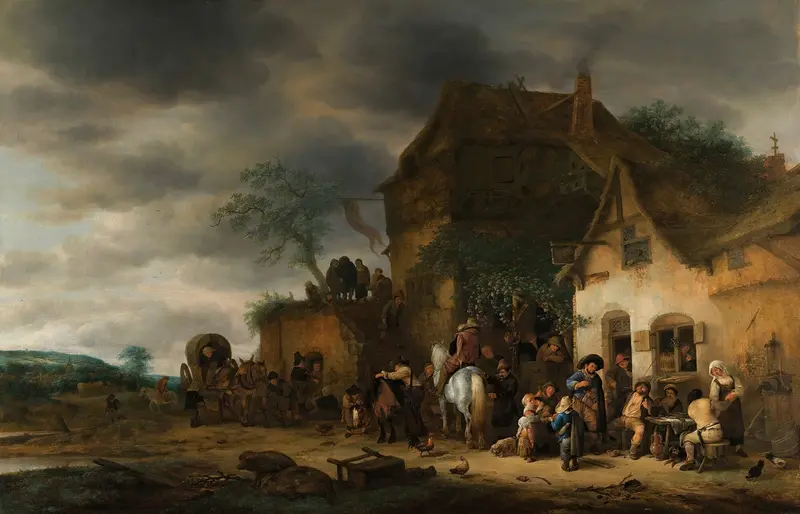
Travellers Halted At A Country Inn
Adriaen van Ostade
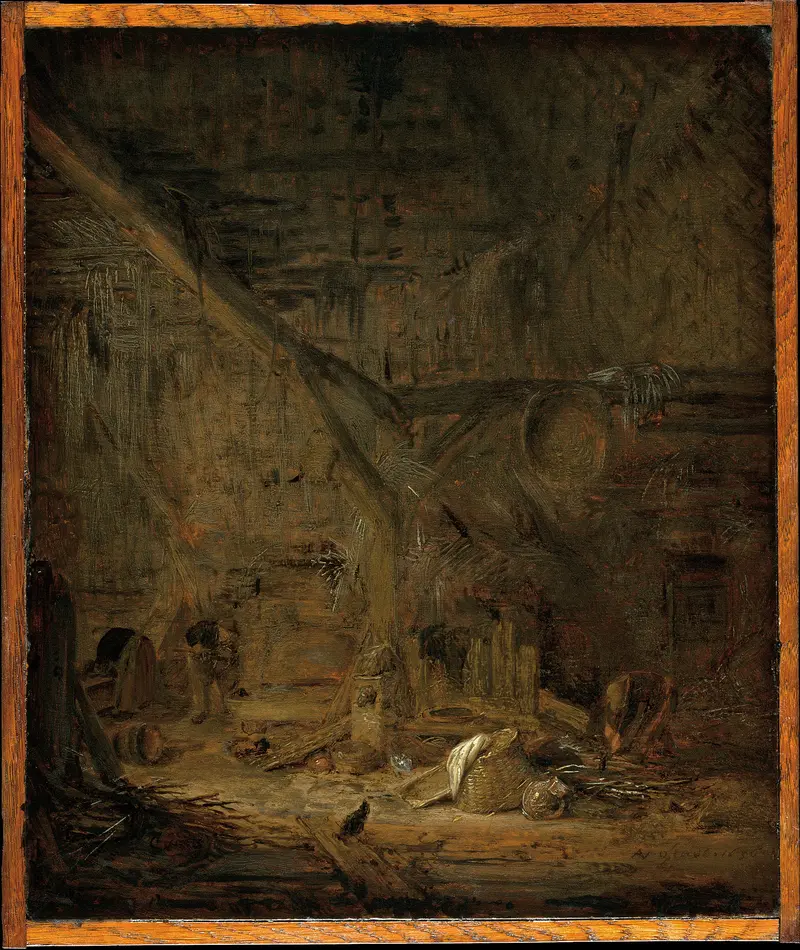
Interior of a Barn
Adriaen van Ostade
Merrymakers in an Inn
Adriaen van Ostade
Boerengezin in interieur
Adriaen van Ostade
Peasants Brawling in a Tavern
Adriaen van Ostade
Man with a Tankard at a Window
Adriaen van Ostade
Dans in de herberg
Adriaen van Ostade
More Genre Scene Art

Banquet of the Officers of the St George Civic Guard
Frans Hals

Rembrandt and Saskia in the Scene of the Prodigal Son
Rembrandt van Rijn

Bal du moulin de la Galette
Pierre-Auguste Renoir

Quadrille at the Moulin Rouge
Henri de Toulouse-Lautrec

A Burial at Ornans
Gustave Courbet

When Will You Marry?
Paul Gauguin