
A Charge of Cuirassiers — History & Facts
In 1823, just a few years after the Napoleonic Wars had shaken Europe, Théodore Géricault returned to the theme of cavalry charges—a subject that had fascinated him since the chaos of his own times. A Charge of Cuirassiers captures the drama and confusion of battle, echoing the artist’s earlier engagement with military subjects and the psychological toll of war. The cuirassiers, elite French heavy cavalry, had become legendary for their thunderous charges during the wars of Napoleon, and Géricault’s fascination with their fate was shared by a public still reckoning with the cost of glory.
The painting’s energy and immediacy reflect the artist’s own restlessness and his search for new ways to convey movement and emotion on canvas. The moment Géricault selects is one of violent momentum: armored horsemen surge forward, sabres drawn, faces grim with determination or fear. The horses, rendered with anatomical precision, rear and twist, their bodies straining against the chaos. Light glances off polished cuirasses and helmets, but the background dissolves into smoke and dust, emphasizing the uncertainty of battle.
The diagonal thrust of the composition pulls the viewer into the melee, while the tangled forms recall the dynamism of Jacques-Louis David’s Napoleon Crossing the Alps, yet Géricault’s approach is rawer, less idealized—here, the confusion and terror are as palpable as the heroism. The standard raised high at the center signals both unity and vulnerability, a fleeting moment before the outcome is decided. The precise history of this work’s commission remains unclear, but it stands as a testament to Géricault’s obsession with the realities of war and his technical innovations in painting movement. Unlike his monumental The Raft of the Medusa, which achieved instant notoriety, A Charge of Cuirassiers was likely intended for a private collector or military patron, reflecting the era’s appetite for contemporary history painting.
Over the years, the painting has been exhibited in major retrospectives of Géricault’s work, helping to cement his reputation as a pioneer of the Romantic movement. Today, it is recognized as a key example of his ability to merge documentary intensity with psychological insight, standing alongside his other explorations of the human and animal form under extreme stress.
More Artworks by Théodore Géricault
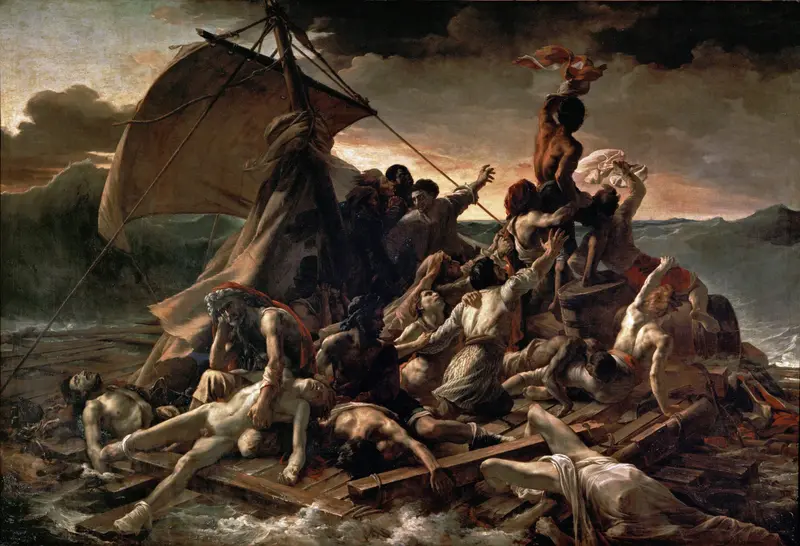
The Raft of the Medusa
Théodore Géricault

Géricault - Le naufrage du radeau de la Méduse, MBA 790
Théodore Géricault
Cattle Market
Théodore Géricault
Evening; Landscape with an Aqueduct
Théodore Géricault
Horse Race
Théodore Géricault

Horses Standing in a Mews
Théodore Géricault
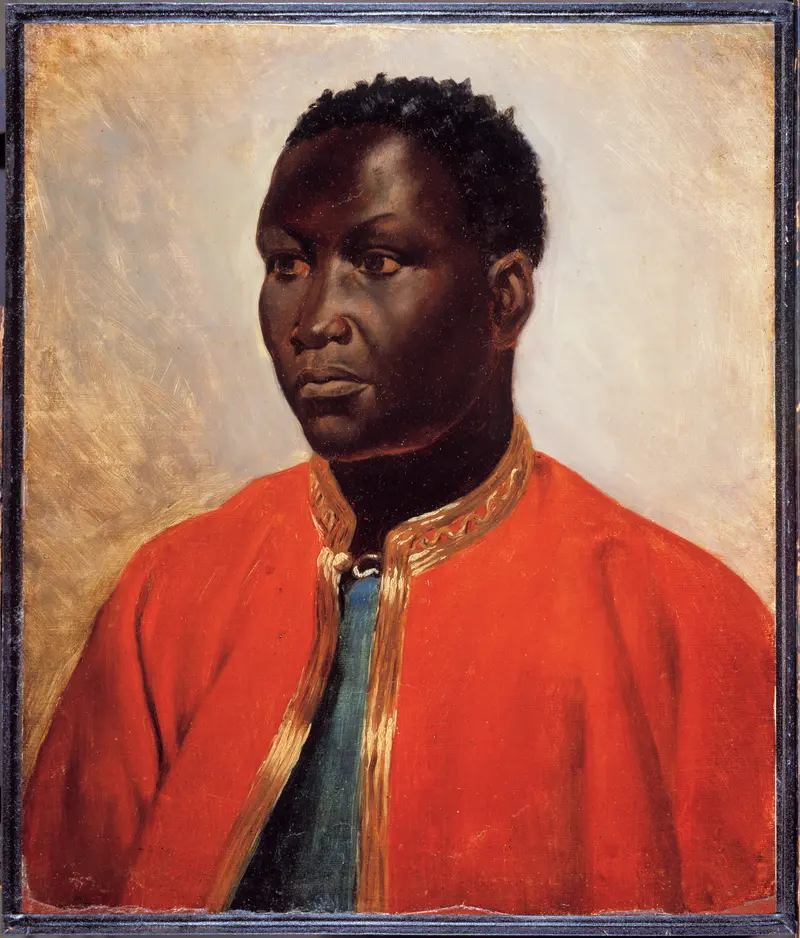
Portrait of a Negro
Théodore Géricault
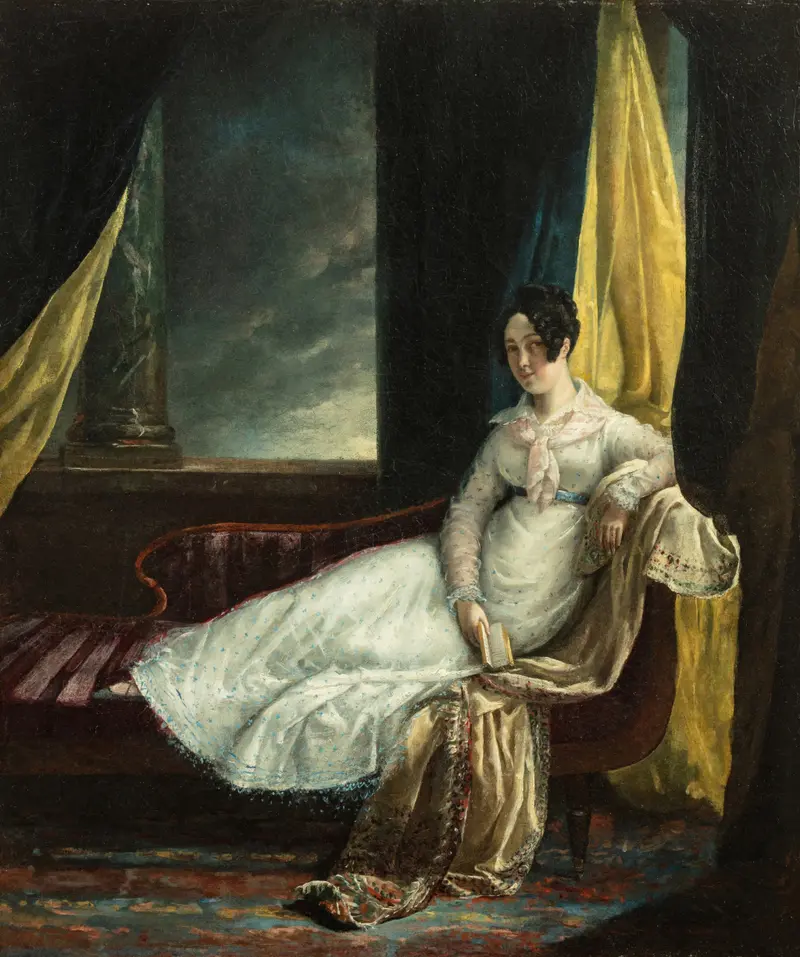
Portrait of Zoë Elmore
Théodore Géricault
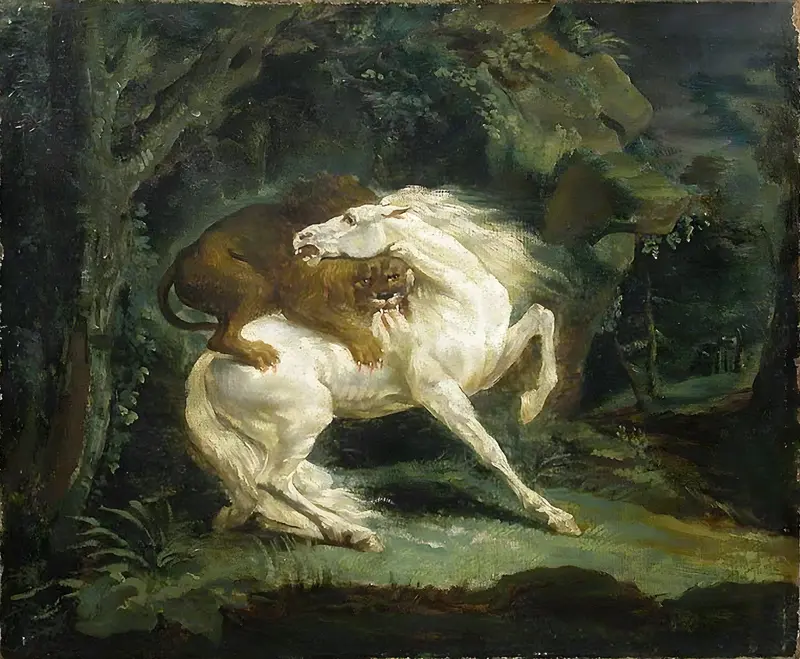
Cheval attaqué par un lion
Théodore Géricault
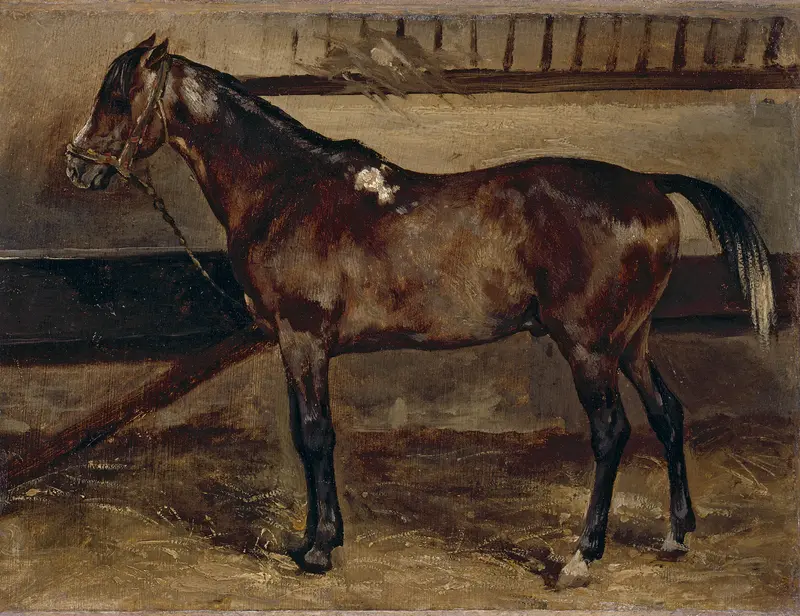
Cheval brun à l'écurie
Théodore Géricault





