
The Raft of the Medusa: story and meaning
The Raft of the Medusa is an oil painting by the French artist Théodore Géricault (1791–1824), painted in Paris in 1818–1819 and a key work of Romanticism. It shows the survivors of the frigate Méduse, wrecked in 1816, adrift on a makeshift raft among the dying and the dead. It is in the Louvre in Paris.
- The shipwreck: the frigate Méduse, with 400 sailors, soldiers and civilian passengers on board, ran aground on the Banc d’Arguin sandbank on 2 July 1816, on its way to Saint-Louis in Senegal.
- The raft: 150 people took their places on a raft built from parts of the wreck. The ropes towing it were cut, and after 12 days adrift only 15 were alive when the brig Argus found them.
- What inspired it: in 1817 two survivors told their story, including scenes of cannibalism; the scandal that broke out inspired Géricault.
- Medium and size: oil on canvas, 491 × 716 cm. Géricault painted it in a studio he rented in Paris and finished it in July 1819 in the foyer of the Théâtre-Italien.
- First shown: at the Salon of 1819 under the title Scène de naufrage (Shipwreck Scene), then in London and Dublin in 1820–1821.
- At the Louvre: bought for the French Crown in November 1824, at the sale held after Géricault’s death, and on display since 1826.
Sources: Louvre collection record (INV 4884) · Louvre: Les Enquêtes du Louvre, “Le radeau de la Méduse” · Wikidata Q212616
Questions and answers about the painting
What is the story behind The Raft of the Medusa?
Géricault’s painting tells a true story. On 2 July 1816 the French frigate Méduse, sailing to Saint-Louis in Senegal with 400 sailors, soldiers and civilian passengers on board, ran aground on the Banc d’Arguin, a large submerged sandbank. 150 of them took their places on a raft that was meant to be towed by the ship’s boats, but the ropes were cut and the raft was left to drift. After 12 days only 15 were still alive when the brig Argus found them. In 1817 two survivors told their story, including scenes of cannibalism, and the scandal that broke out inspired Géricault.
Source: Louvre collection record (INV 4884) · Louvre: Les Enquêtes du Louvre, “Le radeau de la Méduse”
What does Géricault’s painting mean?
Géricault turned a recent news story, a shipwreck that had become a public scandal, into a history painting on a monumental scale: the living, the dying and the dead crowd a raft on the open sea. Wikidata classes it as Romanticism. The subject was sensitive: according to the Louvre, either because Géricault found the price offered too low or because the royal ministry was embarrassed by the subject, no sale was agreed in his lifetime.
Source: Louvre collection record (INV 4884) · Louvre: Les Enquêtes du Louvre, “Le radeau de la Méduse” · Wikidata Q212616 (movement, depicts)
Where is the painting in the Louvre?
The Raft of the Medusa hangs in the Louvre in Paris, in Room 700 (Salle Mollien, Romanticism), Denon wing, level 1. Its inventory number is INV 4884. It was bought for the French Crown in November 1824 at the sale held after Géricault’s death, and it has been on display there since 1826.
How big is the canvas?
The Raft of the Medusa measures 491 × 716 cm (about 16 × 23½ feet). The canvas, 15 by 22 French feet, was supplied to Géricault on 24 February 1818. A full-size copy painted in 1859–1860 by Eugène Ronjat and Pierre Désiré Guillemet is in the Musée de Picardie in Amiens.
Source: Louvre collection record (INV 4884) · Wikidata Q212616
Is the painting in the public domain?
Yes. Géricault died in 1824, so his paintings are free of copyright everywhere. A faithful photograph of a public-domain painting adds no new copyright in the United States or the European Union, so you can download this image and use it in personal or commercial projects. Public Domain Images for Commercial Use explains how.
More Artworks by Théodore Géricault

Géricault - Le naufrage du radeau de la Méduse, MBA 790
Théodore Géricault
Cattle Market
Théodore Géricault
Evening; Landscape with an Aqueduct
Théodore Géricault
Horse Race
Théodore Géricault

Horses Standing in a Mews
Théodore Géricault
Portrait of a Negro
Théodore Géricault
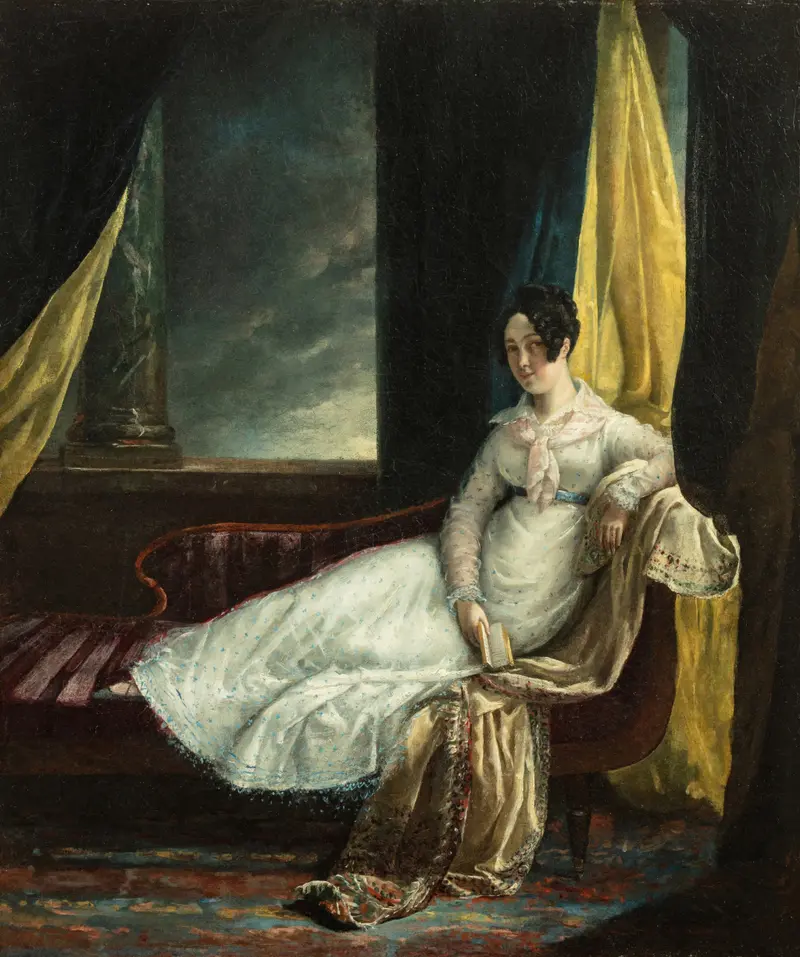
Portrait of Zoë Elmore
Théodore Géricault
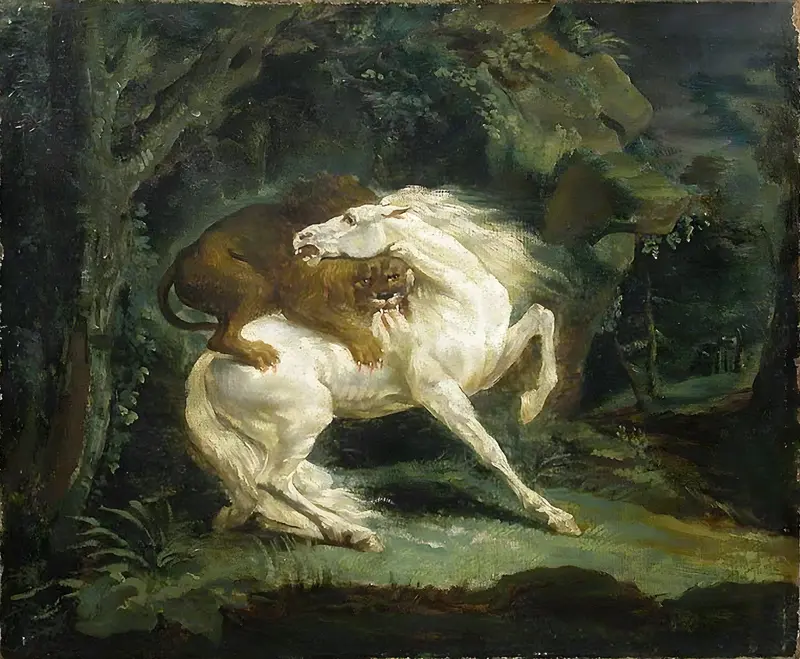
Cheval attaqué par un lion
Théodore Géricault
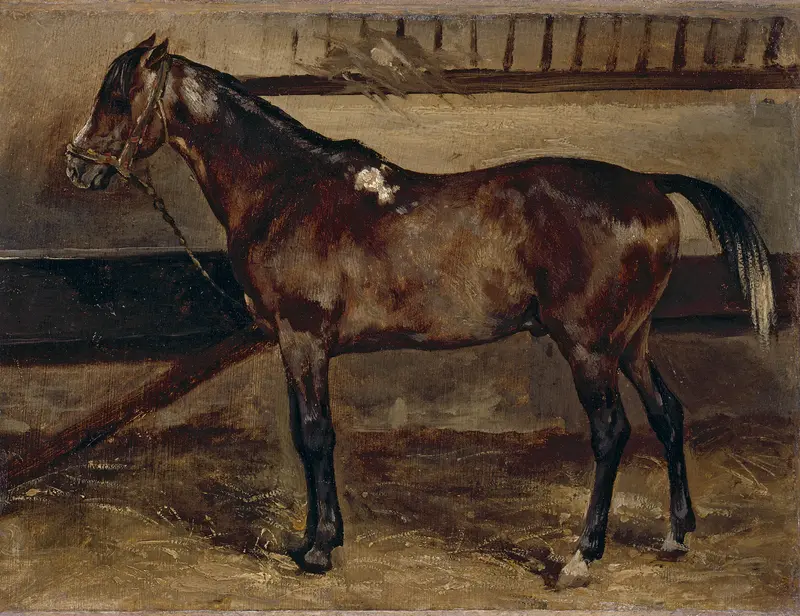
Cheval brun à l'écurie
Théodore Géricault
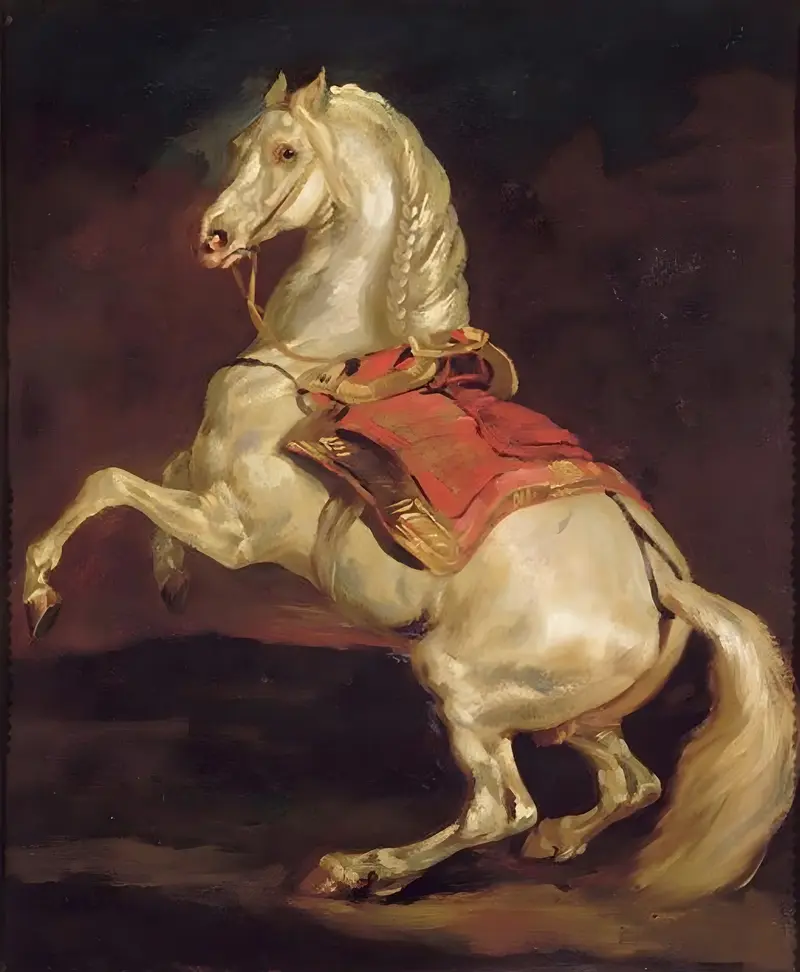
Cheval Cabré au Tapis de Selle Rouge
Théodore Géricault





