
A dune landscape with peasants — History & Facts
A sky that seems to go on forever draws the viewer in first, its billowing clouds dwarfing the human figures scattered below. The drama here is not in any single action, but in the way the landscape itself takes center stage: the winding path leads the eye from a lone traveler and his dog, past a mounted figure and a shepherd, to a distant river and the faint silhouette of a tower on the horizon. The people and animals are small, almost incidental, their daily routines unfolding quietly under the vastness above.
Notice how the light pools gently on the sandy track and the sheep’s wool, while the cool blue of the sky and water sets a calm, contemplative mood. Every detail, from the careful rendering of the grasses to the posture of the walking woman, is a reminder of the artist’s close observation of rural life. Painted in 1661, this scene belongs to the world of the Dutch Golden Age, when landscape painting flourished as never before. Artists like Adriaen van de Velde turned their attention to the countryside, celebrating the land and its people at a time when the Dutch Republic was asserting its identity and prosperity.
Such works were prized by a new class of urban collectors, eager for images that reflected both the beauty and the order of their surroundings. The unknown medium of this piece does not diminish its quiet authority, nor does the lack of a famous provenance; history has kept few traces of this particular painting’s journey, but its gentle vision of everyday life endures. Follow the winding path once more, and see how the landscape opens up, inviting you to step into its measured peace.
More Artworks by Adriaen van de Velde

Staande stier
Adriaen van de Velde
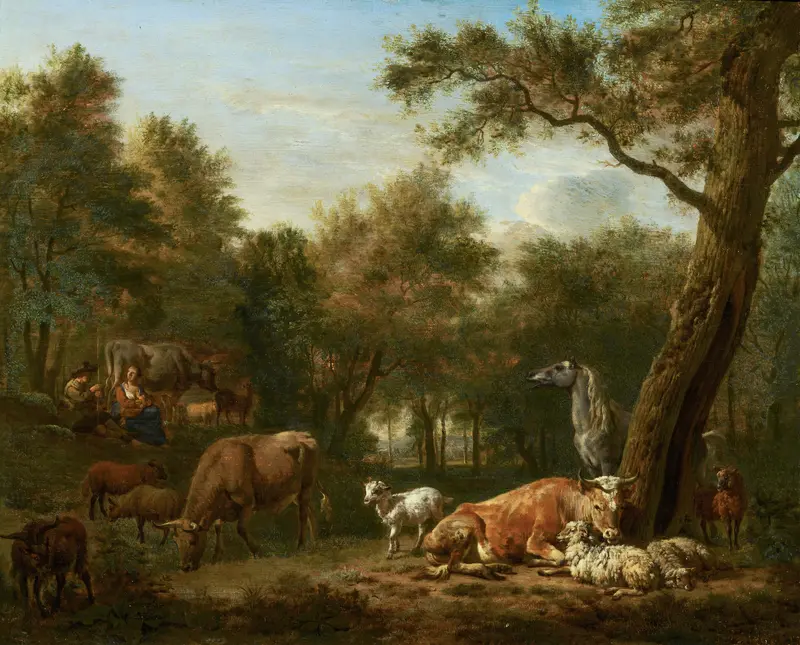
Wooded Landscape with Cattle
Adriaen van de Velde
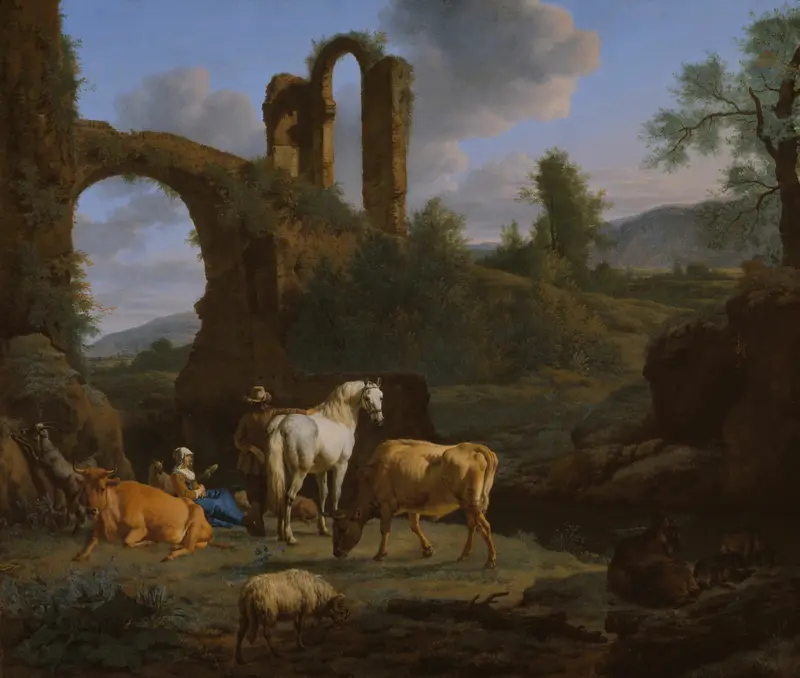
Pastoral Landscape with Ruins
Adriaen van de Velde
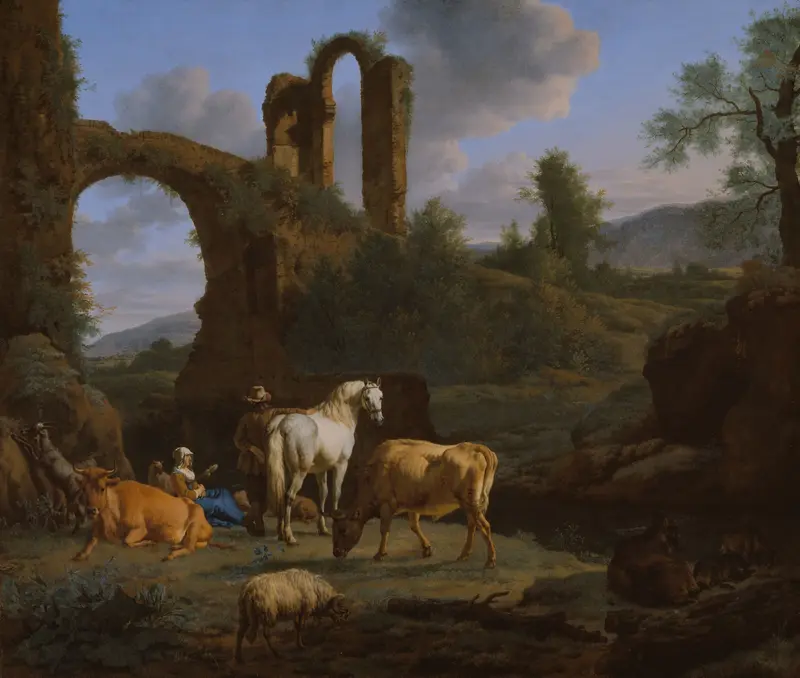
Pastoral Landscape with Ruins
Adriaen van de Velde
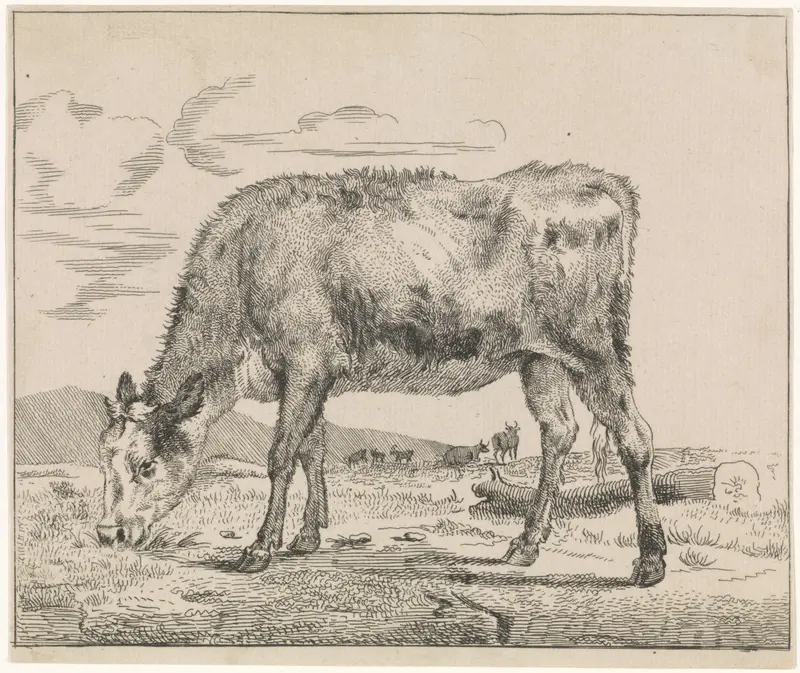
Grazend kalf
Adriaen van de Velde
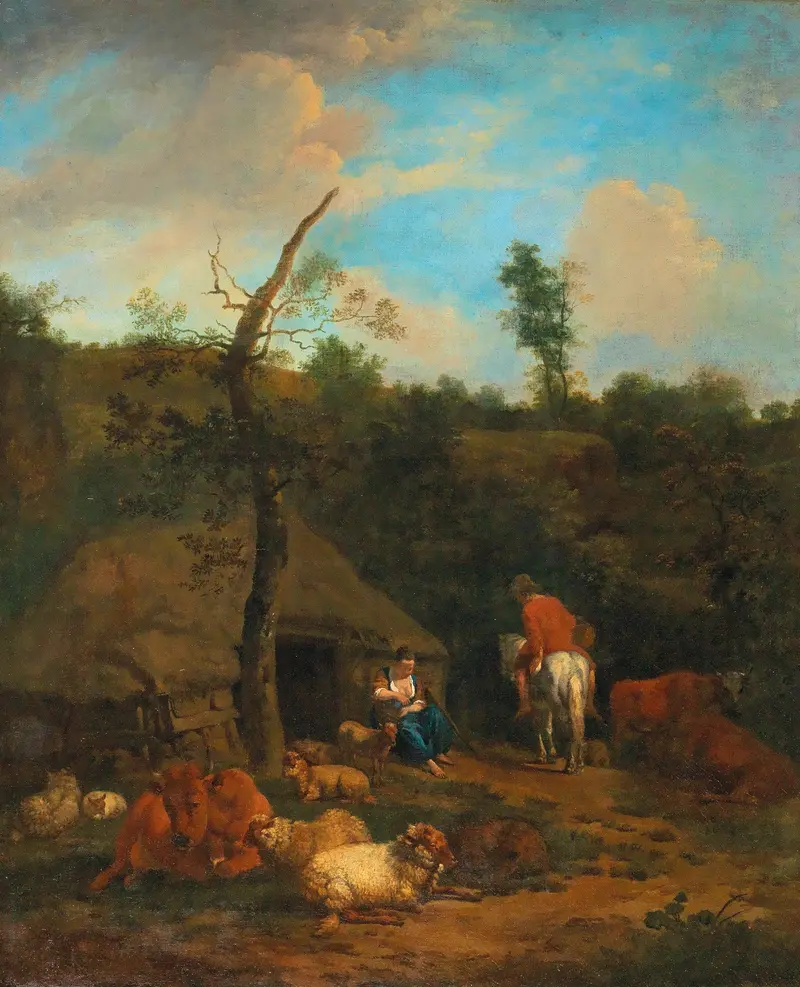
A herdsman and a shepherdess in front of a wooden farmhouse
Adriaen van de Velde
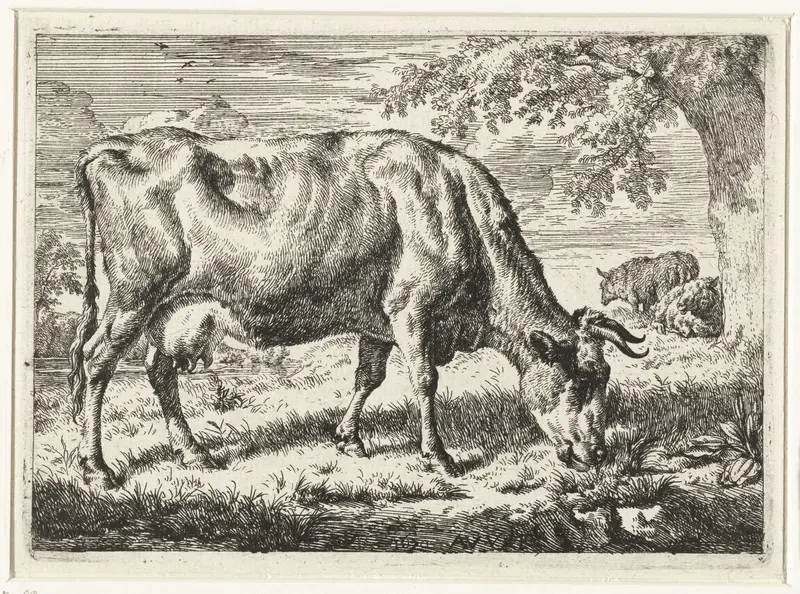
Grazende koe en twee schapen
Adriaen van de Velde
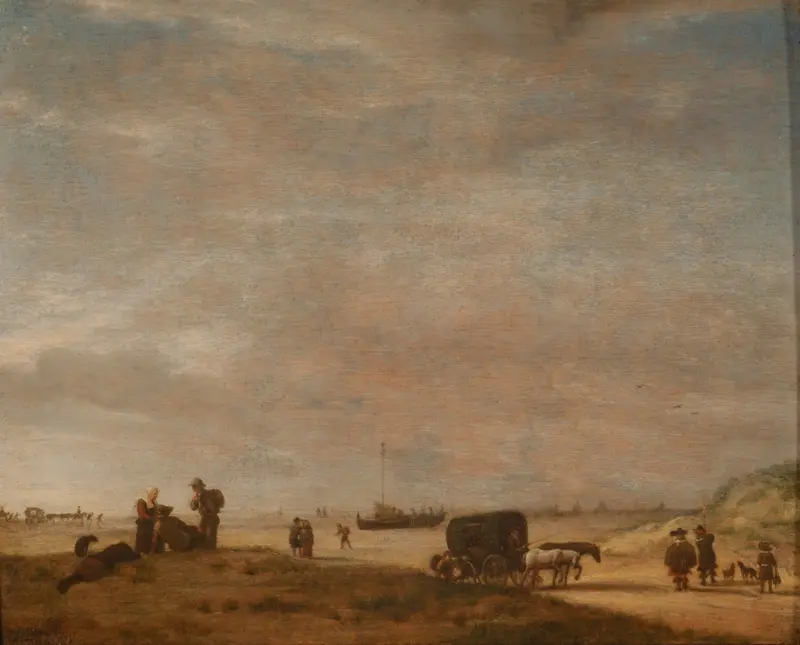
Scheveningen Beach
Adriaen van de Velde
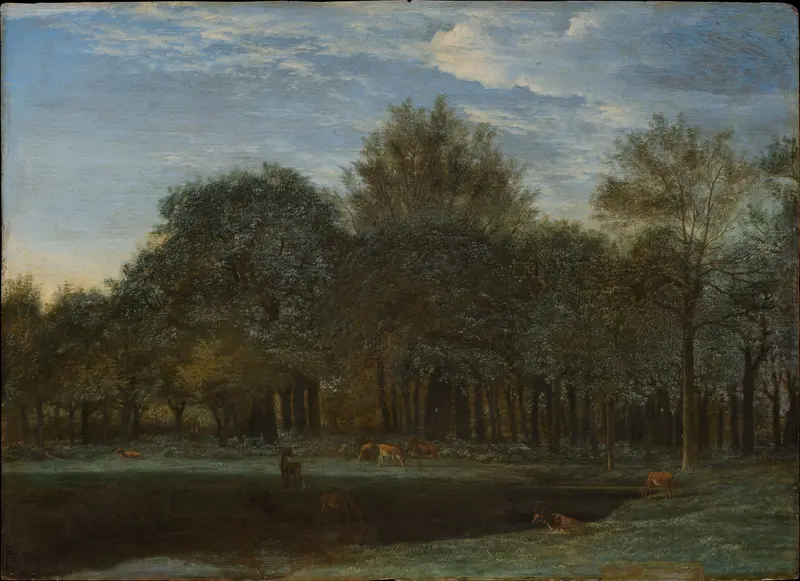
Forest Clearing with Grazing Deer
Adriaen van de Velde
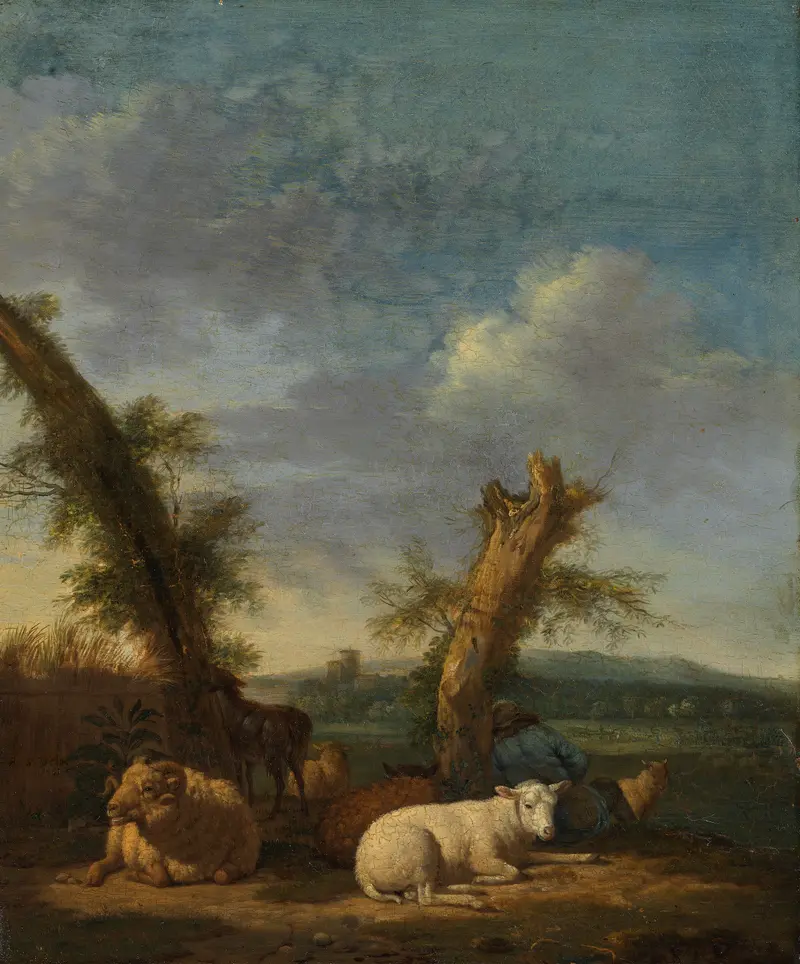
Landscape with Sheep and a Sleeping Shepherd
Adriaen van de Velde
More Landscape Art

The Starry Night
Vincent van Gogh

View of Delft
Johannes Vermeer

Water Lilies
Claude Monet

The Grand Canal, Venice, looking north-west from the Ca' Corner to the Ca' Contarini degli Scrigni, with the campanile of Santa Maria della Carità
Canaletto

Windsor Castle
Canaletto

The Grand Canal looking North-East from the Palazzo Dolfin-Manin to the Rialto Bridge
Canaletto