
A Gondola on the Grand Canal, Venice — History & Facts
What secret hides in the quiet of the canvas? Here, amidst the serene waterways of Venice, a world teeters on the edge of the surreal, where beauty and madness intertwine. Look to the left at the gondola, gently gliding through the shimmering reflections on the Grand Canal. Notice how the warm sunlight dances across the water, illuminating the rich blues and soft ochres that form the backdrop of the scene. The artist’s delicate brushwork captures the graceful curves of the architecture, inviting the viewer to breathe in the tranquil atmosphere while also teasing an undercurrent of unease in its precise detail. Delve deeper into the painting's subtleties—observe the figures within the gondola, their expressions blank yet laden with unspoken stories.
The juxtaposition of the idyllic landscape and the stillness of the passengers evokes a tension between tranquility and the madness of a bustling city just beyond the frame. Each stroke reveals layers of emotion, reminding us that even in beauty, solitude can breed a silent chaos. William Callow painted this piece in 1866, during a period of artistic exploration in his life. Living in London, he had recently returned from travels in Italy, where the enchanting scenery sparked his imagination.
The 19th century was a time when artists were beginning to shift away from traditional forms, propelling their work into realms that questioned perception and emotion, making this canvas a whisper of the changing tides in art history.
More Artworks by William Callow
Browse all →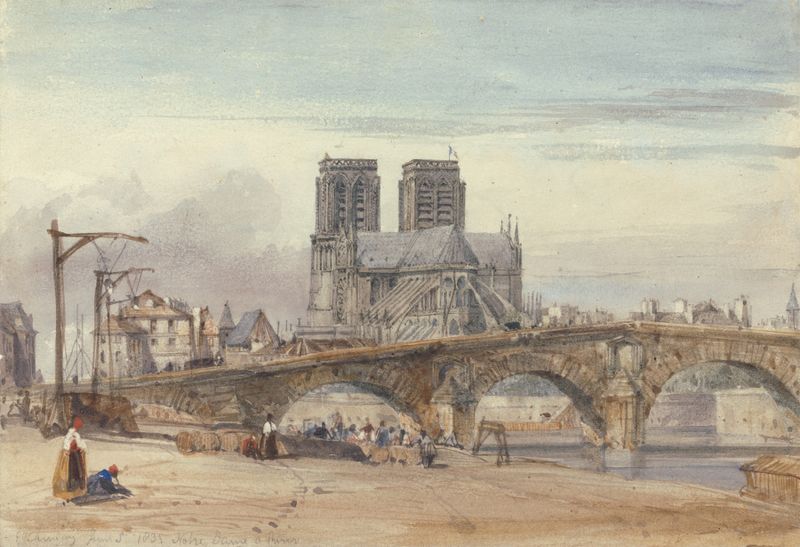
Notre Dame, Paris
William Callow
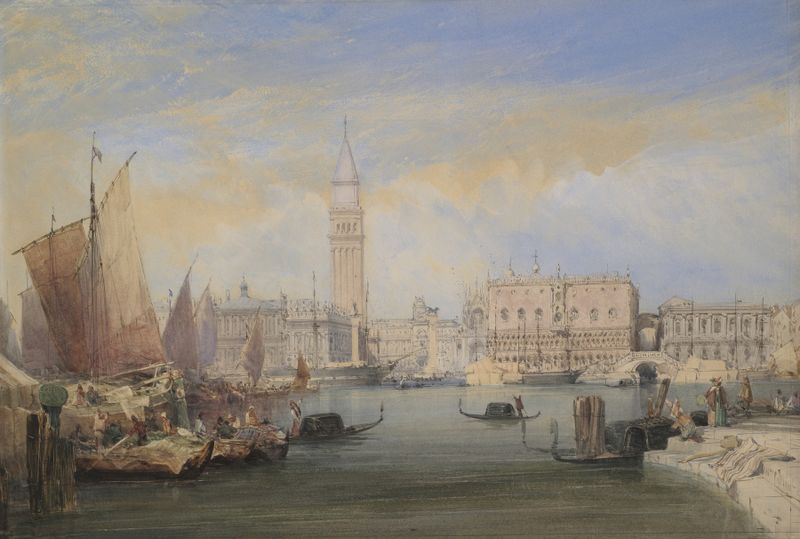
Venice from St. Giorgio
William Callow
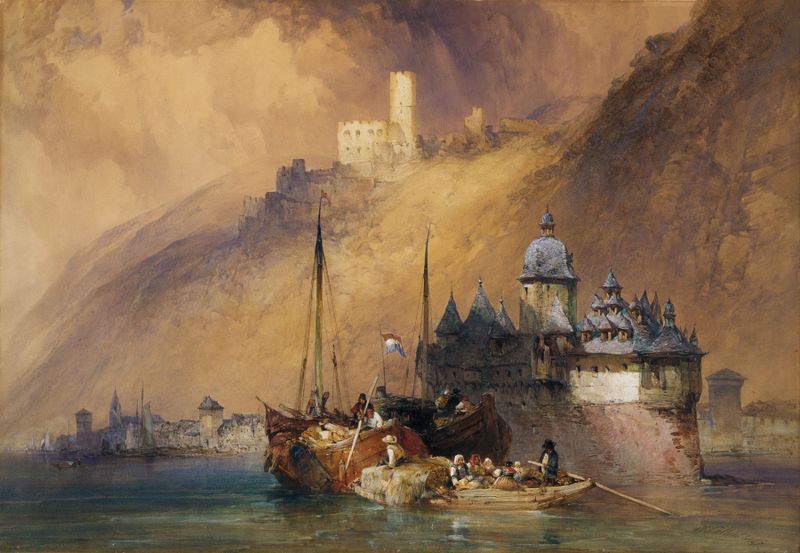
The Phalz Castle on the Rhine
William Callow

The Luxor, Paris, December 1833
William Callow

On the Wharfe, Bolton Abbey
William Callow

Caesar’s Tower, Warwick Castle
William Callow
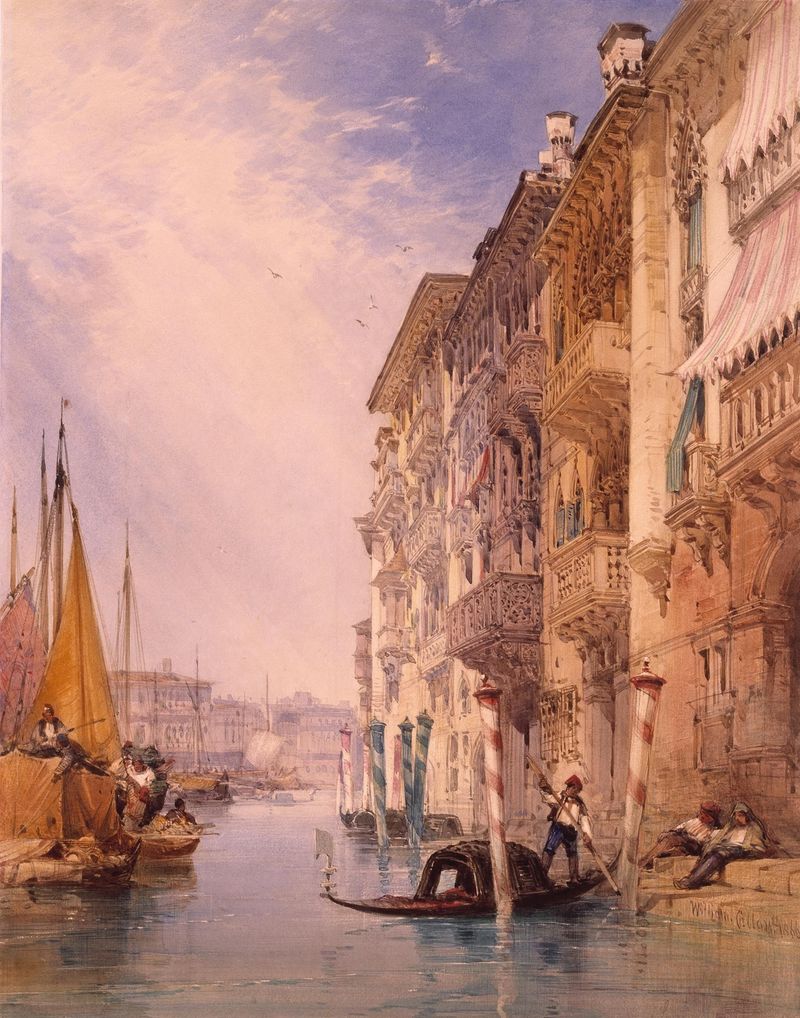
A Gondola on the Grand Canal, Venice
William Callow

Rheinfels and St. Goar
William Callow
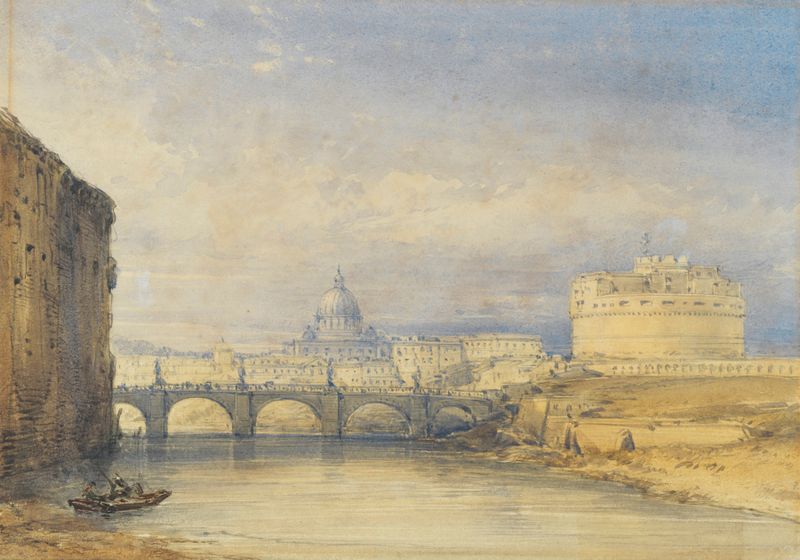
Castel Sant’Angelo, Rome
William Callow

Entering Harbour
William Callow





