
A Hurdy-Gurdy Player — History & Facts
A hush of anticipation hovers in the dim light as a weathered musician leans forward, his battered hurdy-gurdy poised to sing. All eyes in the rustic tavern are drawn to the small child at the center—her uncertain gaze and awkward stance betray both fascination and shyness. The painter, Adriaen van Ostade, chooses this moment of silent negotiation, capturing the tension between the promise of music and the everyday caution of rural life.
The light, carefully gathered around the child’s pale face and the musician’s expressive hands, directs the viewer’s attention to this quiet drama, while the shadowy onlookers recede into the background, their reactions a chorus of amusement and curiosity. Works like this, painted in 1653, belong to the world of the Dutch Golden Age, where scenes of peasant life were prized for their blend of humor, realism, and gentle social observation. Artists such as van Ostade made their name with these genre pictures, which were collected by prosperous townsfolk who saw in them both a mirror and a moral tale. The hurdy-gurdy player, a familiar figure in Dutch and Flemish art, often stood for the outsider or the bringer of fleeting joy; here, he is neither mocked nor pitied, but woven into the fabric of communal life.
Now housed in the Deutsches Historisches Museum, this painting invites us to linger over the subtle gestures and shifting alliances of a vanished village world—one where even a single note could change the mood of the day.
More Artworks by Adriaen van Ostade

Dans in de herberg
Adriaen van Ostade
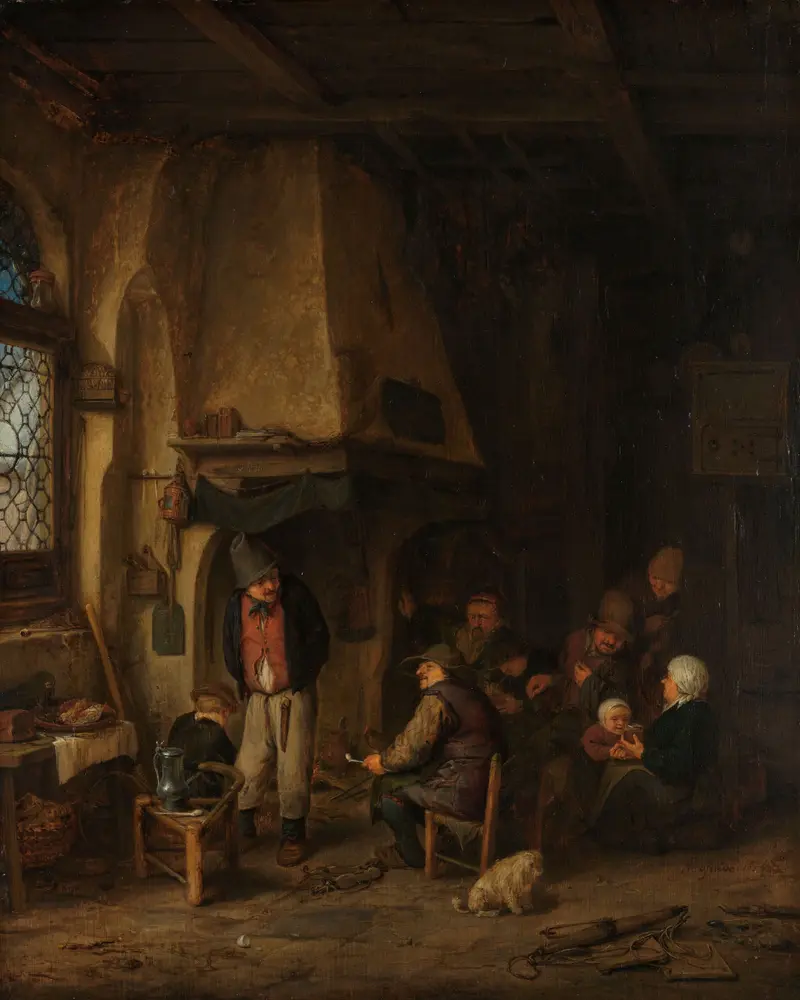
‘The Skaters’: Peasants in an Interior
Adriaen van Ostade
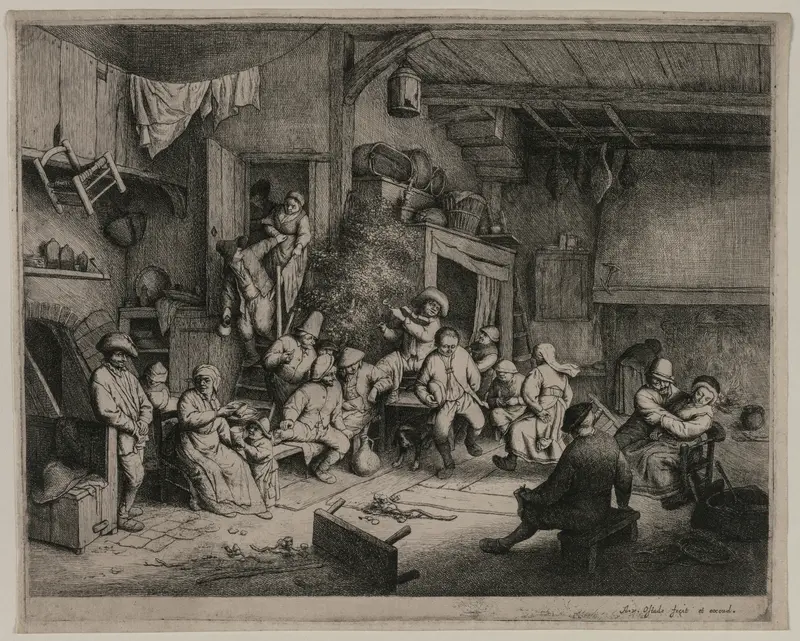
Dance at the Inn
Adriaen van Ostade
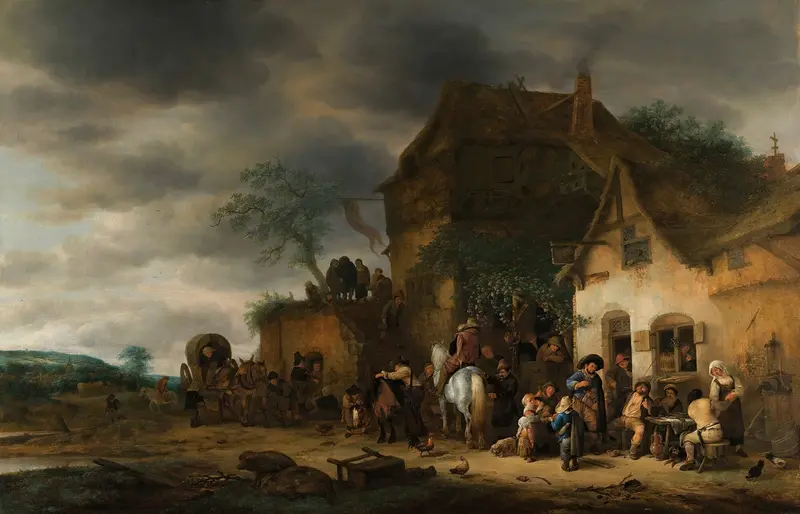
Travellers Halted At A Country Inn
Adriaen van Ostade
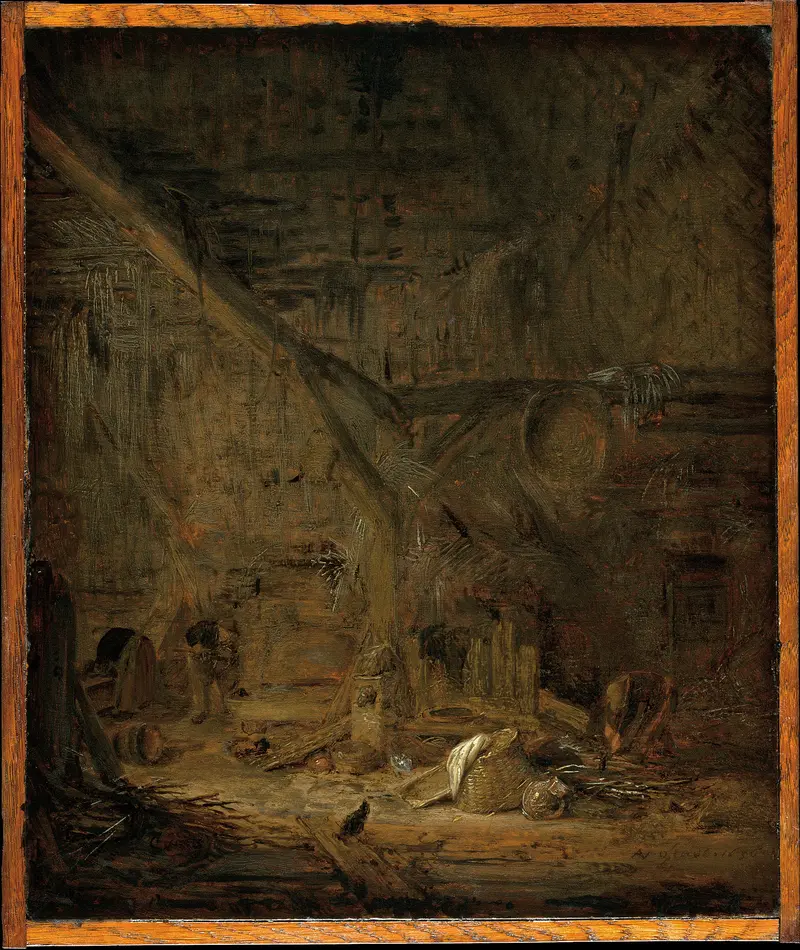
Interior of a Barn
Adriaen van Ostade
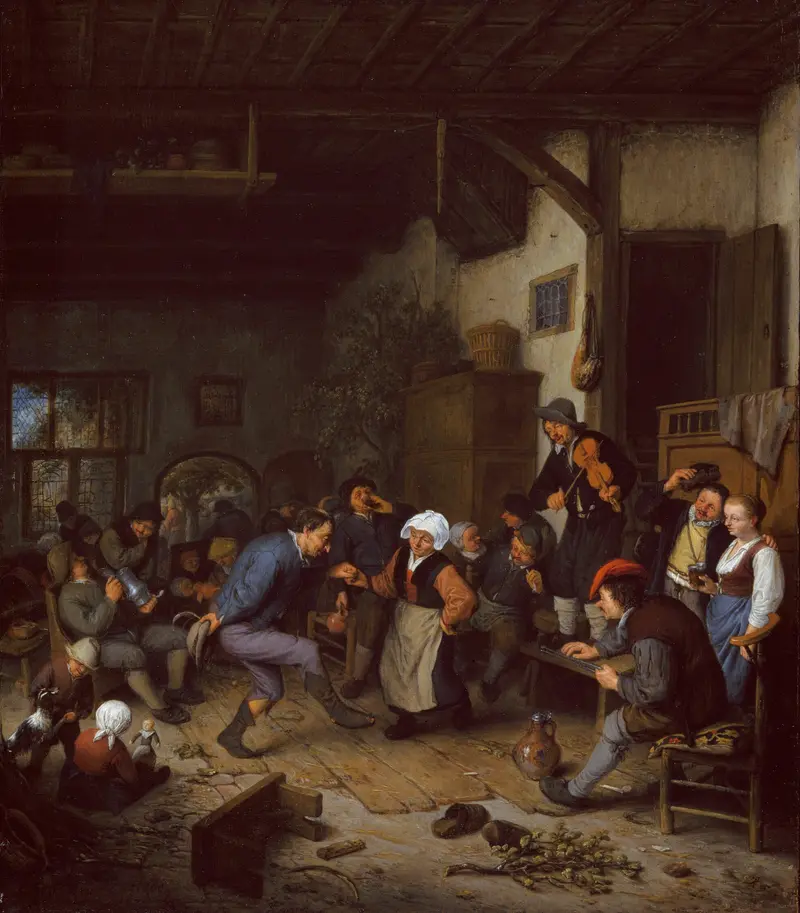
Merrymakers in an Inn
Adriaen van Ostade
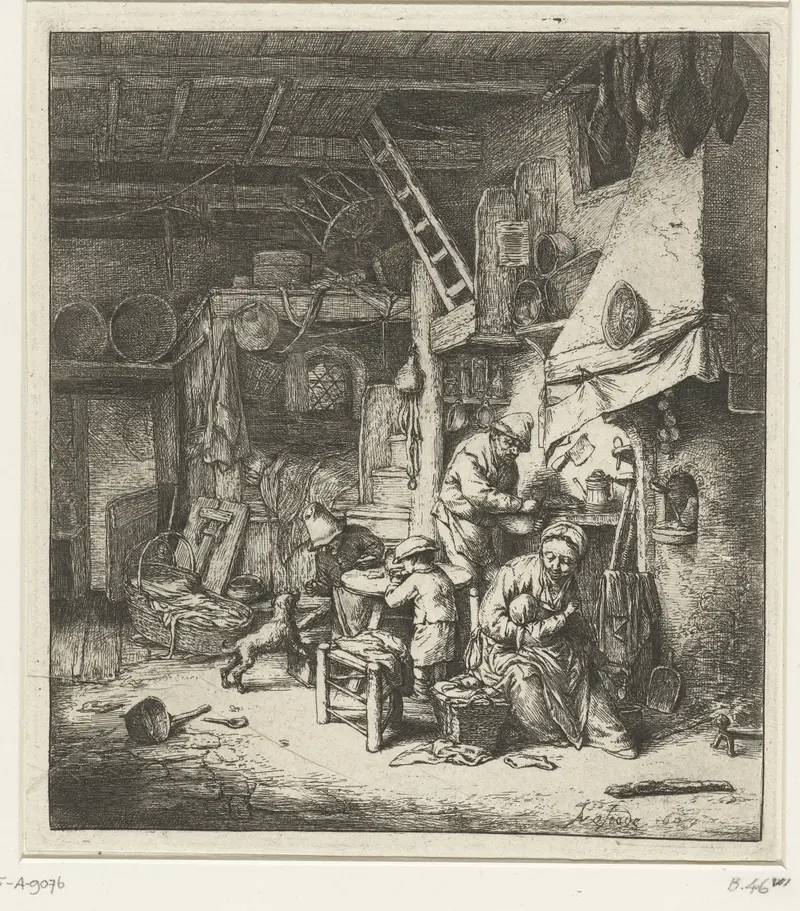
Boerengezin in interieur
Adriaen van Ostade
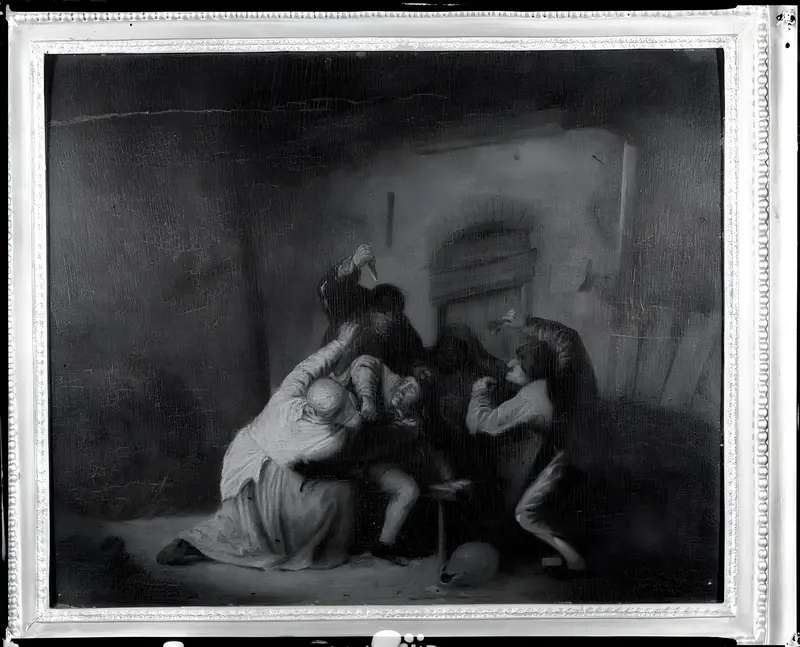
Peasants Brawling in a Tavern
Adriaen van Ostade
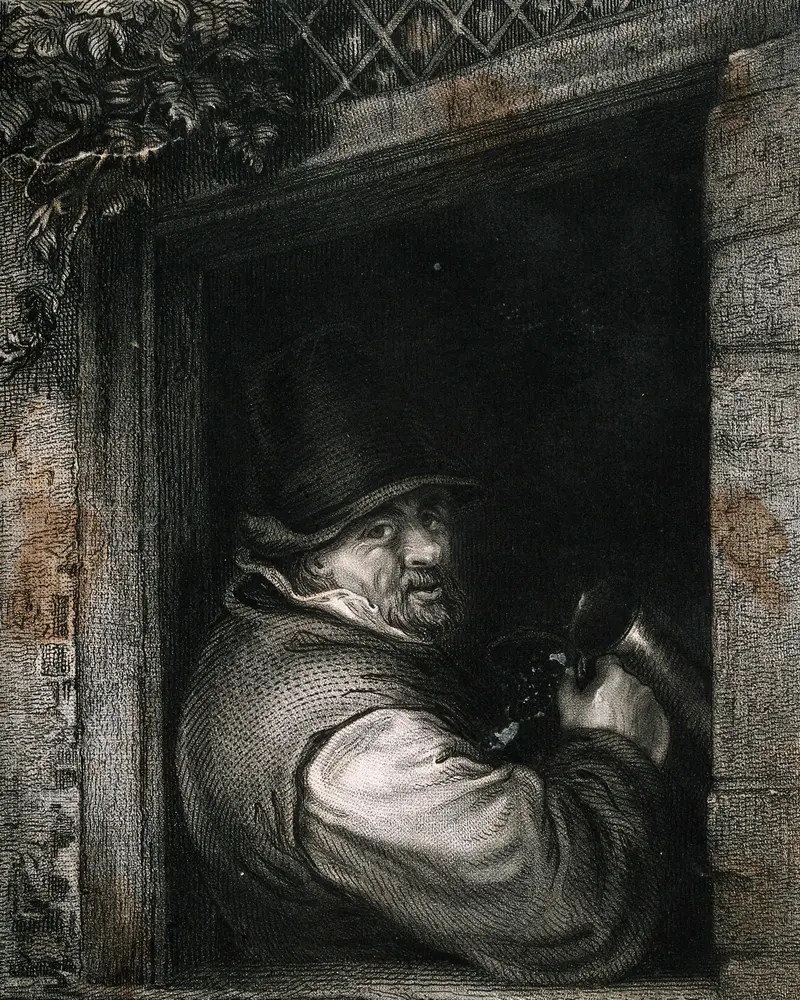
Man with a Tankard at a Window
Adriaen van Ostade
Dans in de herberg
Adriaen van Ostade
More Genre Scene Art

Banquet of the Officers of the St George Civic Guard
Frans Hals

Rembrandt and Saskia in the Scene of the Prodigal Son
Rembrandt van Rijn

Bal du moulin de la Galette
Pierre-Auguste Renoir

Quadrille at the Moulin Rouge
Henri de Toulouse-Lautrec

A Burial at Ornans
Gustave Courbet

When Will You Marry?
Paul Gauguin