
A kitchen interior with a mother and child — History & Facts
A single shaft of light falls across the cluttered floor, guiding the eye from the battered copper pot and cabbage leaves to the heart of the scene: a mother gently offering a spoonful to her child in the shadowy recess of the kitchen. The room is alive with the evidence of daily life—an embroidered cushion on a worn chair, a broom abandoned mid-sweep, a plate with scraps left behind. Every object is rendered with the same care as the figures, so that the humblest detail—a battered jug, a dangling lantern—seems to carry its own quiet dignity.
The composition draws the viewer into the intimacy of the moment, as if invited to pause and witness a private ritual of care amid the disorder. Works like this by Adriaen van Ostade, painted in 1650, belong to a world where the kitchen was both the engine and the stage of ordinary existence. In the Dutch Republic of the seventeenth century, scenes of domestic interiors—especially those showing peasants or townsfolk—were prized for their blend of realism and moral suggestion. Collectors sought such paintings not only for their technical skill, but for the glimpses they offered into the virtues and vices of everyday life.
While little is recorded about the specific journey of this painting before its appearance in the Christie’s collection, its subject and date place it firmly within the tradition that made van Ostade a leading name in genre painting. The picture invites us to linger, to notice, and to recognize the quiet drama in the most familiar acts.
More Artworks by Adriaen van Ostade

Dans in de herberg
Adriaen van Ostade
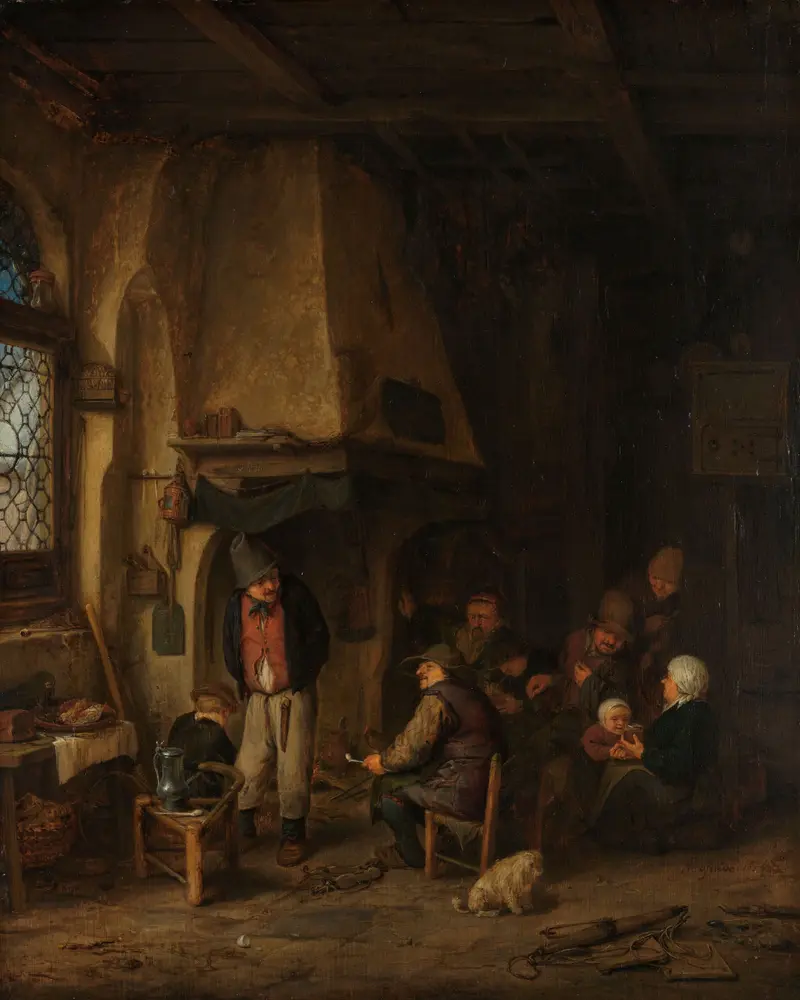
‘The Skaters’: Peasants in an Interior
Adriaen van Ostade
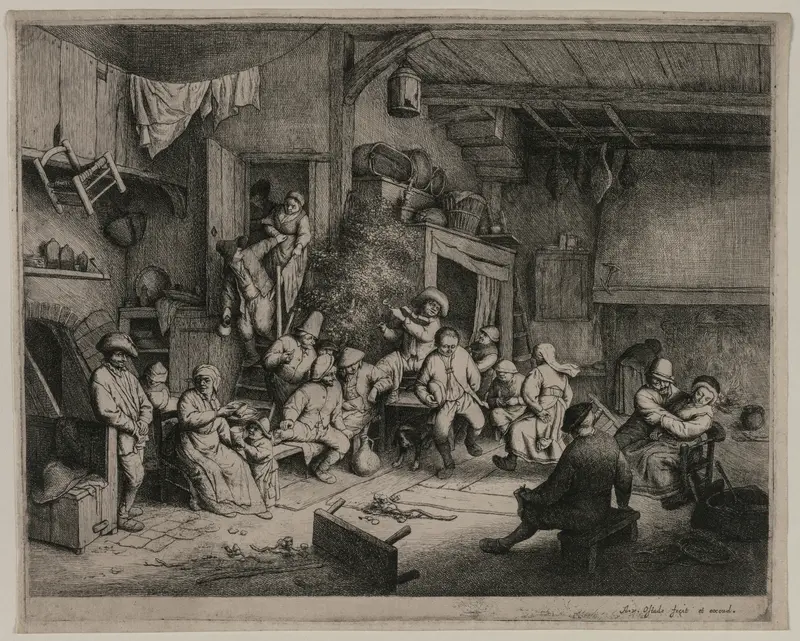
Dance at the Inn
Adriaen van Ostade
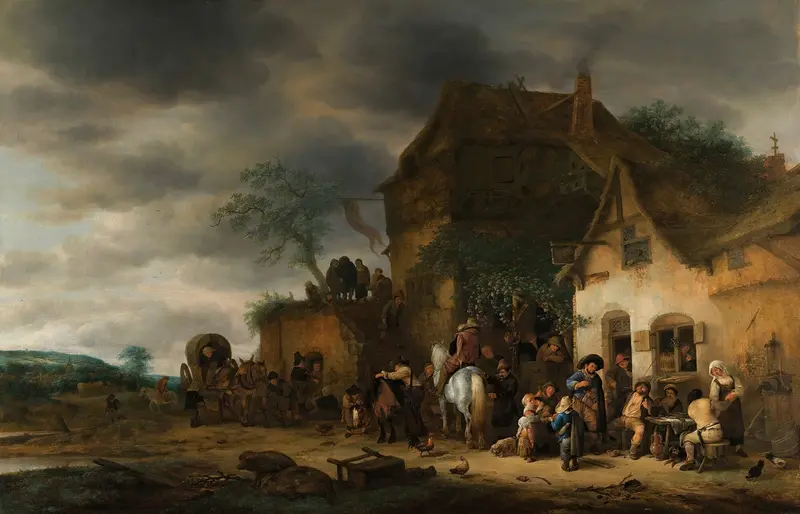
Travellers Halted At A Country Inn
Adriaen van Ostade
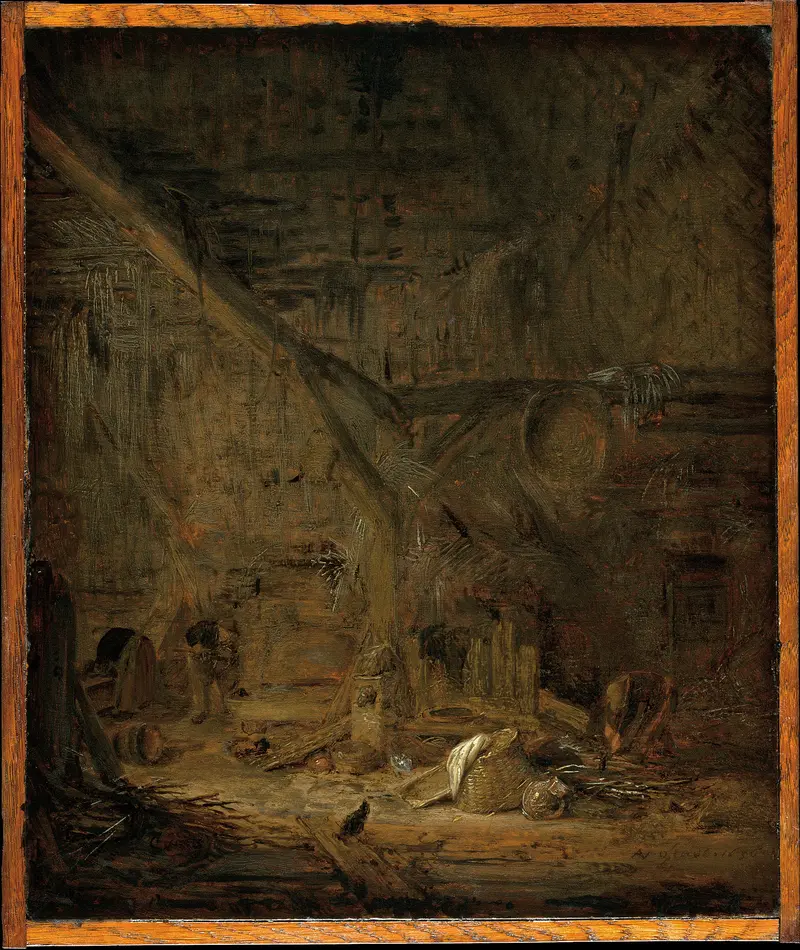
Interior of a Barn
Adriaen van Ostade
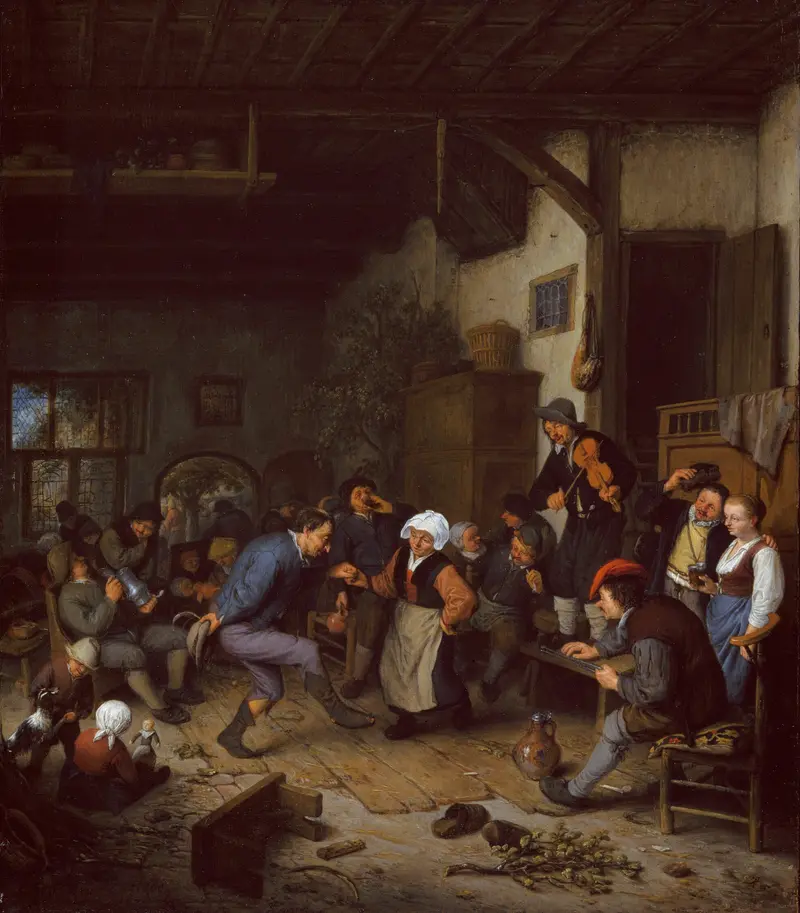
Merrymakers in an Inn
Adriaen van Ostade
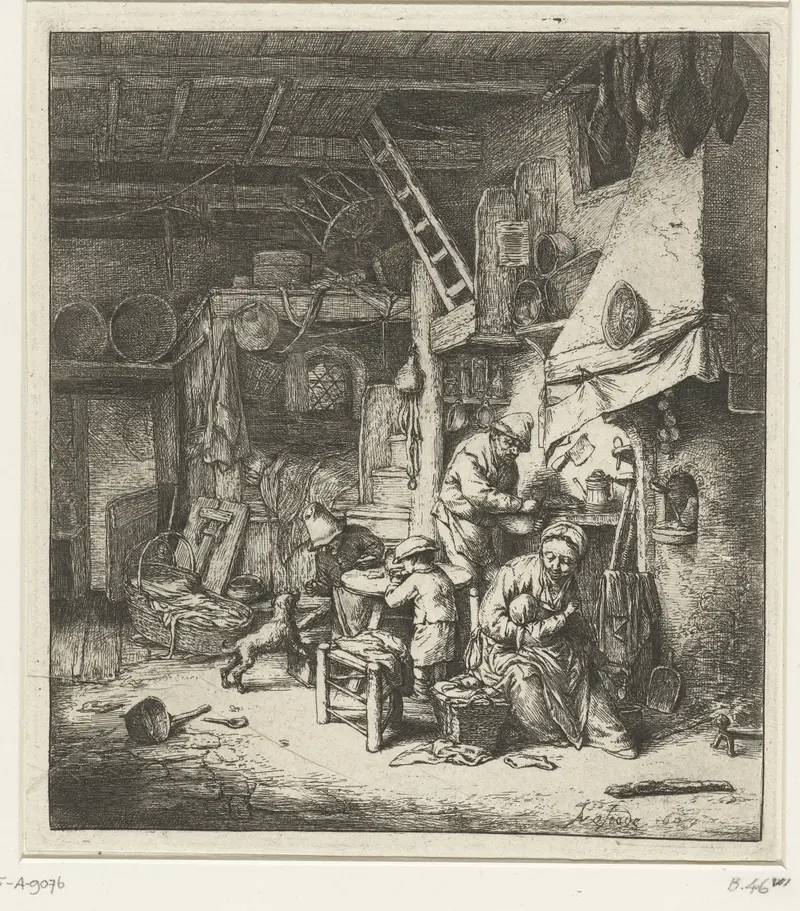
Boerengezin in interieur
Adriaen van Ostade
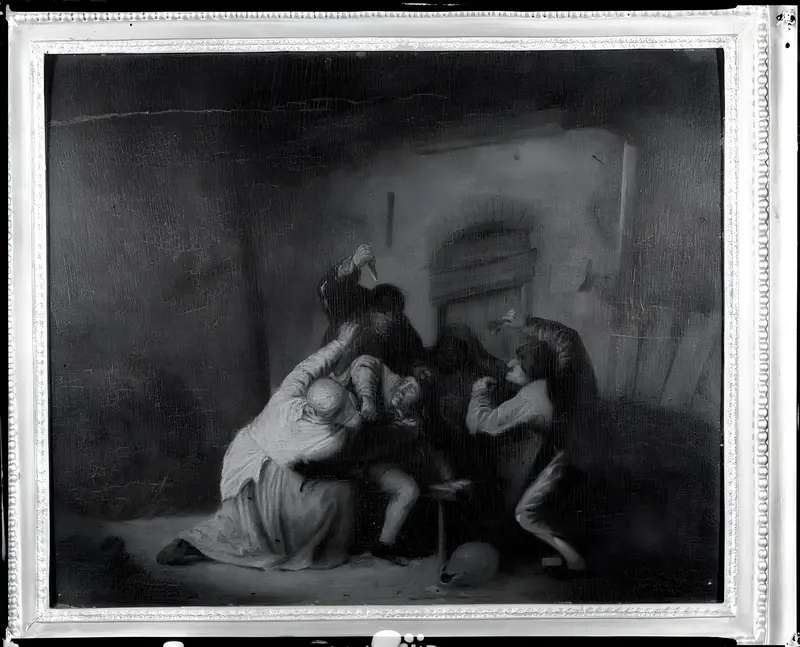
Peasants Brawling in a Tavern
Adriaen van Ostade
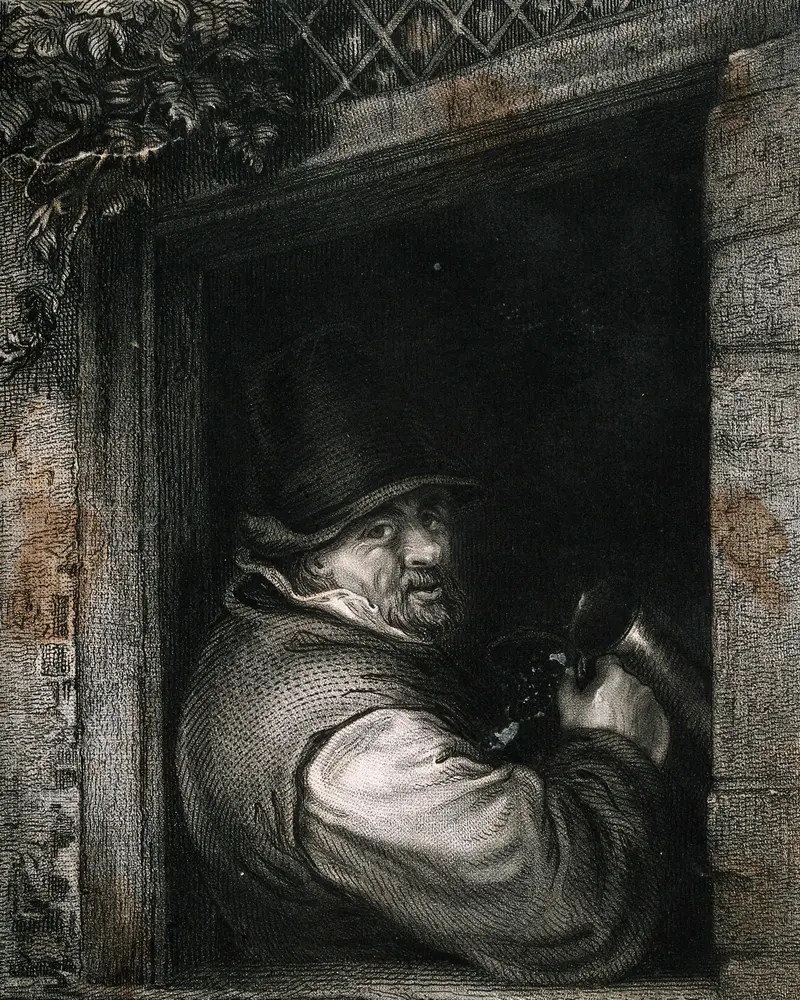
Man with a Tankard at a Window
Adriaen van Ostade
Dans in de herberg
Adriaen van Ostade
More Genre Scene Art

Banquet of the Officers of the St George Civic Guard
Frans Hals

Rembrandt and Saskia in the Scene of the Prodigal Son
Rembrandt van Rijn

Bal du moulin de la Galette
Pierre-Auguste Renoir

Quadrille at the Moulin Rouge
Henri de Toulouse-Lautrec

A Burial at Ornans
Gustave Courbet

When Will You Marry?
Paul Gauguin