
A Lady and Two Gentlemen — History & Facts
A Lady and Two Gentlemen features a lady in a light dress standing between two gentlemen in an elegant garden. The scene is filled with greenery, flowers, and soft colors that create a cheerful atmosphere. The lady's dress is adorned with delicate details, while the gentlemen are dressed in fashionable attire of the time.
The overall composition invites viewers to imagine a moment of social interaction in a beautiful setting. Notice the intricate patterns on the lady's dress, which reflect the Rococo style's emphasis on ornamentation. The gentlemen's postures and expressions suggest a playful conversation, adding a sense of liveliness to the scene. The lush garden background enhances the feeling of leisure and enjoyment.
You can also see the soft brushwork that Watteau is known for, giving the painting a light and airy quality. Jean-Antoine Watteau was a prominent French painter known for his contributions to the Rococo movement, which celebrated beauty and elegance. His works often depicted scenes of leisure and romance, capturing the spirit of 18th-century French society. Watteau's unique style combined realism with a dreamlike quality, making his paintings stand out.
An interesting fact is that he is credited with developing the genre of fête galante, which portrays the elegant outdoor entertainment of the aristocracy.
More Artworks by Jean-Antoine Watteau
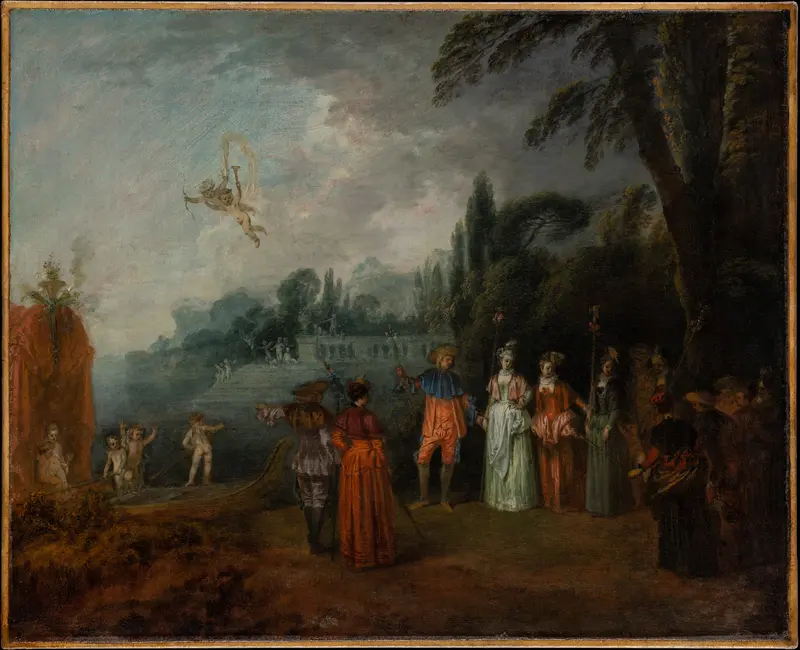
The Embarkation for Cythera
Jean-Antoine Watteau
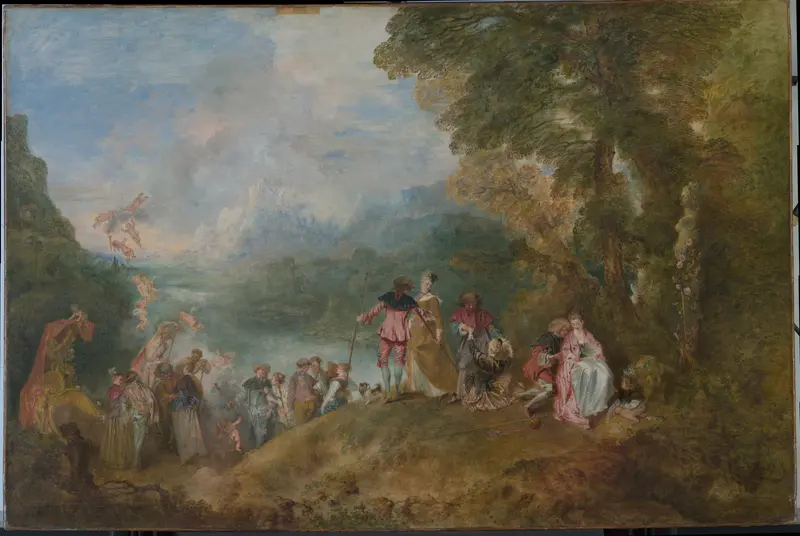
L’Embarquement pour Cythere
Jean-Antoine Watteau
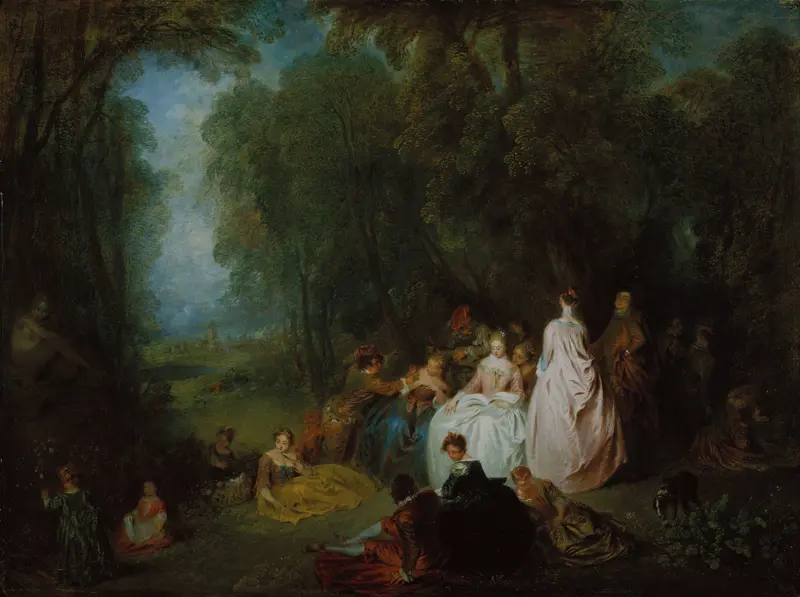
Fête champêtre (Pastoral Gathering)
Jean-Antoine Watteau
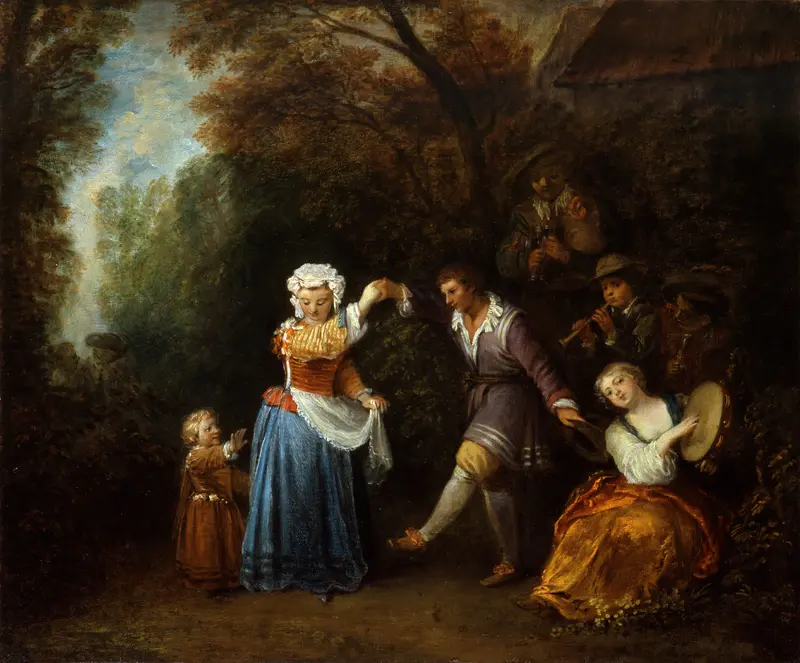
The Country Dance
Jean-Antoine Watteau

The French Comedians
Jean-Antoine Watteau
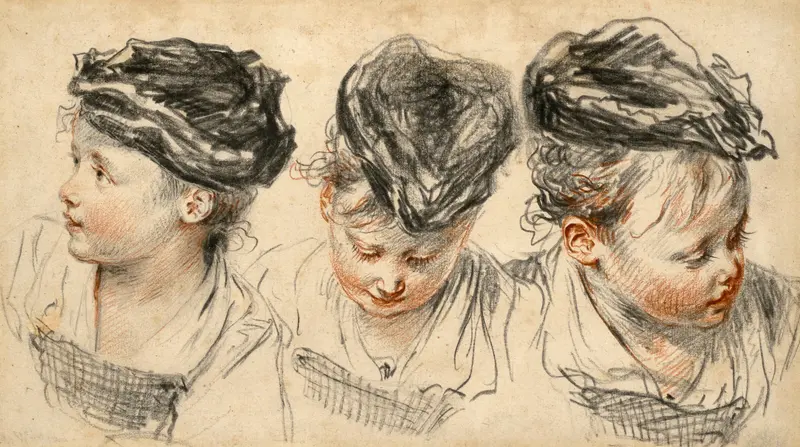
Three head studies of a girl wearing a hat
Jean-Antoine Watteau
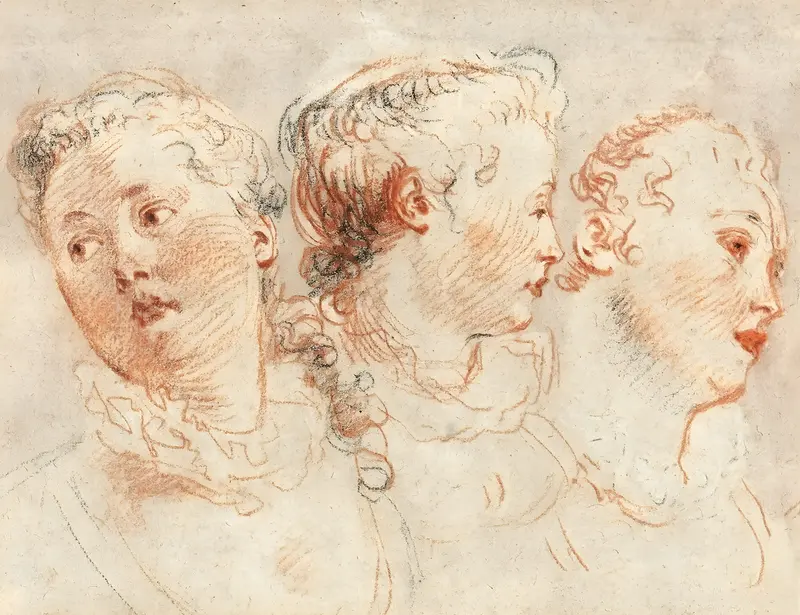
Three Studies Of The Head Of A Woman
Jean-Antoine Watteau

Portret van een dame met harlekijn
Jean-Antoine Watteau
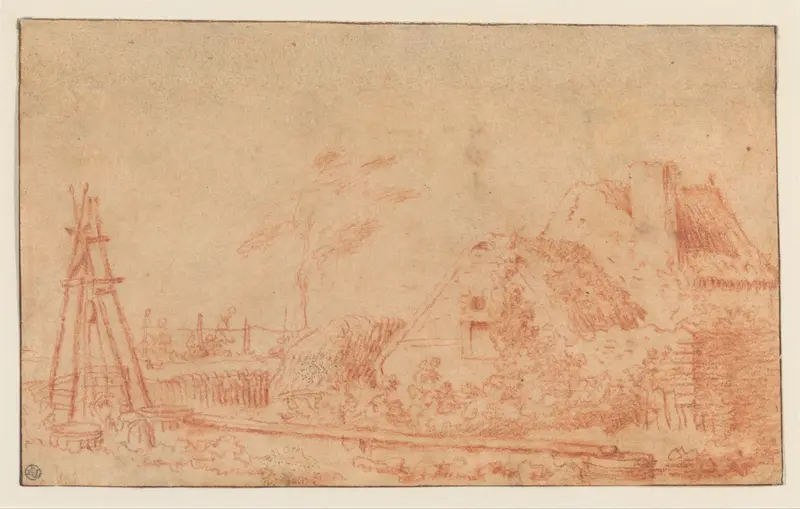
Landscape with a Cottage and Well
Jean-Antoine Watteau
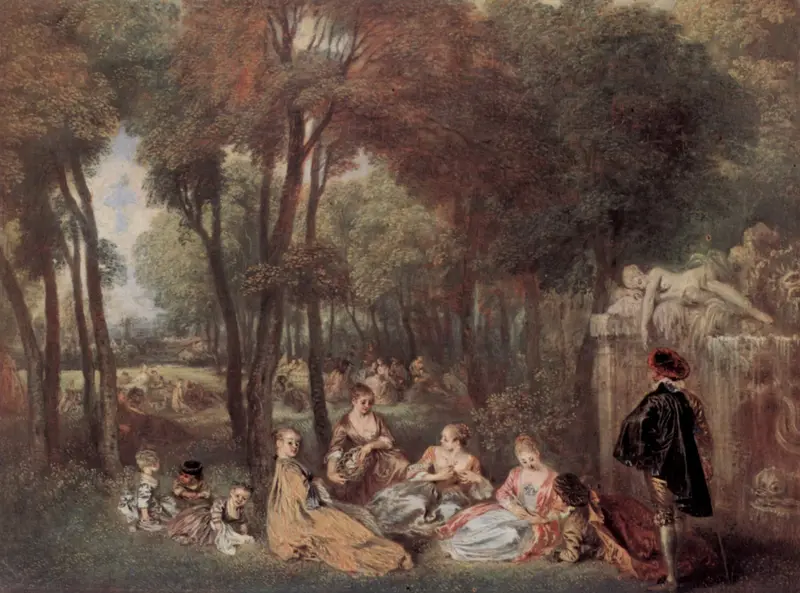
Les Champs Elisées
Jean-Antoine Watteau
More Genre Scene Art

Banquet of the Officers of the St George Civic Guard
Frans Hals

Rembrandt and Saskia in the Scene of the Prodigal Son
Rembrandt van Rijn

Bal du moulin de la Galette
Pierre-Auguste Renoir

Quadrille at the Moulin Rouge
Henri de Toulouse-Lautrec

A Burial at Ornans
Gustave Courbet

When Will You Marry?
Paul Gauguin