
A Landscape With Shepherds And Shepherdesses Among Ancient Ruins, With The Statue Of Castor And Pollux And The Pantheon Beyond — History & Facts
When did color learn to lie? In a world where art plays with reality, every hue captures not just a moment, but the essence of rebirth and the passage of time. Look to the foreground, where delicate figures of shepherds and shepherdesses roam through the verdant landscape, their leisurely poses contrasted against the solemnity of ancient ruins. The soft pastels of their garments blend seamlessly with the lush greenery surrounding them, inviting the viewer's eye to explore the sacred dialogue between nature and human existence. Notice how the light dances across the remnants of the grand structures, illuminating the statue of Castor and Pollux, standing as silent witnesses in this pastoral reverie. As you delve deeper, the interplay between the vibrant life of the shepherds and the crumbling stones of history reveals a poignant commentary on mortality and renewal.
The ancient ruins symbolize both loss and continuity, while the playful figures embody the vitality of the present. This dichotomy between permanence and transience is echoed in the warm tones of the sky, suggesting a fleeting moment of harmony amidst the echoes of the past. Hubert Robert painted this work in a period marked by a fascination with classical antiquity and a desire to reconcile the old with the new. Active in Paris during the late 18th century, he was deeply engaged with the artistic movements of his time, often reflecting on the relationship between nature and architecture.
His landscapes served not only as visual delights but as philosophical inquiries into the cycles of life, art, and the enduring spirit of beauty.
More Artworks by Hubert Robert
Browse all →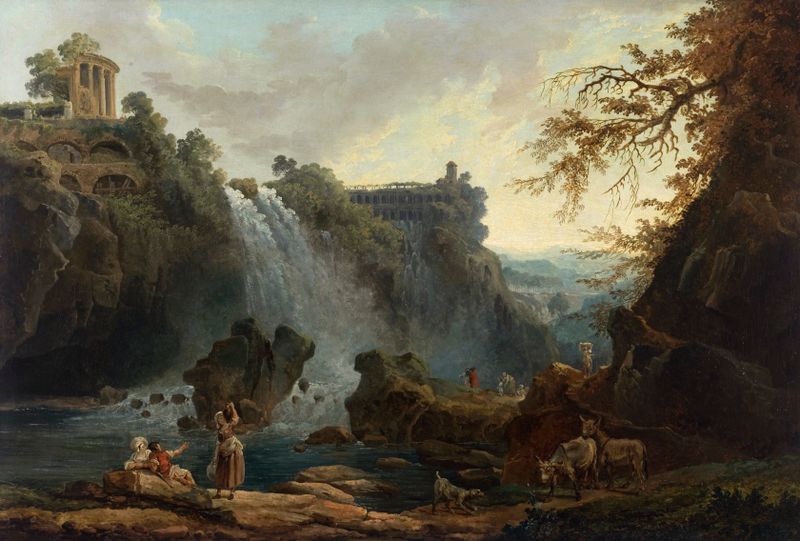
Les Cascatelles de Tivoli
Hubert Robert
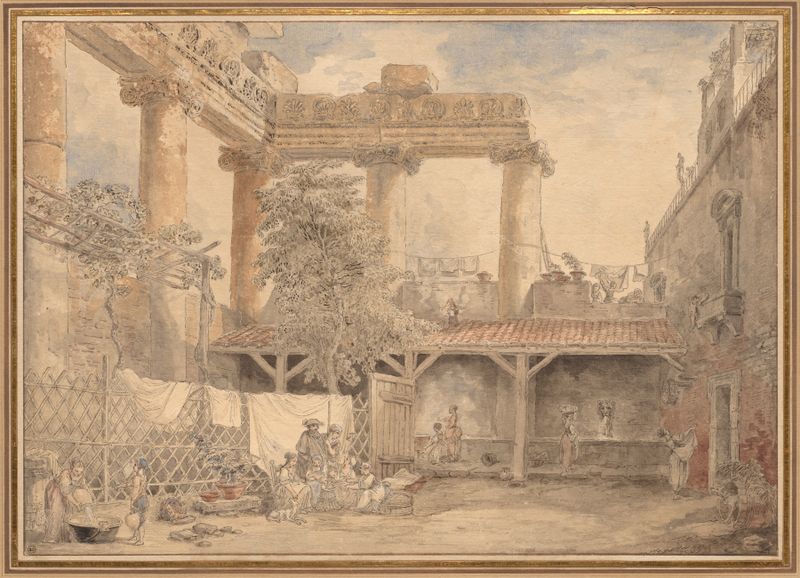
Roman Ruins, Villa Pamfili
Hubert Robert

The Rustic Bridge, Château de Méréville, France
Hubert Robert

The Portico of a Country Mansion
Hubert Robert

Architectural Capriccio
Hubert Robert

The Obelisk
Hubert Robert
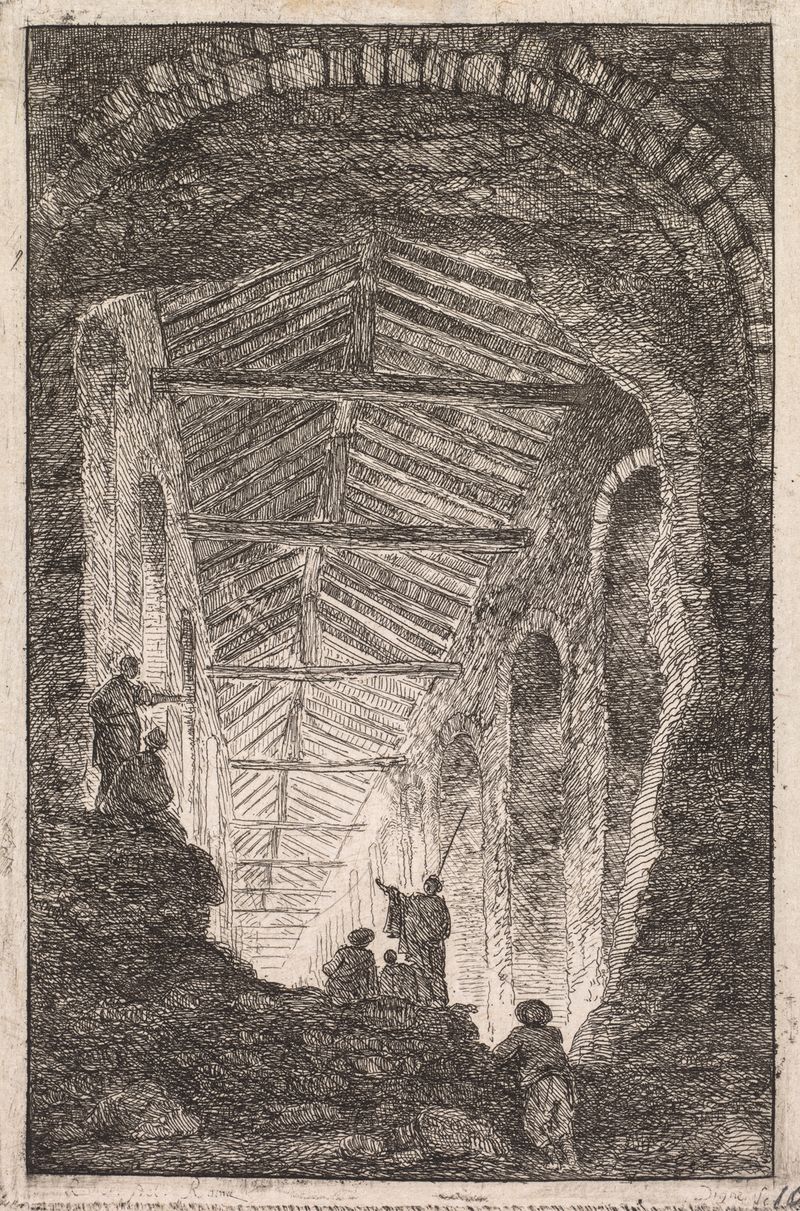
The Antique Gallery
Hubert Robert

L’incendie de l’Opéra, vu des jardins du Palais-Royal, le 8 juin 1781
Hubert Robert
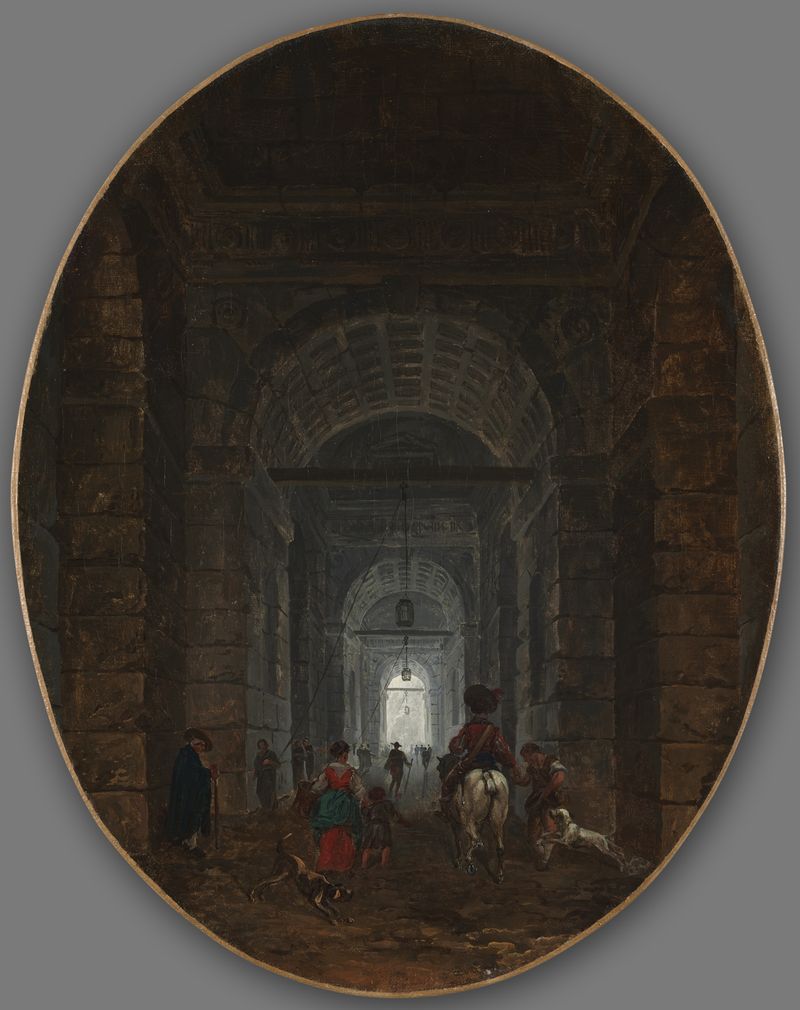
The Grotto of Posillipo
Hubert Robert

Architectural Capriccio with ruins of the Temple of Saturn and the Colosseum in the background
Hubert Robert





