
A male Wheatear — History & Facts
What first grips the eye in A male Wheatear by Archibald Thorburn is the bird’s alert poise, caught mid-moment on a tufted rise, its sharp gaze fixed just beyond the frame. The artist’s hand lingers on the subtle gradations of grey, ochre, and white plumage, each feather rendered with a delicacy that suggests both fragility and resilience. The wheatear’s black eye-stripe slices through its face like a mask, heightening the sense of watchfulness, while the pale, almost luminous background isolates the bird, making its presence all the more immediate.
Light falls softly, picking out the bird’s breast and the curve of its back, guiding the viewer’s attention from the fine beak to the poised tail, and finally to the wiry legs gripping the earth. The scene is quiet, yet charged with the tension of a creature always ready to take flight. This painting belongs to the world of 19th-century British impressionist art, a period when artists like Thorburn turned their gaze to nature with a blend of scientific curiosity and painterly freedom. In Victorian and Edwardian Britain, such works were cherished by collectors and naturalists alike, often commissioned to document native wildlife or to bring the outdoors into drawing rooms and studies.
The Bonhams gallery, where this work now resides, continues that tradition of appreciation. While little is recorded about this specific painting’s journey, its careful observation and lively brushwork speak to a time when art and natural history were deeply entwined. Let your eyes linger on the wheatear’s stance—every detail is an invitation to imagine the wild spaces just beyond the paper’s edge.
More Artworks by Archibald Thorburn

The Watchful Hinds
Archibald Thorburn
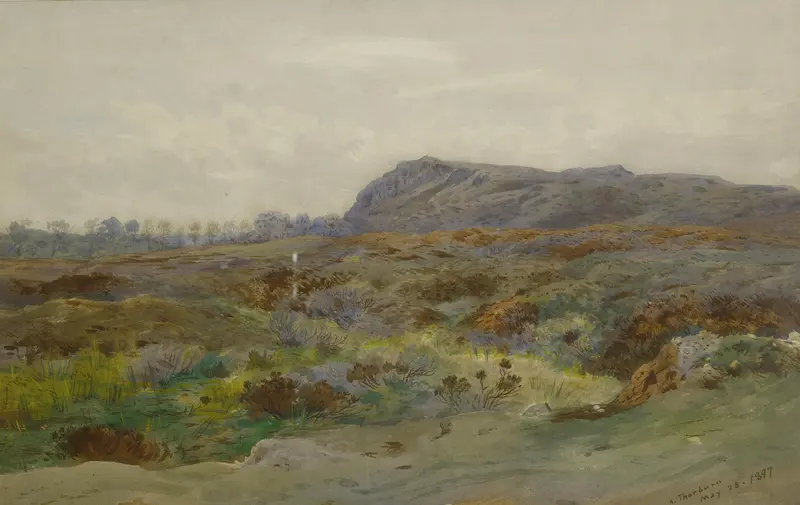
Moorland Landscape
Archibald Thorburn
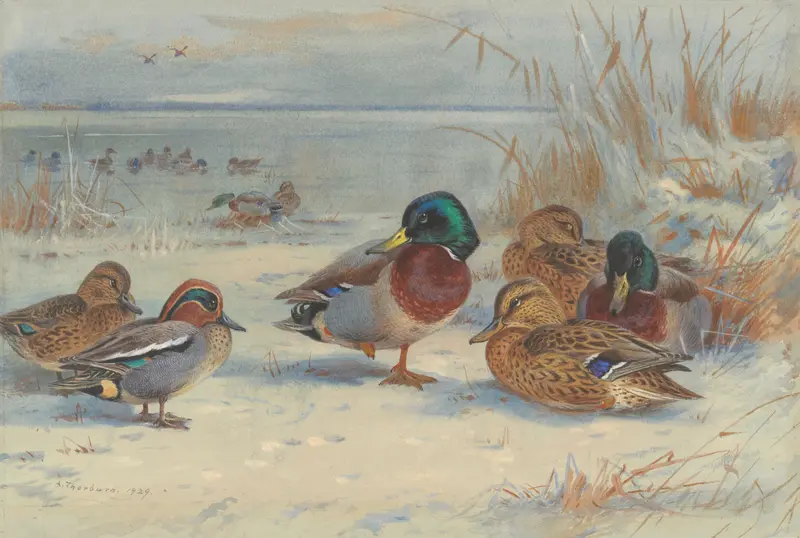
Mallard and teal in the snow
Archibald Thorburn
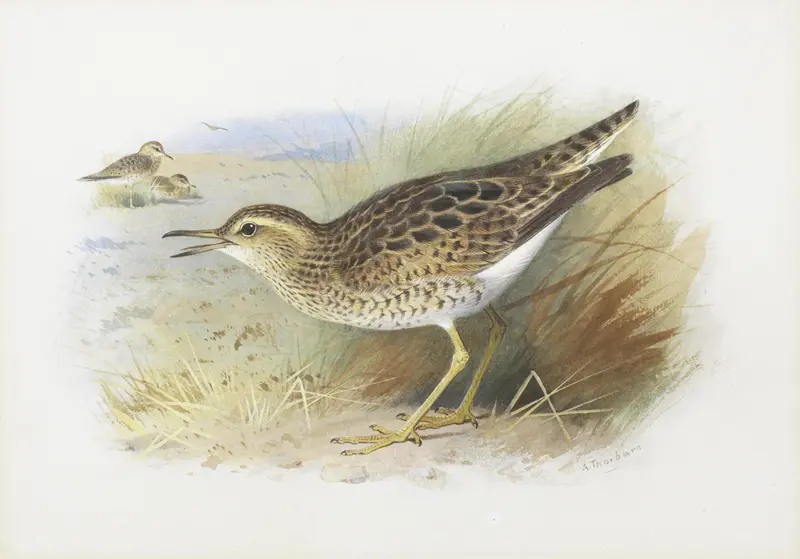
Bartram's Plover
Archibald Thorburn
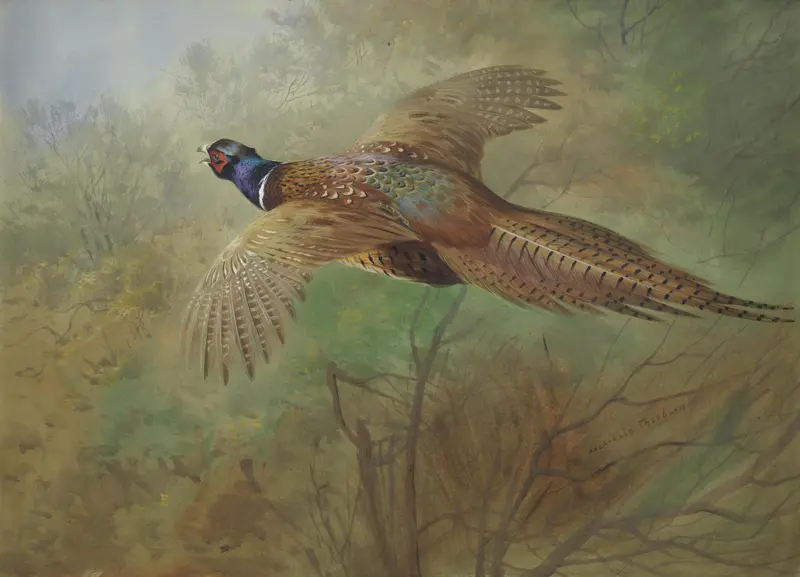
Pheasant in flight
Archibald Thorburn
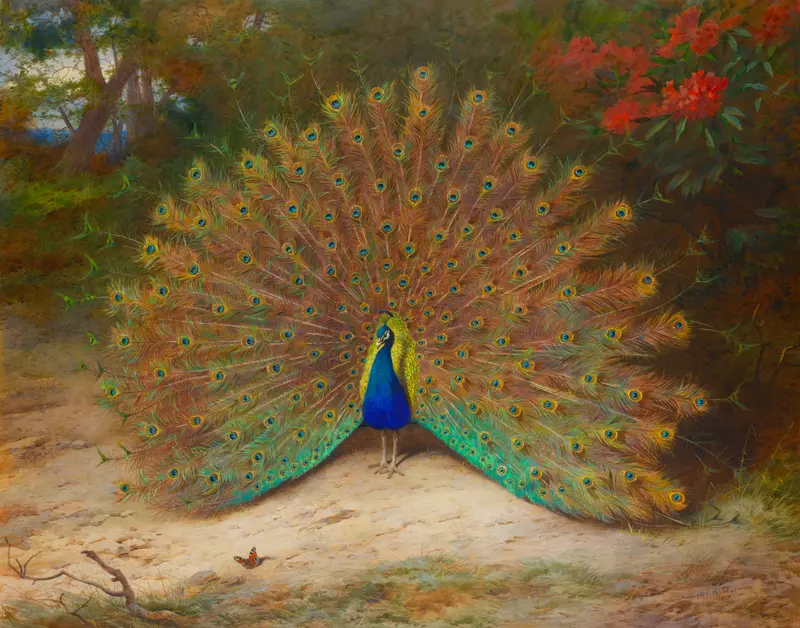
Peacock and Peacock Butterfly
Archibald Thorburn
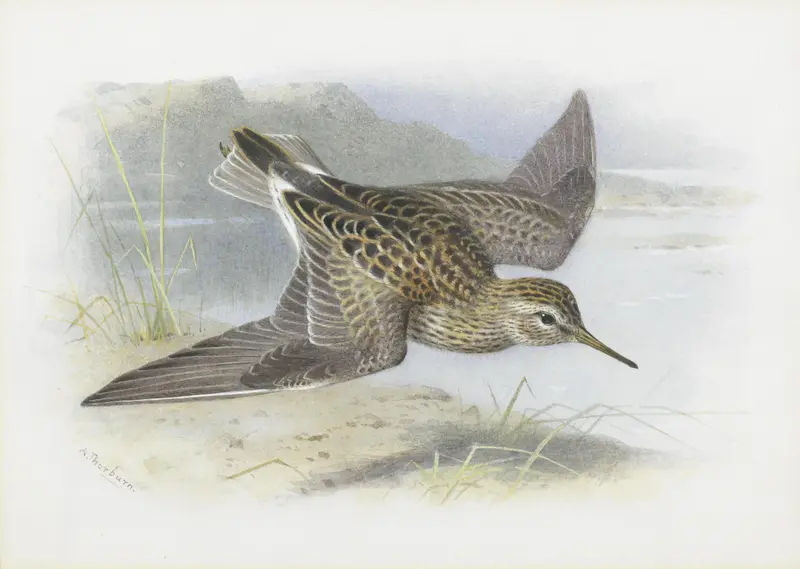
Pectoral Sandpiper
Archibald Thorburn
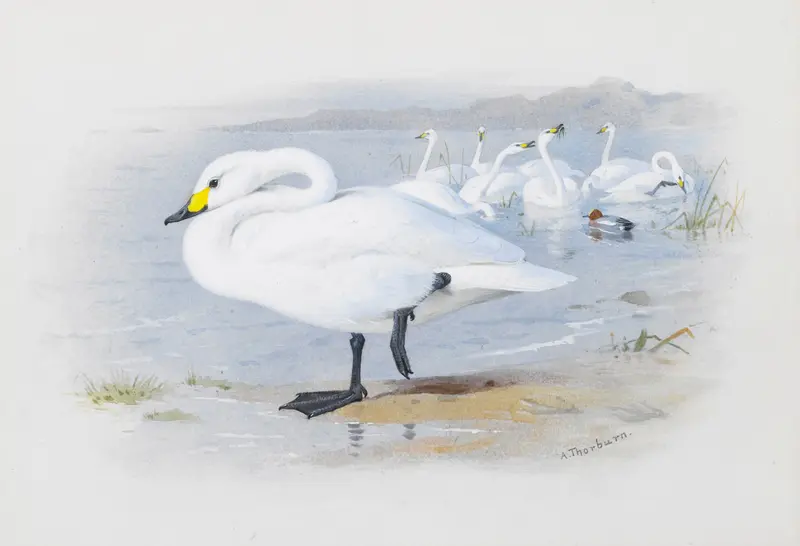
Bewick's swan.
Archibald Thorburn
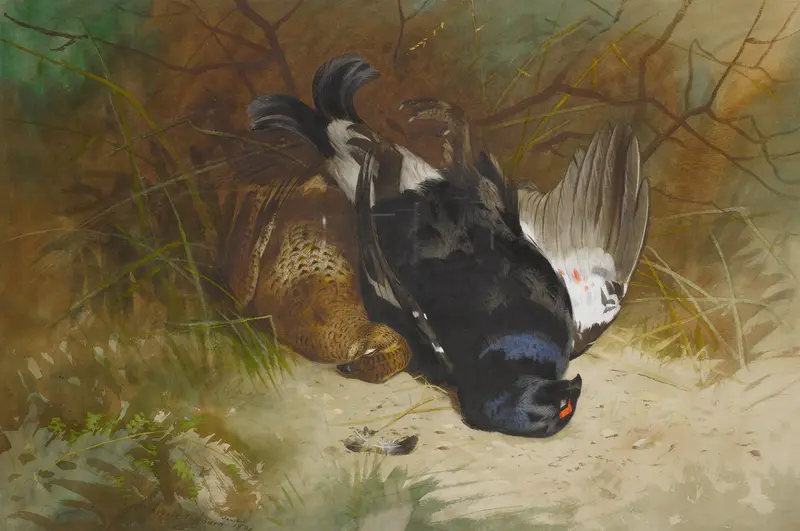
Still life of a pair of Blackgame.
Archibald Thorburn
Blackgame
Archibald Thorburn





