
A Man Leaning on a Parapet — History & Facts
When A Man Leaning on a Parapet was first shown in 1881, it marked one of the earliest public glimpses of Georges Seurat’s developing fascination with the science of seeing. This small, enigmatic work predates his famed pointillist canvases, yet already hints at the careful observation and quiet intensity that would define his later career. Scholars have noted the painting’s unusual intimacy; unlike Seurat’s later scenes of bustling parks, here the viewer is drawn into a private, almost meditative moment.
The sitter’s identity remains a mystery, and the painting’s medium—whether oil, gouache, or another—has not been definitively identified, adding to its air of quiet intrigue. The man in the painting leans forward, his elbows resting on a low wall or parapet, gazing out with an expression that is both thoughtful and distant. The background is simple, directing all attention to the figure’s pose and the play of light across his face and hands. Seurat’s brushwork is more fluid and naturalistic than in his later, rigorously structured compositions, but there is already a sense of studied calm.
The parapet serves as both a literal and psychological barrier, separating the man from the viewer and suggesting a moment of introspection. Compared to Édouard Manet’s similarly composed The Balcony, Seurat’s figure is more withdrawn, less a participant in society than an observer lost in his own thoughts. As an object, A Man Leaning on a Parapet stands at the threshold of Seurat’s artistic journey, created while he was still a student at the École des Beaux-Arts in Paris. Its early date and uncertain medium have made it a subject of close study among art historians, eager to trace the origins of Seurat’s later innovations.
The painting has passed through several private collections and is now held in a major museum, where it offers visitors a rare glimpse into the formative years of a painter who would soon revolutionize modern art. While it may lack the technical bravura of Seurat’s later works, its quiet presence and unresolved mysteries continue to invite reflection and debate.
More Artworks by Georges Seurat
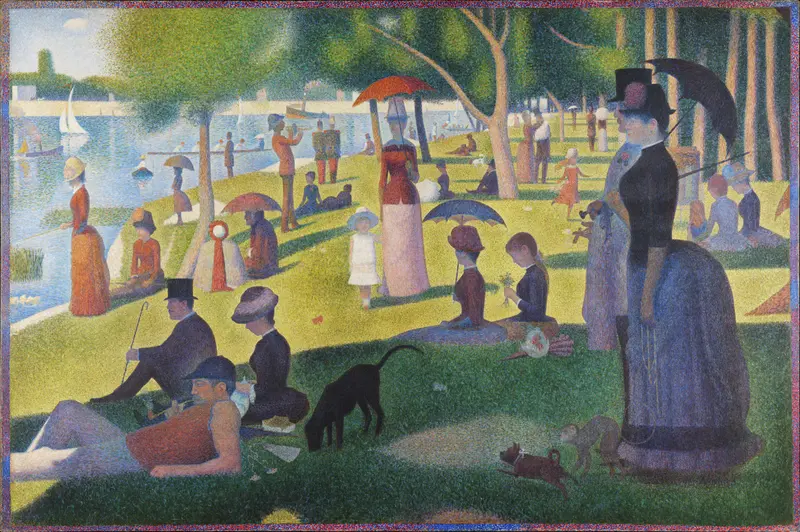
A Sunday Afternoon on the Island of La Grande Jatte
Georges Seurat
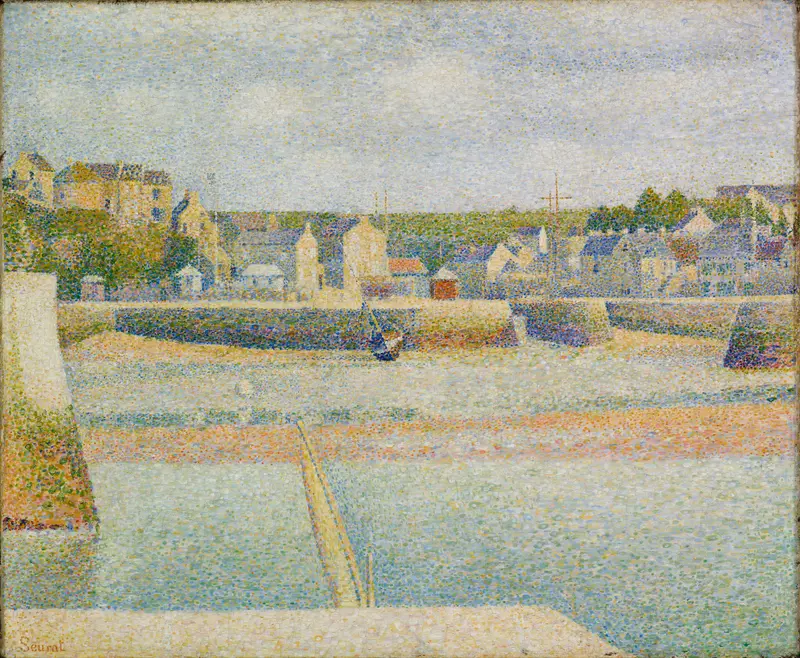
Port-en-Bessin, The Outer Harbor (Low Tide)
Georges Seurat
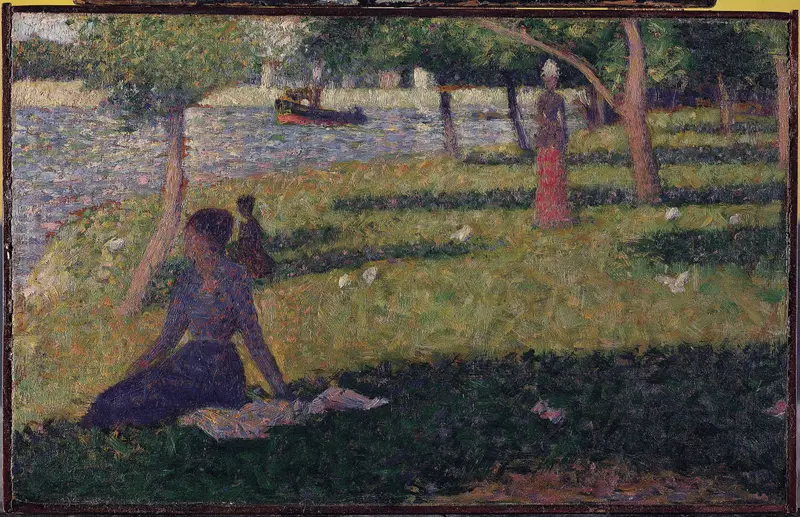
Étude pour ‘La Grande Jatte’ (Study for ‘La Grande Jatte’)
Georges Seurat
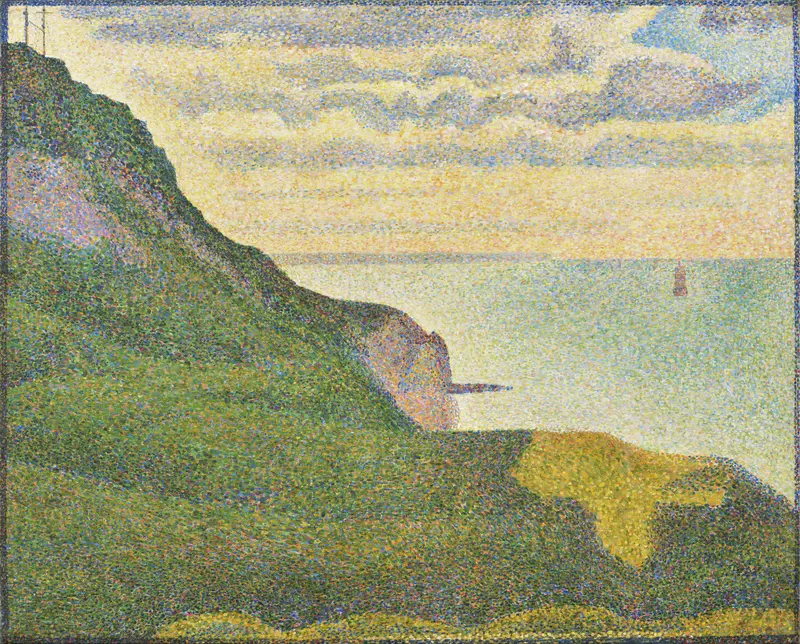
Seascape at Port-en-Bessin,Normandy
Georges Seurat
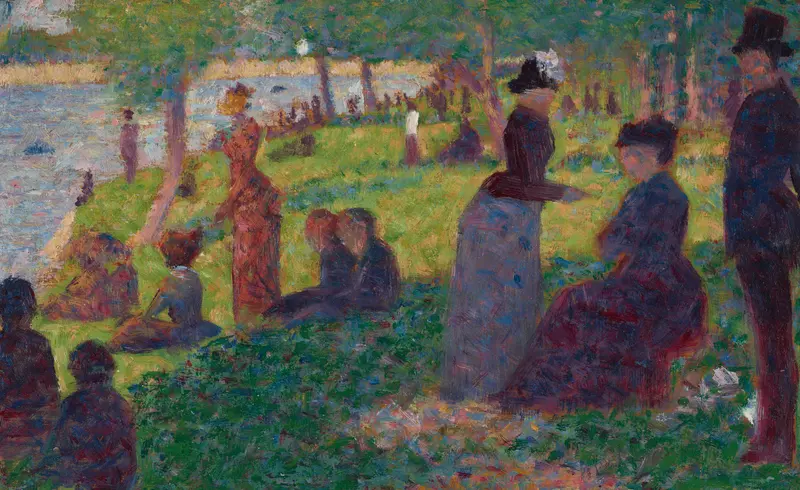
Oil Sketch for "A Sunday on La Grande Jatte — 1884"
Georges Seurat
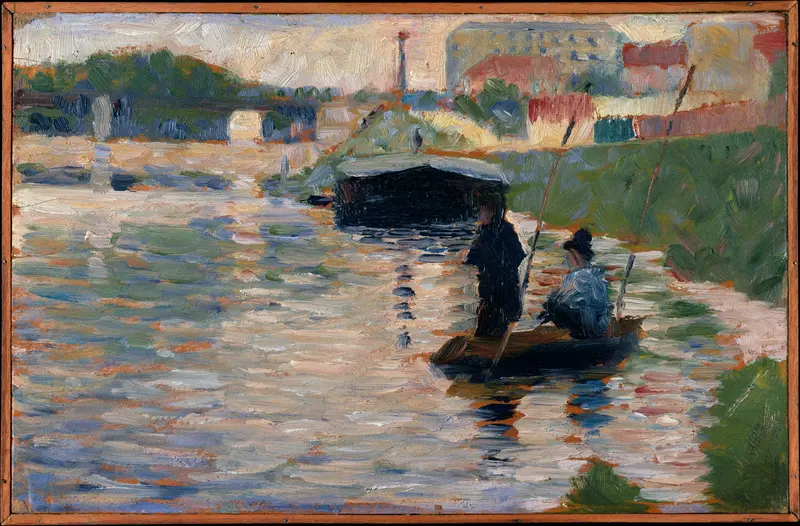
View of the Seine
Georges Seurat
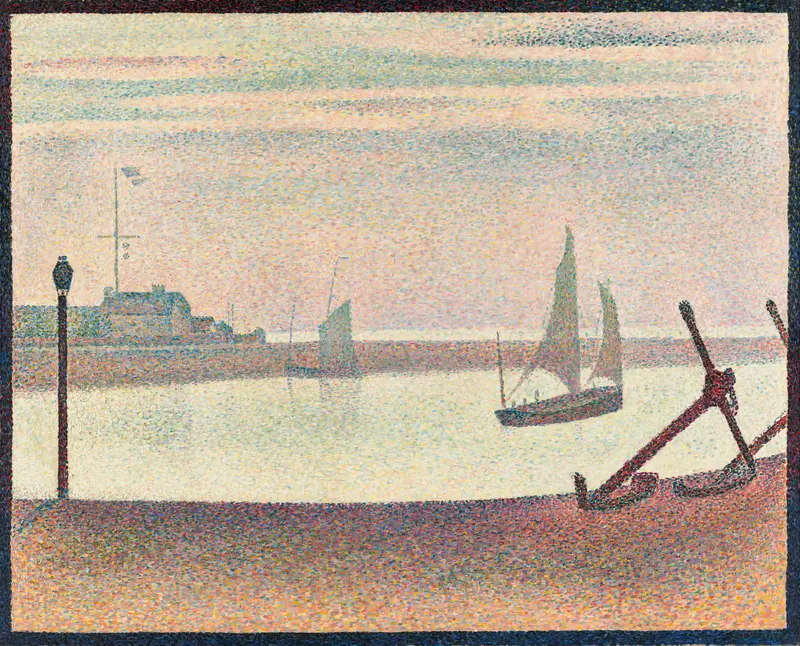
The Channel at Gravelines, Evening
Georges Seurat
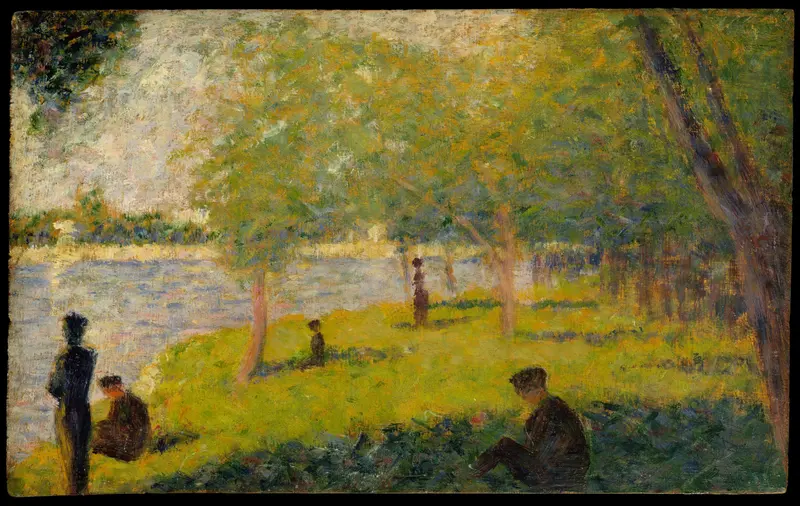
Study for ‘A Sunday on La Grande Jatte’
Georges Seurat
Study for A Sunday on La Grande Jatte
Georges Seurat
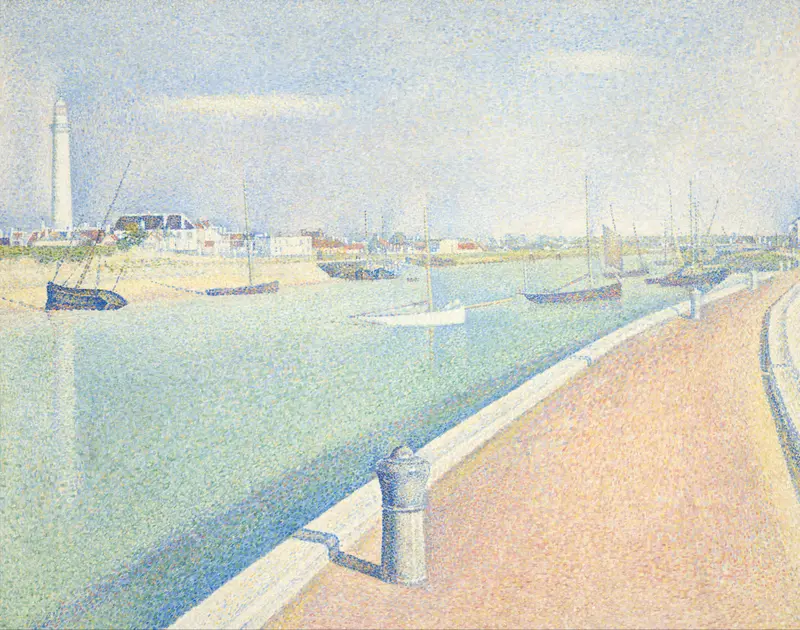
The Channel of Gravelines, Petit Fort Philippe
Georges Seurat





