
A Sunday Afternoon on the Island of La Grande Jatte — History & Facts
On the banks of the River Seine, men, women, and children gather under the shade of trees, their figures arranged in a frieze-like procession across a sunlit park. To the right, a woman in a dark dress and hat stands in profile, holding a black parasol and accompanied by a small monkey on a leash and a dog at her feet. Nearby, another woman in a pale dress stands with a young girl in white, while seated figures in hats and bonnets cluster on the grass, some holding parasols and others lost in quiet activity.
The composition is anchored by trees whose trunks and branches create a rhythmic pattern, casting cool shadows across the yellow-green lawn. Every surface is built up from countless dots and dashes of pure color, a technique that gives the scene a shimmering, mosaic-like texture. The border of the canvas is edged with a band of painted dots, echoing the pointillist technique used throughout the work. Georges Seurat created A Sunday Afternoon on the Island of La Grande Jatte between 1884 and 1886, returning in 1888–89 to add the distinctive painted border.
The painting was developed through numerous studies and sketches, as Seurat meticulously planned the placement of each figure and the effects of color and light. Seurat’s use of pointillism—placing small dots of complementary colors side by side—creates optical mixtures that intensify the brilliance of the scene. Over the years, A Sunday Afternoon on the Island of La Grande Jatte passed through several hands, including the artist’s family and collectors in Paris, before being acquired by Frederic Clay and Helen Birch Bartlett and given to the Art Institute of Chicago in 1926.
Sources: Art Institute of Chicago, record 1926.224 · Wikidata Q1044742 · Wikipedia: A Sunday Afternoon on the Island of La Grande Jatte · Image source (Wikimedia Commons)
More Artworks by Georges Seurat
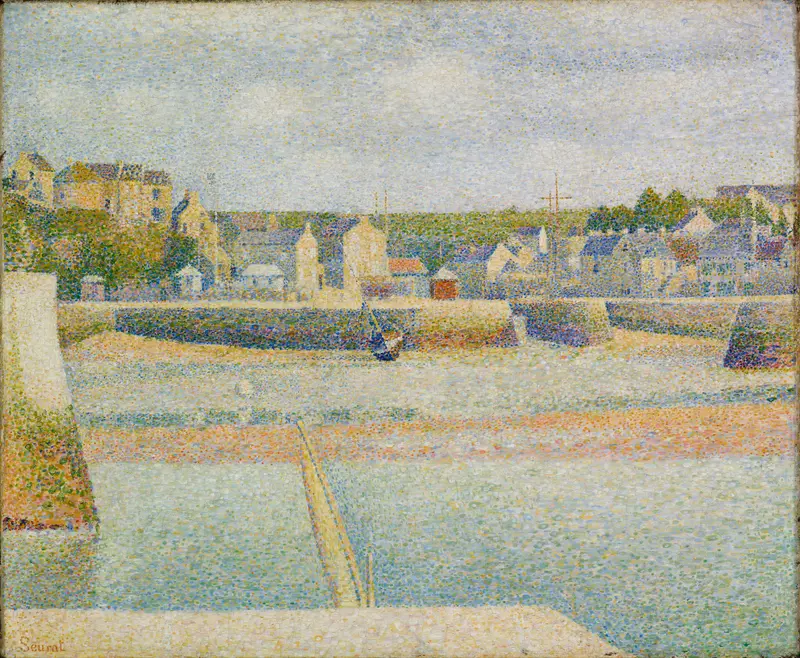
Port-en-Bessin, The Outer Harbor (Low Tide)
Georges Seurat
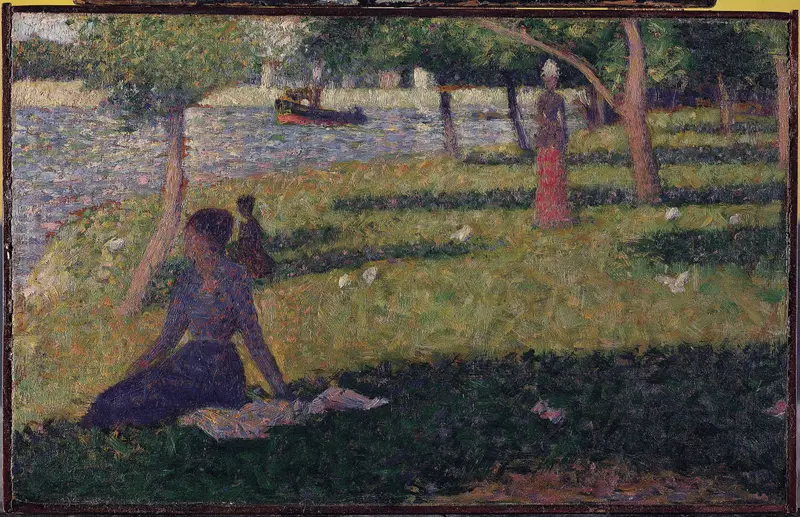
Étude pour ‘La Grande Jatte’ (Study for ‘La Grande Jatte’)
Georges Seurat
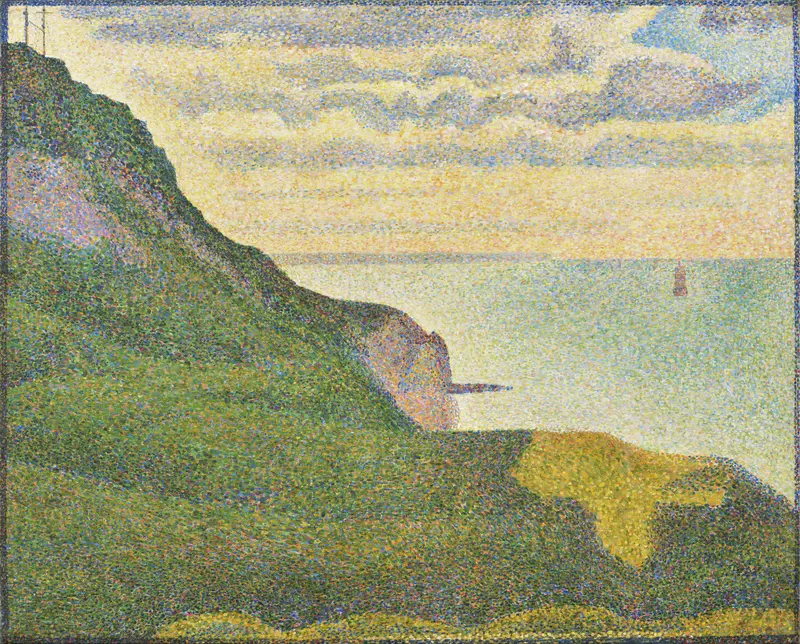
Seascape at Port-en-Bessin,Normandy
Georges Seurat
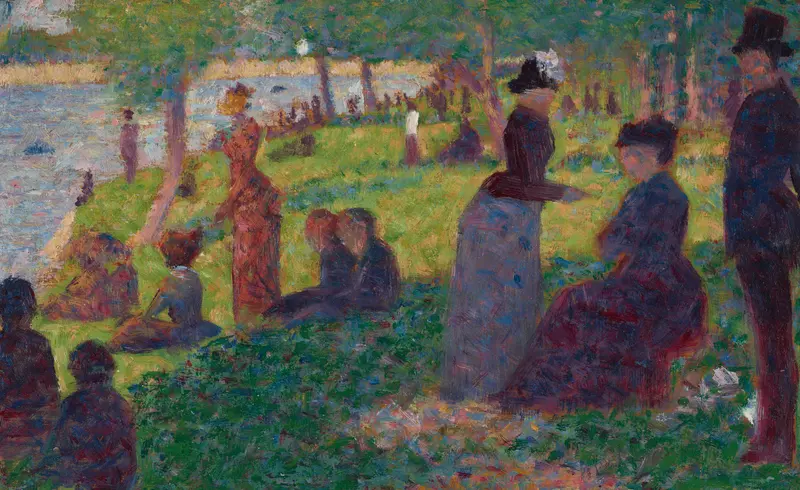
Oil Sketch for "A Sunday on La Grande Jatte — 1884"
Georges Seurat
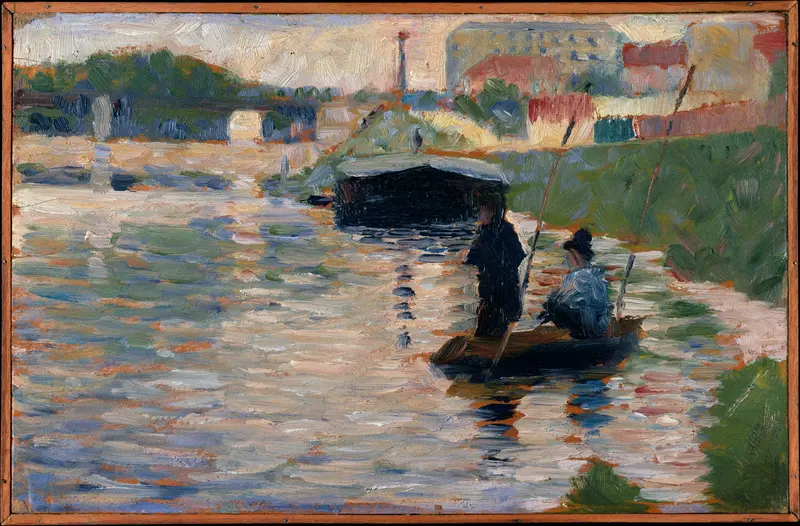
View of the Seine
Georges Seurat
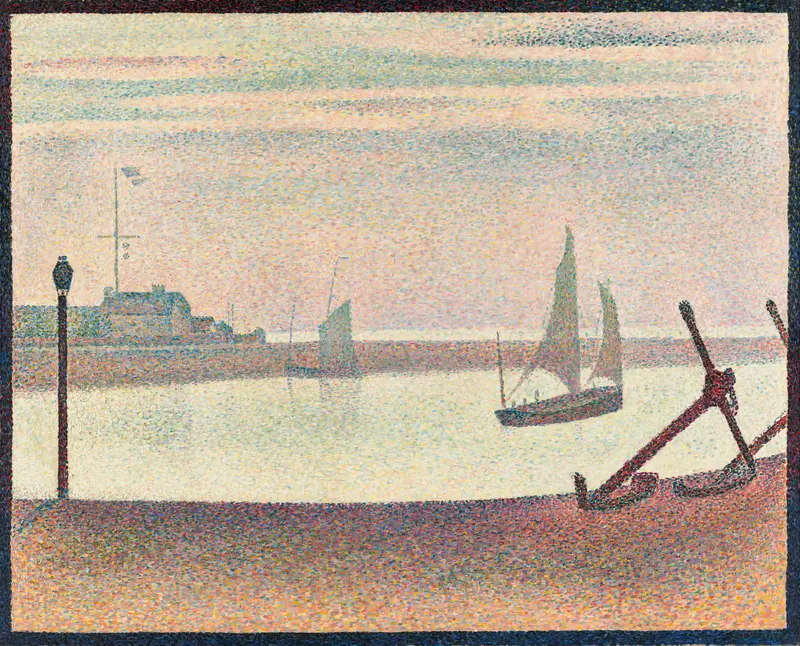
The Channel at Gravelines, Evening
Georges Seurat
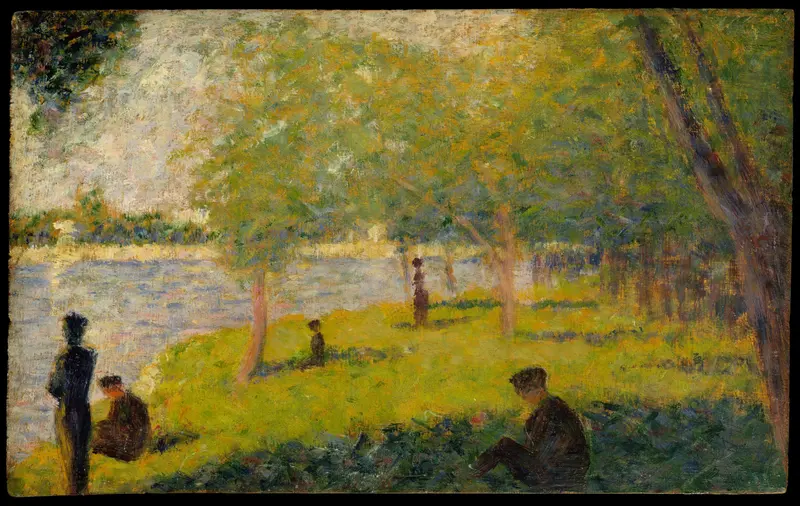
Study for ‘A Sunday on La Grande Jatte’
Georges Seurat
Study for A Sunday on La Grande Jatte
Georges Seurat
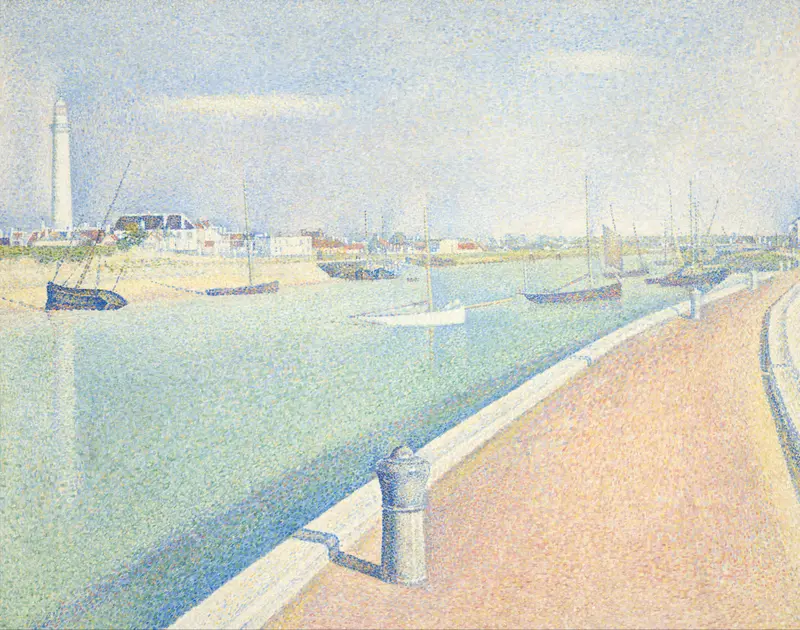
The Channel of Gravelines, Petit Fort Philippe
Georges Seurat
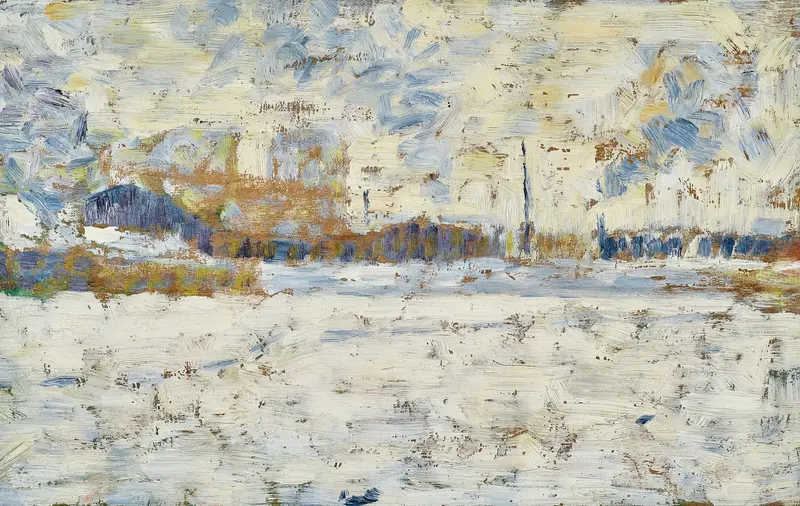
Hiver en banlieue
Georges Seurat
More Genre Scene Art

Banquet of the Officers of the St George Civic Guard
Frans Hals

Rembrandt and Saskia in the Scene of the Prodigal Son
Rembrandt van Rijn

Bal du moulin de la Galette
Pierre-Auguste Renoir

Quadrille at the Moulin Rouge
Henri de Toulouse-Lautrec

A Burial at Ornans
Gustave Courbet

When Will You Marry?
Paul Gauguin