
A Man with Crouching Dog (Smell) — History & Facts
The sly twist of the man’s body is the first thing to catch the eye—caught mid-step, he glances sharply over his shoulder, as if interrupted in a private moment. His gaze is not directed at us, but at the crouching dog at his feet, whose posture leaves little doubt as to what has drawn the man’s attention. The earthy browns and greens set a mood of everyday reality, while the soft light filtering through the trees gives the scene a sense of quiet observation.
The details matter: the man’s heavy coat, the battered hat, the rough path and the humble cottages beyond. Here, every gesture is a clue—his hand clutching his coat, the wary look, the dog’s intent focus on the ground—inviting us to imagine the smells and sounds of a village lane in the Dutch countryside. Painted in the 1650s, A Man with Crouching Dog (Smell) belongs to a world in which artists like Adriaen van Ostade turned their attention to the daily lives of common folk. In the Dutch Republic, scenes of peasants, taverns, and village streets were collected by a rising class of urban patrons who delighted in witty, sometimes earthy glimpses of rural life.
Works like this were not grand commissions, but intimate studies meant to amuse, instruct, or simply capture the flavor of the world outside the city walls. The painting is now part of the collection in Prague, a reminder of how such images traveled far from their origins, carrying with them the humor and humanity of the seventeenth-century Dutch village. Look again at the man’s face and the dog’s pose, and the picture’s small drama comes alive.
More Artworks by Adriaen van Ostade

Dans in de herberg
Adriaen van Ostade
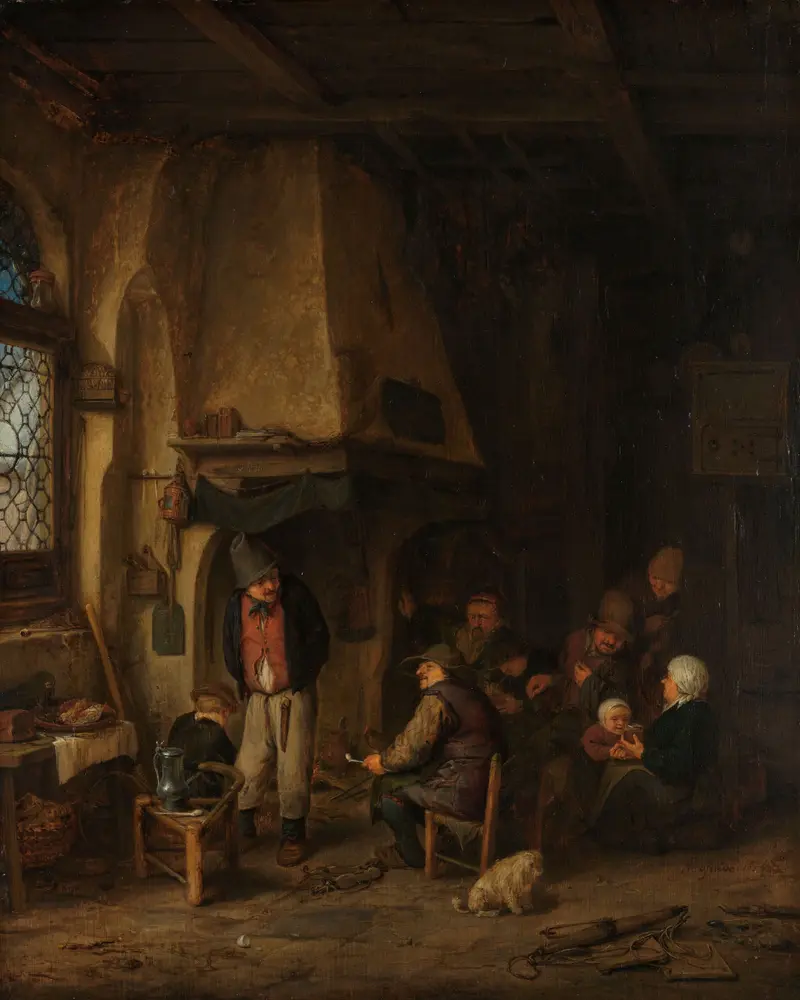
‘The Skaters’: Peasants in an Interior
Adriaen van Ostade
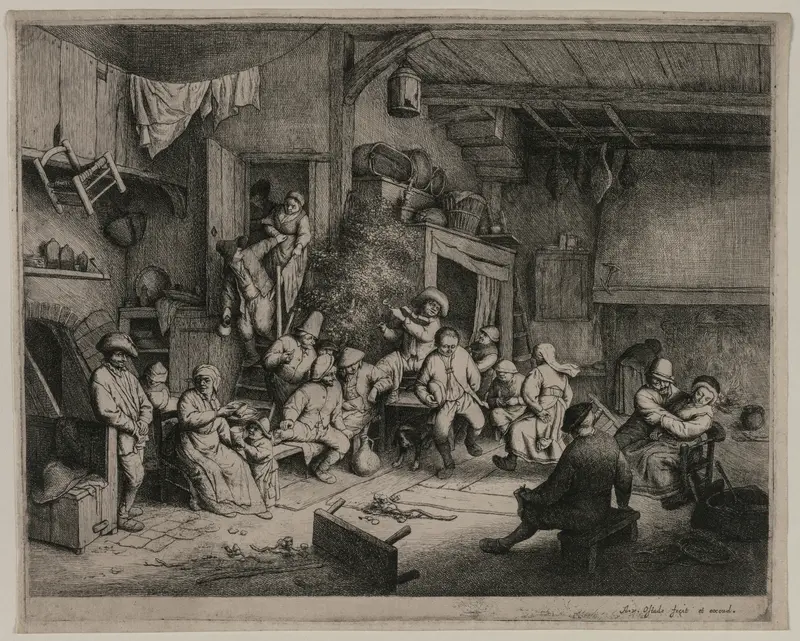
Dance at the Inn
Adriaen van Ostade
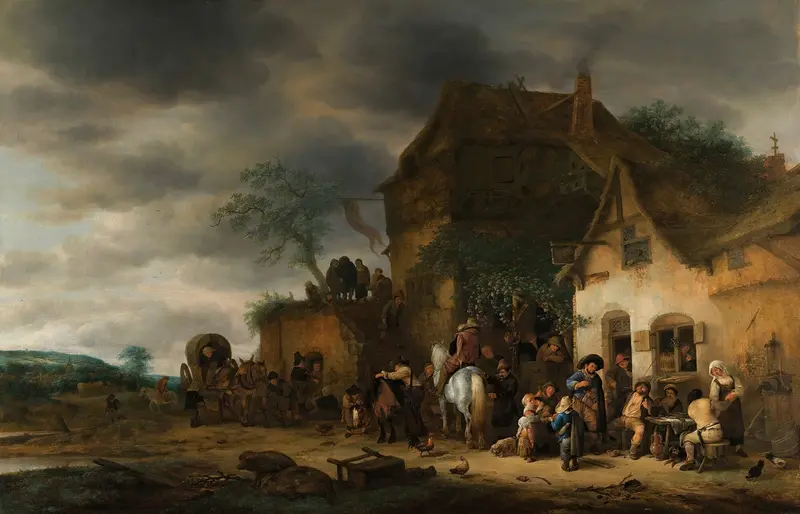
Travellers Halted At A Country Inn
Adriaen van Ostade
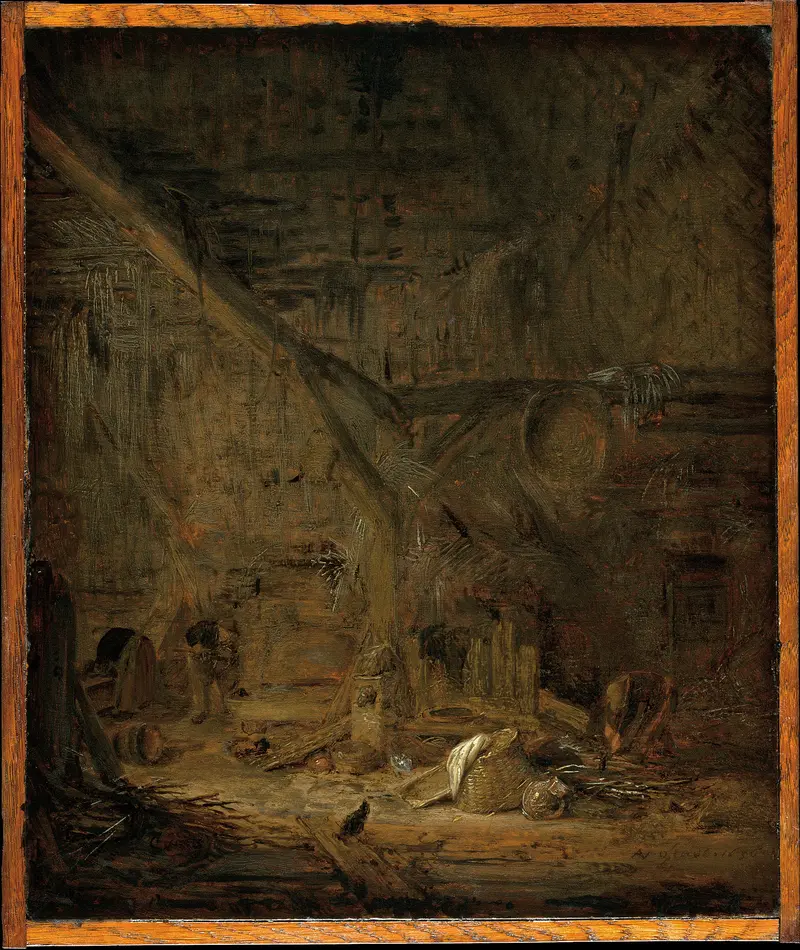
Interior of a Barn
Adriaen van Ostade
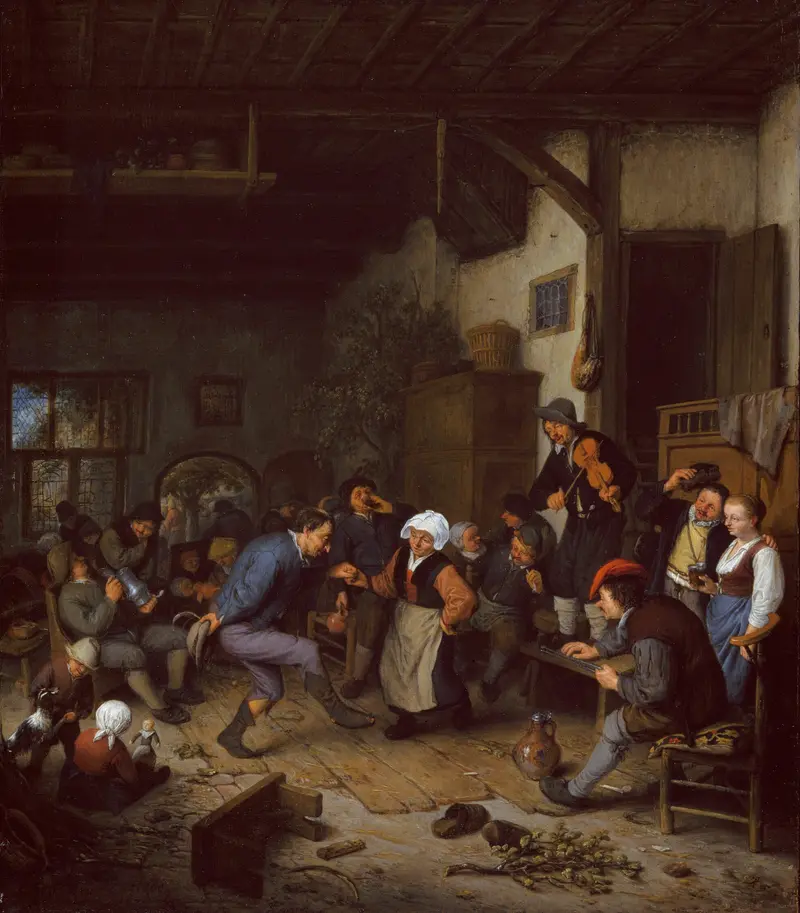
Merrymakers in an Inn
Adriaen van Ostade
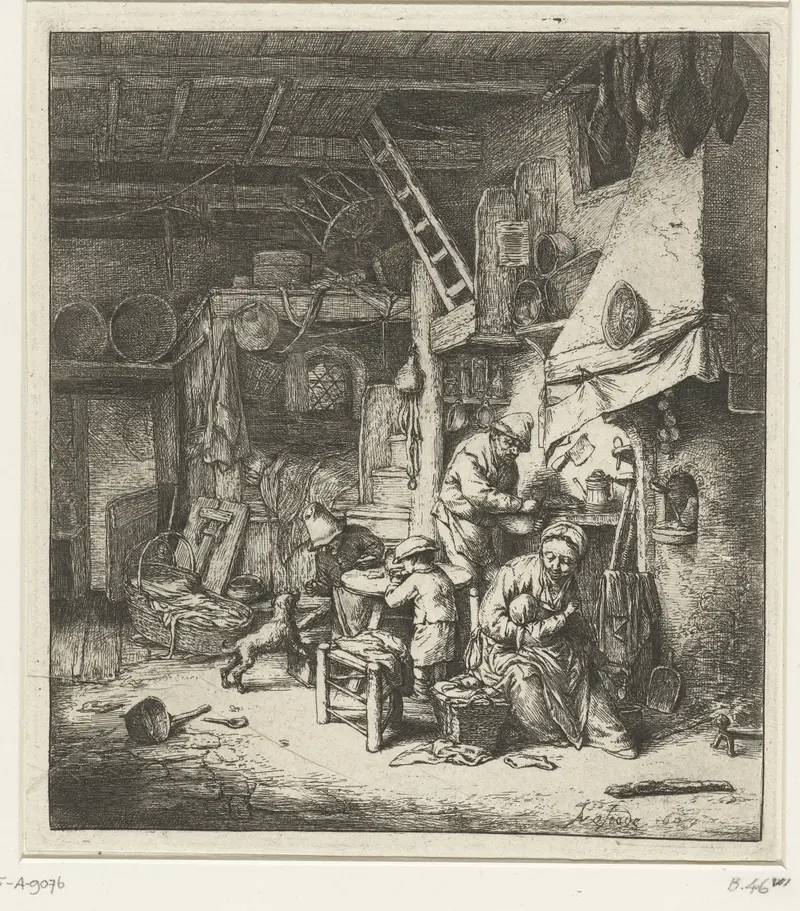
Boerengezin in interieur
Adriaen van Ostade
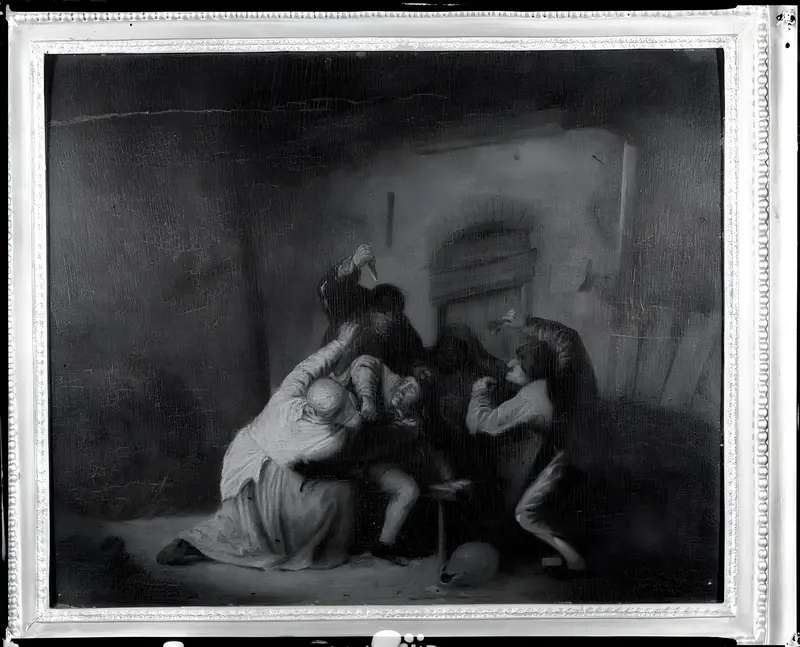
Peasants Brawling in a Tavern
Adriaen van Ostade
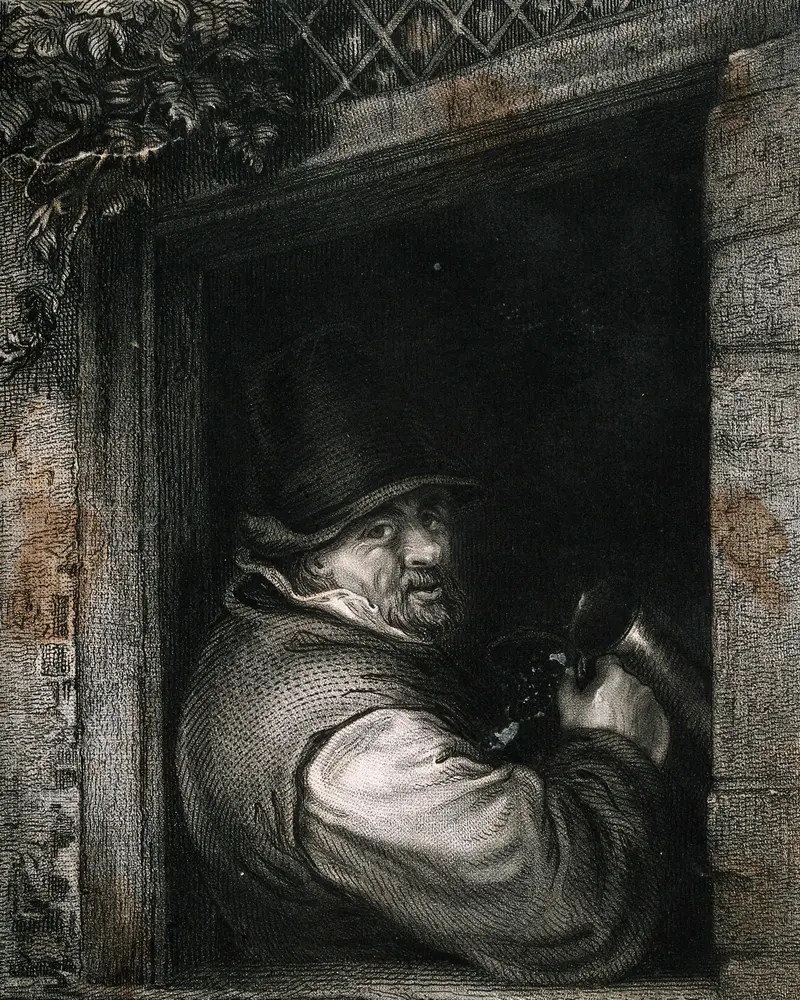
Man with a Tankard at a Window
Adriaen van Ostade
Dans in de herberg
Adriaen van Ostade
More Genre Scene Art

Banquet of the Officers of the St George Civic Guard
Frans Hals

Rembrandt and Saskia in the Scene of the Prodigal Son
Rembrandt van Rijn

Bal du moulin de la Galette
Pierre-Auguste Renoir

Quadrille at the Moulin Rouge
Henri de Toulouse-Lautrec

A Burial at Ornans
Gustave Courbet

When Will You Marry?
Paul Gauguin