
A Man with Jug and Pipe (Taste) — History & Facts
A single figure commands attention at the center, his face flushed with drink and pleasure, caught mid-swig from a hefty jug. The slouch of his hat and the easy grip on his pipe speak of a life lived outdoors, unhurried and unpolished. Light falls gently on his features, drawing the eye to his mischievous grin, while the rough textures of his clothing and the earthy palette root him firmly in the world of the Dutch countryside.
Behind him, a dog sniffs for scraps and another figure slumps on a bench, their blurred forms deepening the sense of everyday routine. Every detail here—the battered shoes, the worn steps, the jug held aloft—signals a moment of simple, sensory pleasure, inviting the viewer to linger in this small, sunlit patch of rural life. Painted in the 1650s by Adriaen van Ostade, this work belongs to a world where scenes of peasants and tavern life were in high demand among the urban middle class of the Dutch Republic. Such paintings offered a window onto the pleasures and follies of rural existence, sometimes as gentle satire, sometimes as moral lesson, but always with a keen eye for character.
The genre flourished in the bustling market towns of Holland, where collectors prized both the humor and the technical skill of artists like van Ostade. Today, A Man with Jug and Pipe (Taste) resides in the collection of the National Gallery in Prague, a small but vivid testament to an age when the everyday was worthy of a painter’s full attention. The man’s half-raised jug still tempts the viewer to imagine the taste of its contents, centuries after the moment was set down in paint.
More Artworks by Adriaen van Ostade

Dans in de herberg
Adriaen van Ostade
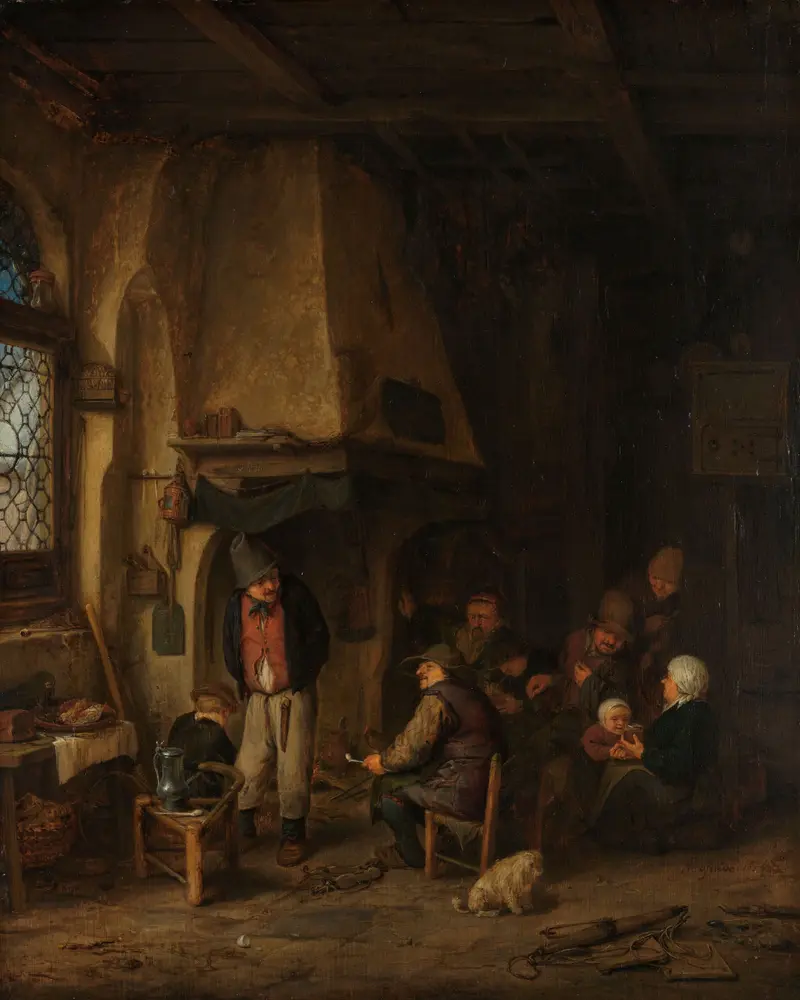
‘The Skaters’: Peasants in an Interior
Adriaen van Ostade
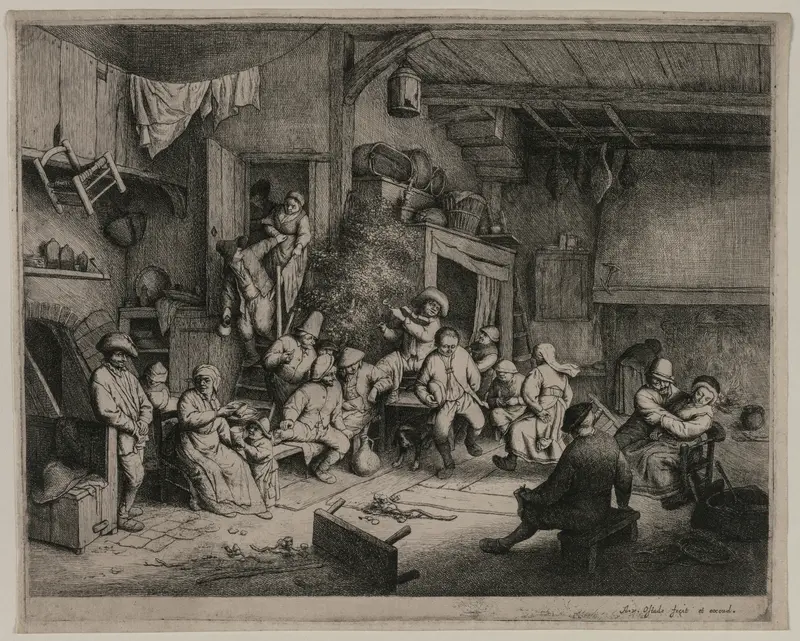
Dance at the Inn
Adriaen van Ostade
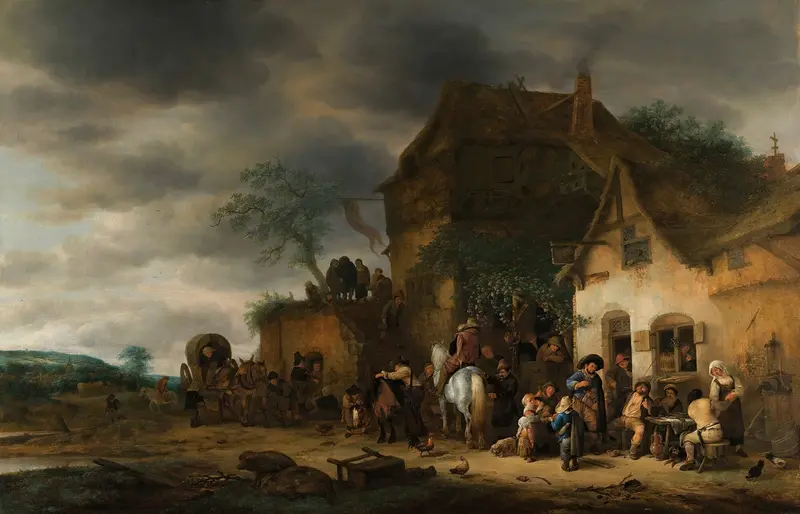
Travellers Halted At A Country Inn
Adriaen van Ostade
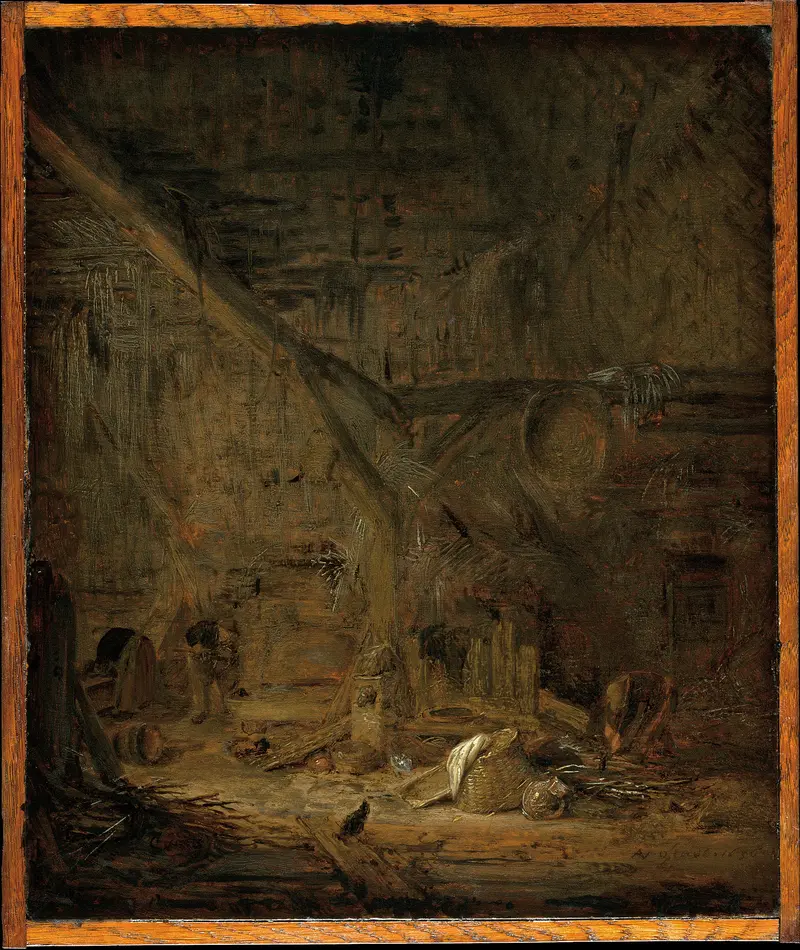
Interior of a Barn
Adriaen van Ostade
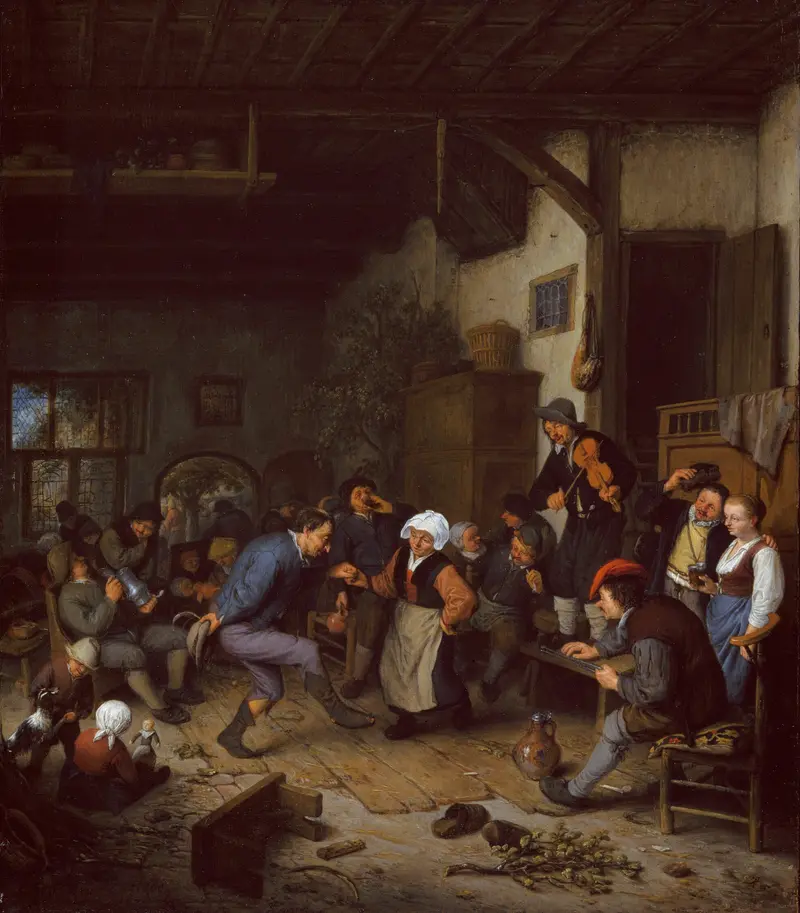
Merrymakers in an Inn
Adriaen van Ostade
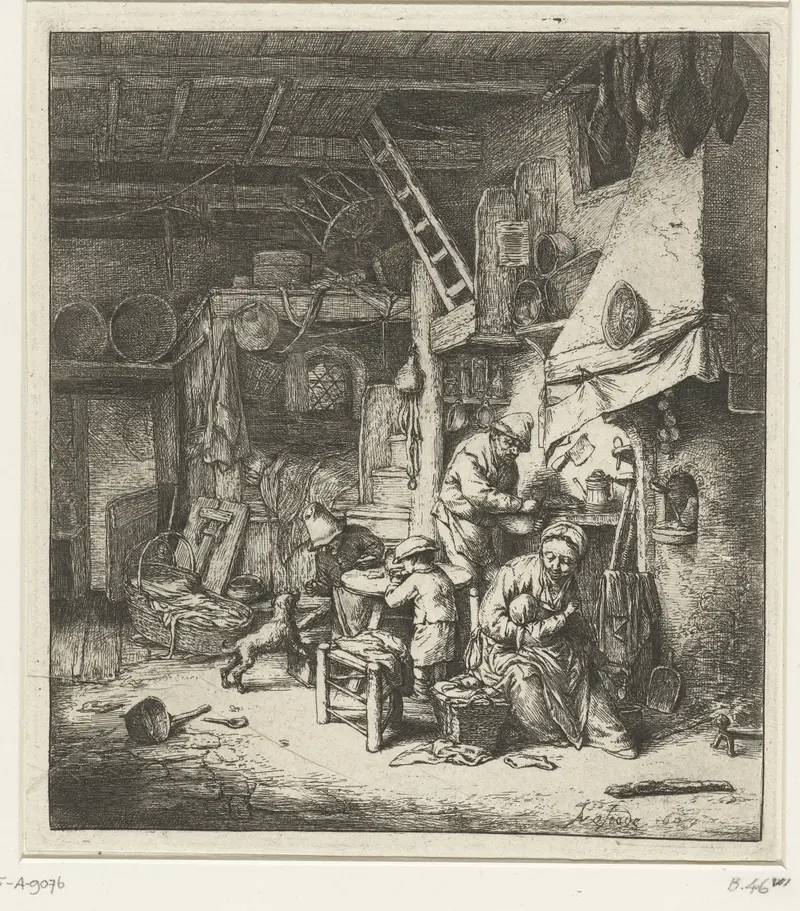
Boerengezin in interieur
Adriaen van Ostade
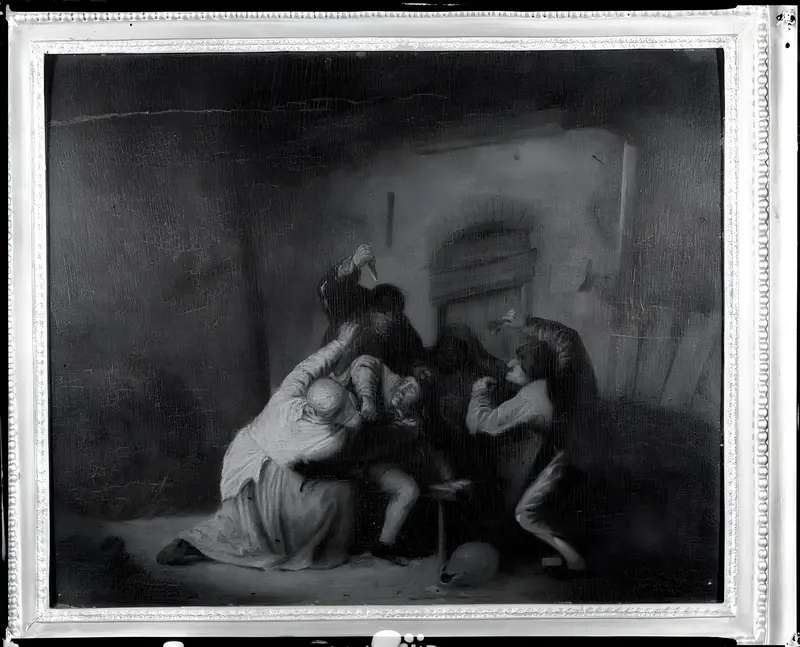
Peasants Brawling in a Tavern
Adriaen van Ostade
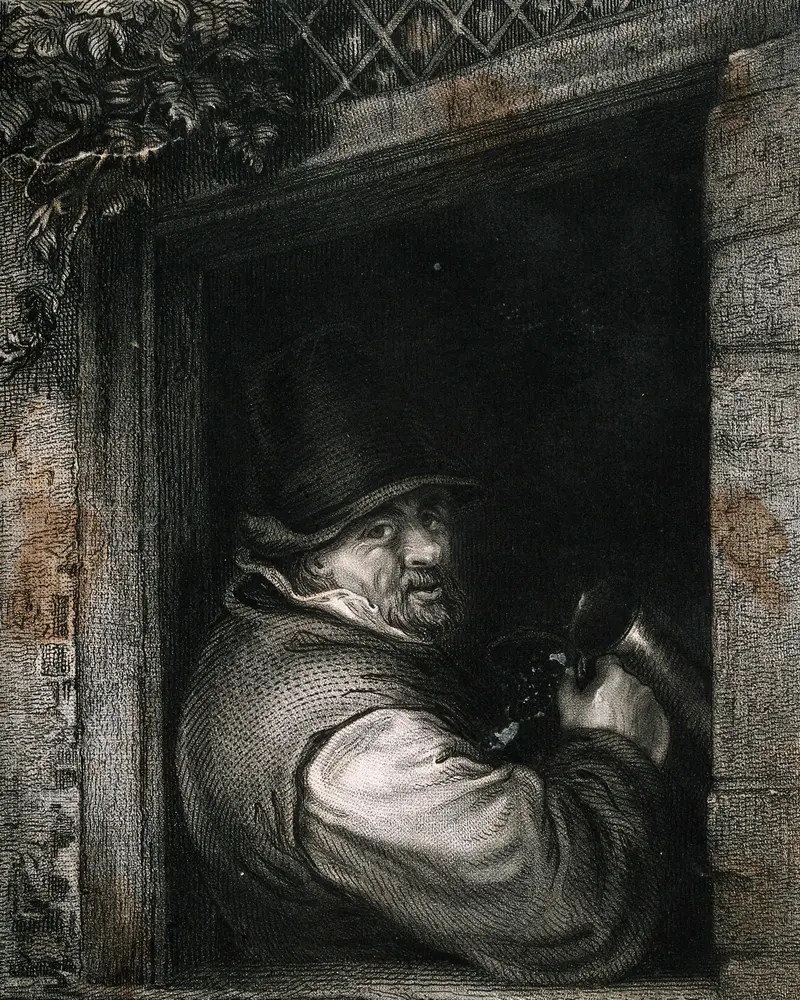
Man with a Tankard at a Window
Adriaen van Ostade
Dans in de herberg
Adriaen van Ostade
More Genre Scene Art

Banquet of the Officers of the St George Civic Guard
Frans Hals

Rembrandt and Saskia in the Scene of the Prodigal Son
Rembrandt van Rijn

Bal du moulin de la Galette
Pierre-Auguste Renoir

Quadrille at the Moulin Rouge
Henri de Toulouse-Lautrec

A Burial at Ornans
Gustave Courbet

When Will You Marry?
Paul Gauguin