
A musical company — History & Facts
What first catches the eye in A musical company by Adriaen Pietersz van de Venne is the sense of gentle commotion—the swirl of silk, the poised instruments, the dog at the center as if he too is an honored guest. The painter draws us into a world of sociability and subtle drama, where the music is almost audible in the way figures lean in, listen, or let their attention wander. The light falls softly from the left, illuminating the lutenist’s expressive face and the gleam of pearls and lace, while the rest of the company dissolves into a golden haze.
Each gesture is purposeful: the violinist’s lifted bow, the cister player’s attentive gaze, the languid posture of the man at the table. Even the cello, resting against the table, seems to wait its turn in this intricate performance. This painting belongs to the Dutch tradition of merry company scenes, popular in the mid-17th century, when music-making signaled refinement, leisure, and the pleasures of good company. Such works were often commissioned by prosperous burghers eager to display their taste and social standing, and they capture a world in which private gatherings were stages for wit, flirtation, and the exchange of glances as much as melodies.
Painted between 1635 and 1645, A musical company reflects the era’s fascination with the interplay of music, manners, and material comfort, all rendered with van de Venne’s delicate touch. History has kept few traces of this specific gathering, but its atmosphere endures—inviting us to imagine the soundscape behind the shimmering surface.
More Artworks by Adriaen Pietersz van de Venne
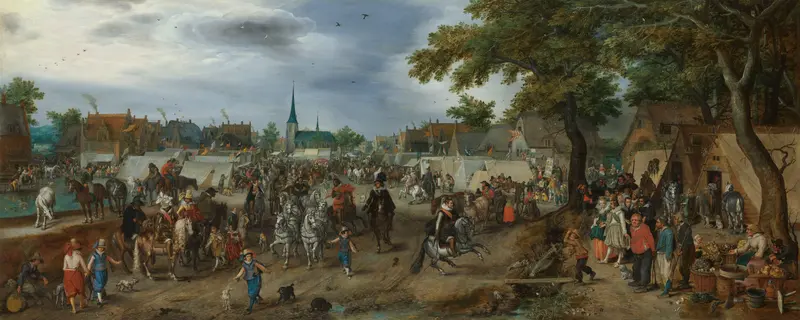
Princes Maurice and Frederick Henry at the Valkenburg Horse Fair
Adriaen Pietersz van de Venne
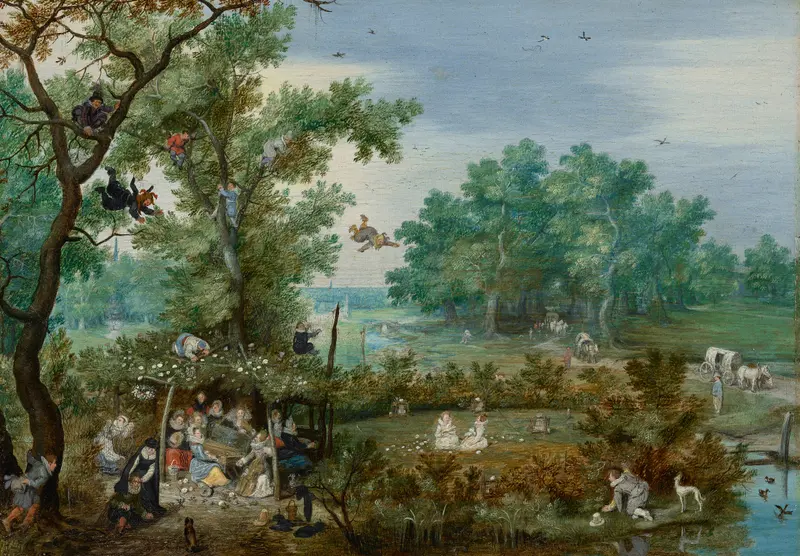
Merry Company in an Arbor
Adriaen Pietersz van de Venne
Princes Maurice and Frederick Henry at the Valkenburg Horse Fair
Adriaen Pietersz van de Venne
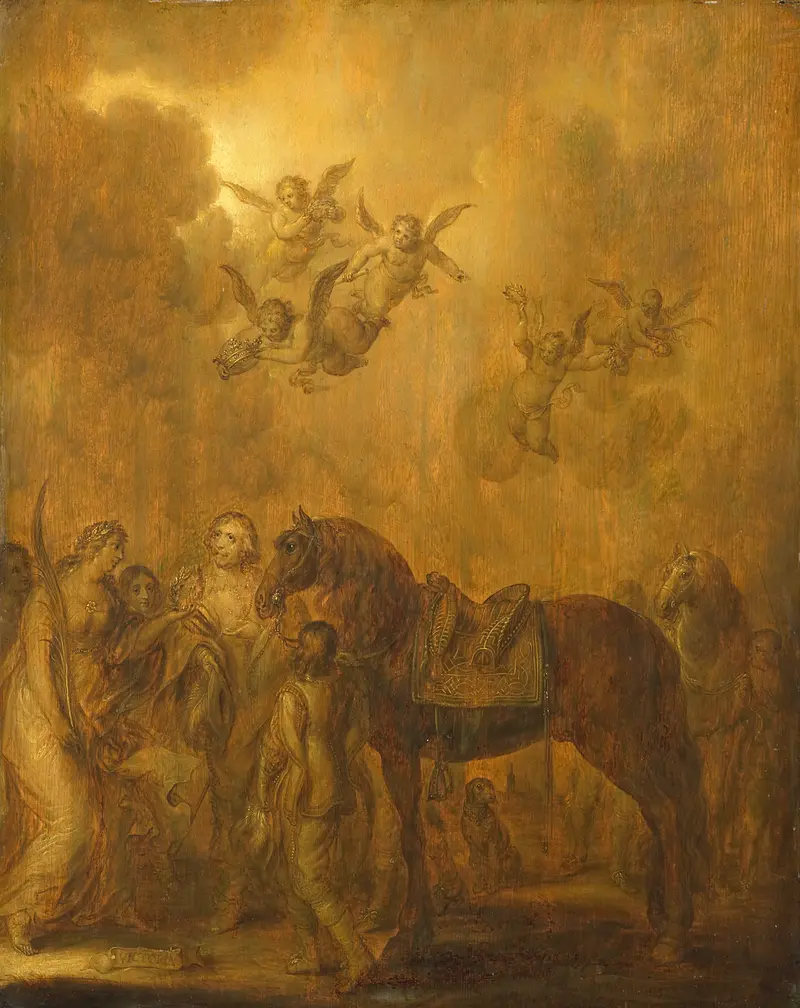
Allegory of the Stadtholdership of Prince Frederick Henry
Adriaen Pietersz van de Venne
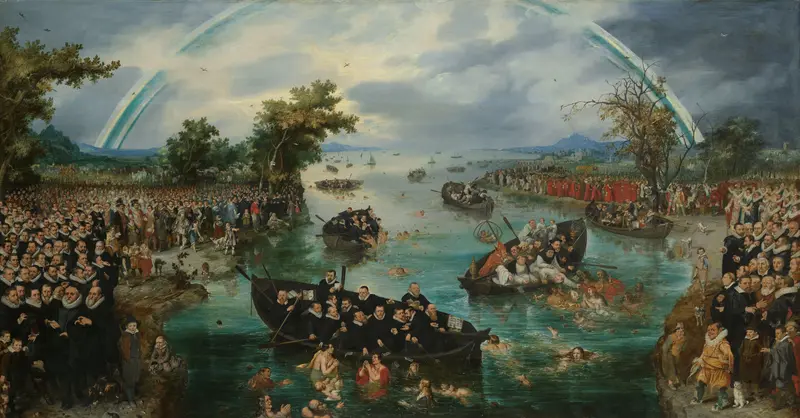
Fishing for Souls
Adriaen Pietersz van de Venne
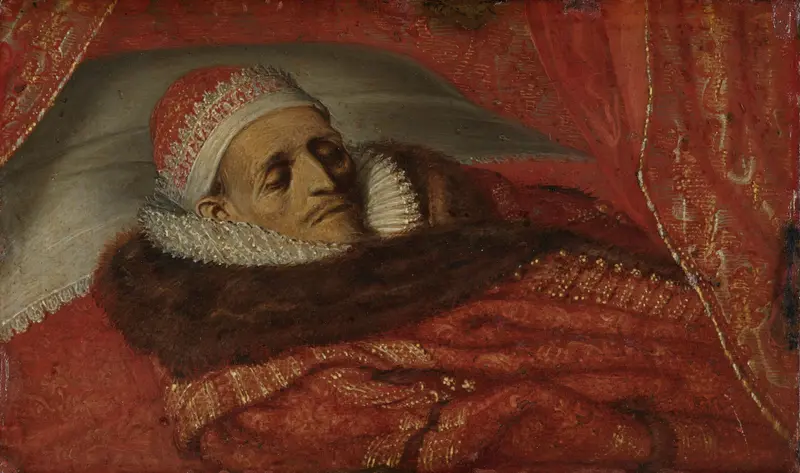
Stadtholder Prince Maurice Lying in State
Adriaen Pietersz van de Venne
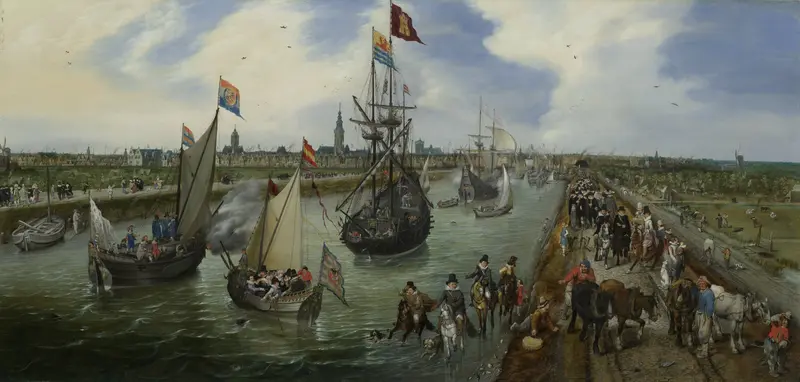
The Departure of a Dignitary from Middelburg
Adriaen Pietersz van de Venne
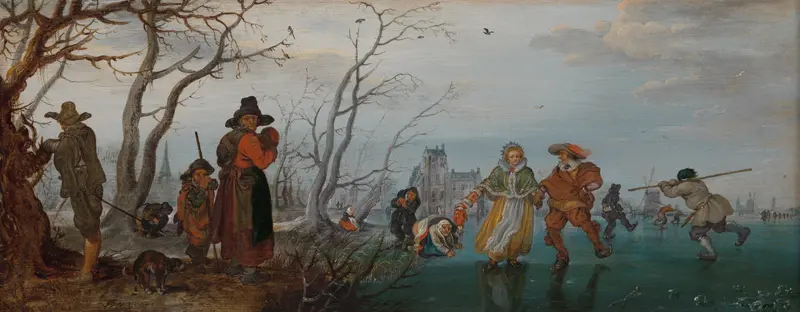
Winter
Adriaen Pietersz van de Venne

A Jeu de Paume Before a Country Palace
Adriaen Pietersz van de Venne
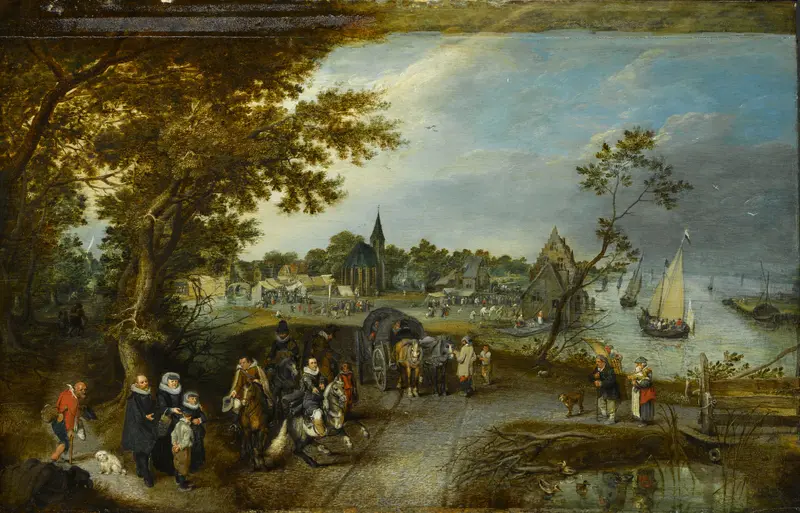
Landscape with Figures and a Village Fair (Village Kermesse)
Adriaen Pietersz van de Venne
More Genre Scene Art

Banquet of the Officers of the St George Civic Guard
Frans Hals

Rembrandt and Saskia in the Scene of the Prodigal Son
Rembrandt van Rijn

Bal du moulin de la Galette
Pierre-Auguste Renoir

Quadrille at the Moulin Rouge
Henri de Toulouse-Lautrec

A Burial at Ornans
Gustave Courbet

When Will You Marry?
Paul Gauguin