
A Pastoral Scene — History & Facts
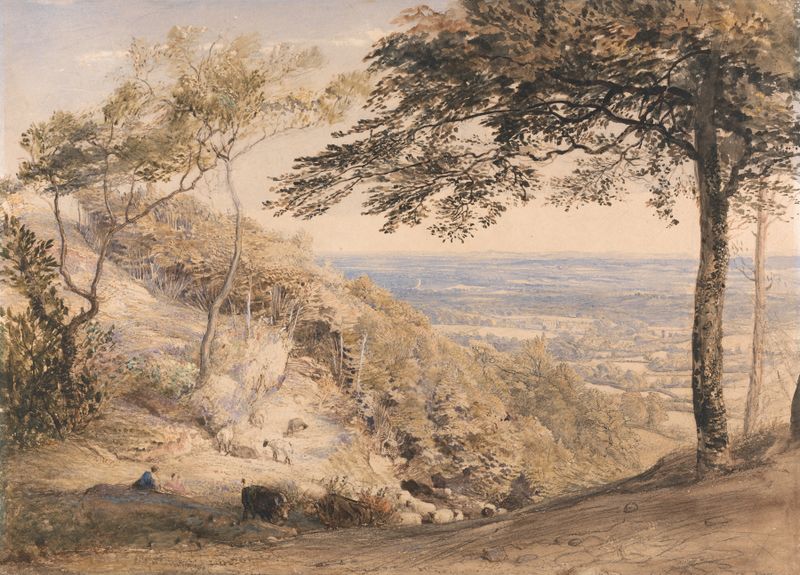
In the quiet embrace of nature, the spirit of rebirth unfurls, whispering secrets of the land. Look closely at the soft, verdant hills that undulate across the canvas, inviting the eye to travel through a tranquil countryside. Notice how the gentle strokes intertwine with hues of green and gold, creating a harmonious blend that awakens the senses. The luminous sky, a wash of pastel blues and pinks, casts its warm glow over the scene, reflecting the promise of dawn.
It beckons you into a world where time seems suspended, urging you to breathe in the pastoral serenity. Amid the idyllic landscape, symbolic contrasts reveal deeper meanings— the tension between light and shadow speaks to the cyclical nature of existence. In the foreground, subtle figures emerge, perhaps shepherds or farmers, whose small forms evoke a sense of humility against the vastness of nature. Each detail—the rustle of leaves and the rusting of fields—echoes a celebration of life and renewal, an invitation to meditate on the interconnectedness of all living things. Samuel Palmer created this work during a transformative period in his life, likely in the early 19th century when he was deeply influenced by the Romantic movement.
Living in London, he sought solace in the countryside, enraptured by the beauty of rural England. His artistic vision embodied a yearning for simplicity and spiritual fulfillment, aligning with the burgeoning exploration of nature’s profound significance in art.
More Artworks by Samuel Palmer
Browse all →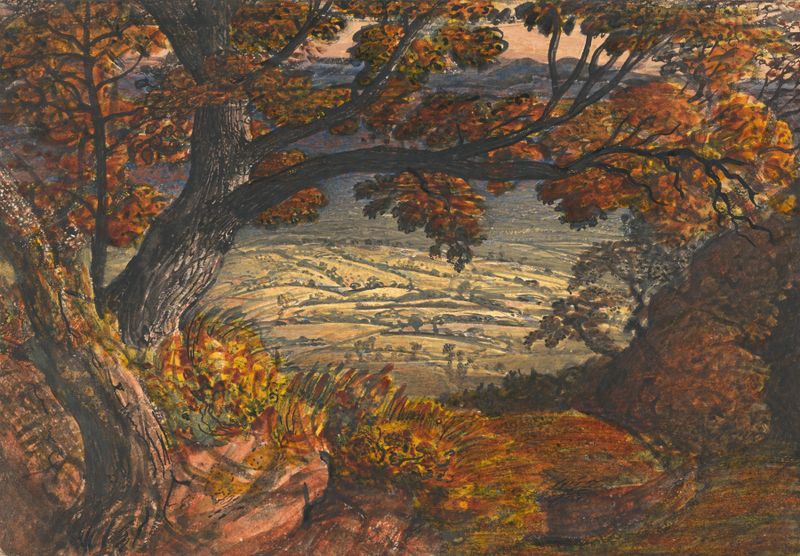
The Weald of Kent
Samuel Palmer
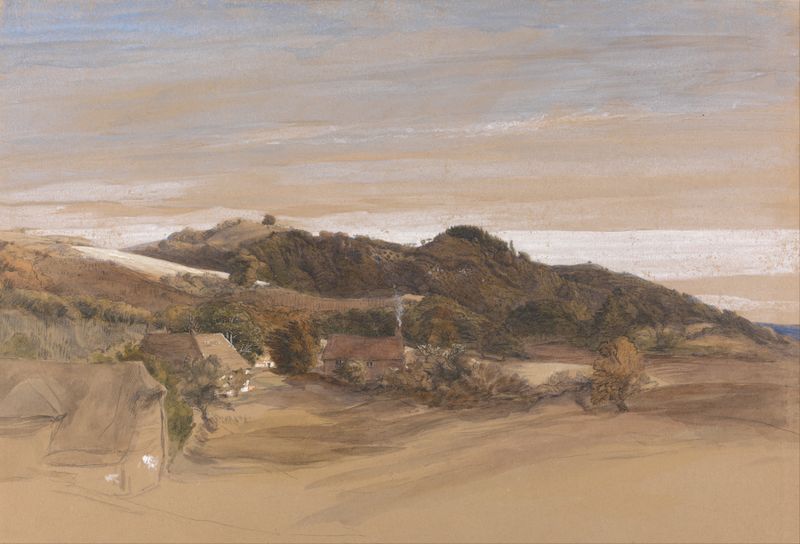
Underriver Hills, near Sevenoaks, Kent, from the Grounds of J. Herries, Esq.
Samuel Palmer
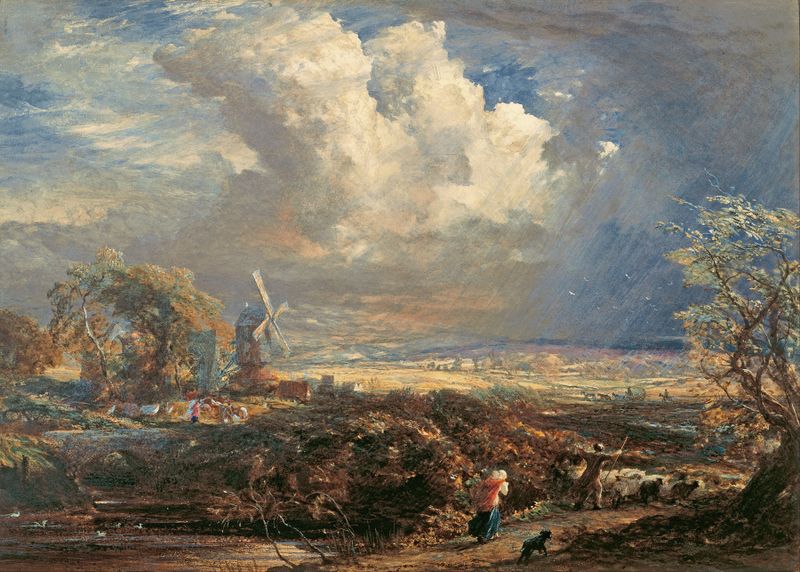
Summer Storm near Pulborough, Sussex
Samuel Palmer
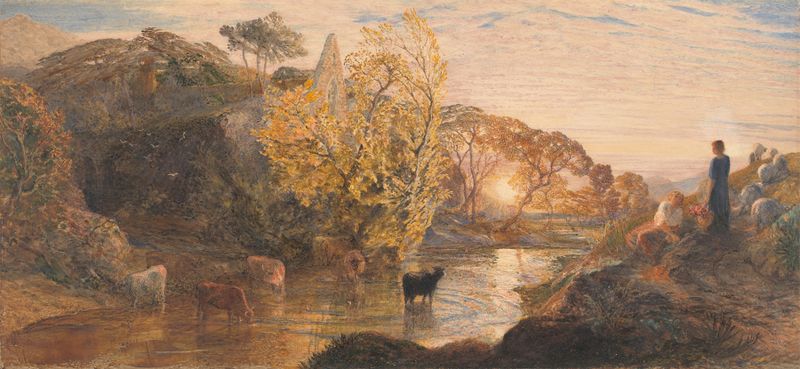
Tintern Abbey at Sunset
Samuel Palmer
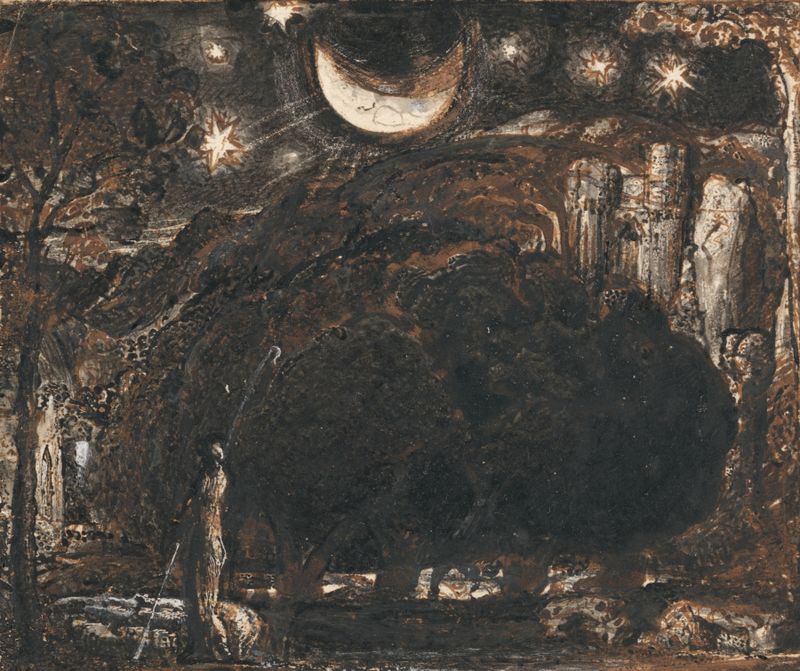
A Shepherd and his Flock under the Moon and Stars
Samuel Palmer
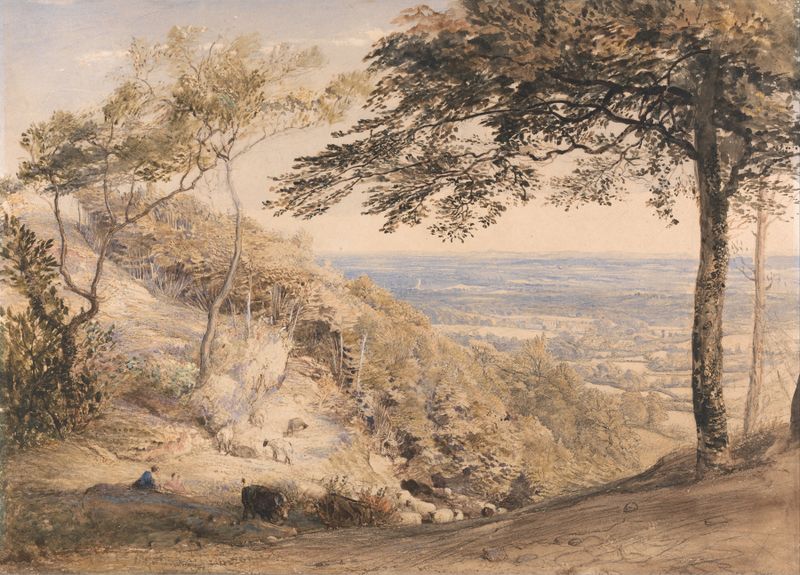
Wilmot’s Hill, Kent
Samuel Palmer
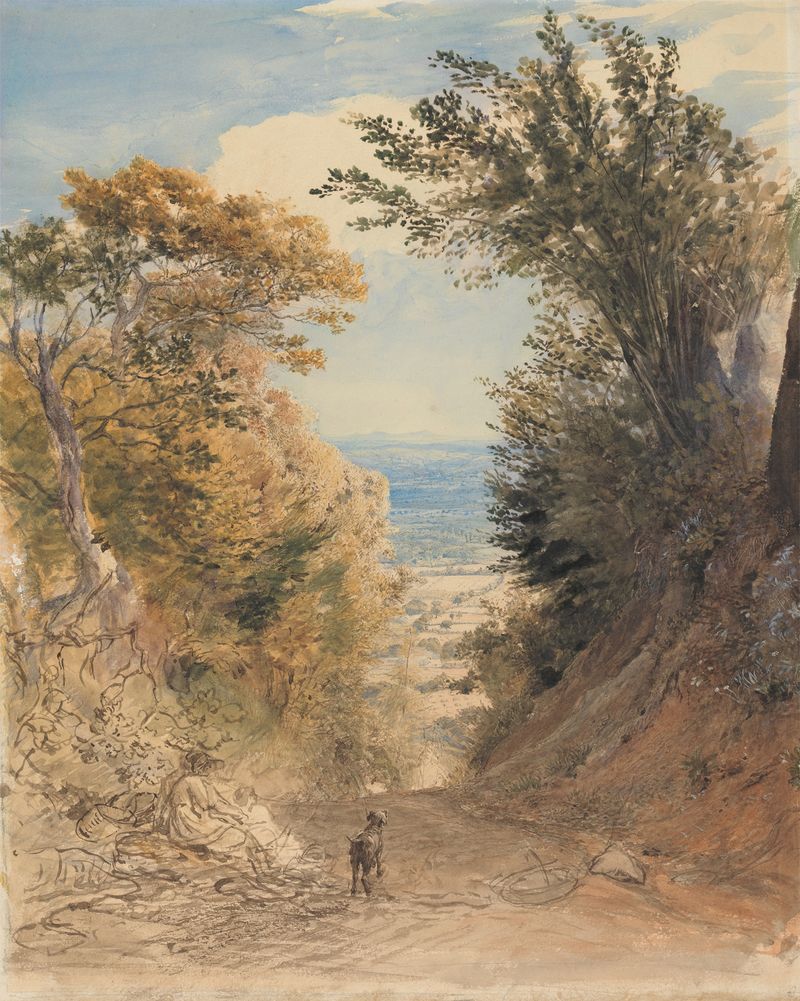
View from Rook’s Hill, Kent
Samuel Palmer
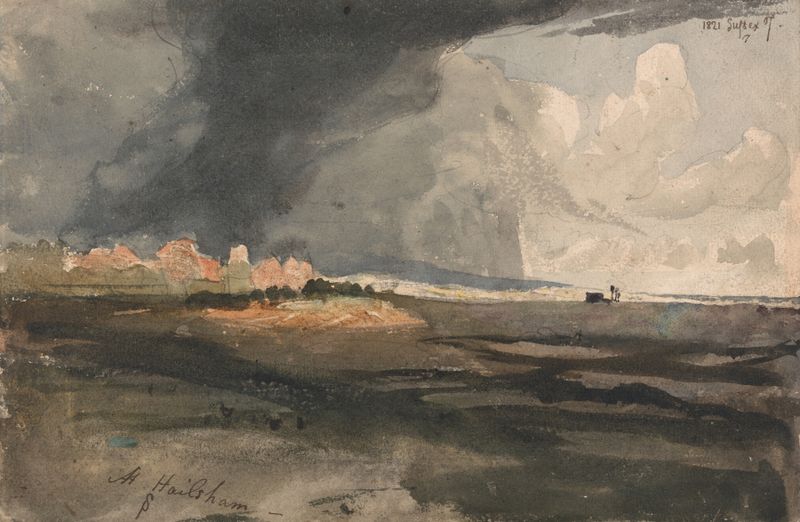
At Hailsham, Sussex; a Storm Approaching
Samuel Palmer
Wilmot’s Hill, Kent
Samuel Palmer
Tintern Abbey
Samuel Palmer





