
A Peasant Family in a Cottage — History & Facts
What draws the eye first is the hush of daily life, caught in a shaft of window light that slices through the gloom of a peasant cottage. The painter, Adriaen van Ostade, chooses not the drama of feast or festival, but the quiet choreography of survival: a woman bends to tend a pot by the hearth, her companion intent on his task beside her, while children cluster at the leaded window and a baby peeks from a wooden crib. Every object is placed with purpose—the cradle, the battered furniture, the rough-hewn beams—each a sign of use and endurance.
Sunlight spills across the floor, illuminating dust and scattered debris, making even the most humble detail worthy of attention. The palette is earthy, the mood intimate, as if the viewer has stepped inside and paused, unnoticed, in a moment of ordinary grace. Painted in 1661, this work belongs to a tradition that flourished in the Dutch Republic, where scenes of everyday life were prized by a growing middle class eager to see their own world reflected with honesty and skill. Van Ostade was celebrated for these interiors, especially in the 1660s, capturing not only the hardships but also the dignity of rural families.
Such paintings were collected for their realism and their gentle humor, offering a counterpoint to the grandeur of history painting. While little is recorded about the journey of this particular canvas, its presence in a modern collection testifies to the enduring appeal of scenes that once hung in merchant homes and modest parlors. Look again at the play of light on the worn floorboards and the absorbed faces: in these small gestures, a whole world is preserved.
More Artworks by Adriaen van Ostade

Dans in de herberg
Adriaen van Ostade
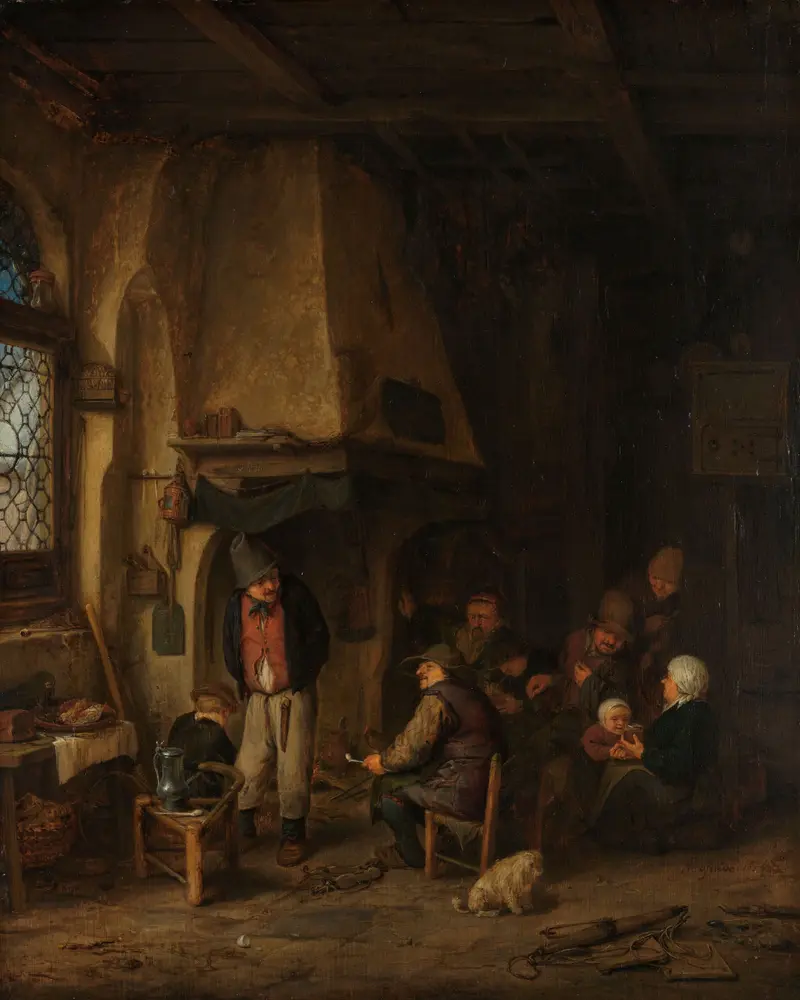
‘The Skaters’: Peasants in an Interior
Adriaen van Ostade
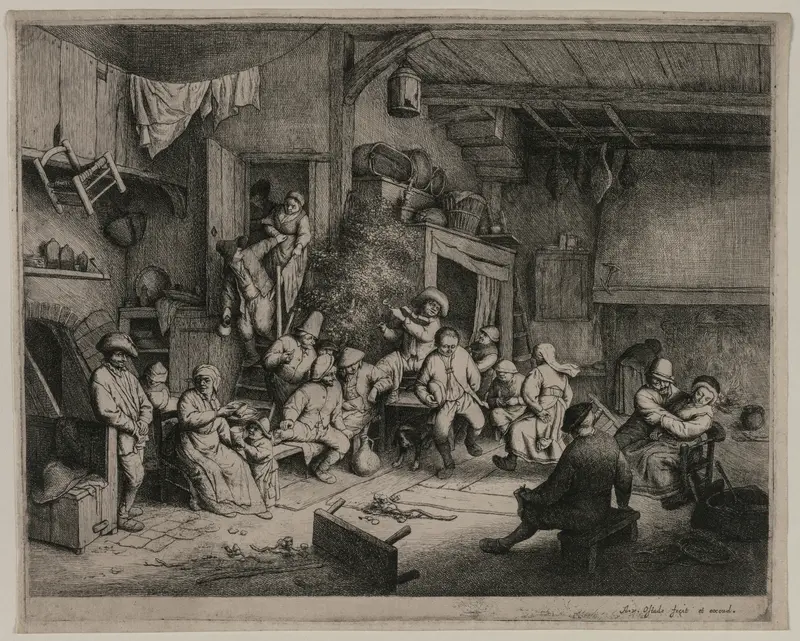
Dance at the Inn
Adriaen van Ostade
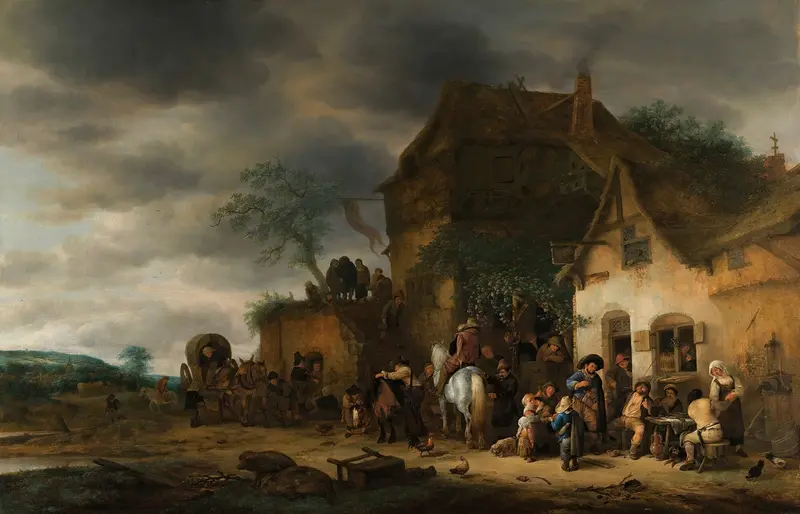
Travellers Halted At A Country Inn
Adriaen van Ostade
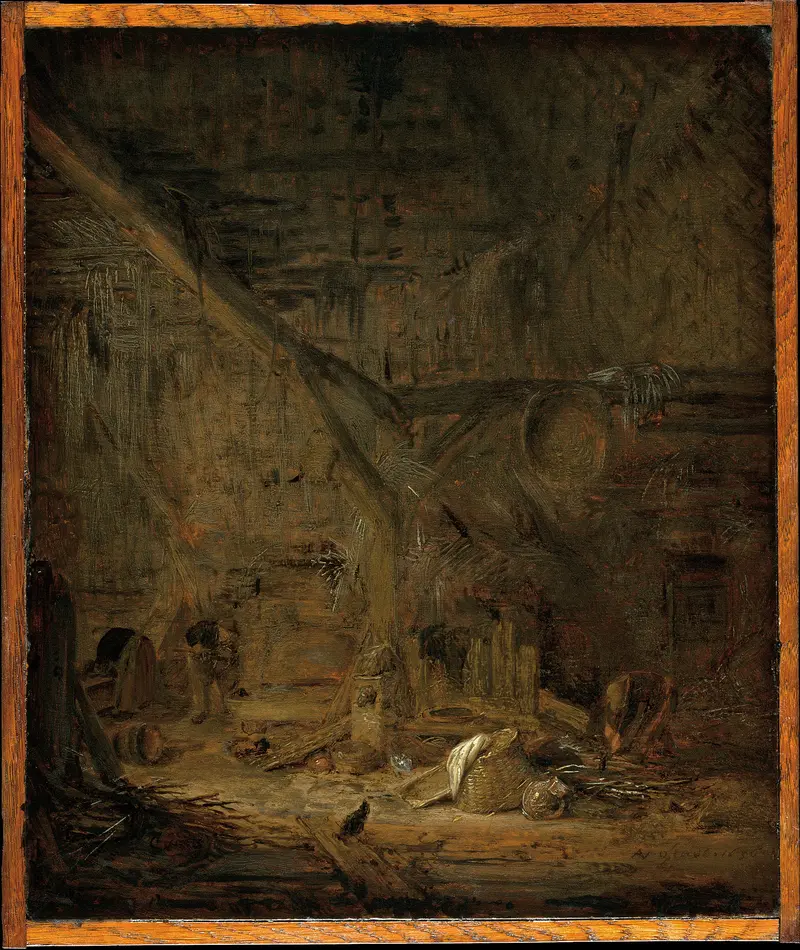
Interior of a Barn
Adriaen van Ostade
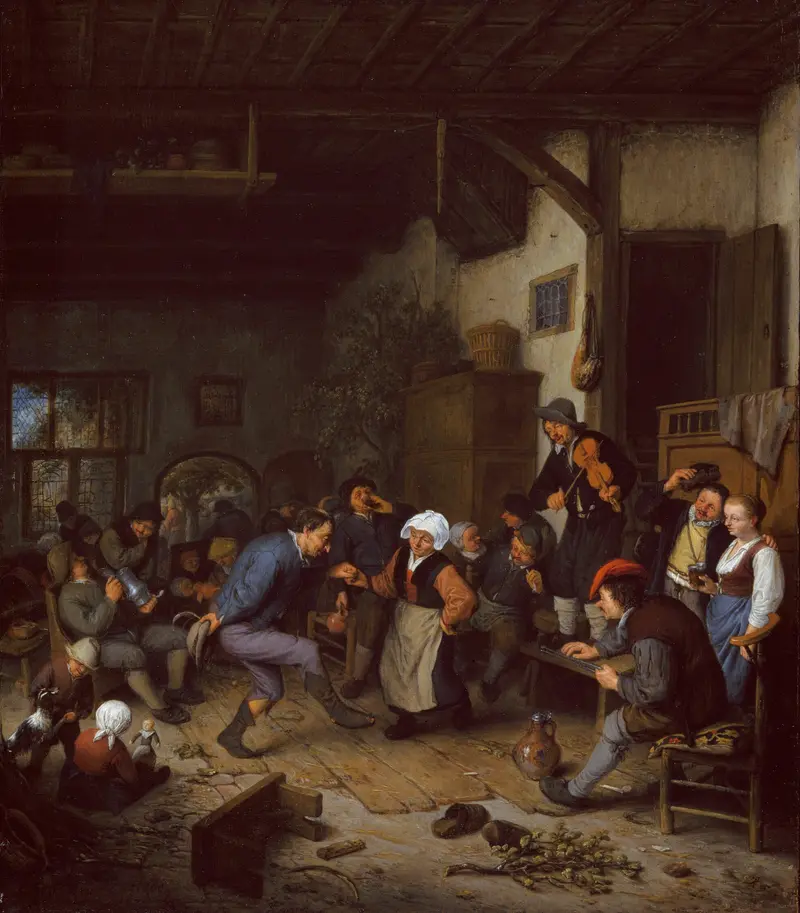
Merrymakers in an Inn
Adriaen van Ostade
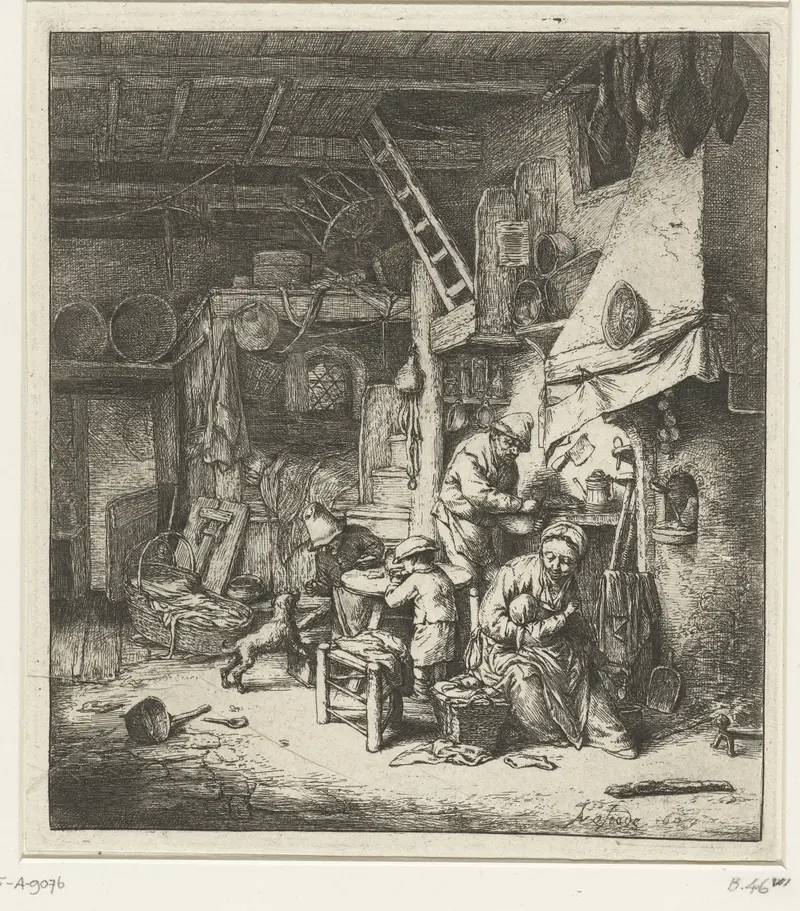
Boerengezin in interieur
Adriaen van Ostade
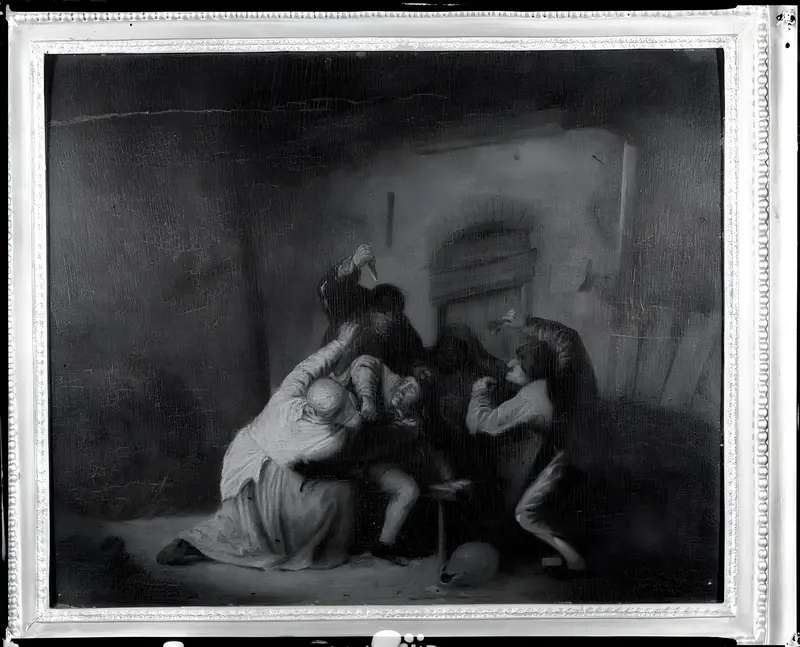
Peasants Brawling in a Tavern
Adriaen van Ostade
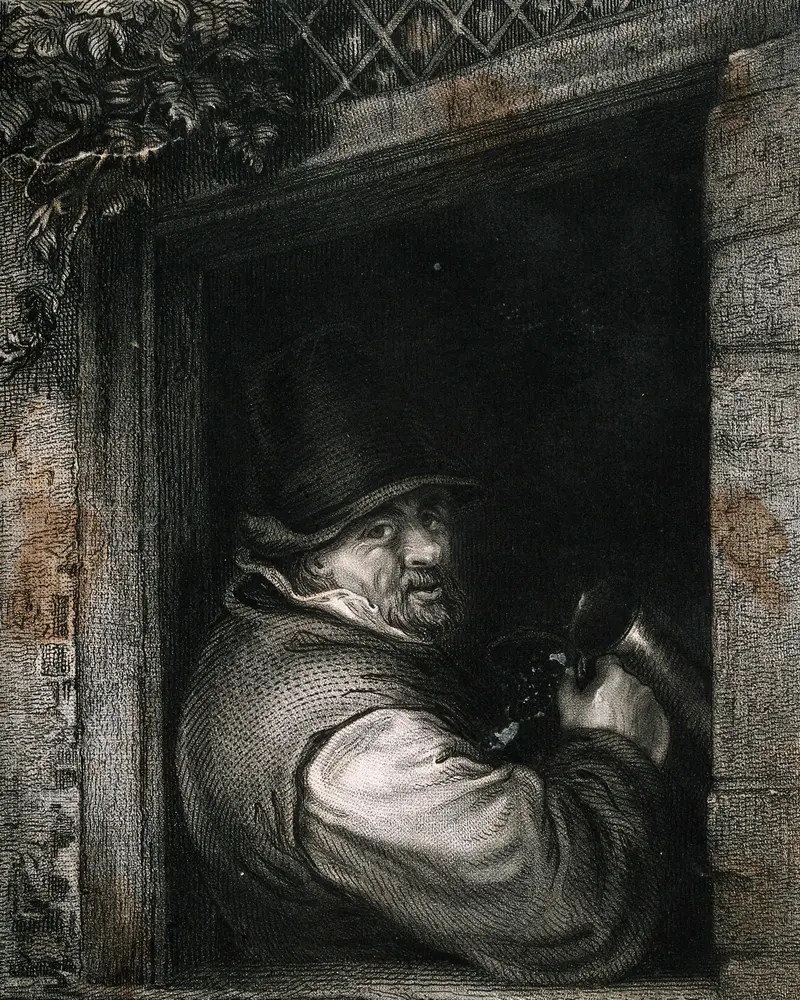
Man with a Tankard at a Window
Adriaen van Ostade
Dans in de herberg
Adriaen van Ostade
More Genre Scene Art

Banquet of the Officers of the St George Civic Guard
Frans Hals

Rembrandt and Saskia in the Scene of the Prodigal Son
Rembrandt van Rijn

Bal du moulin de la Galette
Pierre-Auguste Renoir

Quadrille at the Moulin Rouge
Henri de Toulouse-Lautrec

A Burial at Ornans
Gustave Courbet

When Will You Marry?
Paul Gauguin