
A Peasant Leaning on a Window Ledge — History & Facts
What draws the eye first in A Peasant Leaning on a Window Ledge is the hush of a private moment, caught in the soft, almost secretive glow that pools around the figure’s face. The peasant’s arms rest heavily on the ledge, his gaze angled downward and to the side, as if lost in thought or quietly observing something just out of view. The window frame, rendered with a density that suggests the rough grain of wood, acts as both a barrier and a stage—inviting us to peer in, yet emphasizing the boundary between viewer and subject.
The muted palette, dominated by earthy browns and shadowy blues, deepens the sense of intimacy and enclosure, while a faint cluster of foliage above hints at a world outside this dim interior. The light, carefully rationed, draws out the peasant’s features and the gentle curve of his hat, making his presence feel at once ordinary and quietly dignified. Painted around 1660, this work belongs to a tradition flourishing in the Dutch Golden Age, when artists like Adriaen van Ostade found poetry in the lives of common folk. Scenes like this—humble, unposed, and often tinged with humor or melancholy—were prized by a rising class of urban collectors who saw themselves reflected in the everyday.
Such paintings were not grand commissions for churches or courts, but intimate works for private homes, celebrating the textures of daily life. Today, A Peasant Leaning on a Window Ledge resides in the Royal Collection, a quiet testament to the enduring appeal of the ordinary, and a reminder to look again at the small dramas unfolding in the half-light.
More Artworks by Adriaen van Ostade

Dans in de herberg
Adriaen van Ostade
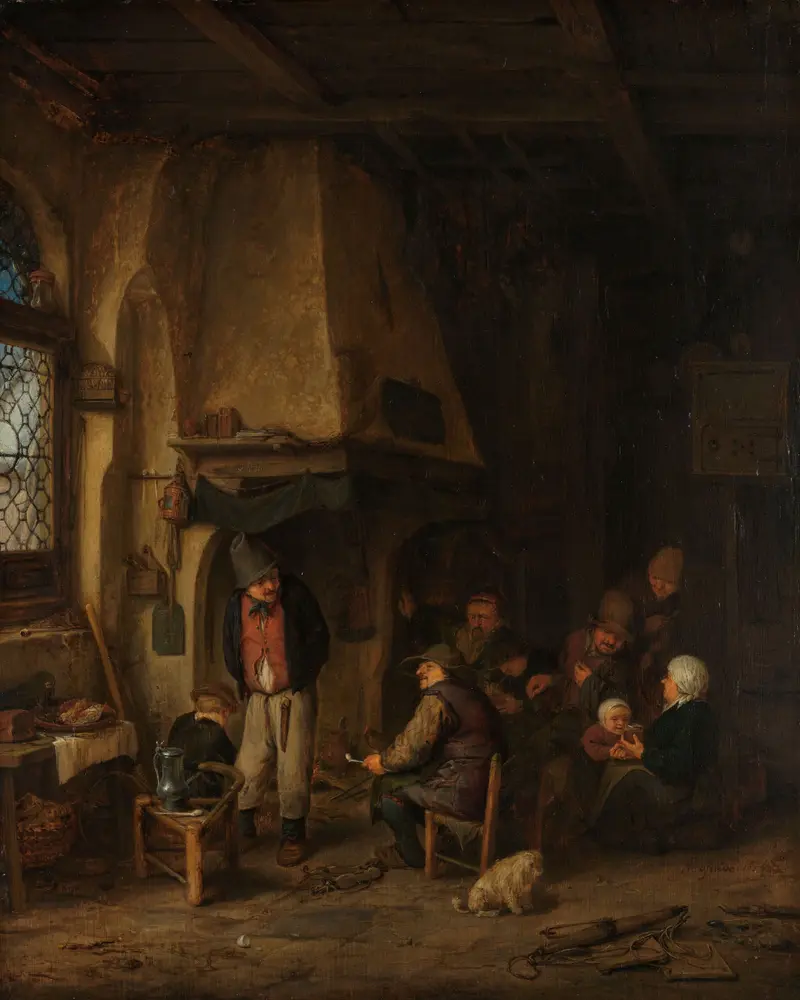
‘The Skaters’: Peasants in an Interior
Adriaen van Ostade
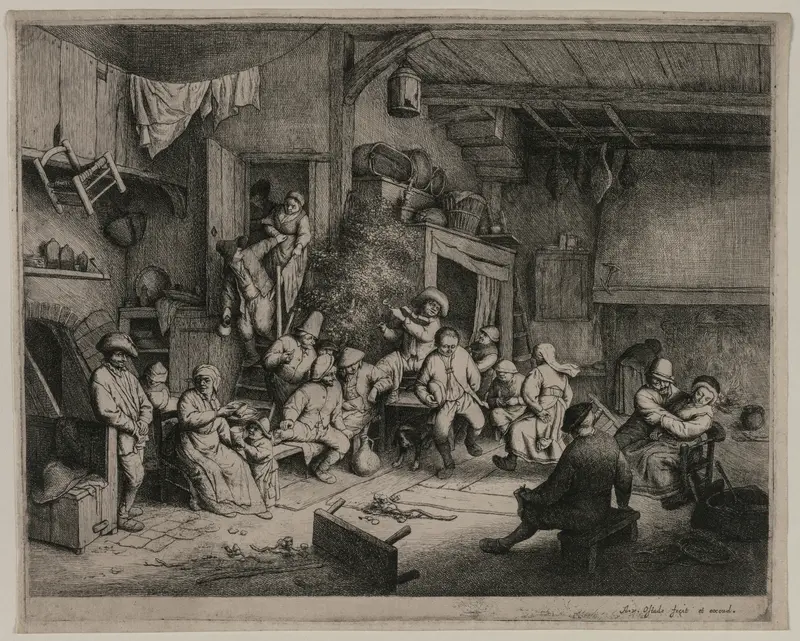
Dance at the Inn
Adriaen van Ostade
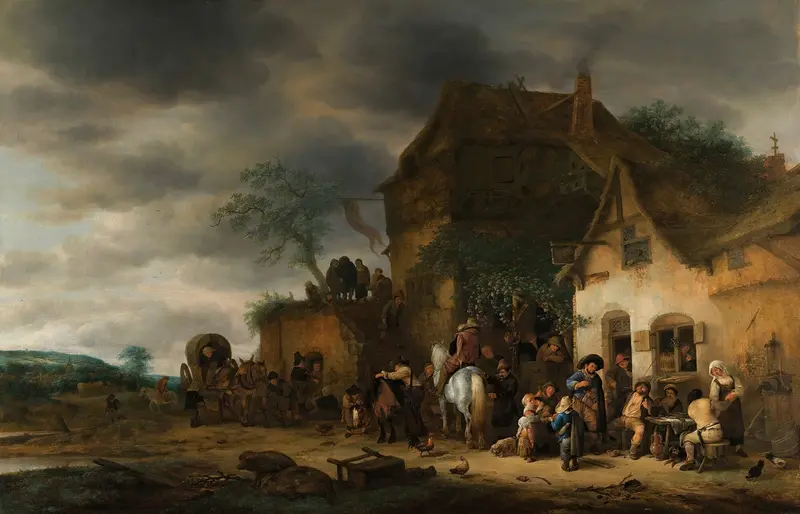
Travellers Halted At A Country Inn
Adriaen van Ostade
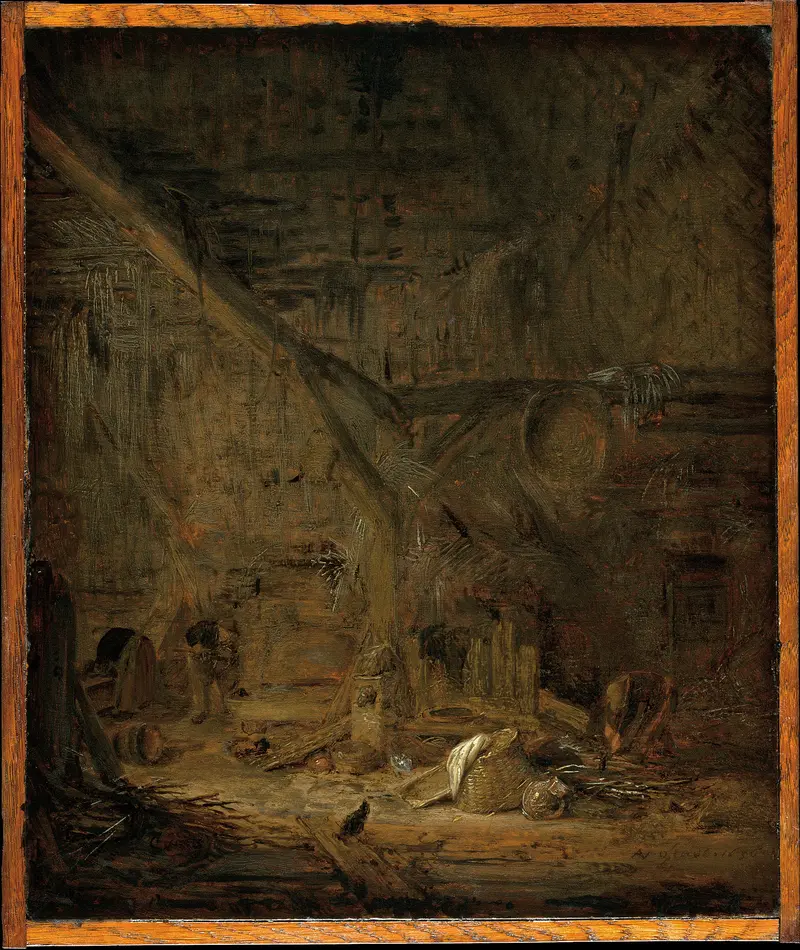
Interior of a Barn
Adriaen van Ostade
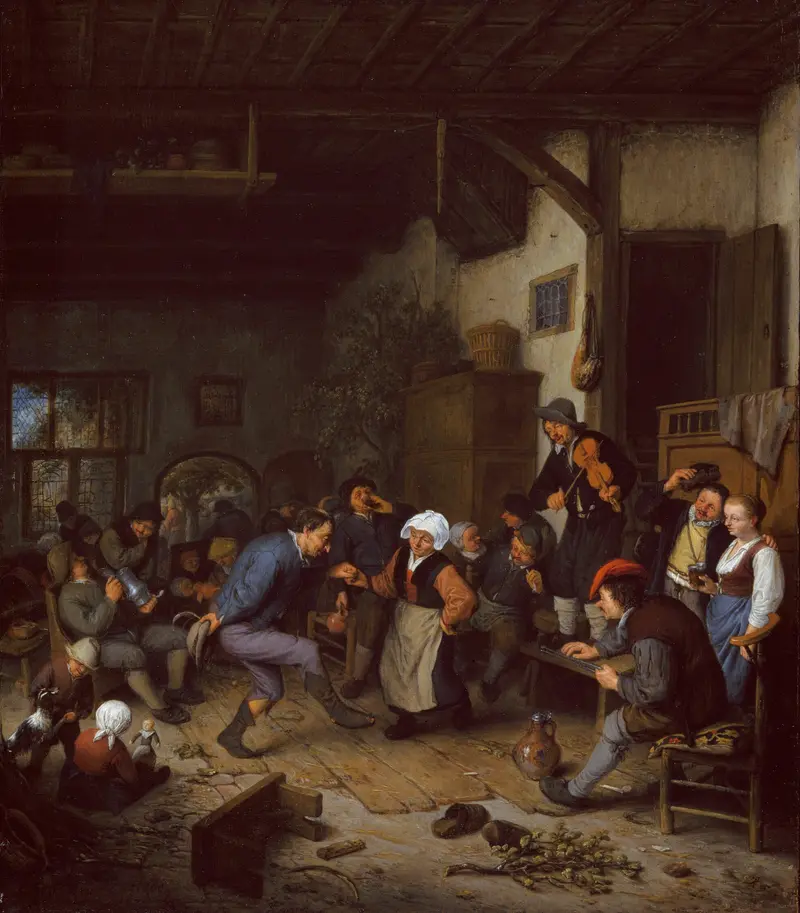
Merrymakers in an Inn
Adriaen van Ostade
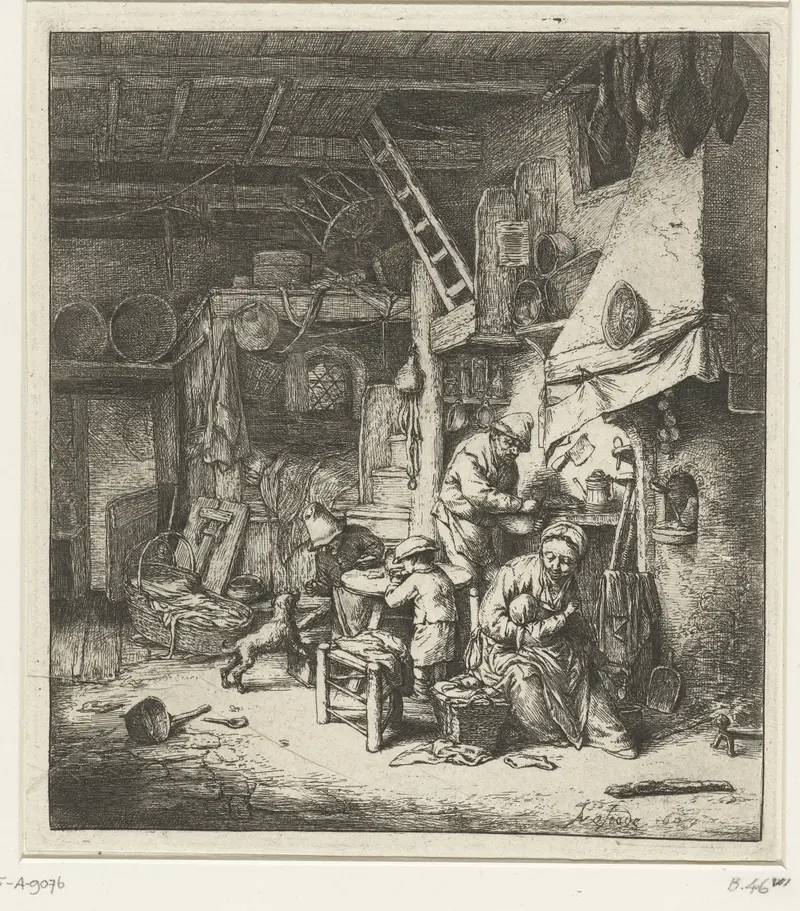
Boerengezin in interieur
Adriaen van Ostade
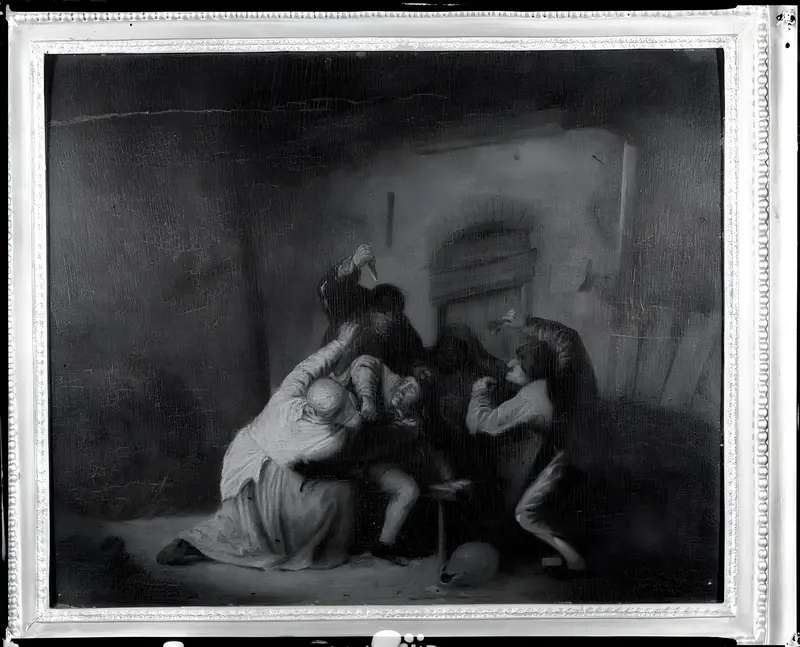
Peasants Brawling in a Tavern
Adriaen van Ostade
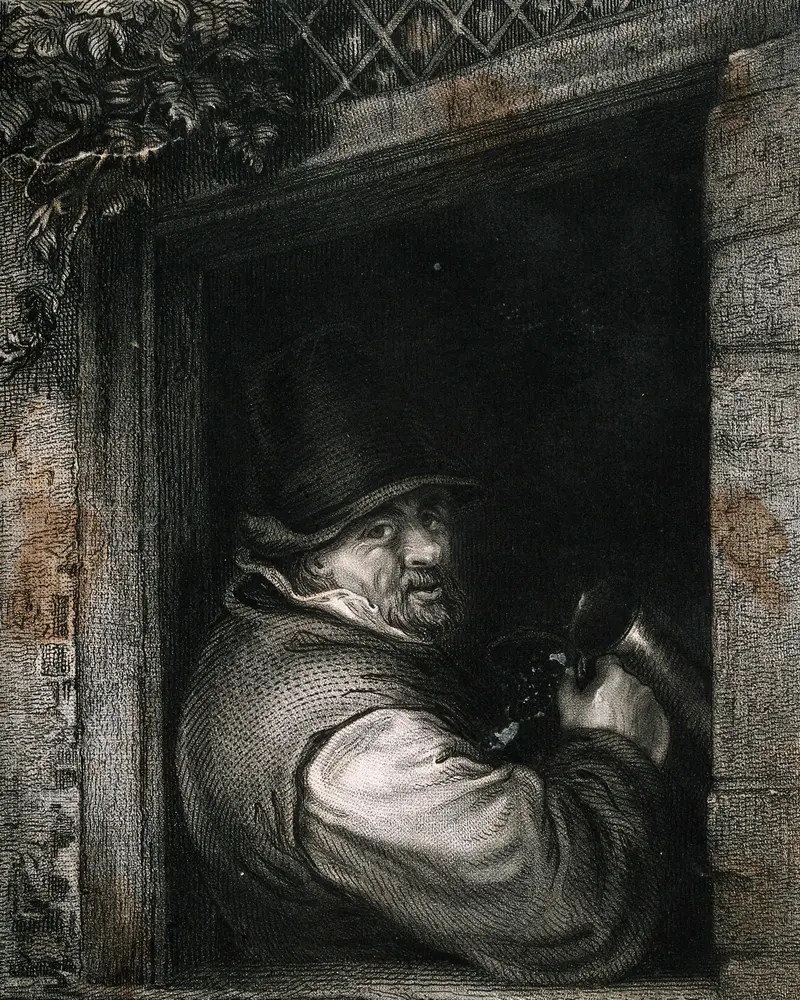
Man with a Tankard at a Window
Adriaen van Ostade
Dans in de herberg
Adriaen van Ostade
More Genre Scene Art

Banquet of the Officers of the St George Civic Guard
Frans Hals

Rembrandt and Saskia in the Scene of the Prodigal Son
Rembrandt van Rijn

Bal du moulin de la Galette
Pierre-Auguste Renoir

Quadrille at the Moulin Rouge
Henri de Toulouse-Lautrec

A Burial at Ornans
Gustave Courbet

When Will You Marry?
Paul Gauguin