
A River Scene — History & Facts
Is this a mirror — or a memory? The gentle curves of the water evoke a sense of nostalgia, as if each ripple holds a secret waiting to unfold. Look to the foreground, where the shimmering surface of the river captures the play of light. Notice how the brushstrokes create a delicate interplay between the reflections of the trees and the sky above, transforming mere water into a canvas of emotional resonance. The soft, muted colors of green and blue blend seamlessly, drawing the eye deeper into the scene and inviting contemplation. However, beneath the surface lies a tension between tranquility and longing.
The solitary boat, barely anchored against the flow, suggests a journey both physical and introspective — perhaps symbolizing the passage of time itself. The faint outlines of distant hills whisper of the unseen, yet beckon with promise. Each detail, from the swaying reeds to the gentle undulation of the water, speaks of nature’s dualities: stillness and movement, presence and absence. In 1887, amidst the rise of Impressionism, Harpignies was exploring themes of light and reflection while living in France.
During this period, he developed a unique approach to landscape painting that merged observation with emotional depth. As he navigated the art scene, he captured these quiet moments in nature, elevating them into profound statements about memory and experience.
More Artworks by Henri-Joseph Harpignies
Browse all →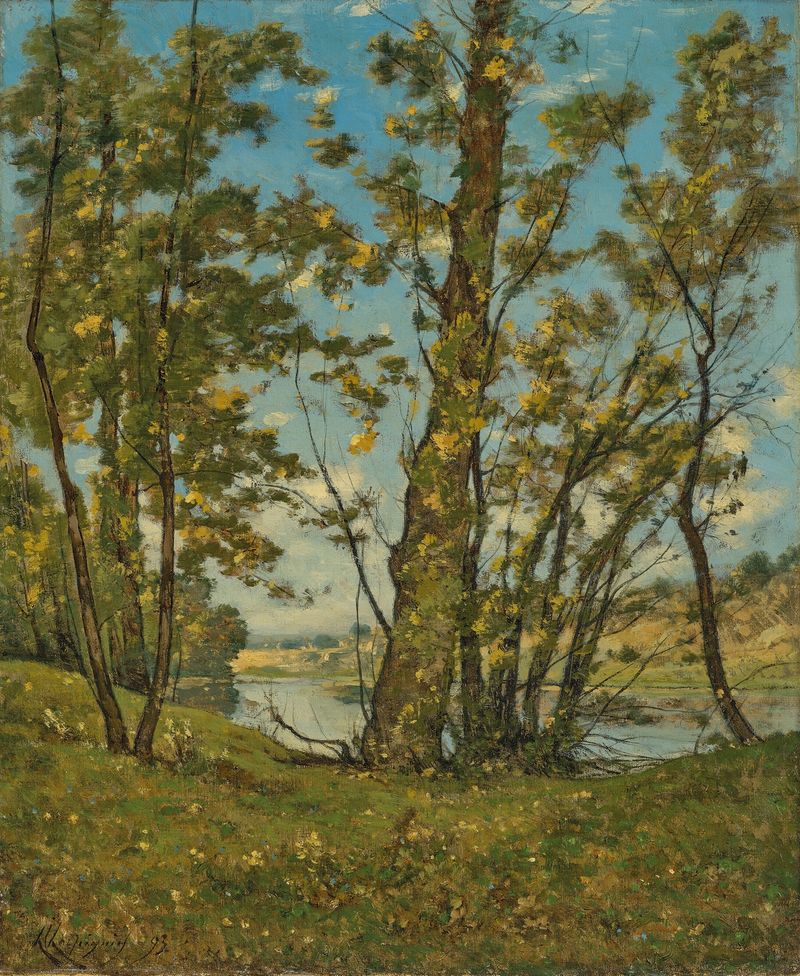
La Loire à Bonny
Henri-Joseph Harpignies
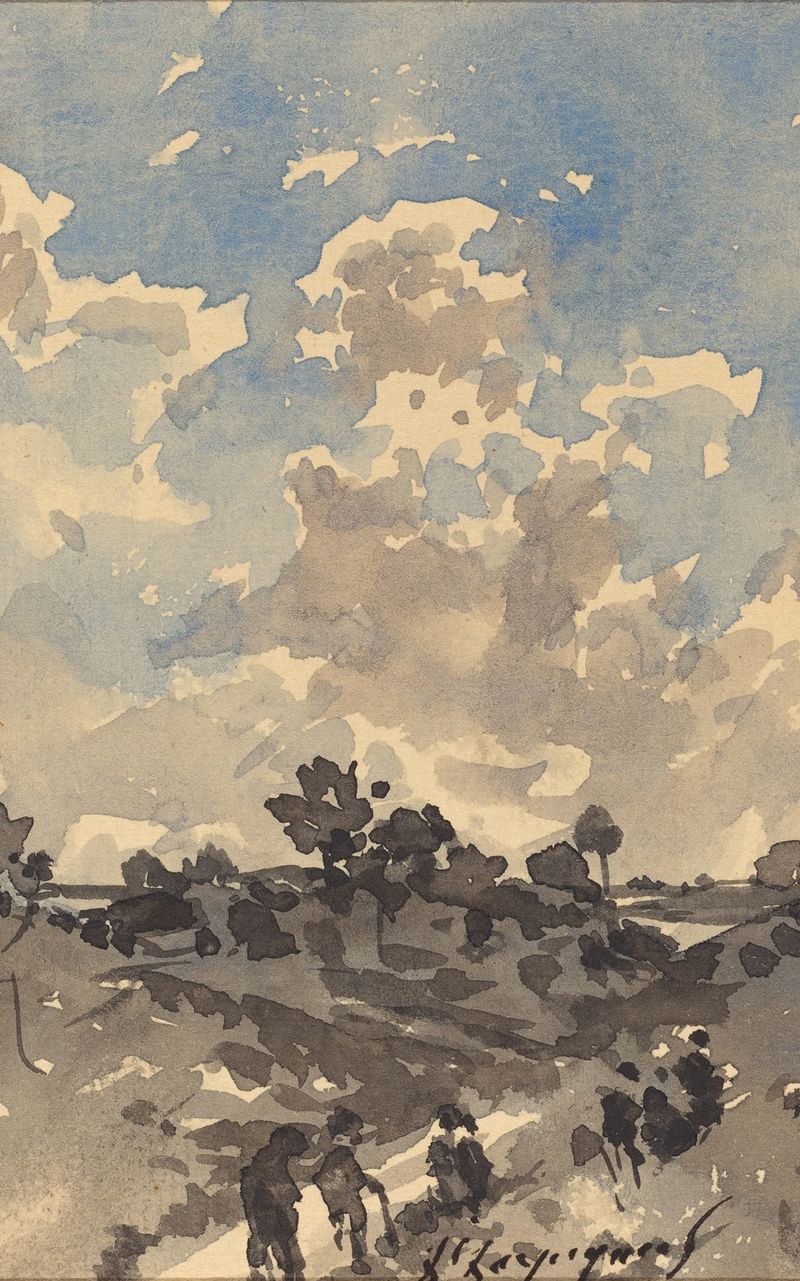
A Landscape with Figures Walking along a Path
Henri-Joseph Harpignies
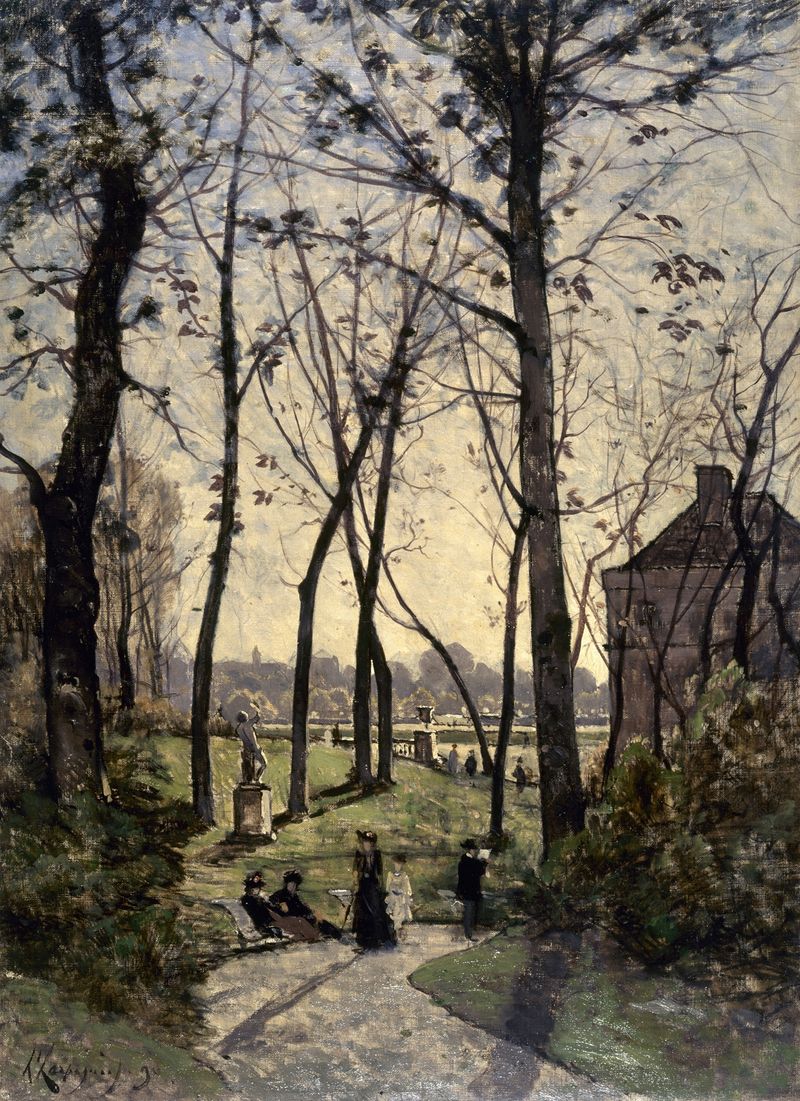
Le jardin du Luxembourg
Henri-Joseph Harpignies
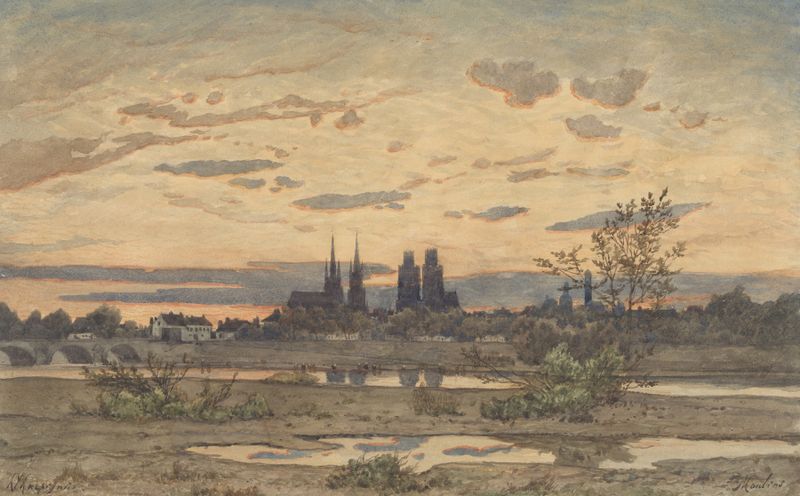
A View of Moulins
Henri-Joseph Harpignies
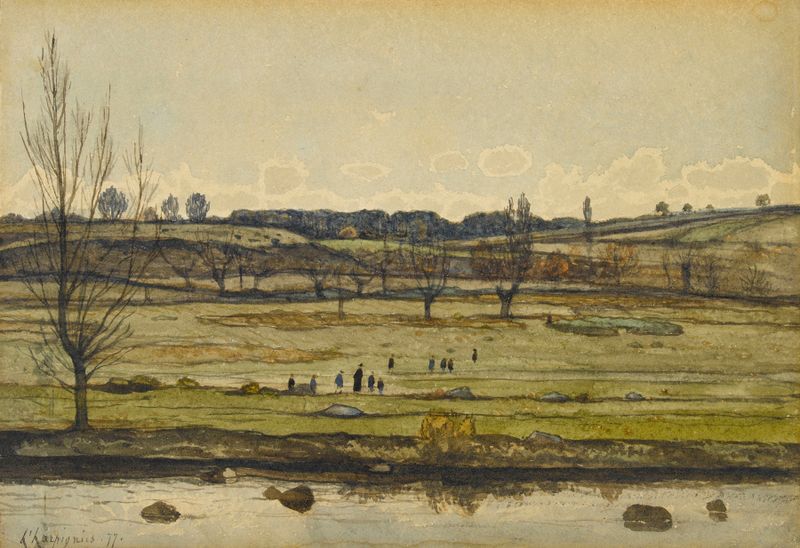
Paysage
Henri-Joseph Harpignies
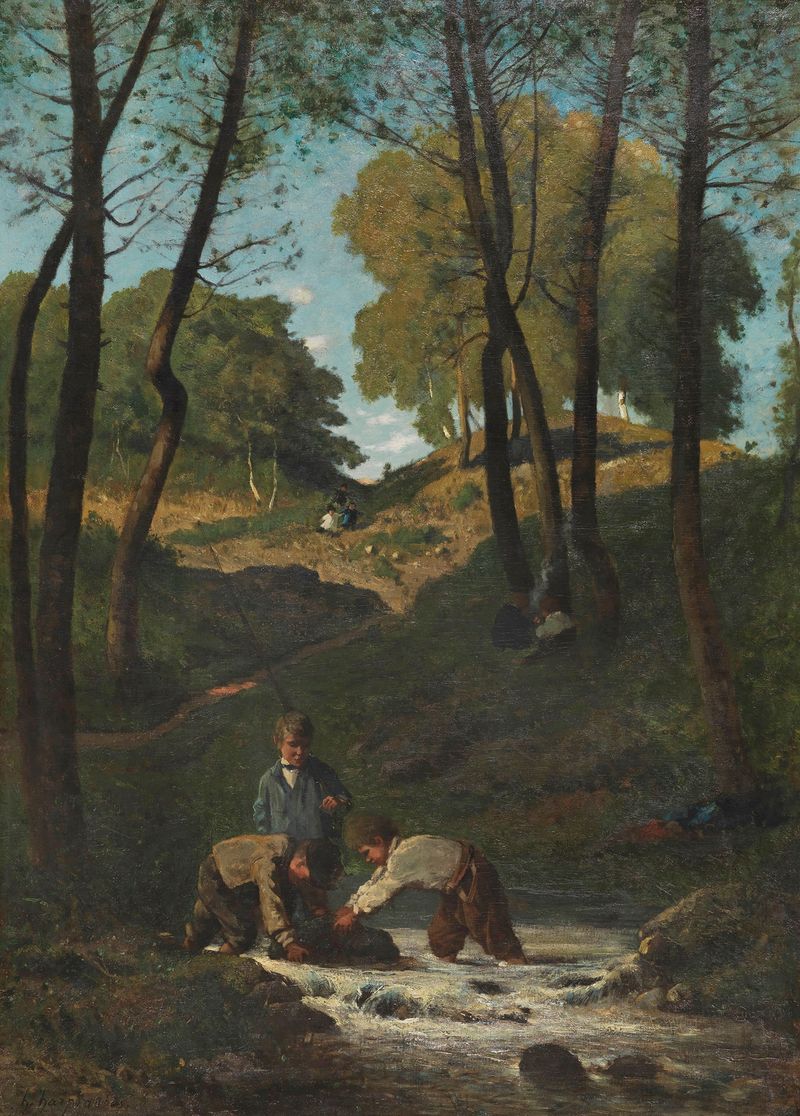
Chercheurs d’écrevisses
Henri-Joseph Harpignies
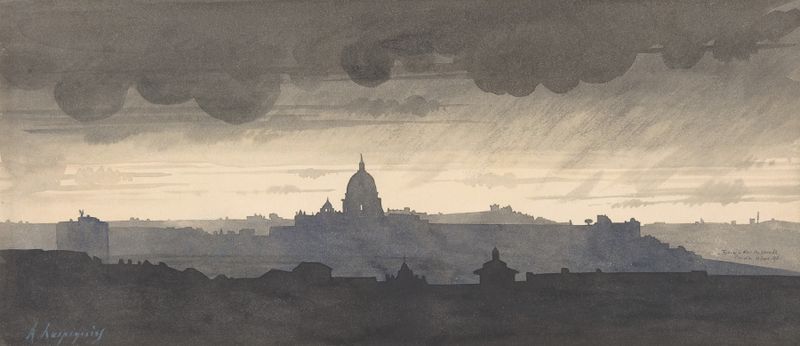
Saint Peter’s Seen From the Pincio, Rome
Henri-Joseph Harpignies
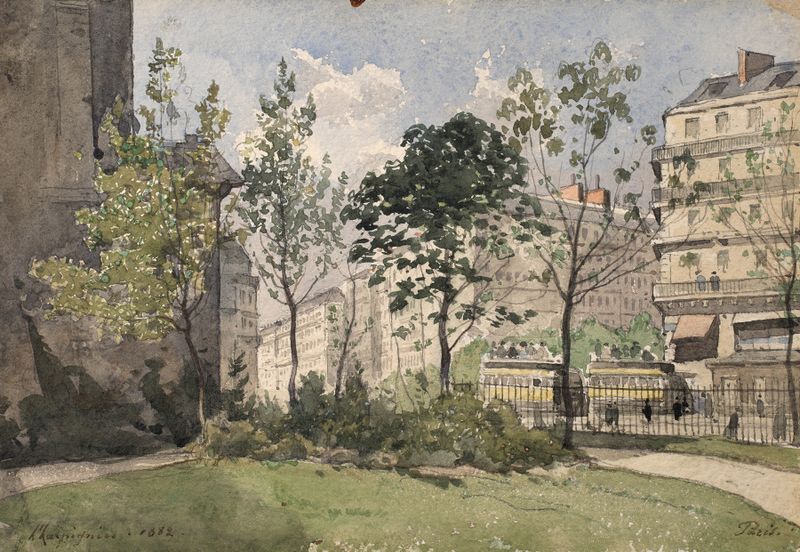
View of the forecourt of the Saint-Germain-des-Prés church
Henri-Joseph Harpignies
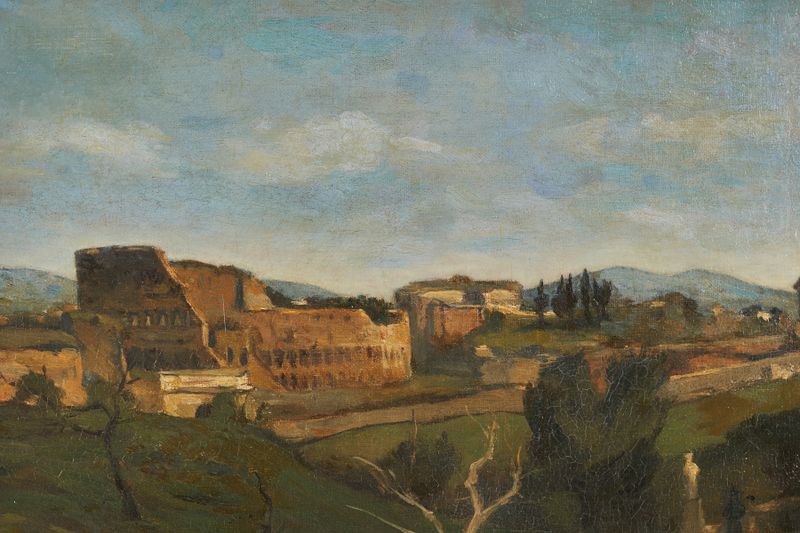
Le Colisée à Rome
Henri-Joseph Harpignies

Villefranche
Henri-Joseph Harpignies





