
A Spring in a Narrow Gorge — History & Facts
A single slender tree, defiantly alive, draws the eye upward through the shadowed chasm in A Spring in a Narrow Gorge. The scene is hushed, as if the world has paused to watch water thread its way among ancient stones. Böcklin’s narrow gorge is not just a backdrop, but a stage for contrasts: the softness of new leaves against the silent, towering cliffs, the delicate white blossoms at the base hinting at life’s persistence where it seems least likely.
The faint glimmers of light deep in the crevice suggest a world beyond, pulling the viewer’s gaze through darkness toward the promise of open sky. Painted in 1881, this work belongs to a period when artists like Arnold Böcklin turned landscapes into realms of psychological depth and mythic resonance. Such paintings were often made for private collectors who sought not just a record of nature, but a portal to the imagination—a place where the boundaries between reality and dream blur. While little is recorded about the journey of this particular piece, its presence today in the Getty Center’s collection allows us to experience a moment of quiet drama from the late nineteenth century.
Stand before it and let your eye wander from the cool shadows to the pale sky, and consider what stories might be waiting in the dark heart of the gorge.
More Artworks by Arnold Böcklin

Die Toteninsel III
Arnold Böcklin
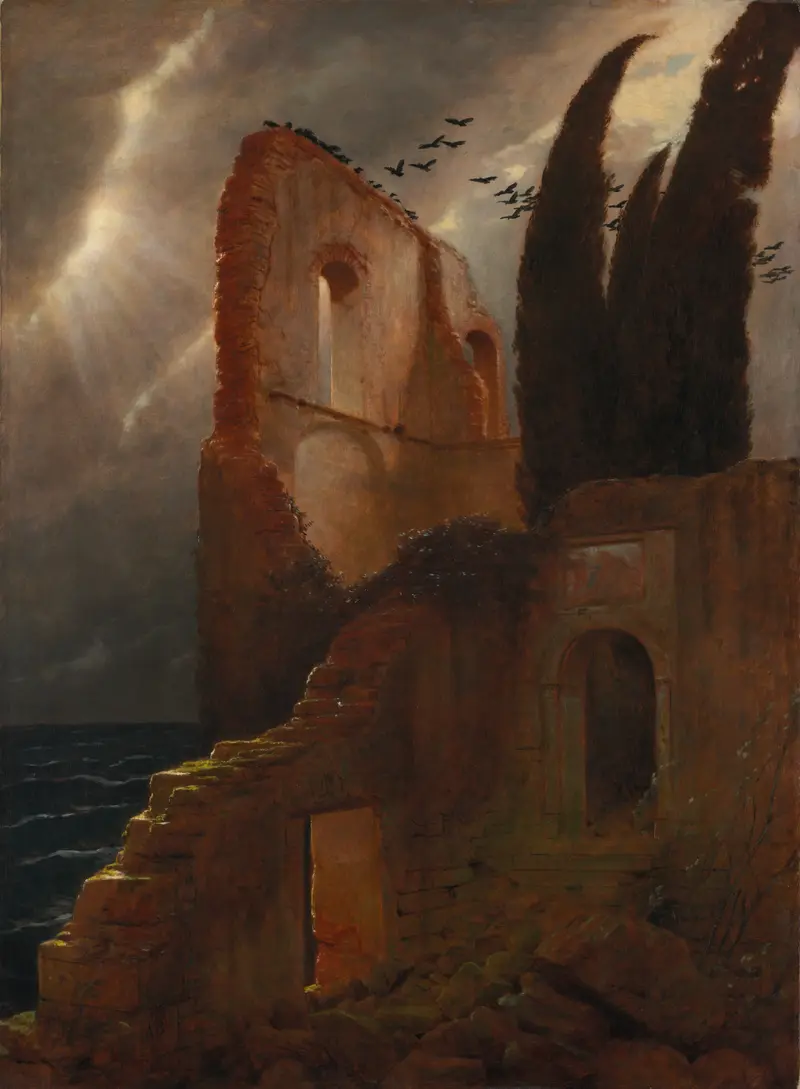
Ruin by the Sea
Arnold Böcklin
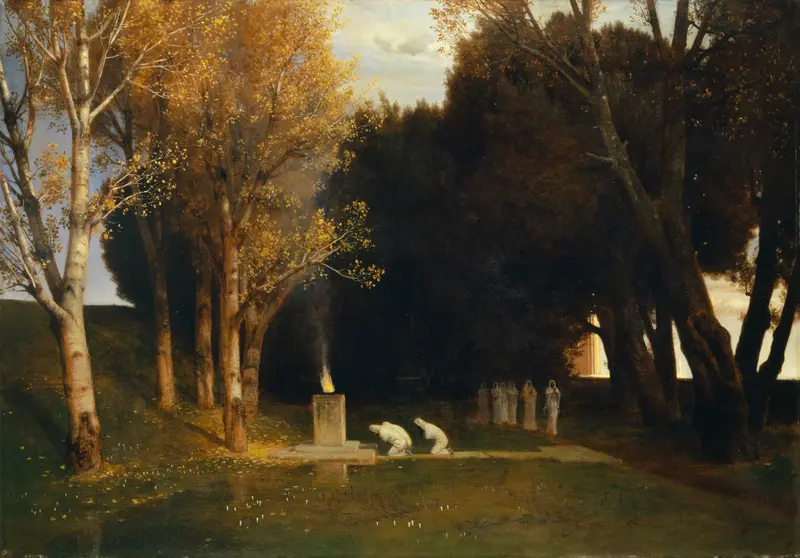
The Sacred Grove
Arnold Böcklin
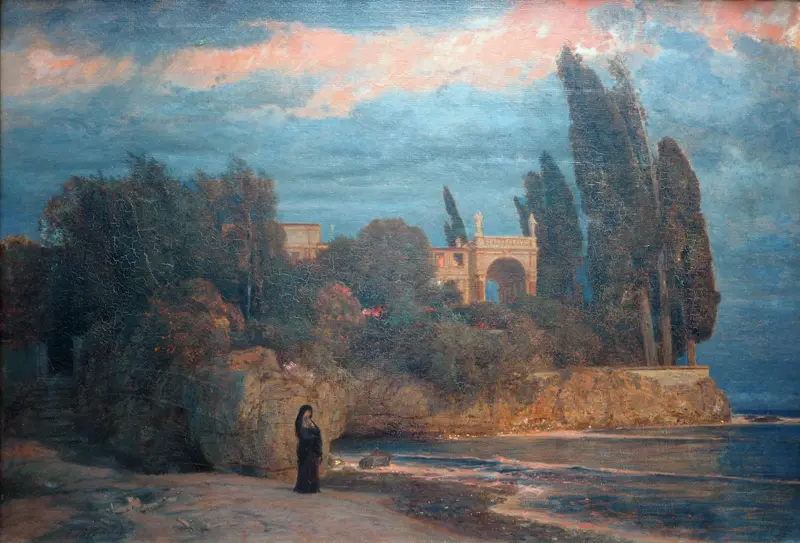
Villa by the Sea
Arnold Böcklin
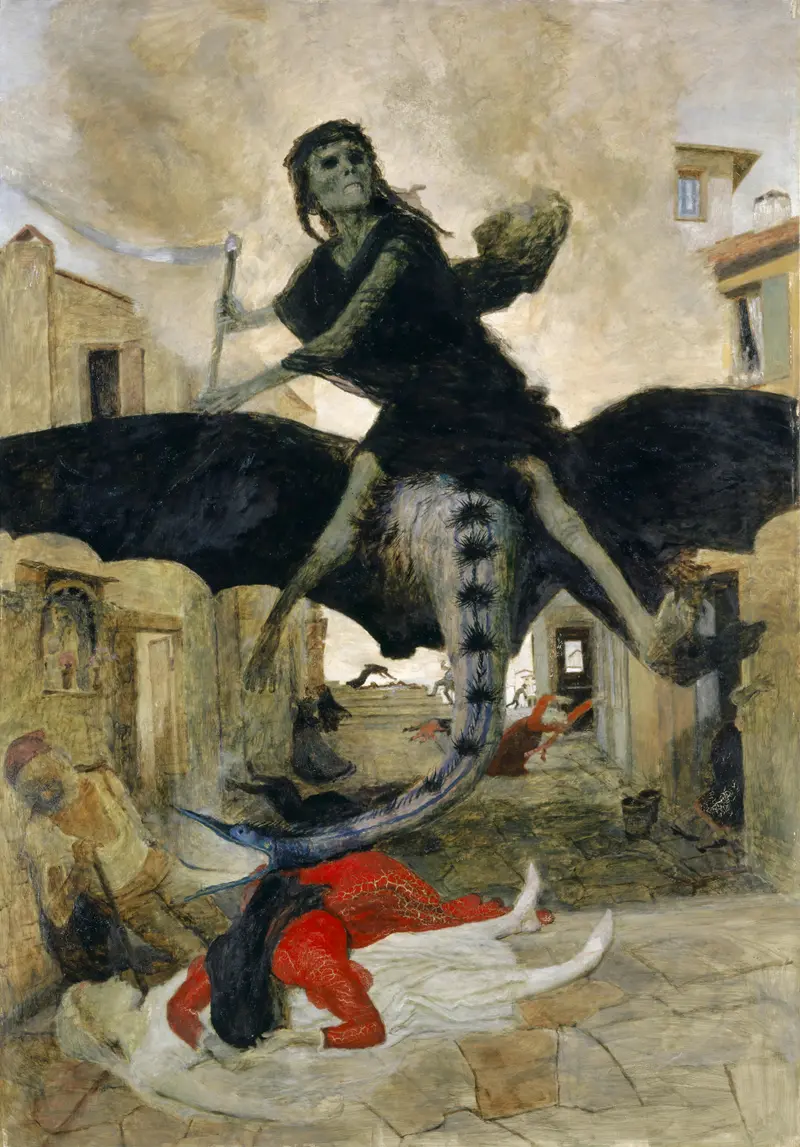
The Plague
Arnold Böcklin
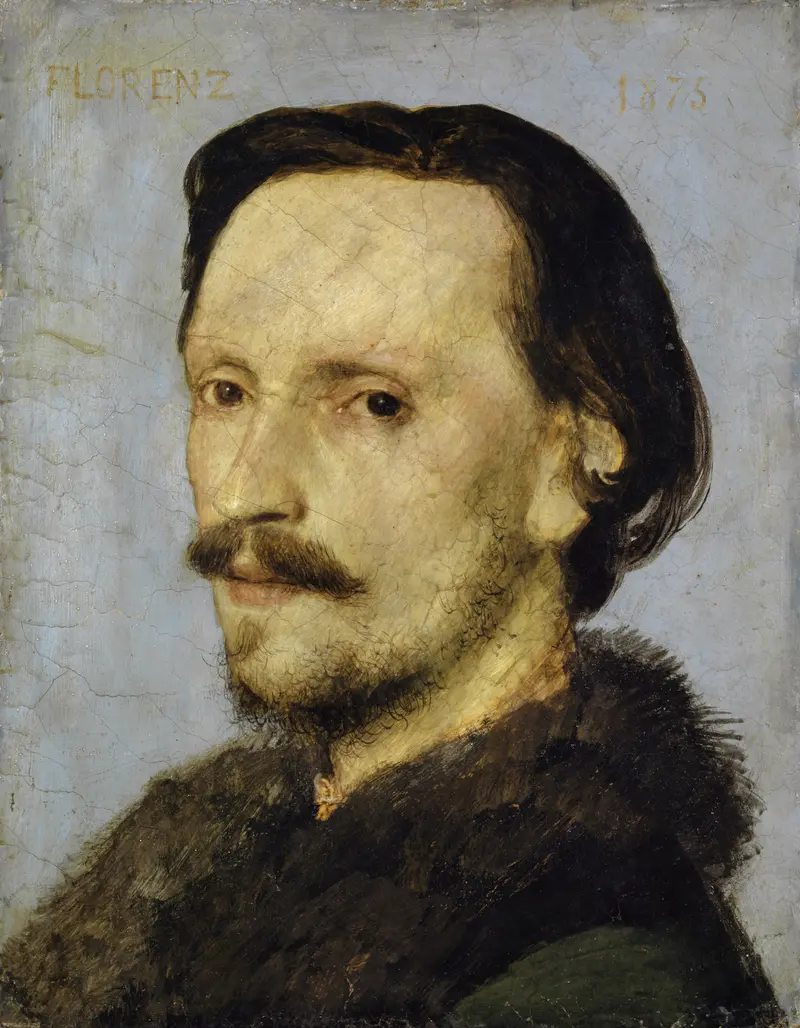
Böcklin Bildnis des Kunsthistorikers Adolph Bayersdorfer, 1875
Arnold Böcklin
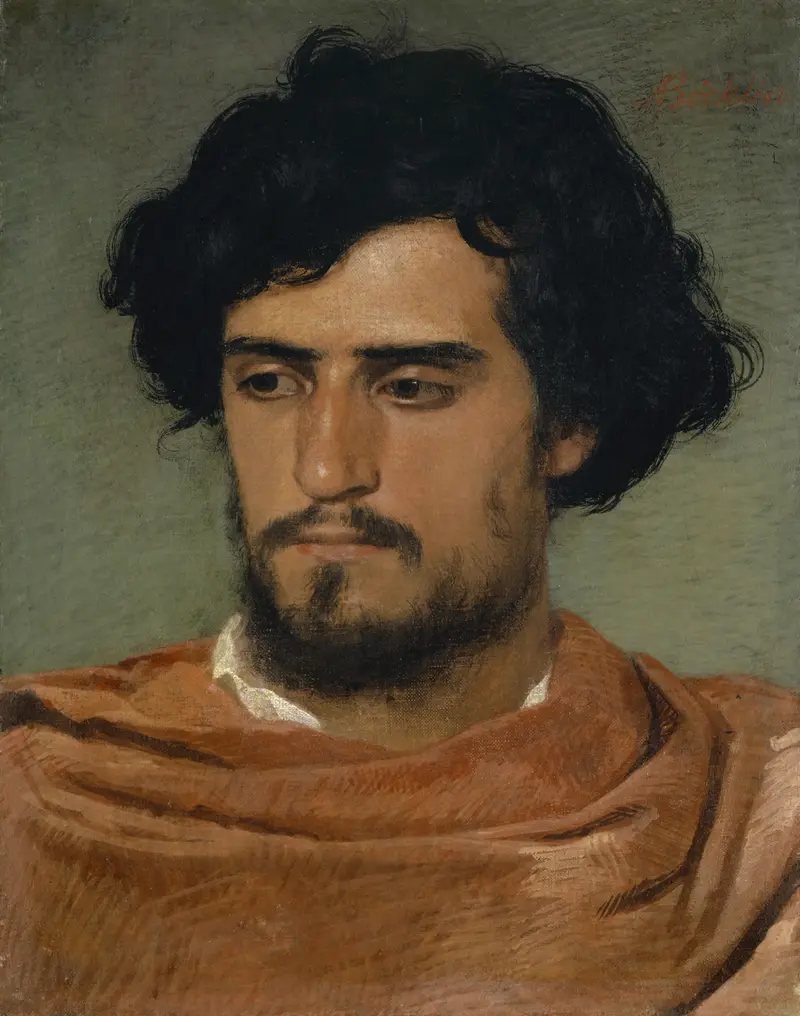
Head of a Roman
Arnold Böcklin
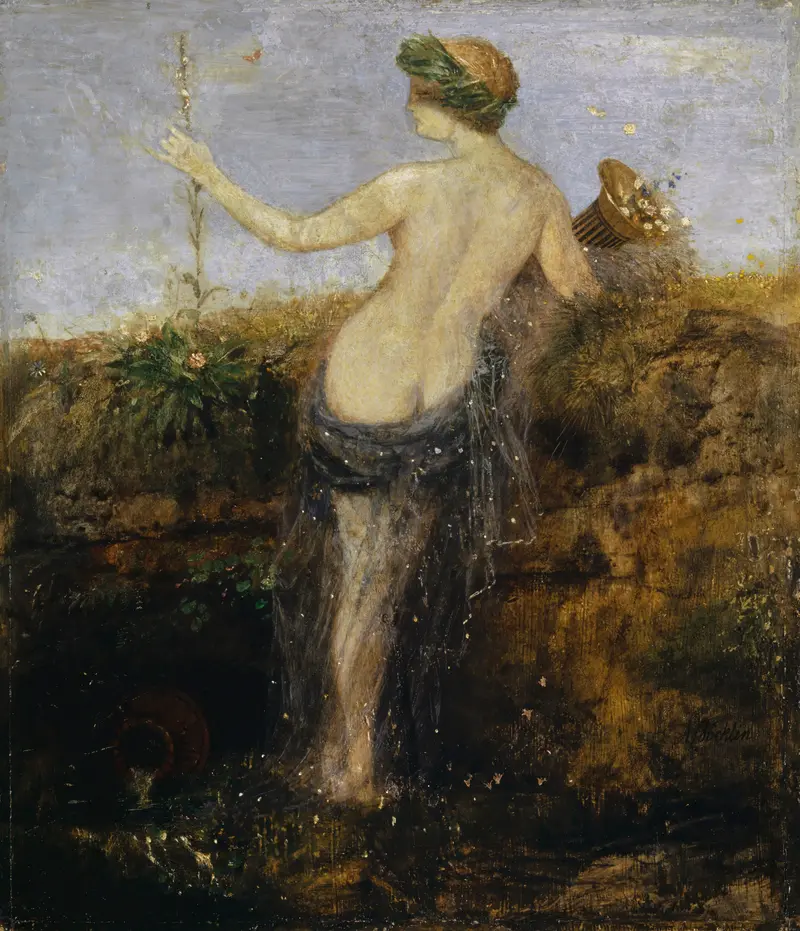
Nymphe with Horn of Plenty
Arnold Böcklin
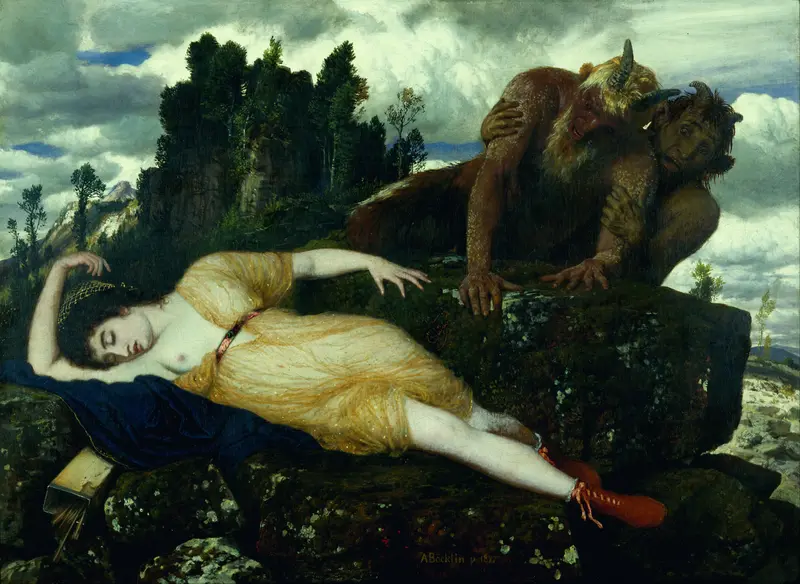
Sleeping Diana Watched by Two Fauns
Arnold Böcklin
Spring (Songs of Spring)
Arnold Böcklin
More Landscape Art

The Starry Night
Vincent van Gogh

View of Delft
Johannes Vermeer

Water Lilies
Claude Monet

The Grand Canal, Venice, looking north-west from the Ca' Corner to the Ca' Contarini degli Scrigni, with the campanile of Santa Maria della Carità
Canaletto

Windsor Castle
Canaletto

The Grand Canal looking North-East from the Palazzo Dolfin-Manin to the Rialto Bridge
Canaletto