
A Stone Curlew and a pair of French Partridge — History & Facts
What first catches the eye in A Stone Curlew and a pair of French Partridge is the sense of quiet alertness, the way the birds seem to freeze at the edge of movement. The stone curlew, long-legged and sharp-eyed, hovers above the sandy ground, its gaze fixed on something just beyond the frame—an invitation for the viewer to imagine what has drawn its attention. Below, the French partridges nestle into the earth, their richly patterned feathers rendered with a precision that rewards close looking.
The artist’s choice to set these birds against a pale, almost washed-out background pushes their forms into sharper relief, while the scattered grasses and the small, sun-bleached skull at lower right hint at the cycles of life and death that shape this landscape. This work springs from the world of 19th-century British impressionist art, a period when natural history painting flourished in tandem with the rise of amateur ornithology and the Victorian passion for cataloguing the natural world. Artists like Archibald Thorburn became celebrated for their ability to capture not only the likeness but the character of wild birds, often working for collectors, scientists, or publishers of lavish illustrated books. While little is recorded about this specific painting’s commission or journey, its presence in the Bonhams gallery today speaks to the enduring appeal of such works—at once scientific record and quiet celebration of the everyday drama of the countryside.
Look again at the careful interplay of shadow and light, and you may find yourself drawn into the hush of the scene, as if you too have stumbled upon these wary creatures in the wild.
More Artworks by Archibald Thorburn

The Watchful Hinds
Archibald Thorburn
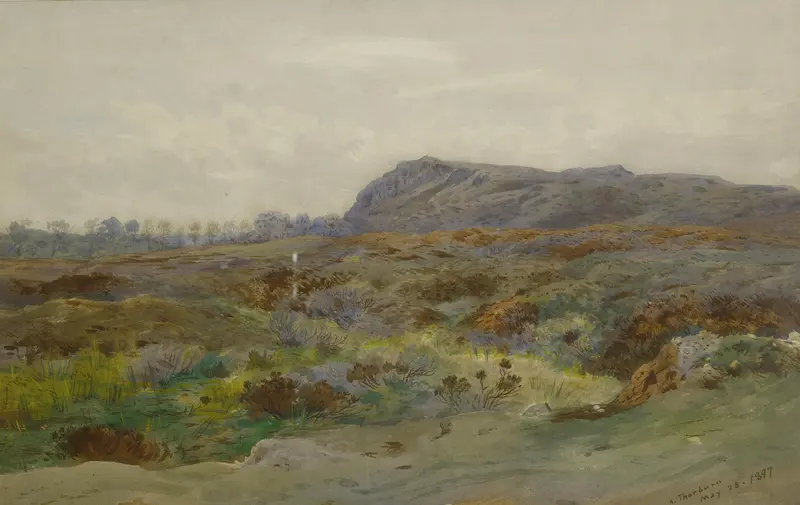
Moorland Landscape
Archibald Thorburn
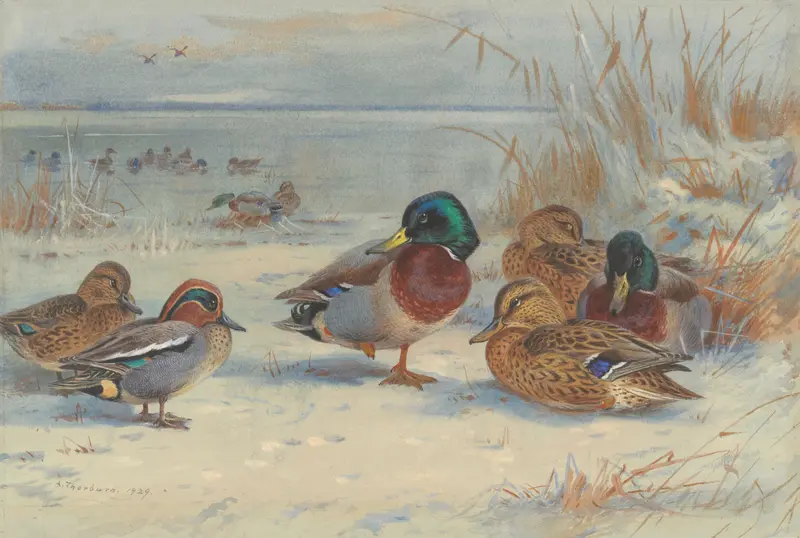
Mallard and teal in the snow
Archibald Thorburn
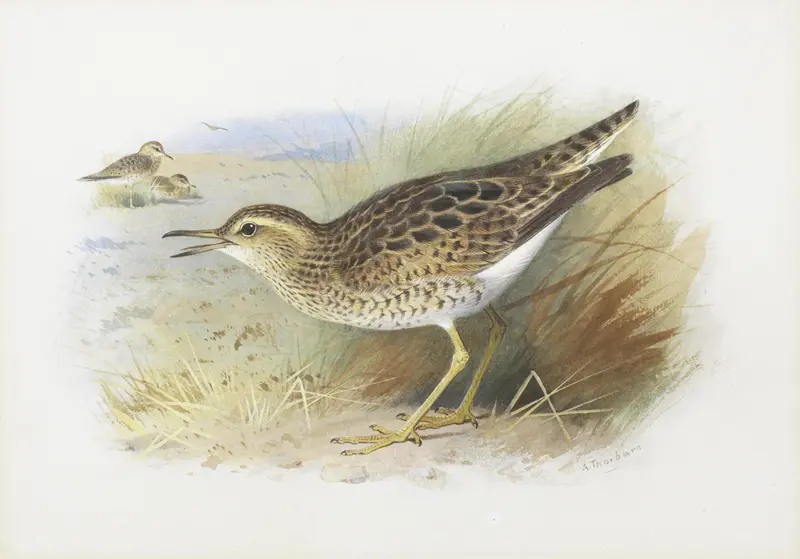
Bartram's Plover
Archibald Thorburn
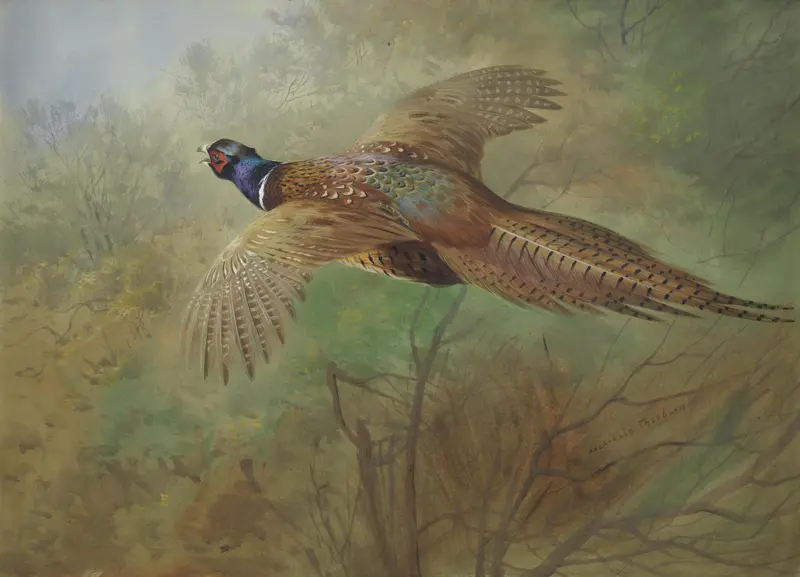
Pheasant in flight
Archibald Thorburn
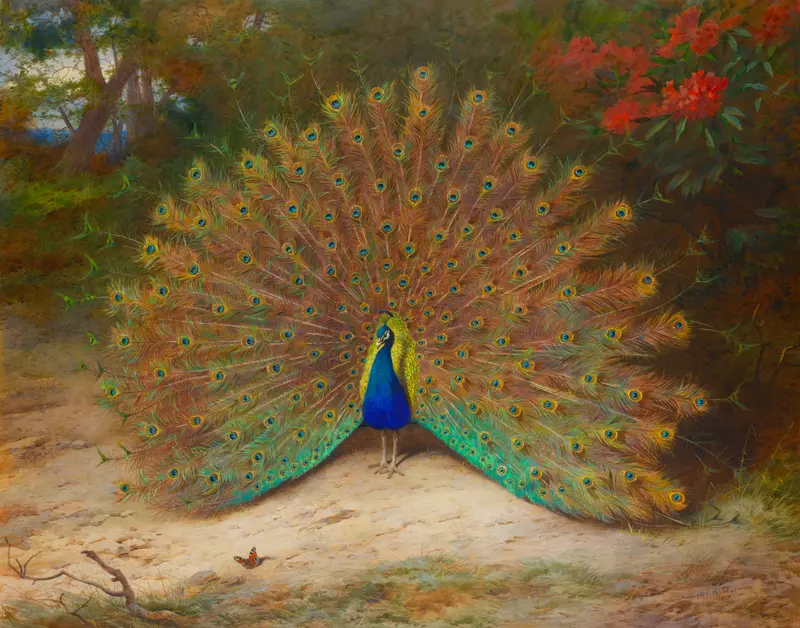
Peacock and Peacock Butterfly
Archibald Thorburn
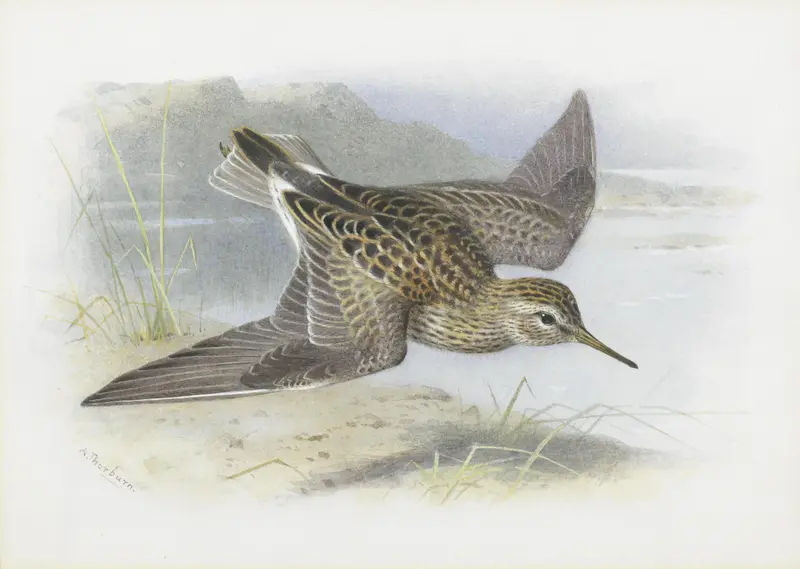
Pectoral Sandpiper
Archibald Thorburn
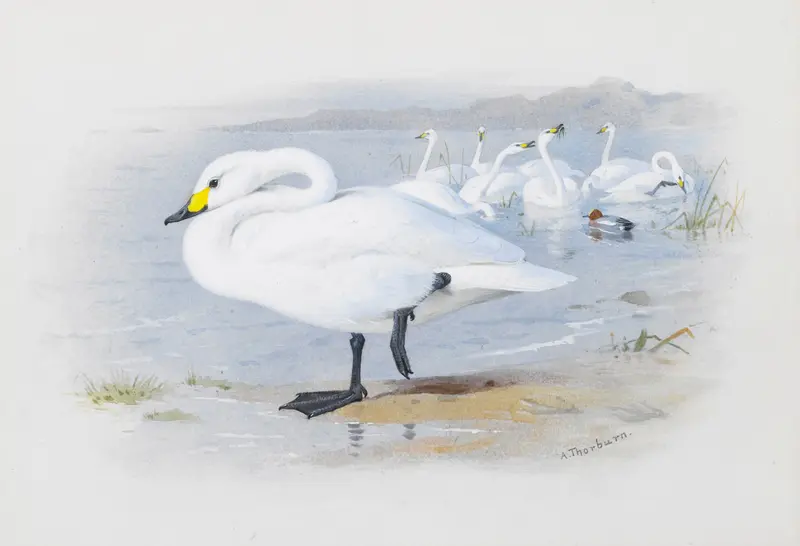
Bewick's swan.
Archibald Thorburn
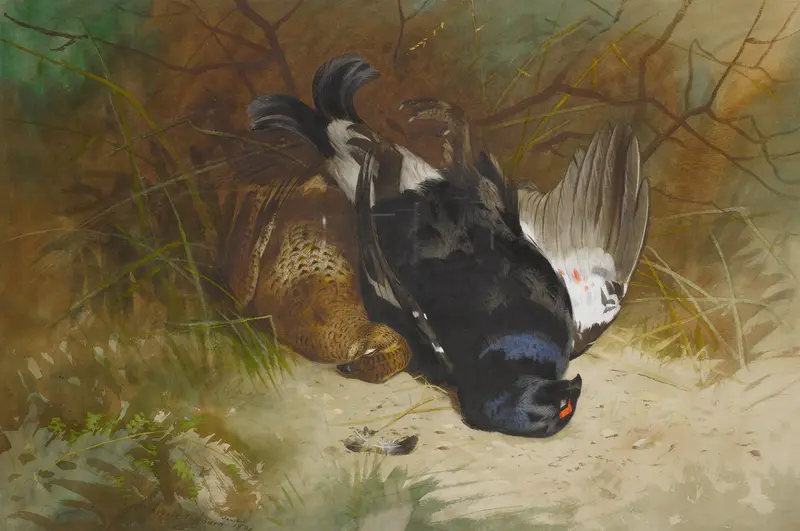
Still life of a pair of Blackgame.
Archibald Thorburn
Blackgame
Archibald Thorburn





