
A View of Molosmes — History & Facts
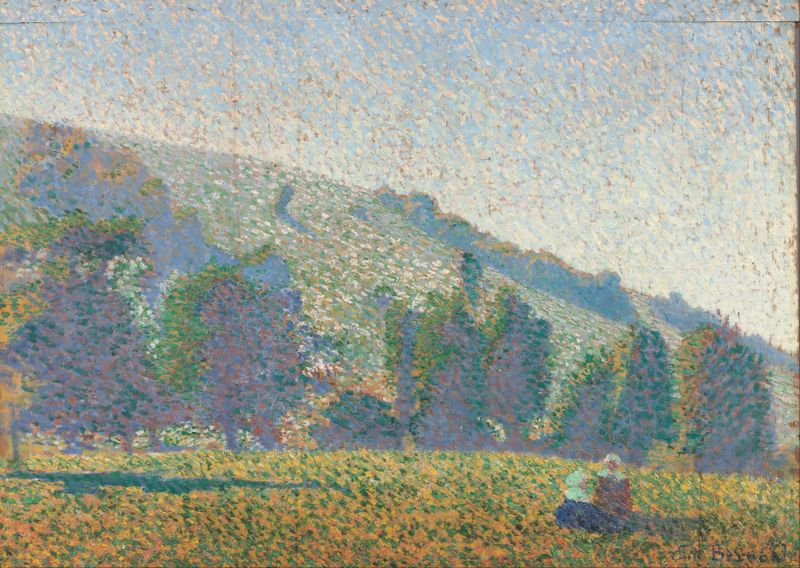
In the quiet of art, loss often finds its voice, whispering through the strokes of a masterful hand. Look to the foreground where the textured fields stretch across the canvas, a mosaic of greens and ochres that invites the eye to wander. Notice how the horizon, painted with an almost dreamlike quality, blurs the lines between earth and sky, creating a sense of ethereal serenity. The juxtaposition of bold brushstrokes against softer washes of color evokes a tension between the tangible and the ephemeral, hinting at the passage of time itself. Beneath the pastoral beauty lies an emotional landscape, where the weight of absence lingers.
The distant hills cradle a somber atmosphere, perhaps suggesting the longing for a lost connection or a memory fading into the background. Each stroke feels deliberate, yet haunted, as if the artist grapples with vulnerability amid the idyllic scene, inviting viewers to contemplate their own experiences of loss. Created during a period of personal upheaval, the artist worked on this piece in the late 19th century, a time when the art world was evolving rapidly. As Impressionism began to dominate, he sought to convey deeper emotional truths through a unique synthesis of color and form.
This exploration of personal and collective loss reflected both his own journey and the broader cultural shifts of his time, echoing sentiments that resonate in the hearts of many even today.
More Artworks by Emile Bernard
Browse all →
House among trees; Pont-Aven
Emile Bernard
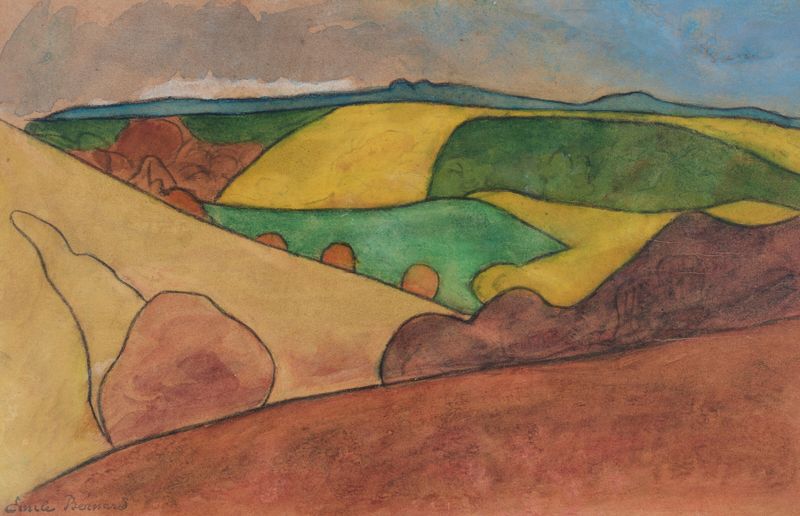
Paysage de Bretagne
Emile Bernard

Harvest by the Sea
Emile Bernard
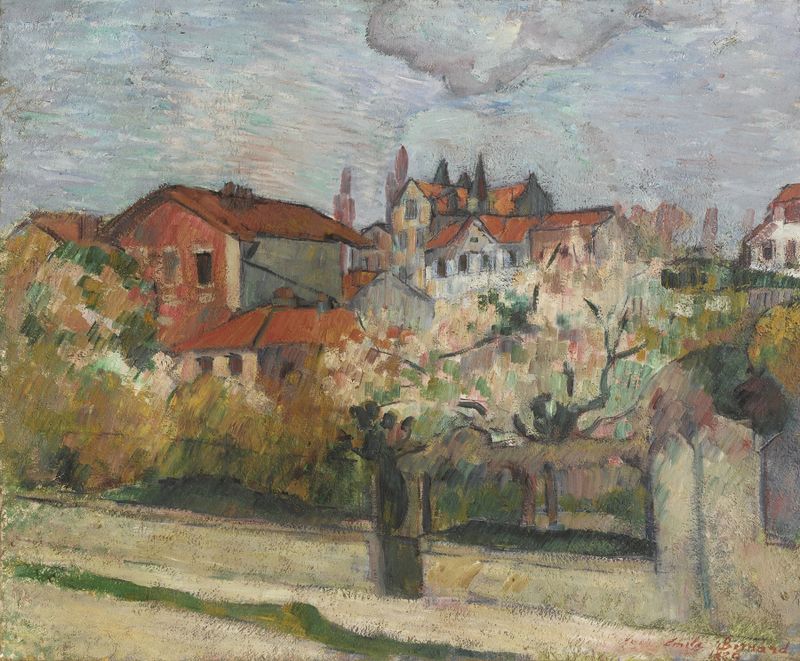
Jardin en fleur à Asinères
Emile Bernard
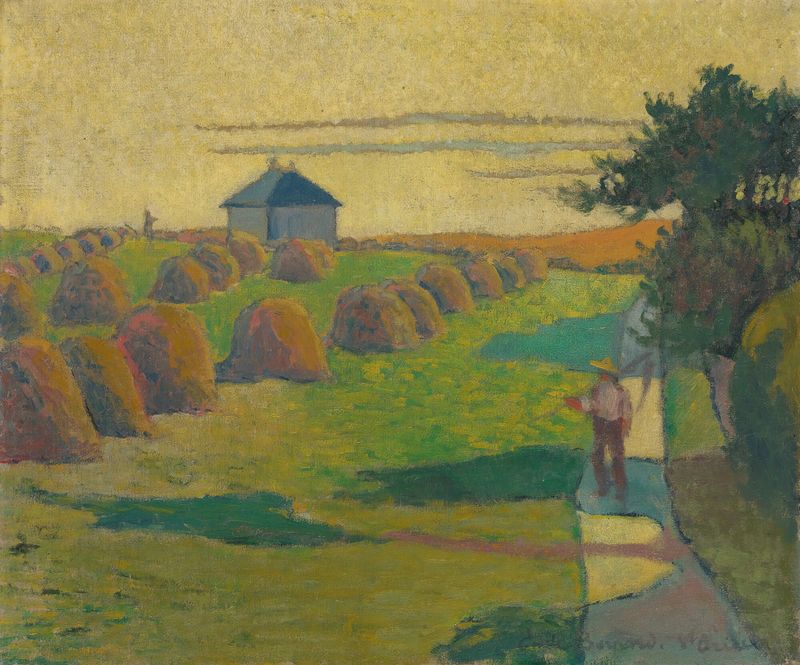
Saint-Briac
Emile Bernard
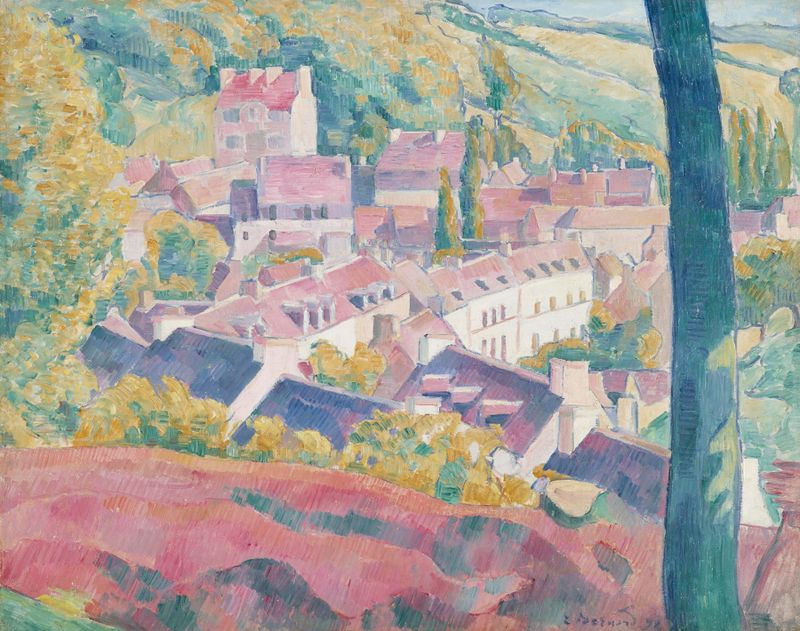
Pont-Aven Seen from the Bois d’Amour
Emile Bernard
Two Breton women in a meadow
Emile Bernard

Un Coin Du Bois D’amour A Pont Aven
Emile Bernard

Vue des toits
Emile Bernard

Landscape at Pont-Aven
Emile Bernard





