
A View of Paestum — History & Facts
What first seizes the eye in A View of Paestum is the way the ancient temples rise from the landscape like survivors of another world, their columns catching the last warmth of the sun as if they alone remember the glory of Greece in Italy. The painter sets these ruins not as isolated relics, but as living landmarks in a broad, inhabited plain, ringed by walls and dotted with figures—travelers, perhaps, or scholars—who animate the foreground and draw the viewer into the scene. The low horizon grants the sky a commanding presence, its pink and blue gradations suggesting either dawn or dusk, a time of reflection and rediscovery.
The careful alignment of the temples, each rendered with crisp architectural detail, signals reverence for antiquity, while the scattered ruins and cultivated fields remind us that history and daily life are never far apart. Painted in 1759, this work belongs to an age when the Grand Tour was transforming the European imagination, and landscapes like this were prized by aristocrats eager to possess a piece of the classical past. Artists such as Antonio Joli found their patrons among these travelers, producing views that were both souvenirs and statements of taste—windows onto a world where ancient stones and modern ambitions met. The painting now resides in the Norton Simon Museum, a testament to the enduring fascination with sites like Paestum, whose temples inspired poets, painters, and architects alike.
As you linger over the scene, let your eyes wander from the geometry of the ruins to the gentle slopes beyond, and imagine the generations who have stood in awe before these same stones.
More Artworks by Antonio Joli

Monastery Di San Martino, Naples
Antonio Joli
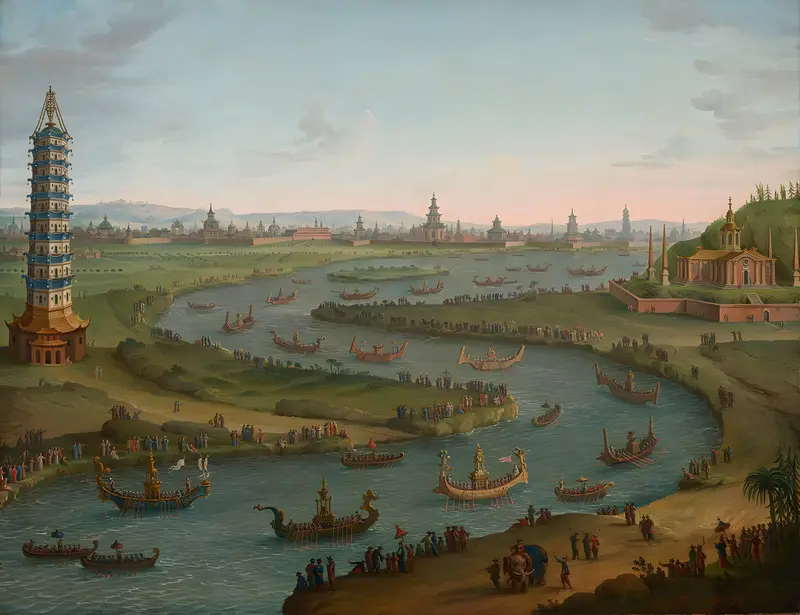
A capriccio with the French Ambassador approaching the King of Siam’s Palace in a state barge, in October
Antonio Joli
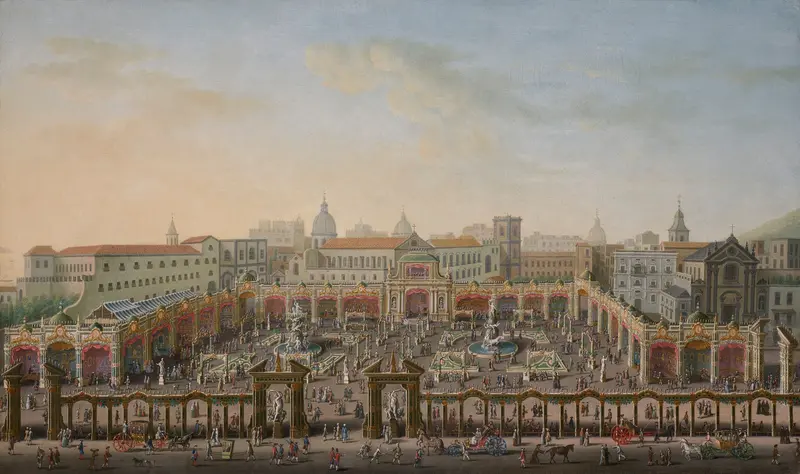
Naples, Piazza Trieste e Trento with a fair viewed from a balcony of the Palazzo Reale
Antonio Joli
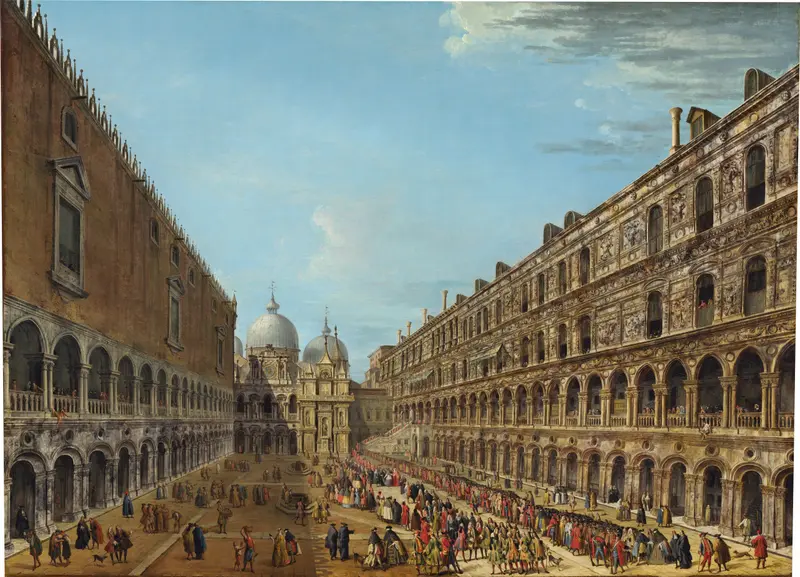
Procession in the Courtyard of the Ducal Palace,Venice
Antonio Joli
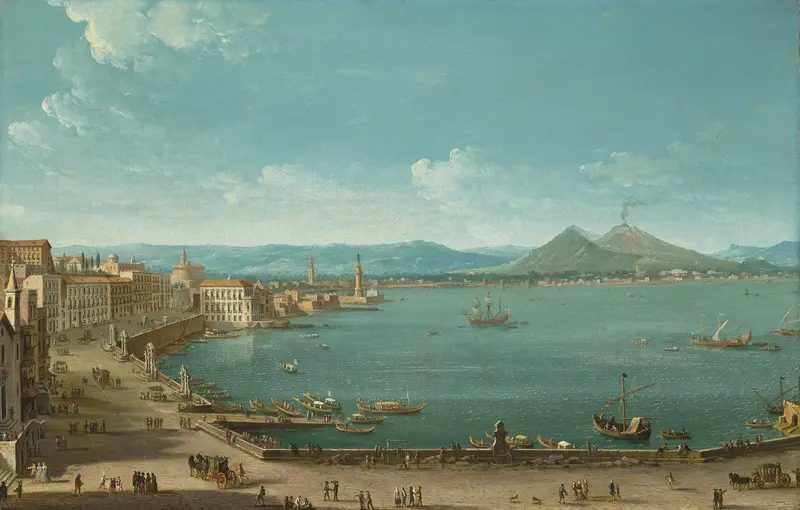
Naples with the Bay of Santa Lucia and Vesuvius beyond
Antonio Joli
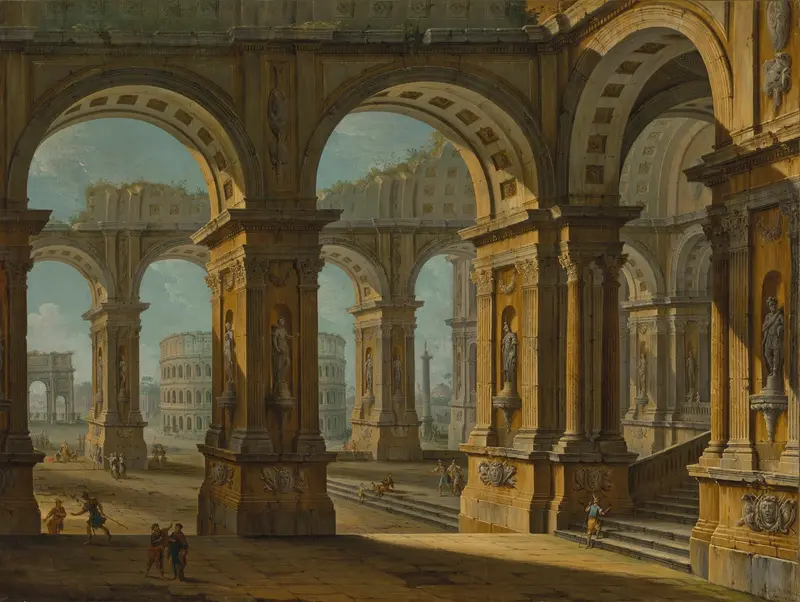
A capriccio of Rome with the Colusseum and Arch of Titus
Antonio Joli
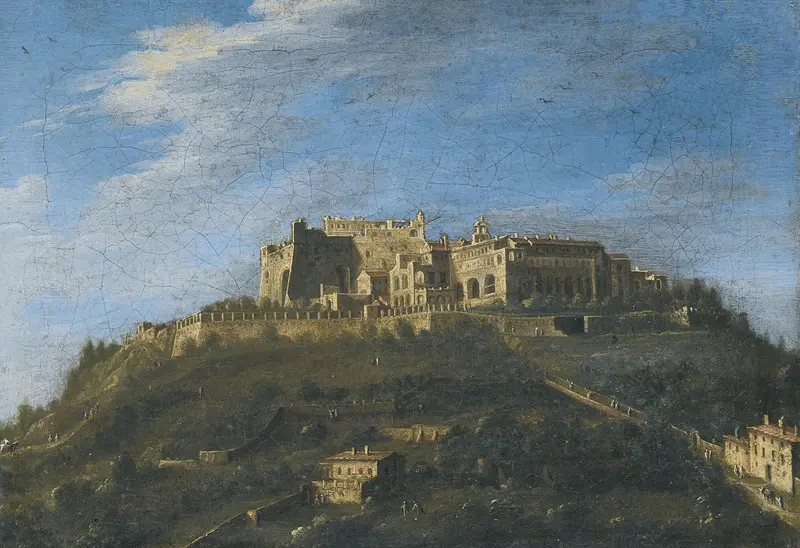
Monastery Di San Martino, Naples
Antonio Joli
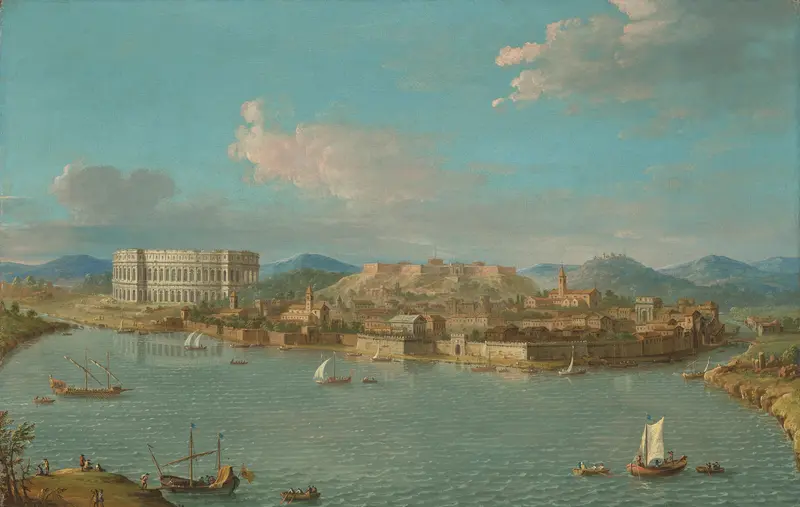
Pula, with the Pula Arena
Antonio Joli
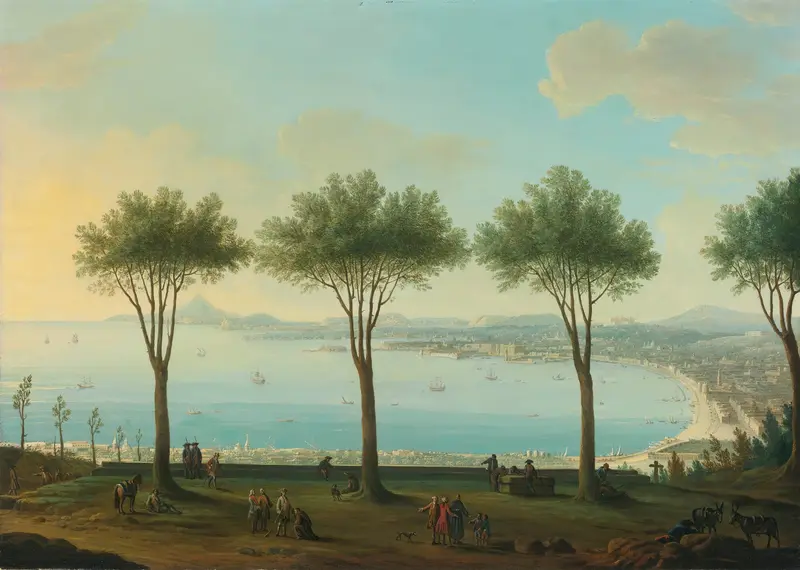
View Of The Bay Of Naples From The South (Possibly Poggioreale), Looking North With A King Of The Bourbon Family, Possibly Ferdinand Iv, In The Foreground
Antonio Joli
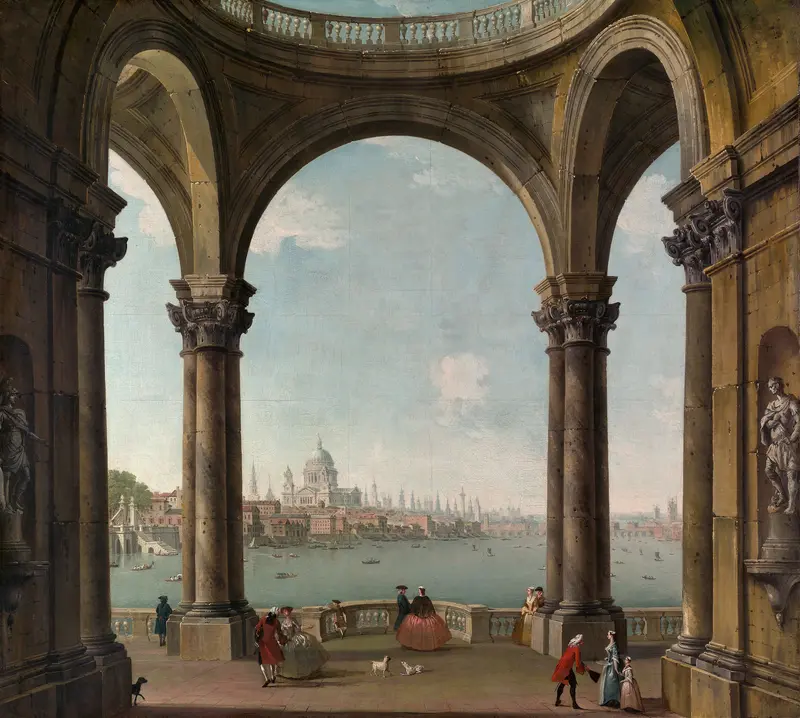
Capriccio with St. Paul’s and Old London Bridge
Antonio Joli
More Landscape Art

The Starry Night
Vincent van Gogh

View of Delft
Johannes Vermeer

Water Lilies
Claude Monet

The Grand Canal, Venice, looking north-west from the Ca' Corner to the Ca' Contarini degli Scrigni, with the campanile of Santa Maria della Carità
Canaletto

Windsor Castle
Canaletto

The Grand Canal looking North-East from the Palazzo Dolfin-Manin to the Rialto Bridge
Canaletto