
A View of the Forum with the Campo Vaccino, the Church of Santa Francesca Romana and the Colosseum — History & Facts
The first thing to catch the eye is not the grandeur of the ruins, but the life that pulses quietly among them. In A View of the Forum with the Campo Vaccino, the Church of Santa Francesca Romana and the Colosseum, Antonio Joli leads us into the heart of eighteenth-century Rome, where the ancient Forum has become a pasture—its stones and columns scattered like the bones of a forgotten titan. The sunlight draws you deeper, illuminating figures who go about their daily routines: herders guiding cattle, merchants and travelers in animated conversation, and children clambering over toppled marble.
The ruins are not just relics; they are a living stage, their grandeur softened by the ordinary rhythms of work and play. The painter’s careful arrangement of columns and arches frames the space, inviting the viewer to wander through history and present at once. This painting belongs to a world fascinated by the ruins of antiquity, when artists and travelers alike were gripped by the allure of Rome’s faded glory. In the mid-eighteenth century, such views—known as vedute—were prized by Grand Tourists, wealthy visitors eager to carry home visions of the Eternal City.
Antonio Joli was among the artists who answered this demand, capturing both the majesty and the decay of Rome’s monuments. Painted around 1750, this work reflects the era’s taste for both accuracy and atmosphere, balancing documentary detail with a sense of gentle nostalgia. History has kept few traces of this specific painting’s journey, but its vision endures: a reminder that every ruin is also a gathering place, every fragment a witness to the lives that pass among them.
More Artworks by Antonio Joli

Monastery Di San Martino, Naples
Antonio Joli
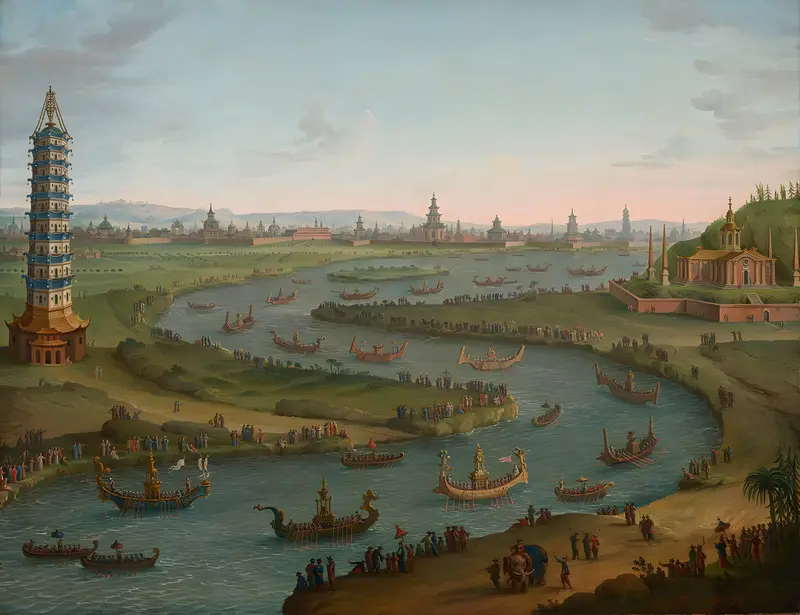
A capriccio with the French Ambassador approaching the King of Siam’s Palace in a state barge, in October
Antonio Joli
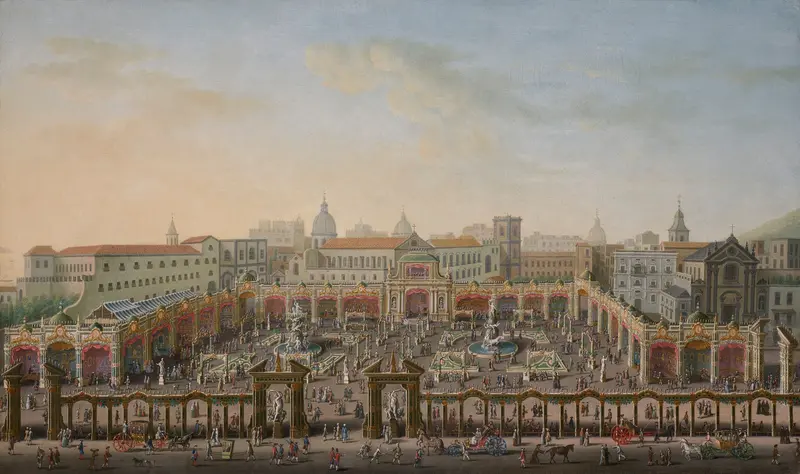
Naples, Piazza Trieste e Trento with a fair viewed from a balcony of the Palazzo Reale
Antonio Joli
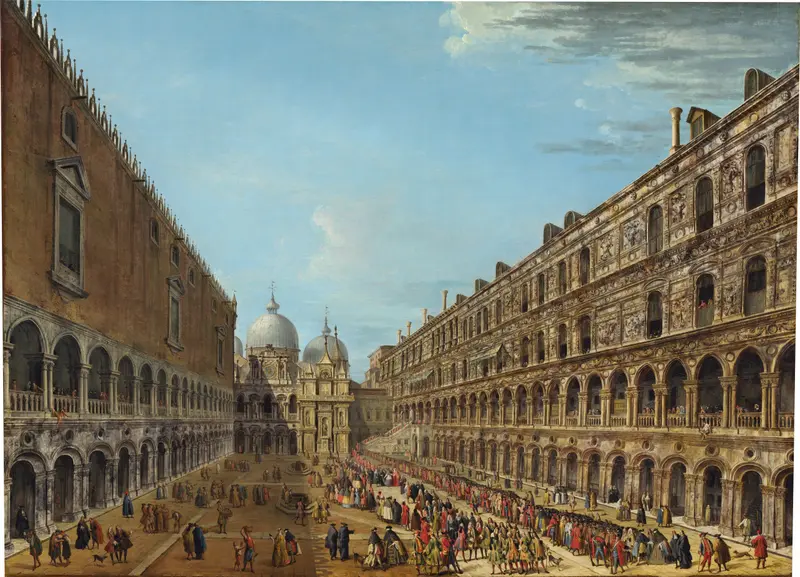
Procession in the Courtyard of the Ducal Palace,Venice
Antonio Joli
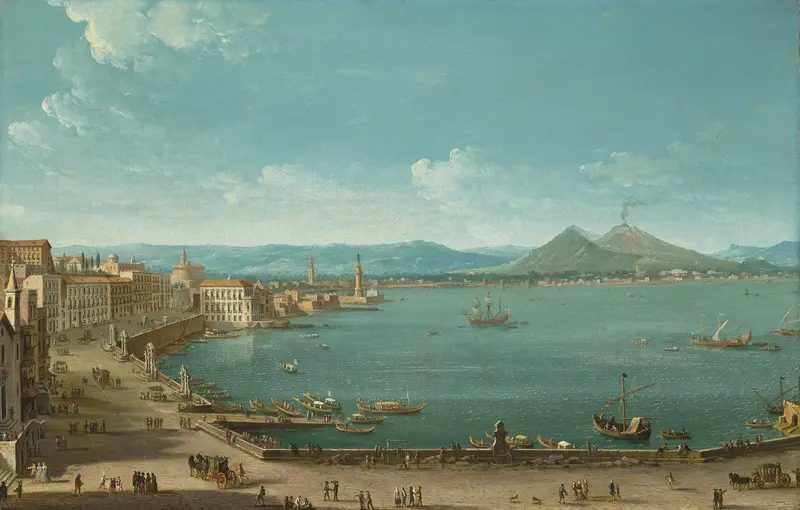
Naples with the Bay of Santa Lucia and Vesuvius beyond
Antonio Joli
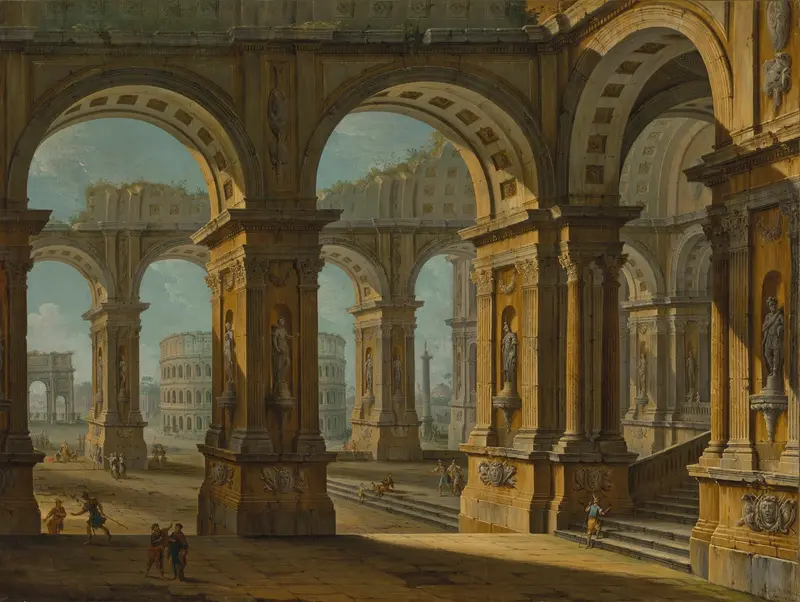
A capriccio of Rome with the Colusseum and Arch of Titus
Antonio Joli
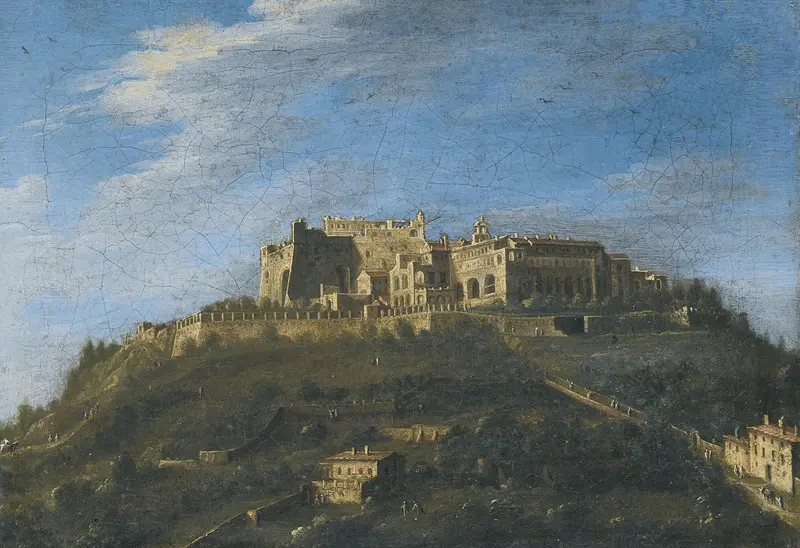
Monastery Di San Martino, Naples
Antonio Joli
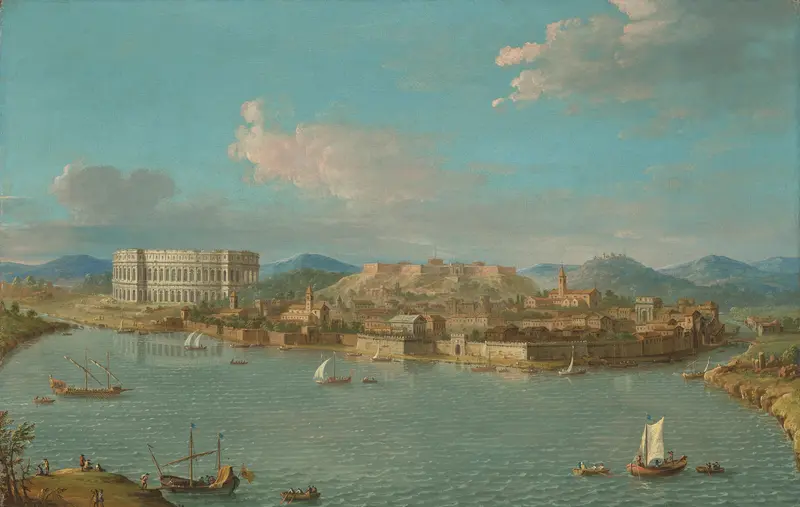
Pula, with the Pula Arena
Antonio Joli
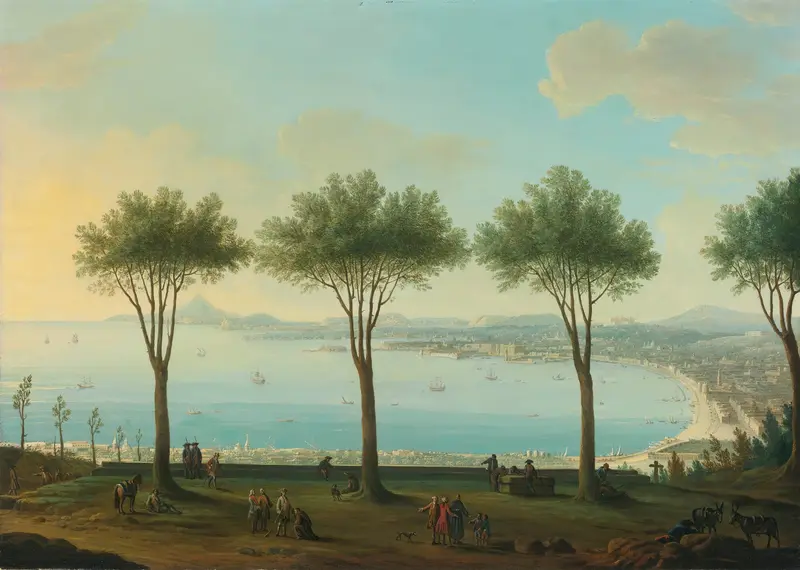
View Of The Bay Of Naples From The South (Possibly Poggioreale), Looking North With A King Of The Bourbon Family, Possibly Ferdinand Iv, In The Foreground
Antonio Joli
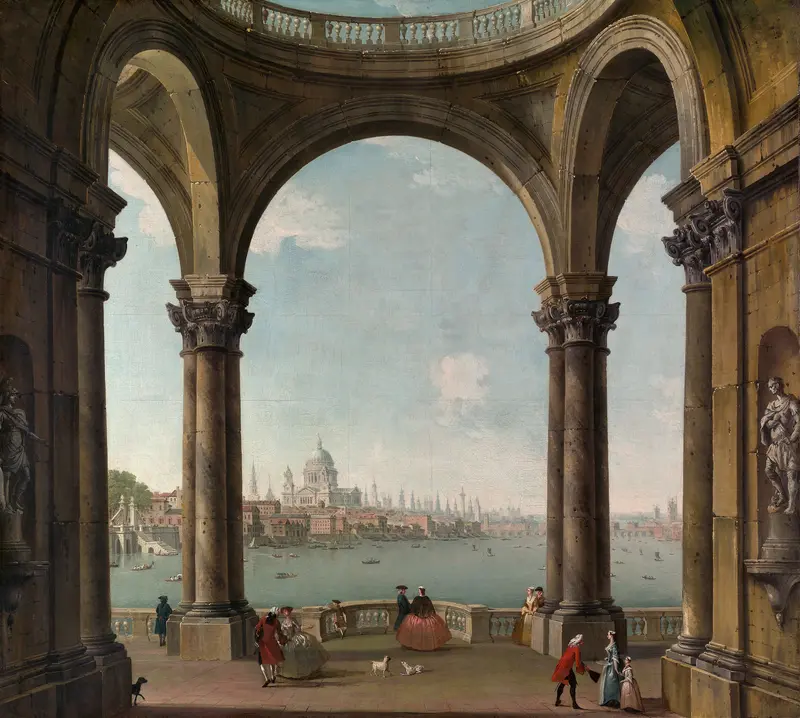
Capriccio with St. Paul’s and Old London Bridge
Antonio Joli
More Landscape Art

The Starry Night
Vincent van Gogh

View of Delft
Johannes Vermeer

Water Lilies
Claude Monet

The Grand Canal, Venice, looking north-west from the Ca' Corner to the Ca' Contarini degli Scrigni, with the campanile of Santa Maria della Carità
Canaletto

Windsor Castle
Canaletto

The Grand Canal looking North-East from the Palazzo Dolfin-Manin to the Rialto Bridge
Canaletto