
A Visit to the Artist's Studio — History & Facts
What first catches the eye in A Visit to the Artist's Studio is not the clutter of brushes, palettes, and jars, but the utterly serious gaze of the baboons as they crowd around the easel. The largest, poised with brush in hand, appears deep in concentration, while the others gather with a mix of curiosity and intent, their bodies echoing the familiar postures of human artists and critics. The soft, natural light draws us to the focal point—the act of painting itself—while the subdued, earthy palette and the careful rendering of fur and flesh lend a sense of gravity to this improbable scene.
Every detail, from the scattered fruit to the battered paintbox, is rendered with such fidelity that the viewer is drawn into the illusion, compelled to linger and search for meaning in the animals’ expressions and gestures. Works like this, painted in the late nineteenth century, belong to a world fascinated by both the scientific study of animals and the playful subversion of academic art. Gabriel von Max, known for his psychological interest in both human and animal subjects, often blurred the line between the two, using monkeys as stand-ins for artists, critics, or society itself. Such paintings were collected by a new class of private patrons who delighted in their wit and technical bravura, and who hung them in salons as conversation pieces.
The presence of this work in a Sotheby’s New York sale in 2015 is a reminder of how these images, once part of a lively debate about art and evolution, now invite viewers to reflect on the boundaries between instinct and intellect, imitation and creation—questions as alive today as they were in von Max’s time.
More Artworks by Gabriel von Max

The Sisters
Gabriel von Max
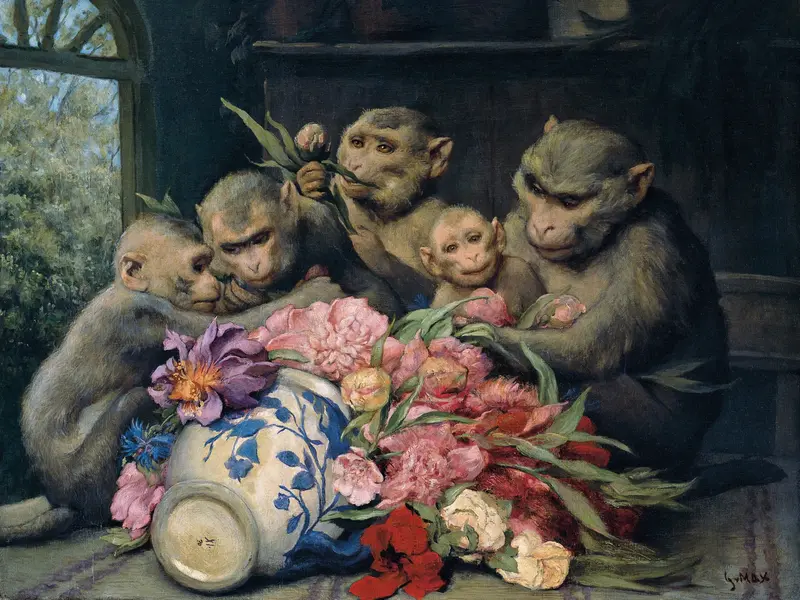
The Botanists
Gabriel von Max
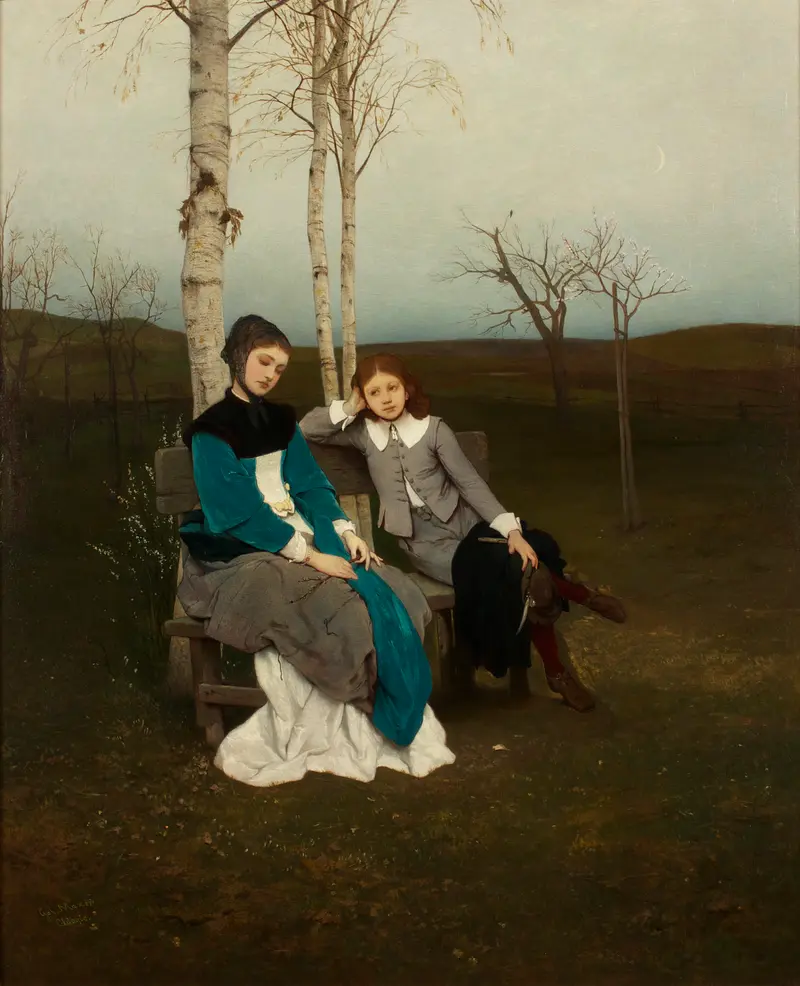
Adagio 4653 Österreichische Galerie Belvedere
Gabriel von Max
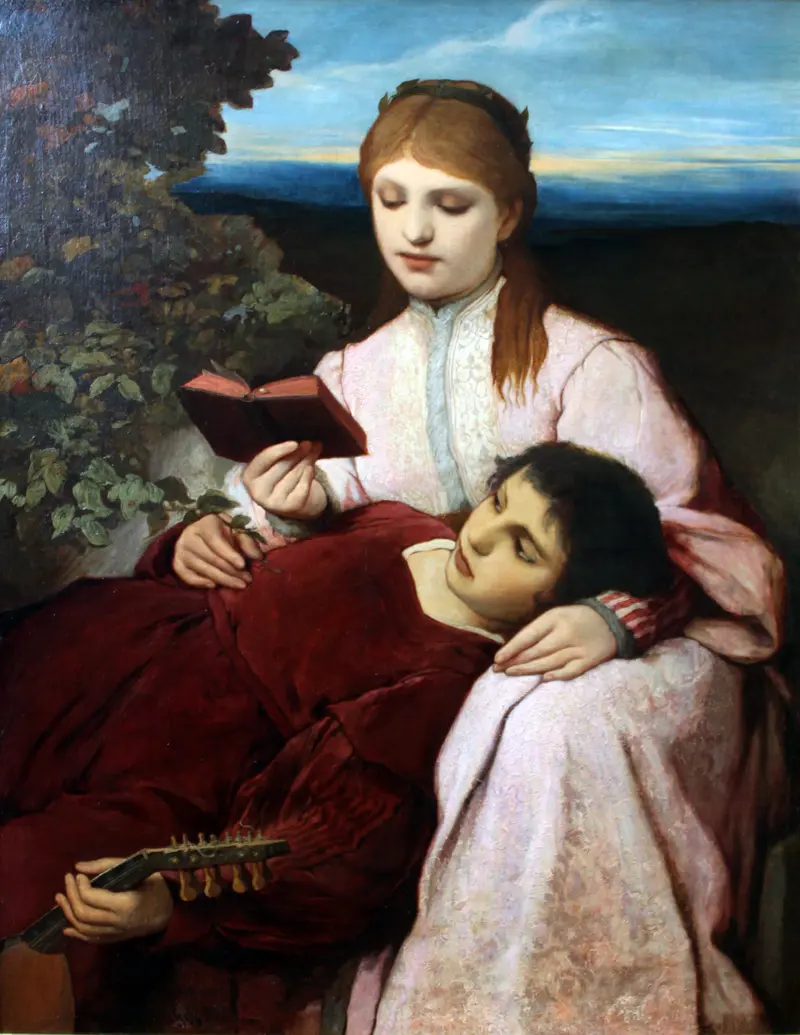
Leisure Hour (Scene from "Tannhäuser")
Gabriel von Max
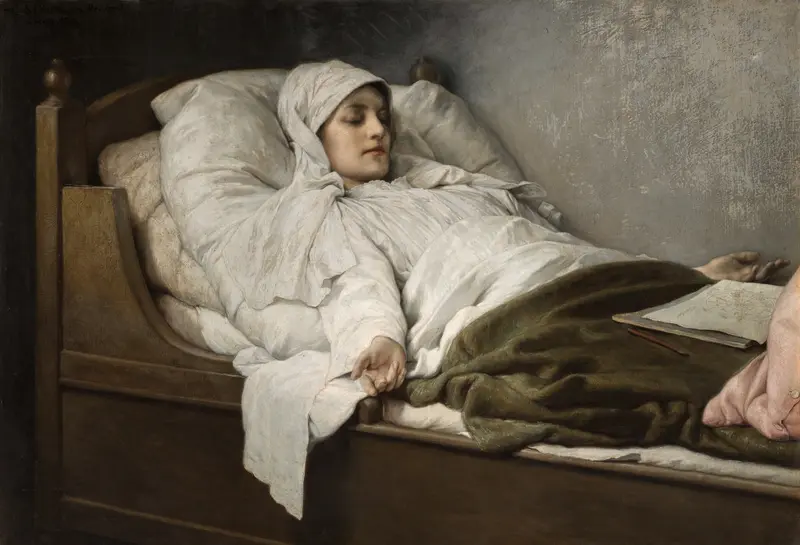
The Seeress of Prevorst
Gabriel von Max
Studienkopf 3866 Österreichische Galerie Belvedere
Gabriel von Max
Monkey with violets.
Gabriel von Max
The Last Token: A Christian Martyr
Gabriel von Max
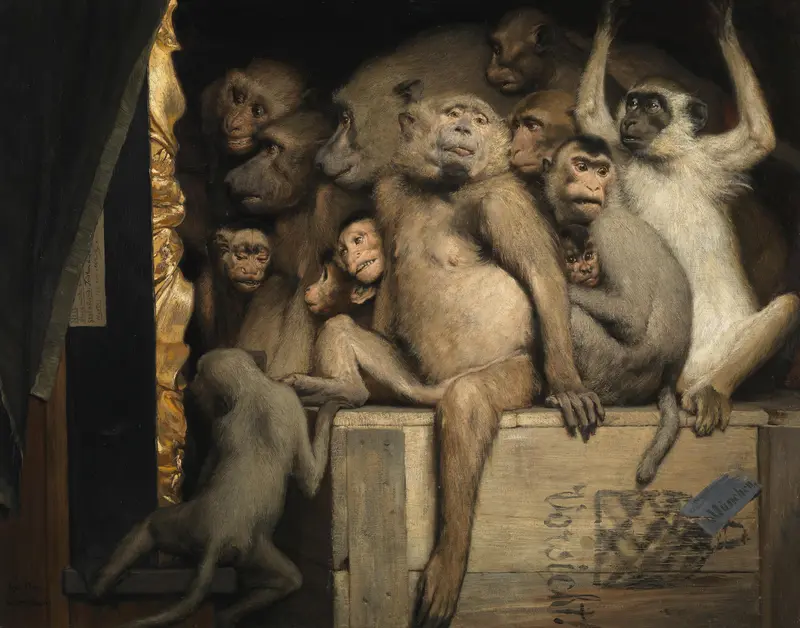
Monkeys as Judges of Art
Gabriel von Max
The Anatomist
Gabriel von Max
More Genre Scene Art

Banquet of the Officers of the St George Civic Guard
Frans Hals

Rembrandt and Saskia in the Scene of the Prodigal Son
Rembrandt van Rijn

Bal du moulin de la Galette
Pierre-Auguste Renoir

Quadrille at the Moulin Rouge
Henri de Toulouse-Lautrec

A Burial at Ornans
Gustave Courbet

When Will You Marry?
Paul Gauguin