
A woman gutting herring in front of her house — History & Facts
What draws the eye first is not the act of gutting herring, but the quiet exchange of glances between the old woman and the man with his walking stick. The woman, seated firmly in the threshold of her home, holds her knife and fish with practiced ease, her hands steady in the fading daylight. The man, leaning in with a casual air, seems to offer conversation or perhaps a bit of news, his posture relaxed but attentive.
The scattered chickens to the left, pecking at the earth, reinforce the sense of everyday rhythm, while the tangled vines and weathered bricks speak of years spent in the same place. Light falls gently across the scene, warming the woman's white cap and apron, and drawing attention to the small, almost theatrical stage of her doorstep. This painting belongs to the world of seventeenth-century Dutch genre scenes, where artists like Adriaen van Ostade found endless inspiration in the lives of ordinary people. In an era when the Dutch Republic was thriving, scenes like this were collected by a rising middle class eager to see their own world reflected with honesty and a touch of humor.
Between 1650 and 1700, when this work was made, such images were prized for their ability to celebrate humble labor and domestic virtue. Today, the painting resides in the Rijksmuseum, a quiet testament to the enduring appeal of small moments and the dignity found in daily tasks—inviting us to linger, just as the man lingers in conversation, before moving on.
More Artworks by Adriaen van Ostade

Dans in de herberg
Adriaen van Ostade
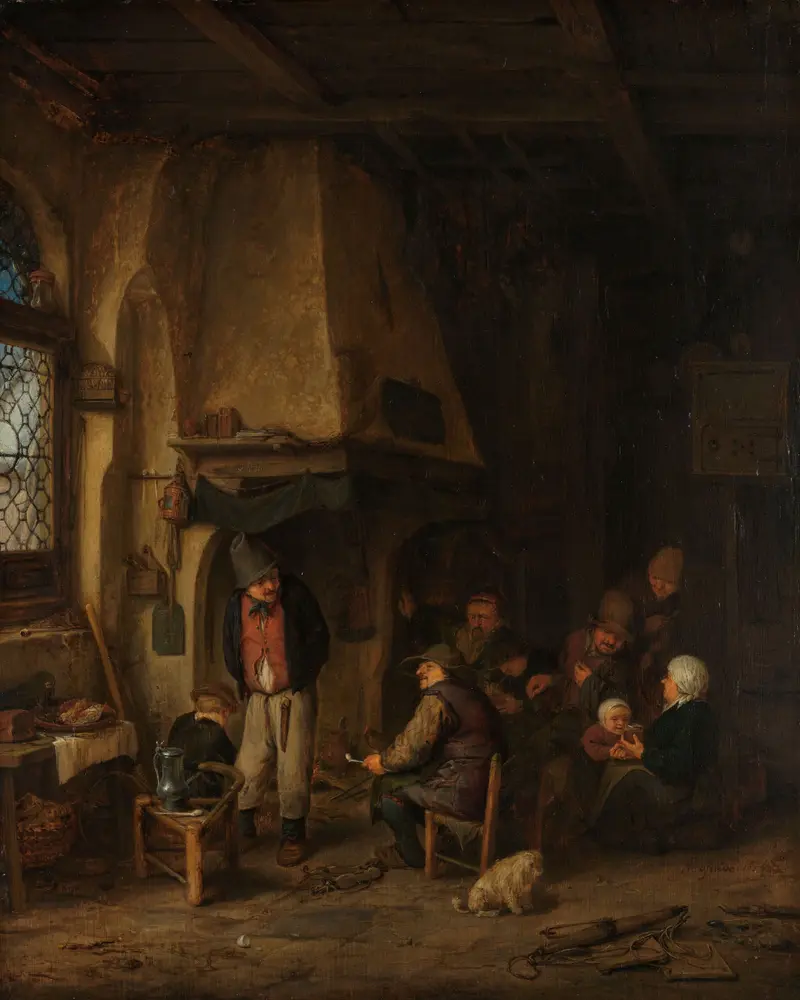
‘The Skaters’: Peasants in an Interior
Adriaen van Ostade
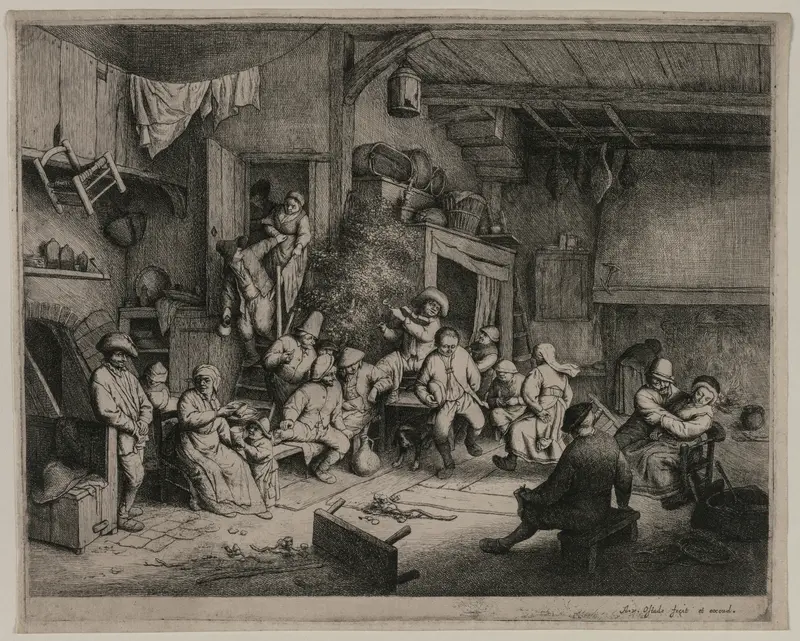
Dance at the Inn
Adriaen van Ostade
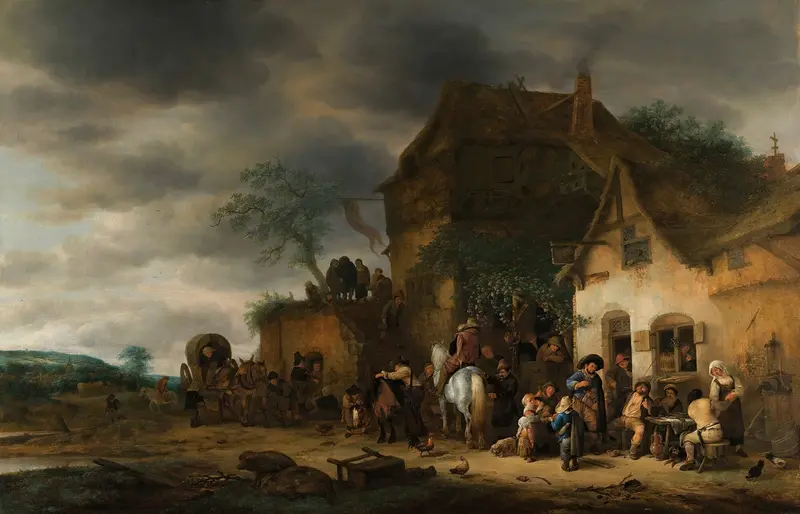
Travellers Halted At A Country Inn
Adriaen van Ostade
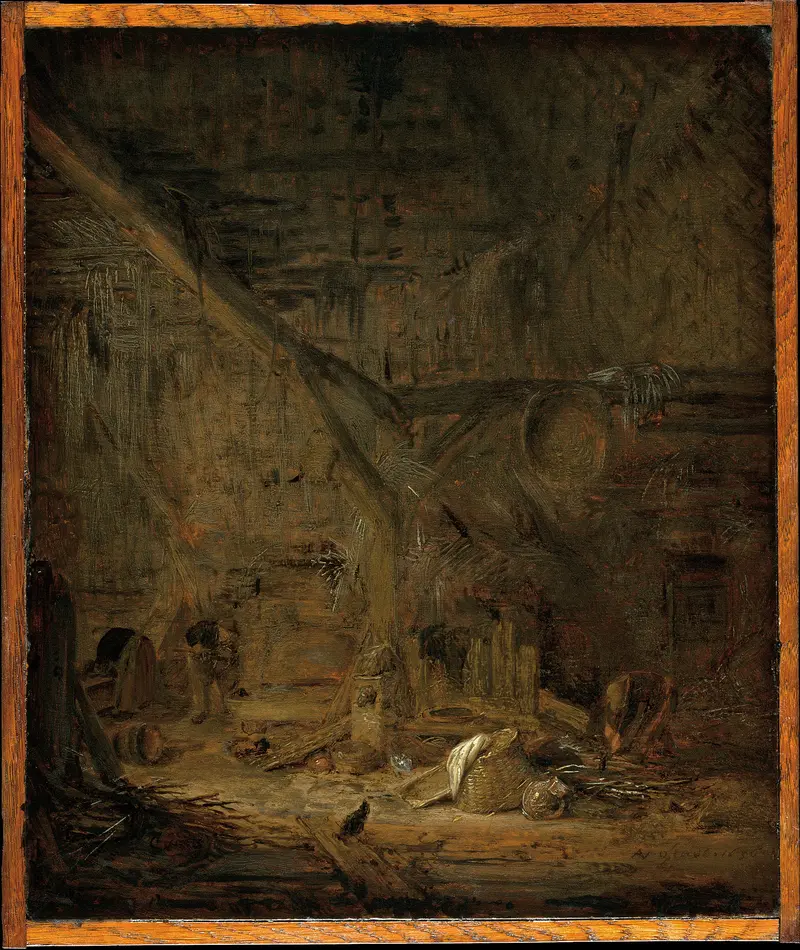
Interior of a Barn
Adriaen van Ostade
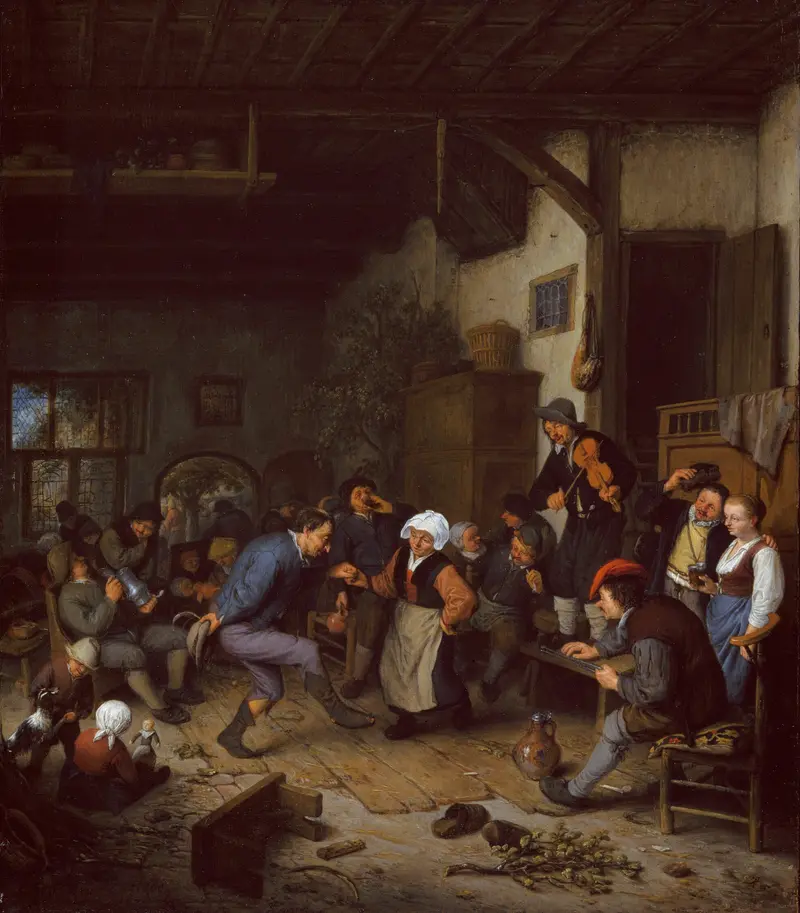
Merrymakers in an Inn
Adriaen van Ostade
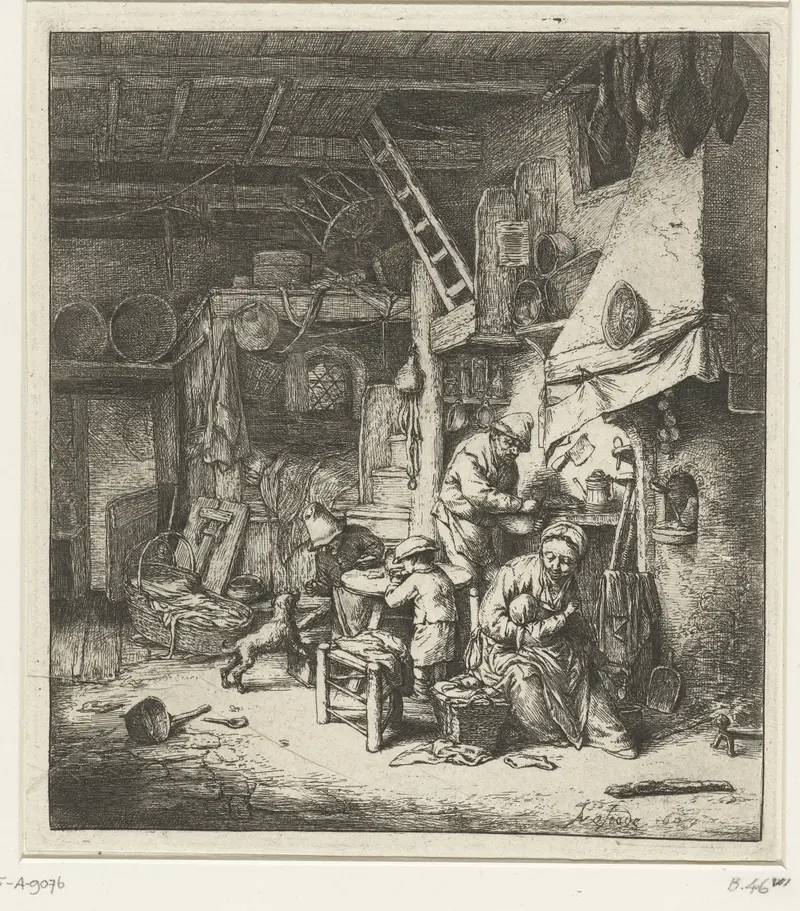
Boerengezin in interieur
Adriaen van Ostade
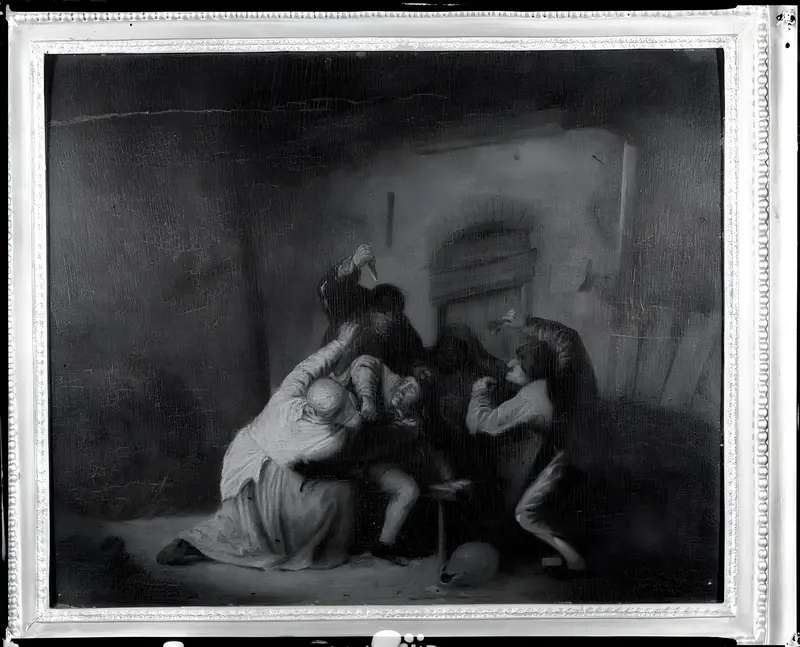
Peasants Brawling in a Tavern
Adriaen van Ostade
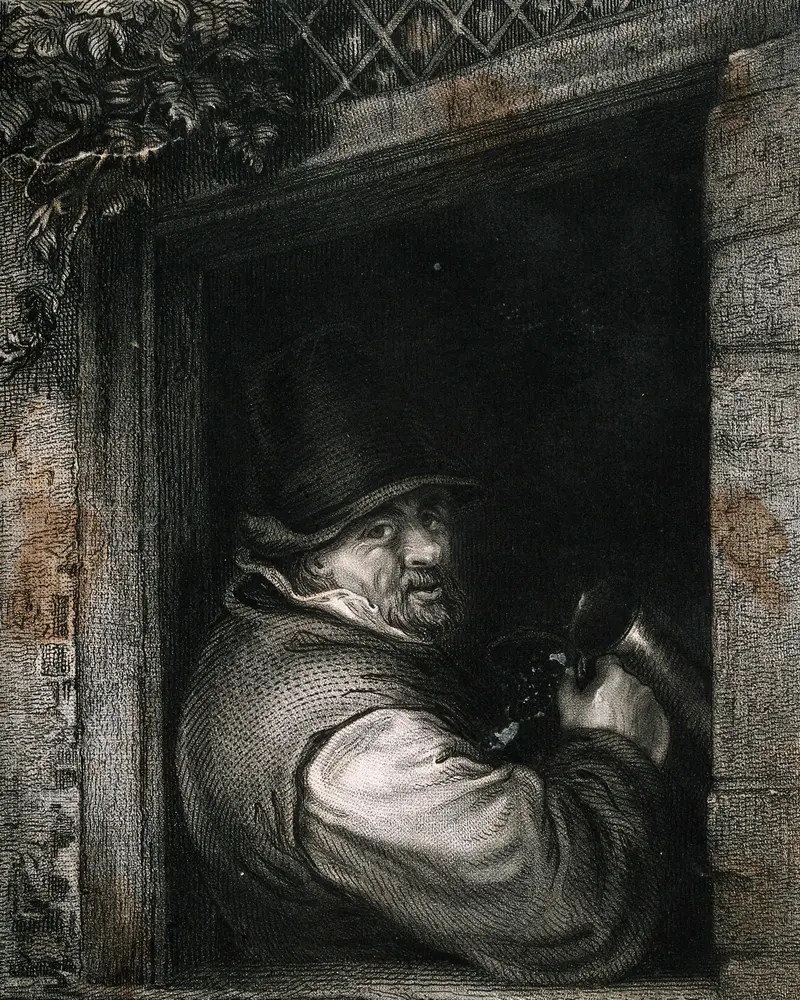
Man with a Tankard at a Window
Adriaen van Ostade
Dans in de herberg
Adriaen van Ostade
More Genre Scene Art

Banquet of the Officers of the St George Civic Guard
Frans Hals

Rembrandt and Saskia in the Scene of the Prodigal Son
Rembrandt van Rijn

Bal du moulin de la Galette
Pierre-Auguste Renoir

Quadrille at the Moulin Rouge
Henri de Toulouse-Lautrec

A Burial at Ornans
Gustave Courbet

When Will You Marry?
Paul Gauguin