
A Woman with a Beer-jug — History & Facts
What draws the eye first is not the jug or the glass, but the woman's expression—a quiet, knowing glance, as if she has just caught your gaze across the table. The soft, diffused light falls from the left, picking out the gentle folds of her linen cap and the sturdy orange of her sleeves, while the muted gray background pushes her presence forward. The beer-jug, cradled in her hand, is not just a vessel but a sign of daily ritual, its rounded form echoing the fullness of her gesture as she sets a brimming glass on the table.
Her pose, half-turned and relaxed, suggests a moment of pause, an instant caught between action and rest. The palette, earthy and restrained, roots the scene in the everyday, yet the artist’s careful attention to the textures of skin, cloth, and pottery gives the moment a quiet dignity. Works like this, painted in the Dutch Republic around 1670, belong to a world where scenes of tavern life and domestic routine were celebrated by artists such as Adriaen van Ostade. These pictures were prized by the growing middle class, who saw in them both a mirror of their own lives and a gentle moral lesson.
Unlike grand history paintings, these genre scenes were intimate, meant for private homes rather than public halls, and often traded hands among collectors who delighted in their familiarity. The painting’s survival in the Google Cultural Institute’s digital collection today is a reminder that history has kept few traces of its journey, but much of its spirit. Look again at her face—the story is in the glance, and the moment is yours to finish.
More Artworks by Adriaen van Ostade

Dans in de herberg
Adriaen van Ostade
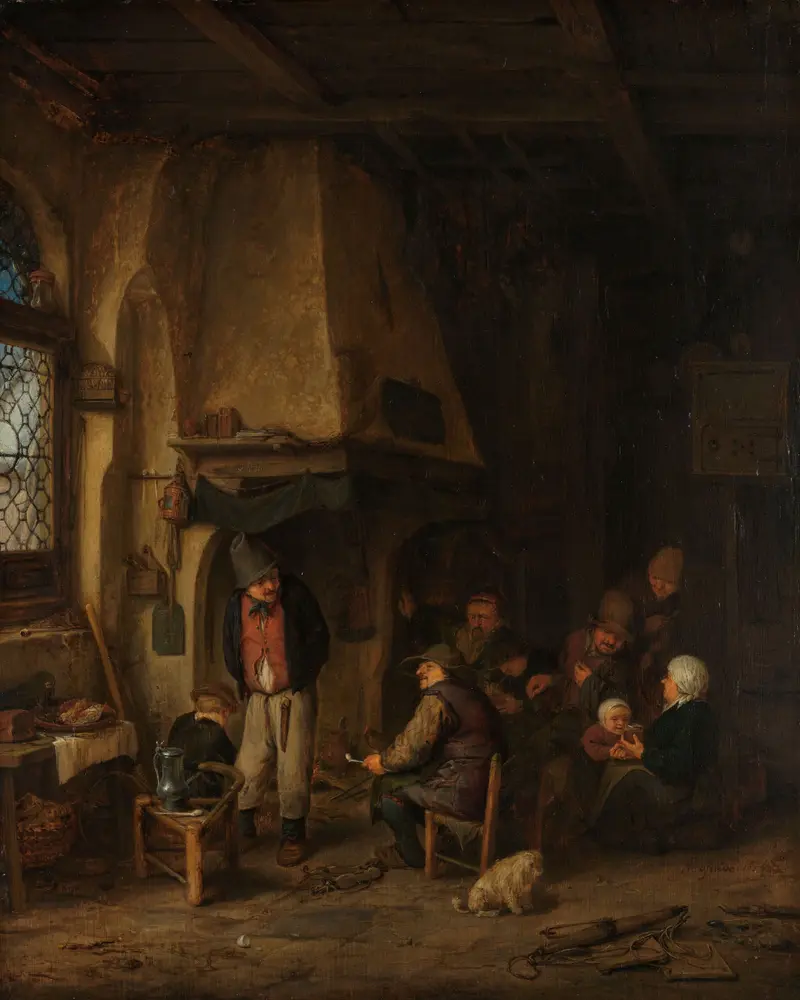
‘The Skaters’: Peasants in an Interior
Adriaen van Ostade
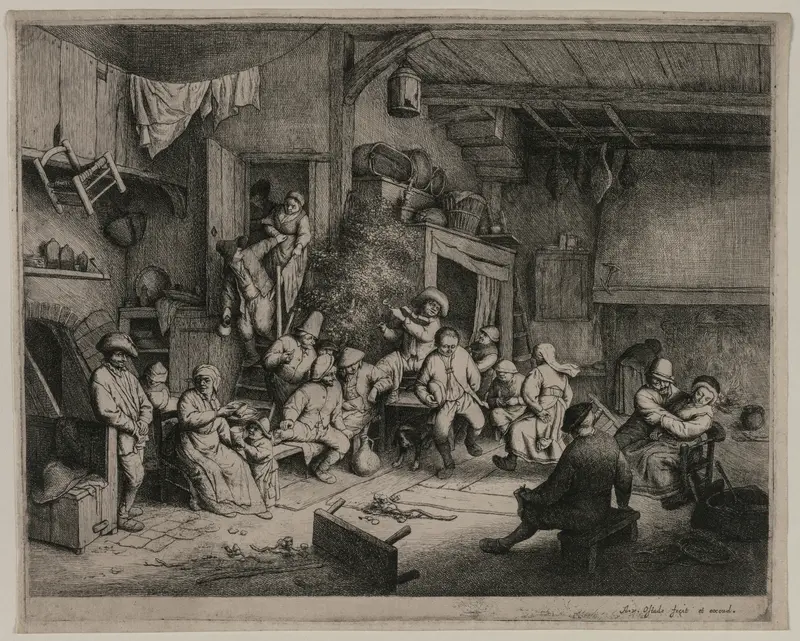
Dance at the Inn
Adriaen van Ostade
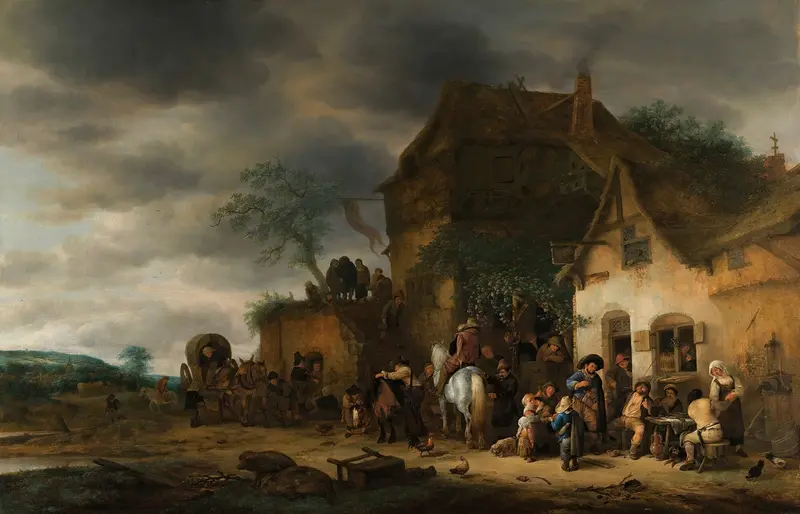
Travellers Halted At A Country Inn
Adriaen van Ostade
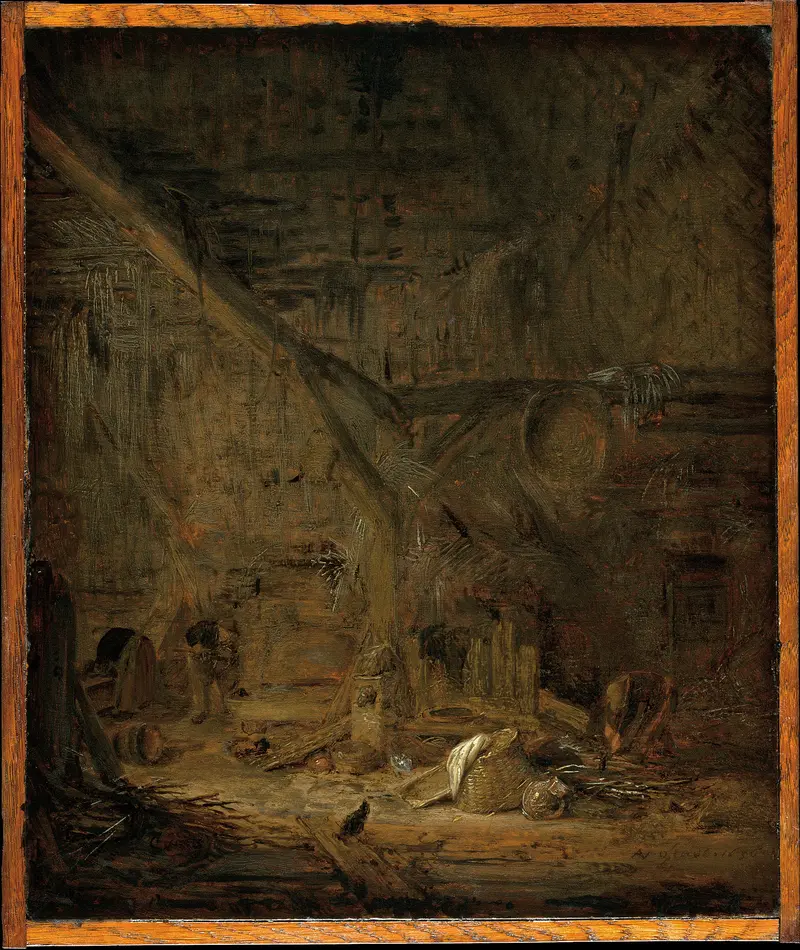
Interior of a Barn
Adriaen van Ostade
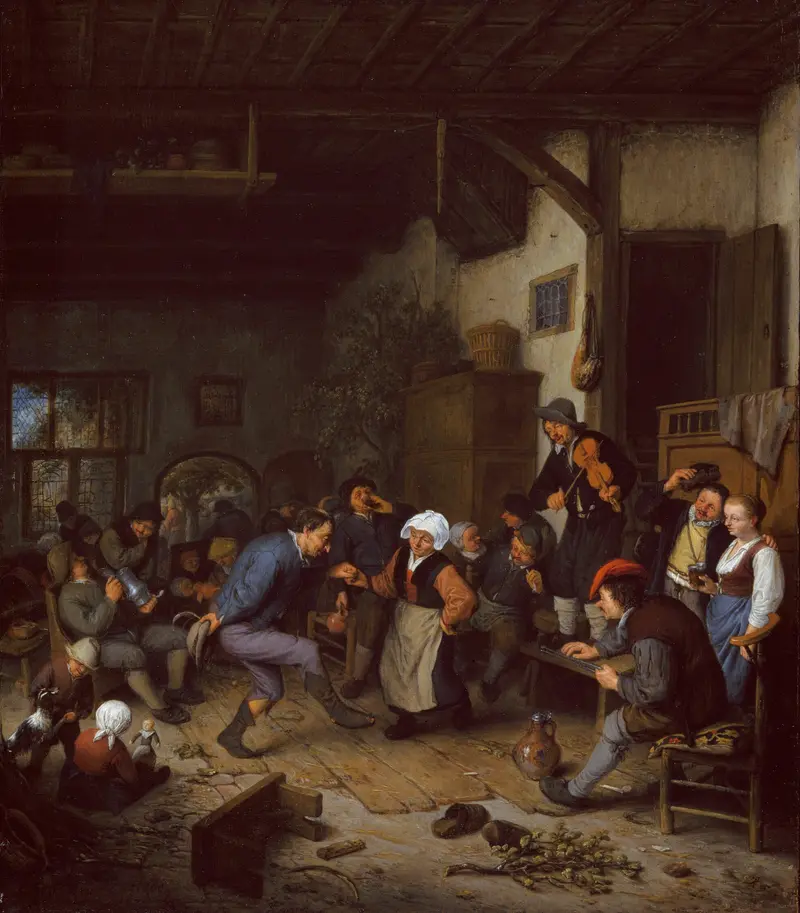
Merrymakers in an Inn
Adriaen van Ostade
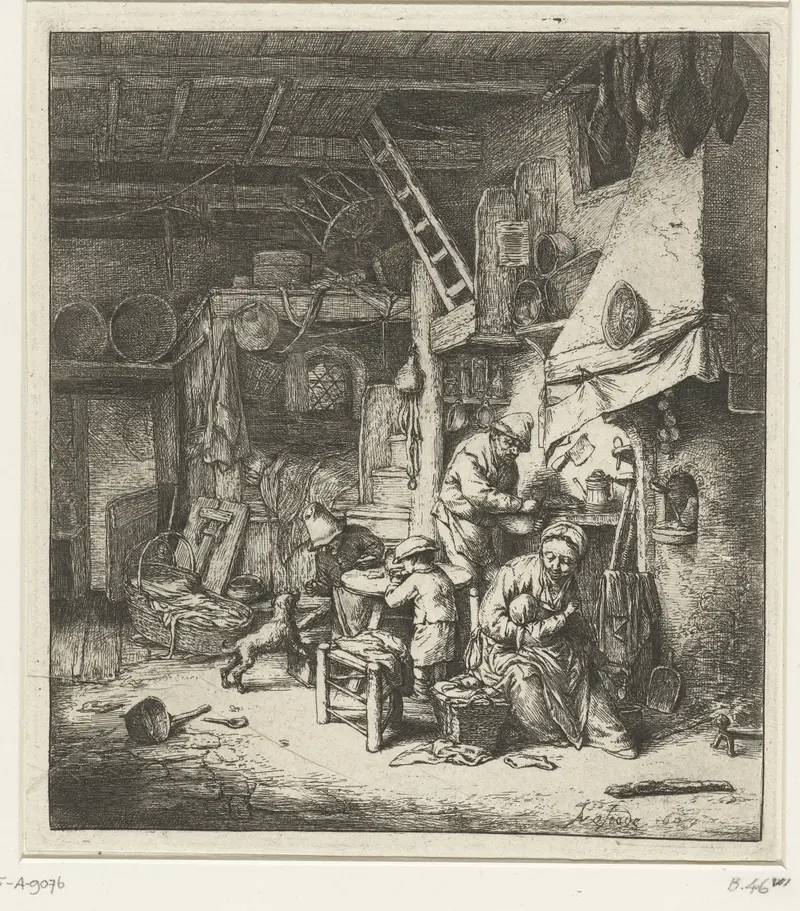
Boerengezin in interieur
Adriaen van Ostade
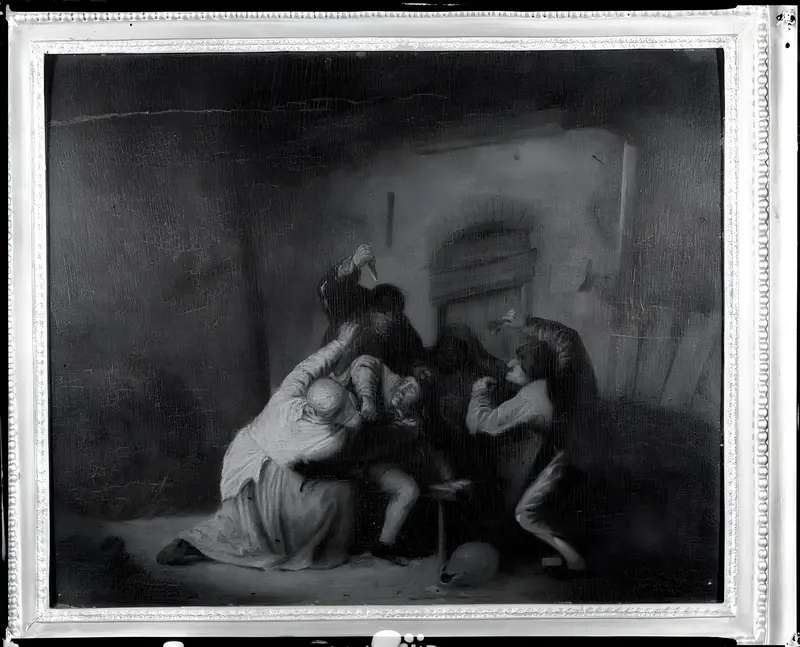
Peasants Brawling in a Tavern
Adriaen van Ostade
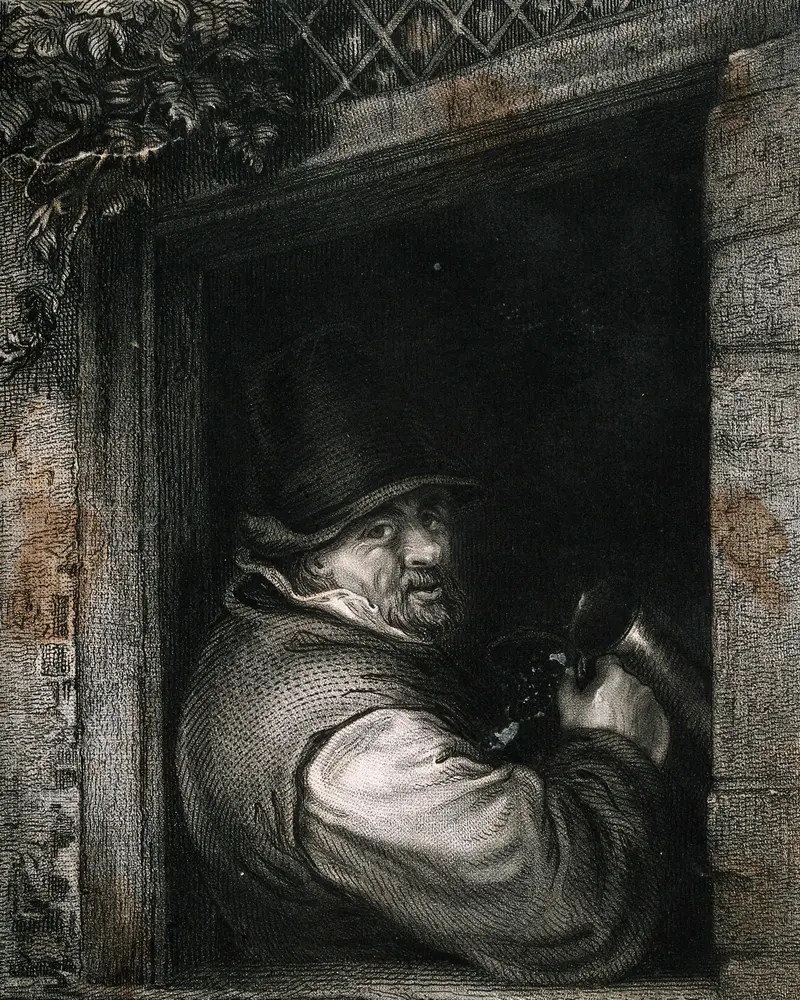
Man with a Tankard at a Window
Adriaen van Ostade
Dans in de herberg
Adriaen van Ostade
More Genre Scene Art

Banquet of the Officers of the St George Civic Guard
Frans Hals

Rembrandt and Saskia in the Scene of the Prodigal Son
Rembrandt van Rijn

Bal du moulin de la Galette
Pierre-Auguste Renoir

Quadrille at the Moulin Rouge
Henri de Toulouse-Lautrec

A Burial at Ornans
Gustave Courbet

When Will You Marry?
Paul Gauguin