
After the Service — History & Facts
A shaft of afternoon light falls across the cold stone floor, guiding the viewer’s gaze to two women at the heart of the scene—one elderly and stooped, the other youthful and attentive—moving together through the hush of an Orthodox church. The younger woman’s hand hovers gently behind the elder’s back, a silent offer of support as they step forward along the patterned tiles. Around them, figures linger in quiet devotion: a woman fingers her prayer beads, others cluster near the iconostasis, their faces half-lit by the glow of candles and gilded icons.
The painted saints on the wall seem to watch over the living, their presence both distant and immediate, as if the boundaries between the sacred and the everyday have grown thin in this moment after the service. Works like this, created by Theodoros Ralli between 1873 and 1895, belong to a world fascinated by the rituals and interiors of Eastern Christianity. In the late nineteenth century, scenes of everyday piety and local tradition were prized by collectors eager for glimpses of distant customs and the dignity of ordinary lives. Ralli, a Greek artist trained in the cosmopolitan circles of Paris, often returned to themes of faith and community, capturing the interplay of light, architecture, and human gesture.
The careful rendering of dress and posture here is not just ethnographic detail, but a meditation on continuity and care—timeless values made visible in the quiet aftermath of worship. The painting invites the viewer to pause, as its subjects do, and trace the slow passage of devotion across the stones.
More Artworks by Theodoros Ralli

The Sleeping Concubine
Theodoros Ralli
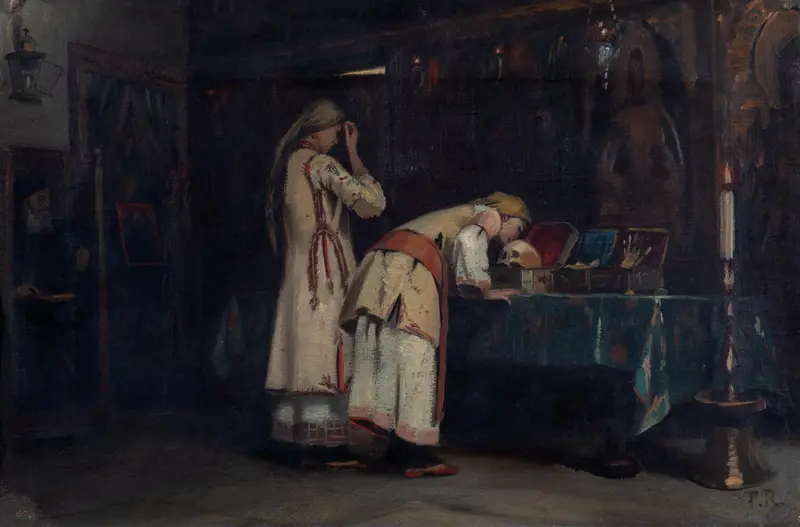
Holy Relics
Theodoros Ralli
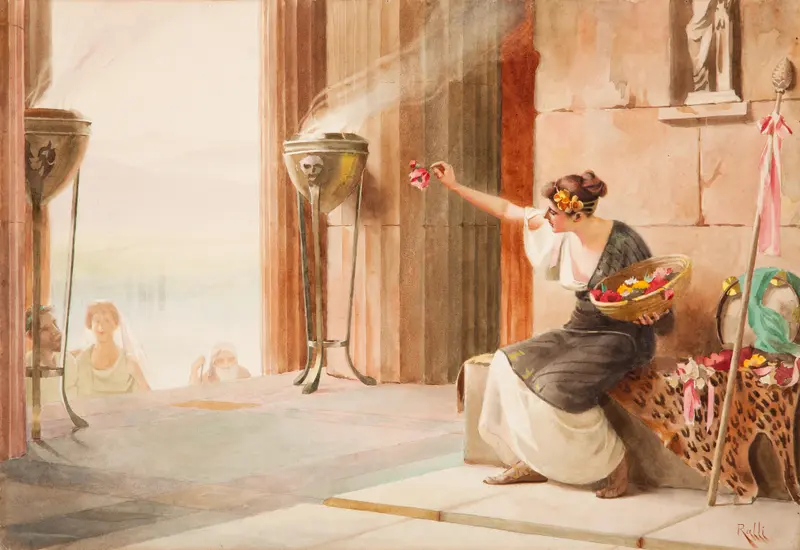
Flower Seller at the Parthenon
Theodoros Ralli
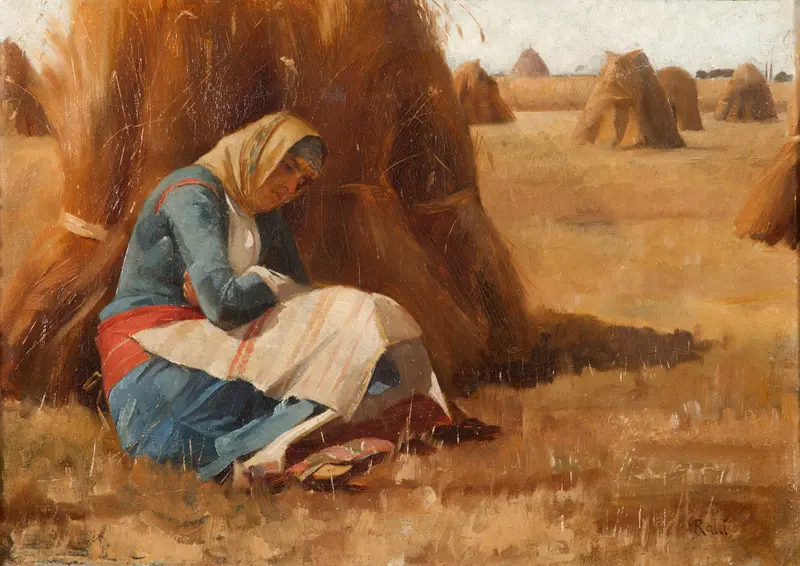
Resting by a Haystack
Theodoros Ralli
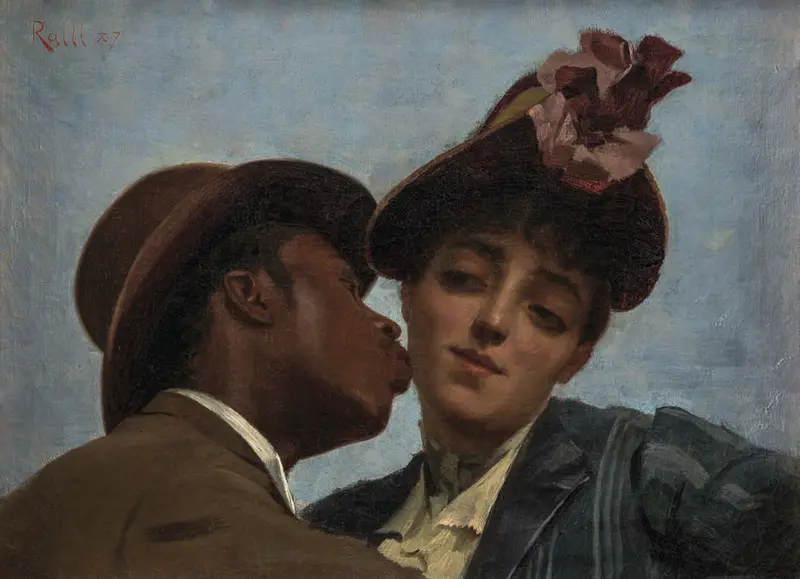
The Kiss (Ralli)
Theodoros Ralli
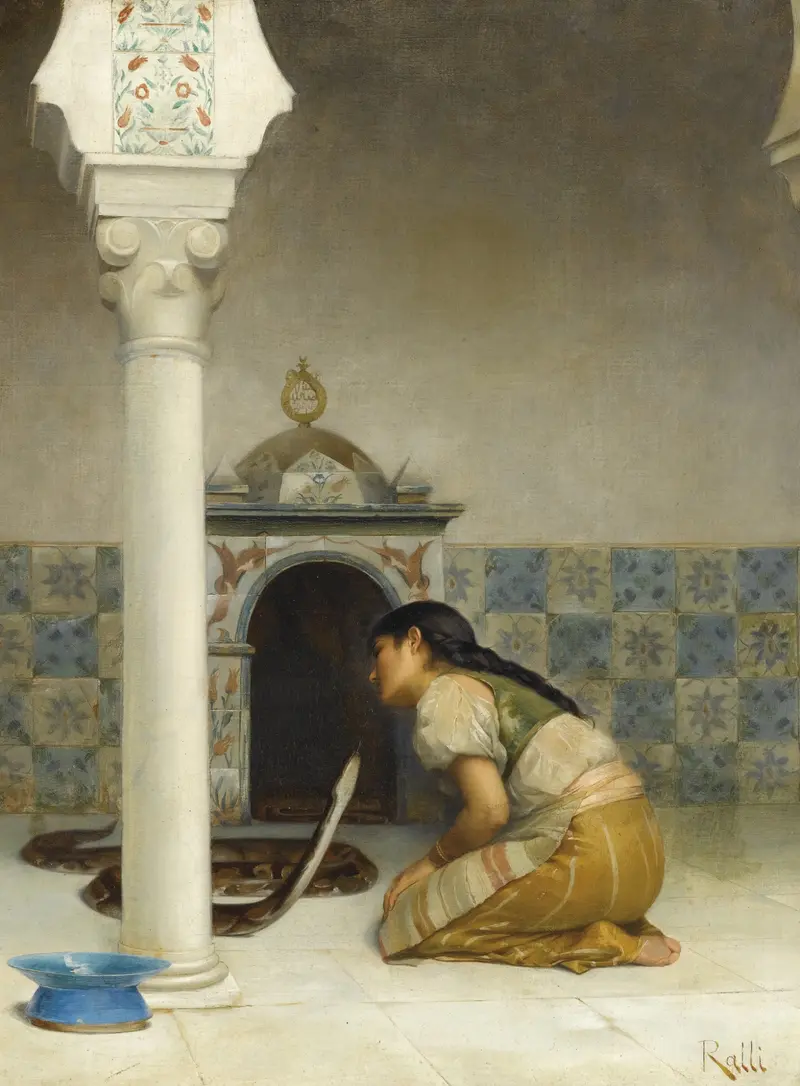
The Sacred Serpent
Theodoros Ralli
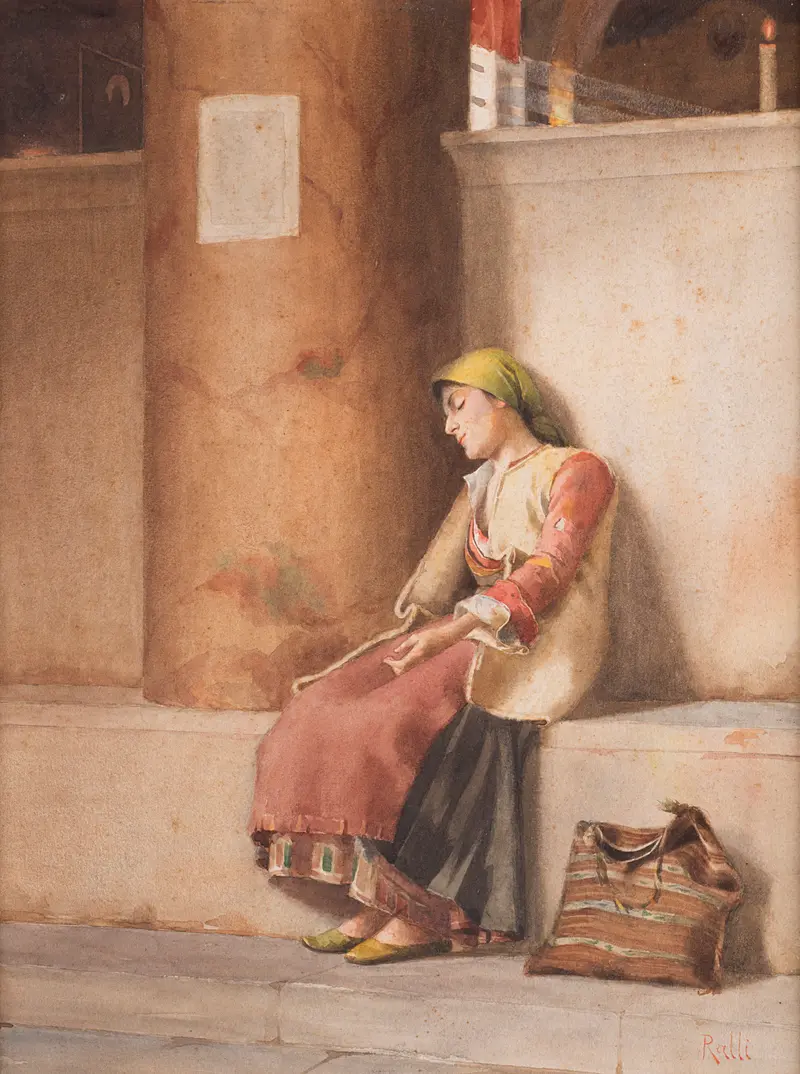
A Moment of Reflection
Theodoros Ralli
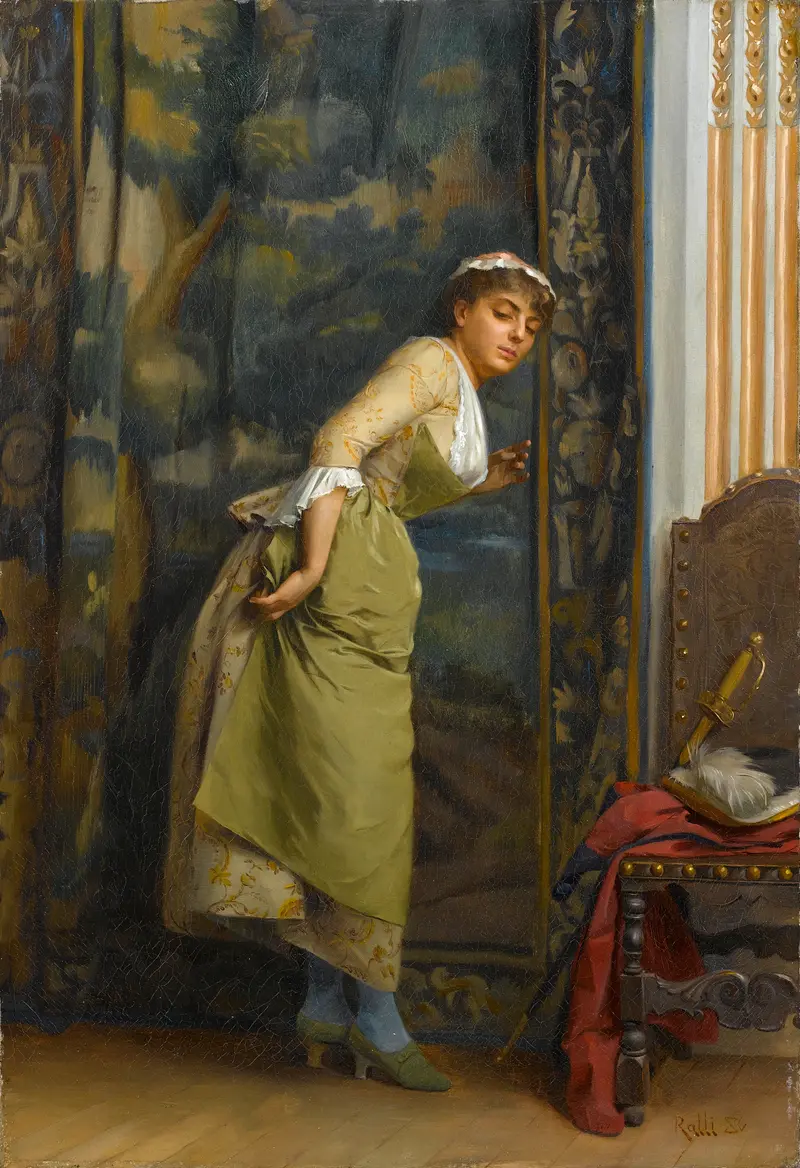
Eavesdropping (Ralli)
Theodoros Ralli
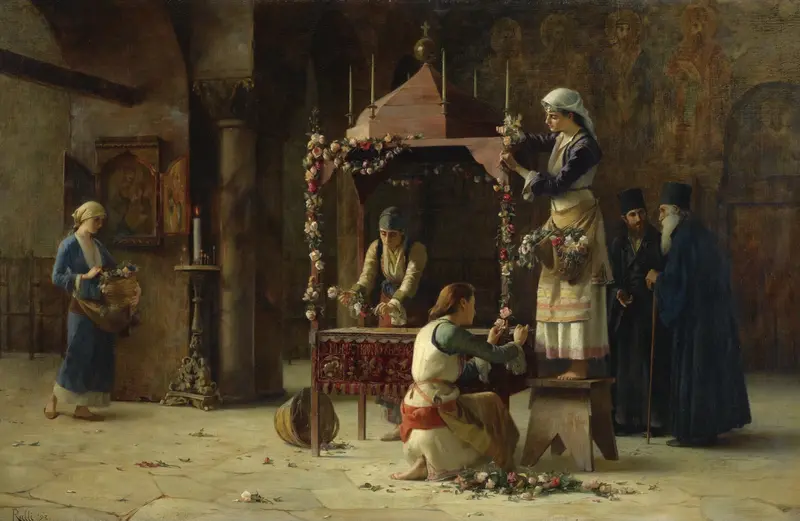
Holy Friday, Greece
Theodoros Ralli
A Moment's Rest
Theodoros Ralli
More Genre Scene Art

Banquet of the Officers of the St George Civic Guard
Frans Hals

Rembrandt and Saskia in the Scene of the Prodigal Son
Rembrandt van Rijn

Bal du moulin de la Galette
Pierre-Auguste Renoir

Quadrille at the Moulin Rouge
Henri de Toulouse-Lautrec

A Burial at Ornans
Gustave Courbet

When Will You Marry?
Paul Gauguin