
'Al kromme lappen' — History & Facts
A swirl of bodies, caught mid-motion, draws the viewer into a scene that feels both chaotic and tightly choreographed. The figures, hunched and exaggerated, seem to stagger and lurch across the panel, their limbs tangled in a rough dance. The artist’s brushwork—loose yet deliberate—turns the folds of their clothing into almost sculptural forms, while the pale, monochrome palette focuses all attention on gesture and expression.
The raised stick, gripped tightly by the central figure, signals authority or threat, and the faces, twisted in grimaces or shouts, suggest a moment of conflict or communal ritual. Every line and shadow pulls the eye in a circle, echoing the title’s suggestion of crookedness and looping movement. Painted in 1633, Al kromme lappen by Adriaen Pietersz van de Venne belongs to a world fascinated by the follies and foibles of everyday life. The early seventeenth century in the Dutch Republic saw a surge in genre scenes—paintings that delighted in the comic, the grotesque, and the moralizing.
Artists like van de Venne often worked for a broad audience, creating works that could amuse, instruct, or provoke debate in the homes of merchants and the halls of civic leaders. Though little is recorded about the specific journey of this painting, now in the DAMS Antwerpen collection, its energy and ambiguity invite us to linger, searching for meaning in every crooked gesture.
More Artworks by Adriaen Pietersz van de Venne
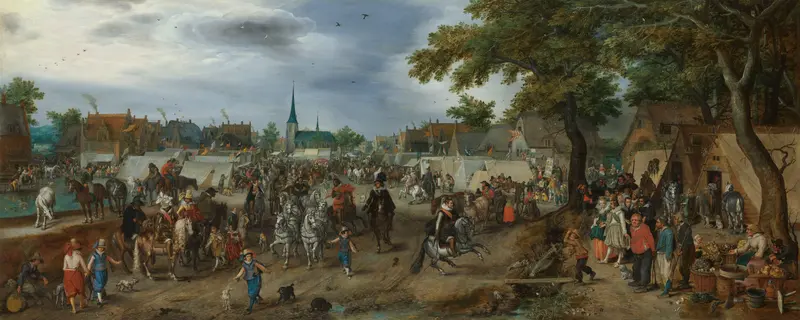
Princes Maurice and Frederick Henry at the Valkenburg Horse Fair
Adriaen Pietersz van de Venne
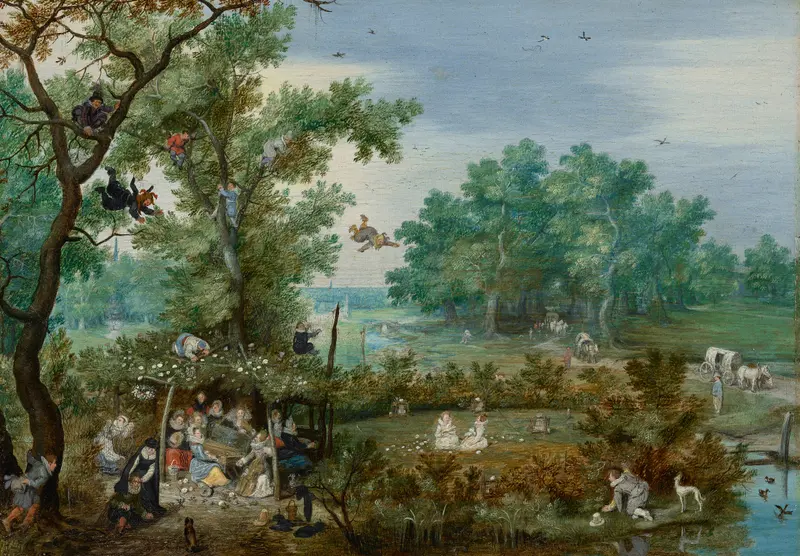
Merry Company in an Arbor
Adriaen Pietersz van de Venne
Princes Maurice and Frederick Henry at the Valkenburg Horse Fair
Adriaen Pietersz van de Venne
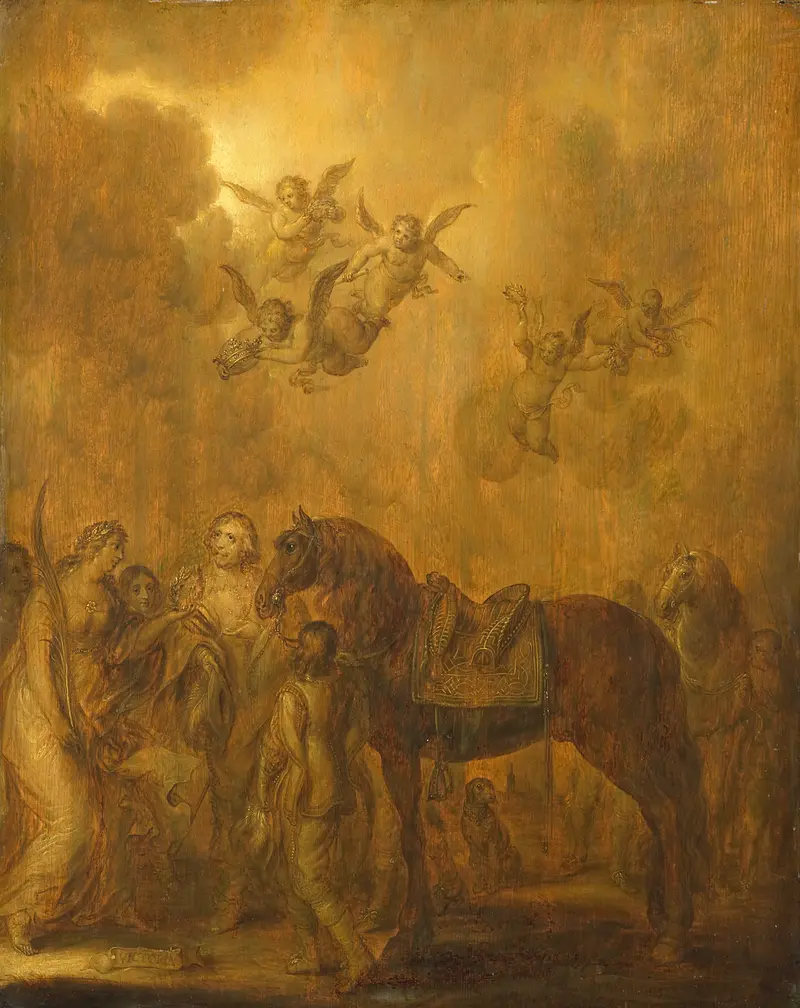
Allegory of the Stadtholdership of Prince Frederick Henry
Adriaen Pietersz van de Venne
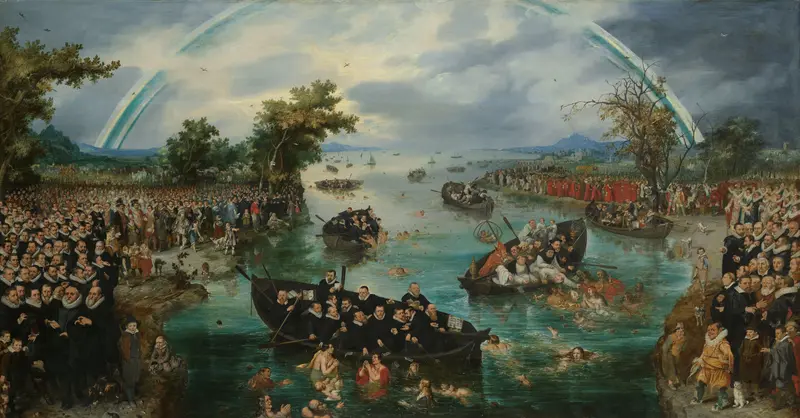
Fishing for Souls
Adriaen Pietersz van de Venne
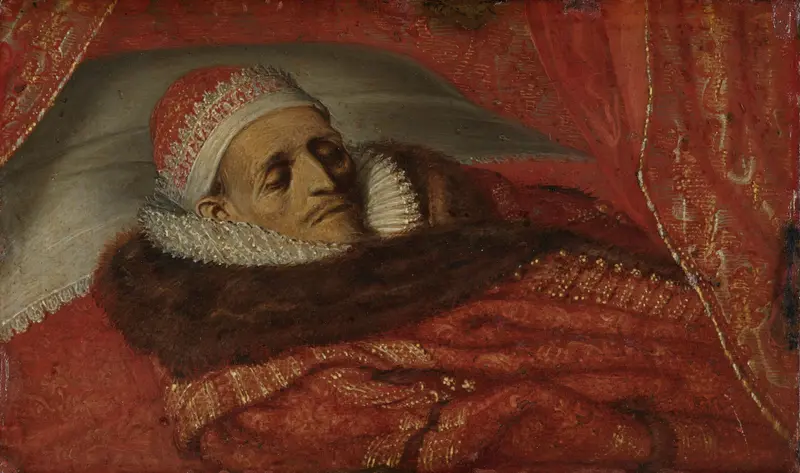
Stadtholder Prince Maurice Lying in State
Adriaen Pietersz van de Venne
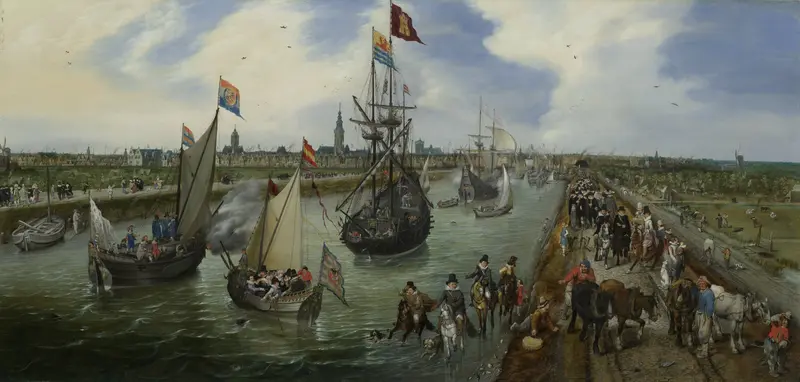
The Departure of a Dignitary from Middelburg
Adriaen Pietersz van de Venne
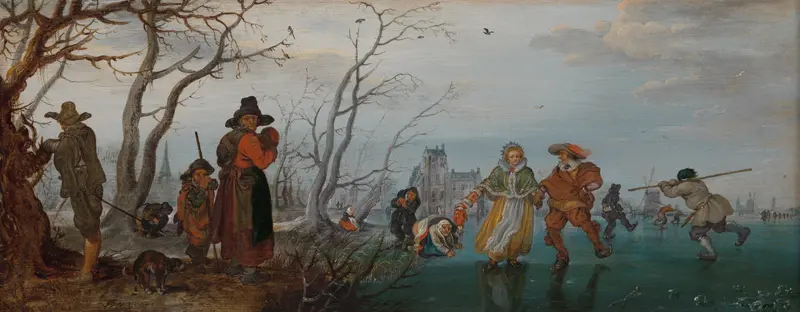
Winter
Adriaen Pietersz van de Venne

A Jeu de Paume Before a Country Palace
Adriaen Pietersz van de Venne
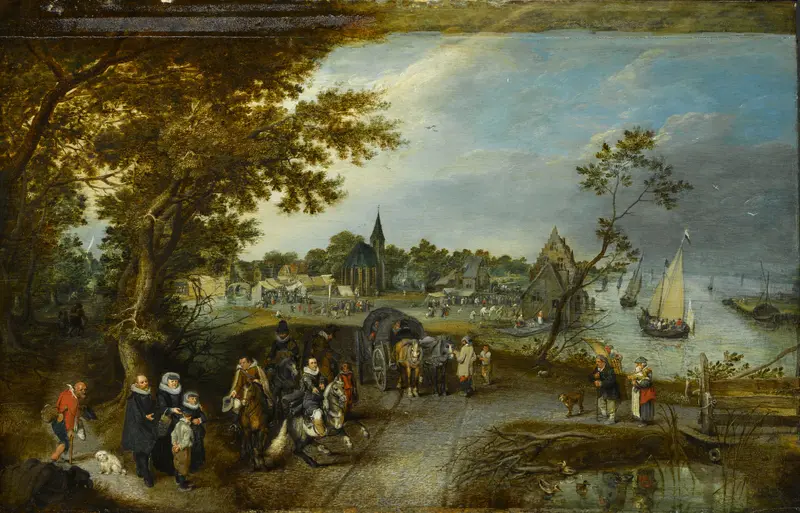
Landscape with Figures and a Village Fair (Village Kermesse)
Adriaen Pietersz van de Venne
More Genre Scene Art

Banquet of the Officers of the St George Civic Guard
Frans Hals

Rembrandt and Saskia in the Scene of the Prodigal Son
Rembrandt van Rijn

Bal du moulin de la Galette
Pierre-Auguste Renoir

Quadrille at the Moulin Rouge
Henri de Toulouse-Lautrec

A Burial at Ornans
Gustave Courbet

When Will You Marry?
Paul Gauguin