
Alexander Pope (1688–1744) — History & Facts
When William Blake painted Alexander Pope (1688–1744) in 1800, he was not simply paying homage to a literary giant; he was also staking his own claim in the ongoing debate about the place of poetry and vision in English culture. At the turn of the nineteenth century, Pope’s legacy was fiercely contested—admired for his wit and form, yet criticized by Romantics for lacking spiritual depth. Blake, who revered visionary imagination above neoclassical order, chose to portray Pope at a moment when the poet’s reputation was being redefined by a new generation. The portrait captures Pope in a contemplative pose, his gaze turned inward rather than outward, hands perhaps resting on a manuscript or closed book—a visual nod to the poet’s lifelong struggle with ill health and his reliance on intellect over physical strength.
Blake’s treatment is intimate: the light falls softly across Pope’s delicate features, emphasizing the sharpness of his mind rather than the frailty of his body. Unlike Jonathan Richardson’s more formal, public images of Pope, Blake’s work invites the viewer into a private world, hinting at the poet’s inner life and the solitary labor of creation. The absence of grand trappings or classical symbols marks a departure from the conventions of eighteenth-century portraiture, aligning instead with Blake’s own belief in the primacy of the spirit. The precise medium of Alexander Pope (1688–1744) remains uncertain, and the painting’s early history is not fully documented.
It is likely that Blake created the work on his own initiative, perhaps as part of his series of visionary portraits of poets and historical figures. For much of its existence, the painting was little known, overshadowed by Blake’s more famous illuminated books and mystical watercolors. Today, it stands as a testament to Blake’s complex relationship with the literary past and his unique approach to portraiture—bridging the gap between the seen and the unseen, the material and the imagined.
More Artworks by William Blake
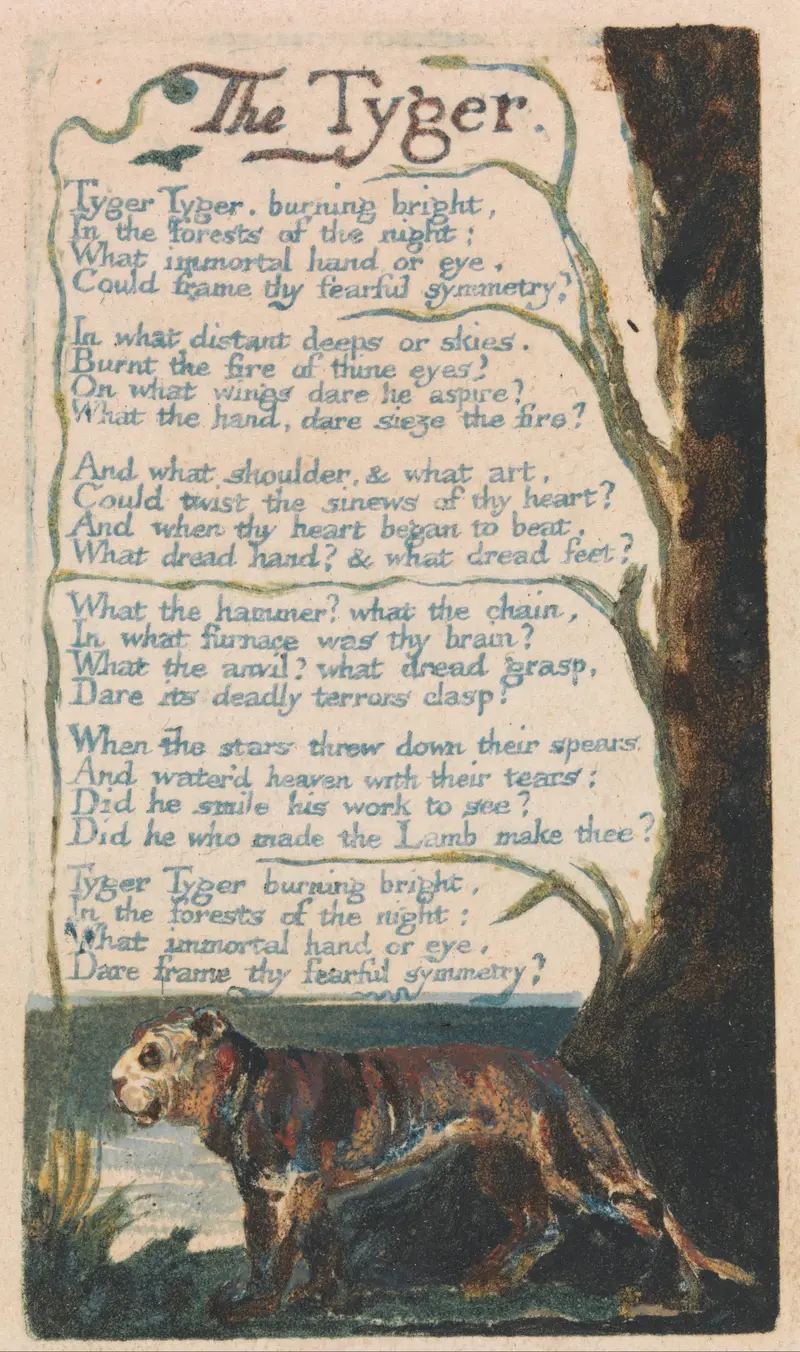
The Tyger
William Blake

Christ Blessing
William Blake
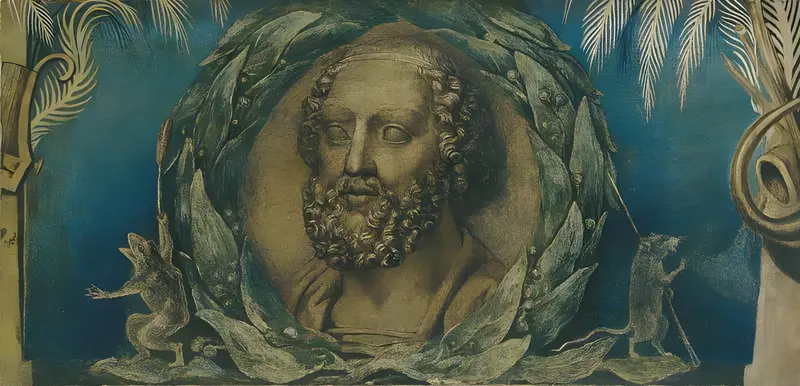
Homer
William Blake
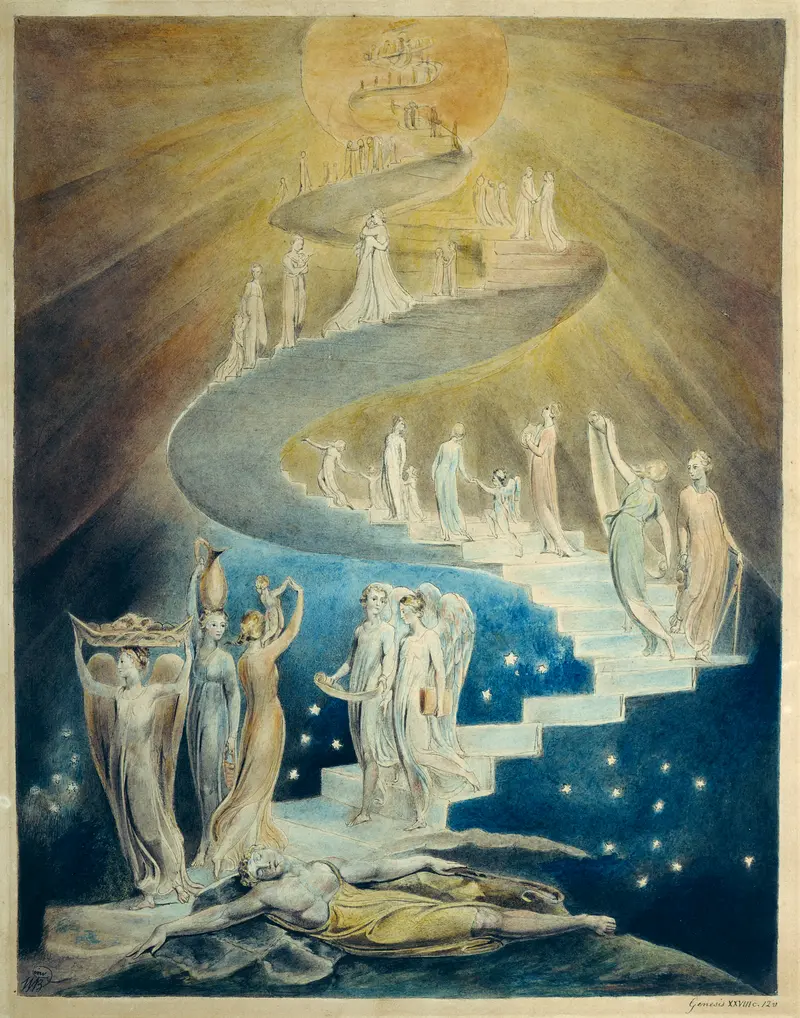
Jacob's Ladder
William Blake
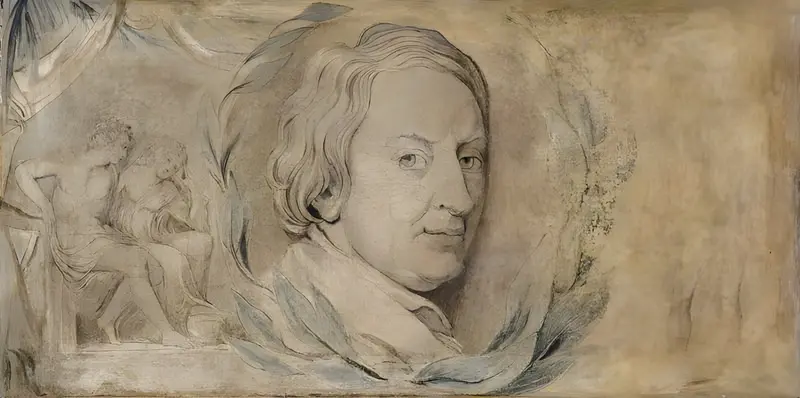
John Dryden (1631–1700)
William Blake
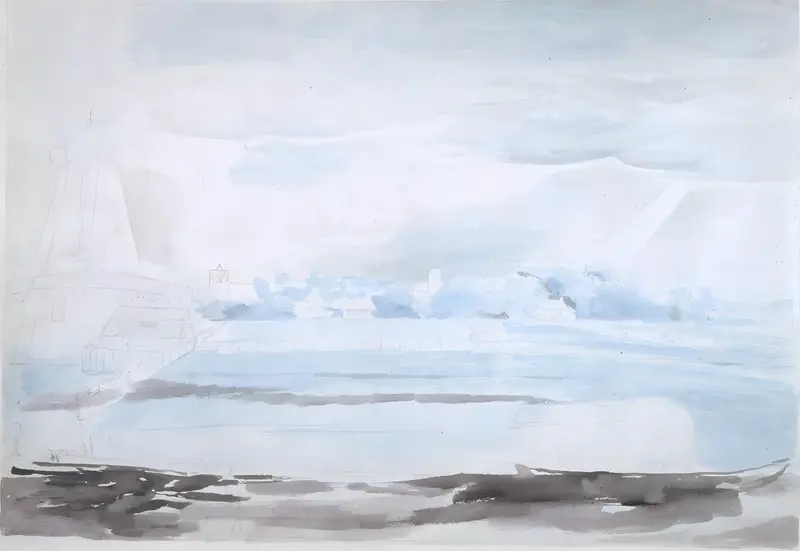
Landscape near Felpham
William Blake
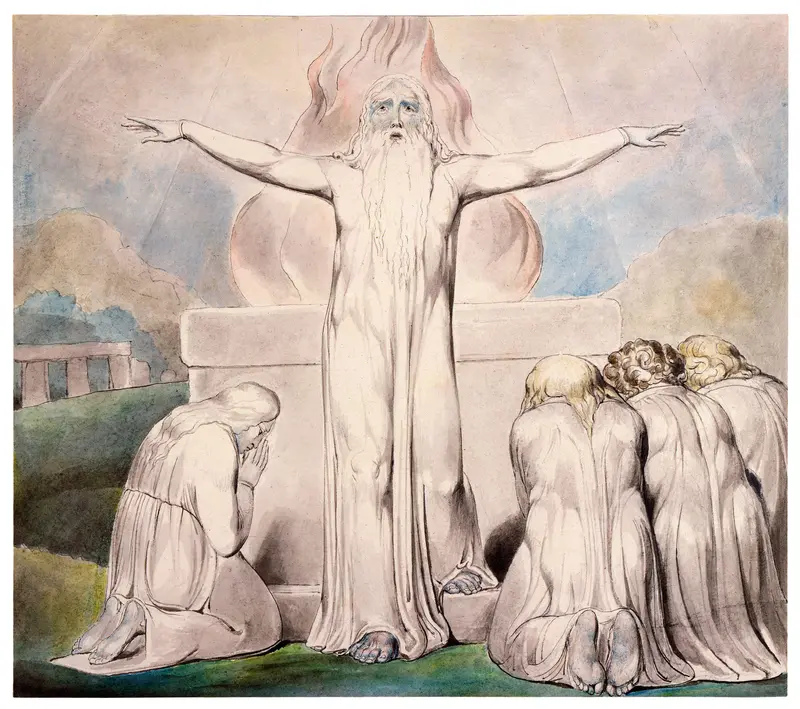
Sacrifice of Job
William Blake
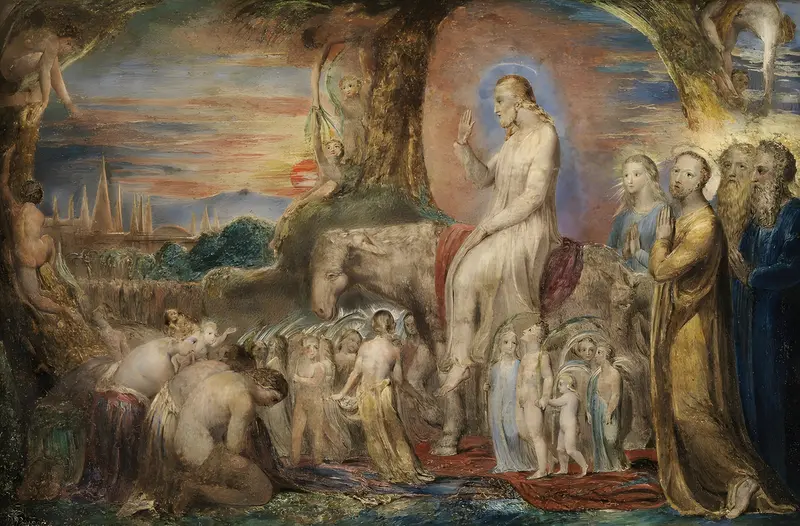
Christ's Entry into Jerusalem
William Blake
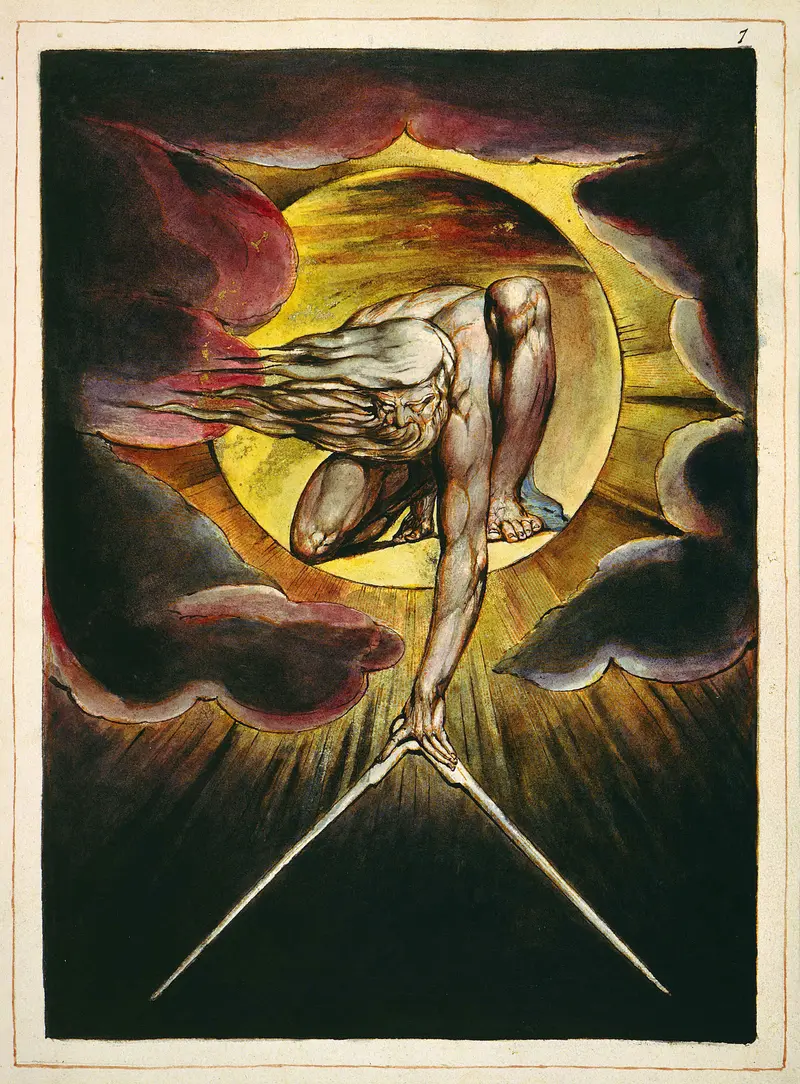
The Ancient of Days
William Blake
Adam Naming the Beasts
William Blake





