
Amberleyn jokilaakso (Arunjoki) — History & Facts
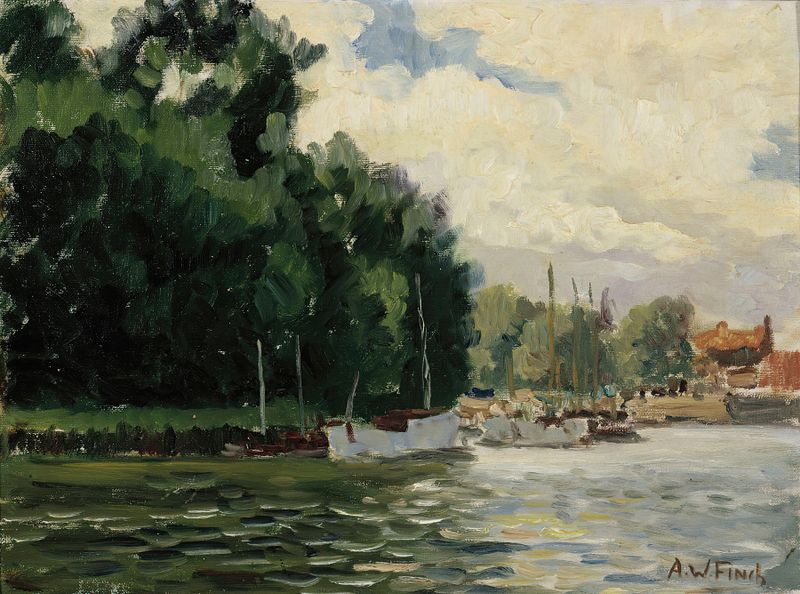
Could a single brushstroke hold eternity? In Amberleyn jokilaakso (Arunjoki), the artist captures the essence of grief, inviting us to linger in the depths of our emotions. Look to the sweeping river on the canvas, its gentle curves drawing the eye through a landscape steeped in muted browns and vibrant greens. Notice how the light dances delicately across the water's surface, glistening like fragmented memories. The interplay of shadow and illumination weaves a complex narrative that evokes both tranquility and sorrow, with strokes that feel urgent yet tender, as if they yearn to tell a deeper story. Beneath this serene exterior lies a profound emotional tension—a juxtaposition between the stillness of the landscape and the tumult of human experience.
The trees stand tall and solemn, their silhouettes quietly echoing the weight of loss, while the river flows, a reminder of time's relentless passage. Each brushstroke invites reflection, offering glimpses into the ache of remembrance and the beauty that persists through suffering. Finch painted this work in 1911 during a transformative period in his career, having recently returned to England after a decade in Canada. The world around him was shifting dramatically, with the onset of modernism on the horizon.
Deeply influenced by the natural landscapes he encountered, he sought to express the interplay of light and emotion, using his artistry to process personal grief and the collective anxieties of the time.
More Artworks by Alfred William Finch
Browse all →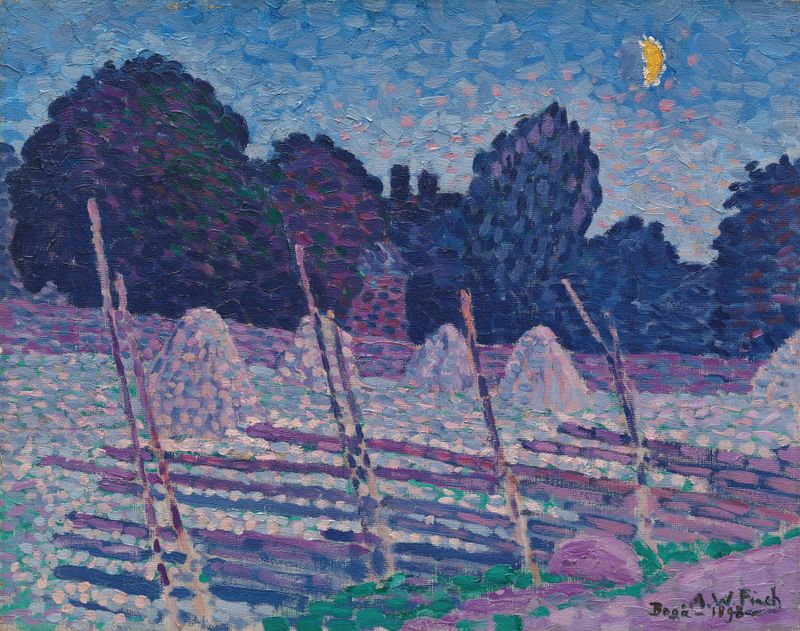
An August’s Night
Alfred William Finch
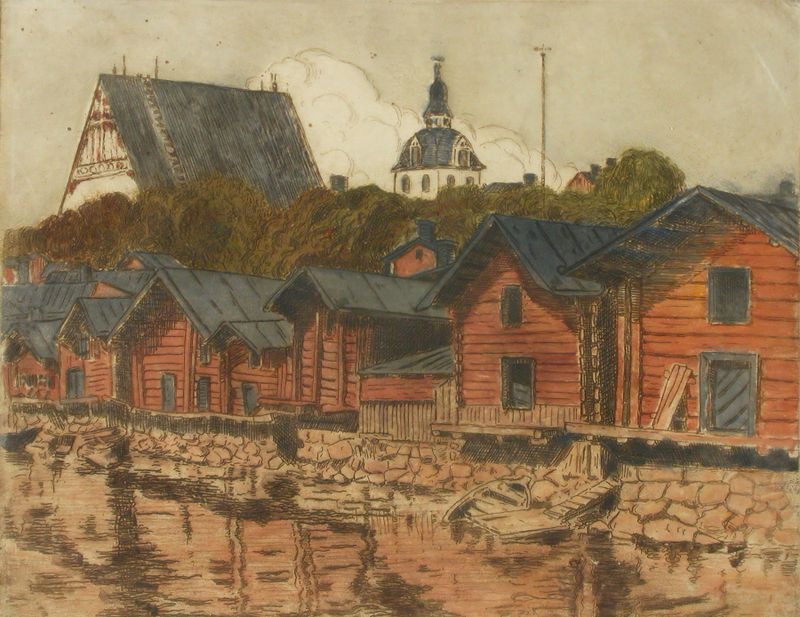
Porvoon ranta-aittoja
Alfred William Finch
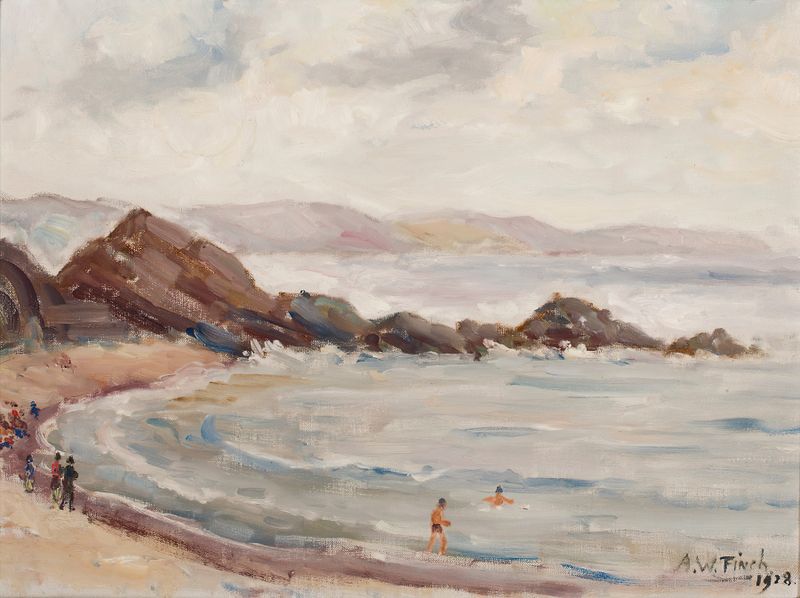
Looen rantaa
Alfred William Finch

Richmond, a River Landscape
Alfred William Finch
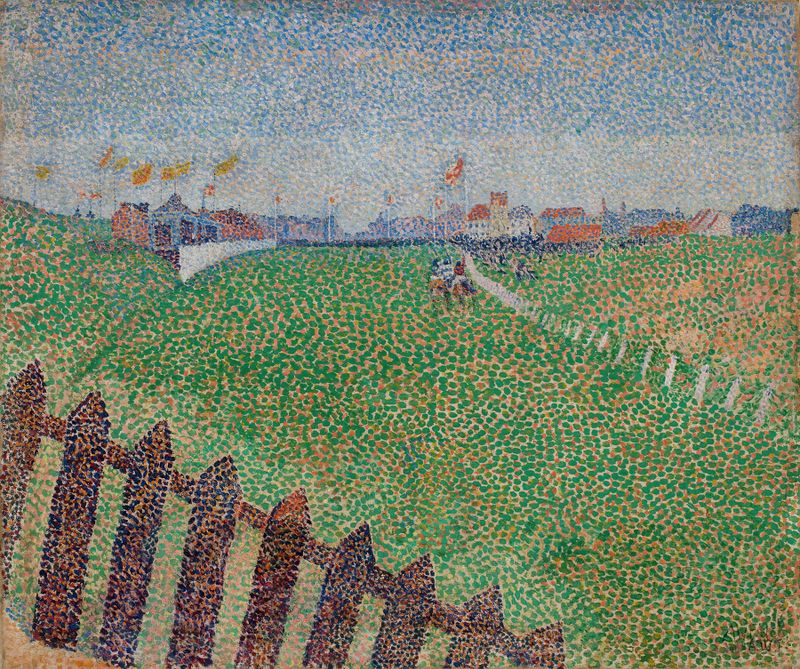
The Wellington Racecourse in Drizzle (Ostende)
Alfred William Finch
Richmond, Thames
Alfred William Finch
Shore View, Knocke
Alfred William Finch
The Road to Nieuport
Alfred William Finch

Bushes
Alfred William Finch
Puistokuva Englannista
Alfred William Finch





