
American Bison — History & Facts
What draws the eye first in American Bison by John James Audubon is the remarkable sense of presence—three bison, rendered with a naturalist’s precision, command the foreground as if caught in a moment of wary stillness. The largest, a bull, stands alert, his massive head lowered and gaze fixed outward, while a female reclines in the grass, her body angled protectively toward a calf that grazes nearby. The artist’s use of subtle gradients in the landscape—soft greens and browns melting into the misty blue of distant hills—frames the animals in their native domain, yet the sharp detail of their coats and the glint in their eyes pull the viewer back to the immediacy of the scene.
Light falls gently from the left, illuminating the textures of fur and earth, and guiding the gaze from the intimacy of the group to the shadowy herds drifting across the plains behind. This image belongs to a world in which the boundaries between art and science were being redrawn. In the early 1840s, Audubon—already celebrated for his work on birds—set out to capture the mammals of North America with the same fidelity and grandeur. The resulting book plates, including this one, were not only scientific documents but also works of art, intended to educate and awe a growing audience fascinated by the continent’s wild abundance.
Produced in collaboration with his son, these illustrations reflect an era when exploration and natural history were intertwined, and when the American bison still roamed vast open ranges. Today, the plate survives as a window onto that vanished landscape, inviting viewers to linger over every detail and imagine the world it once described.
More Artworks by John James Audubon
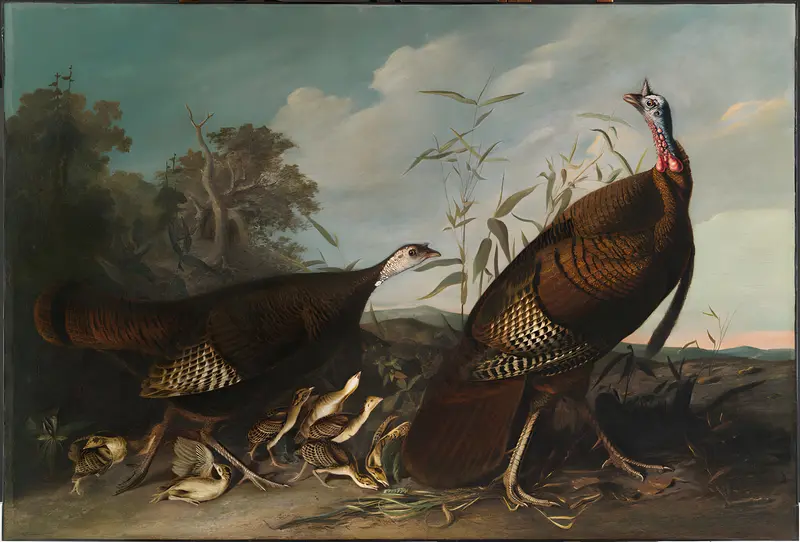
Wild Turkey Cock, Hen, and Chicks
John James Audubon
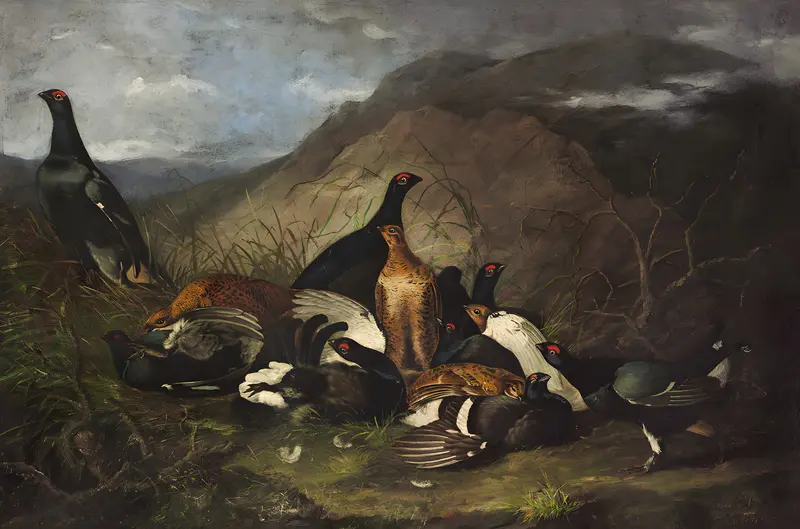
Scottish Black Grouse, Cocks and Hens
John James Audubon
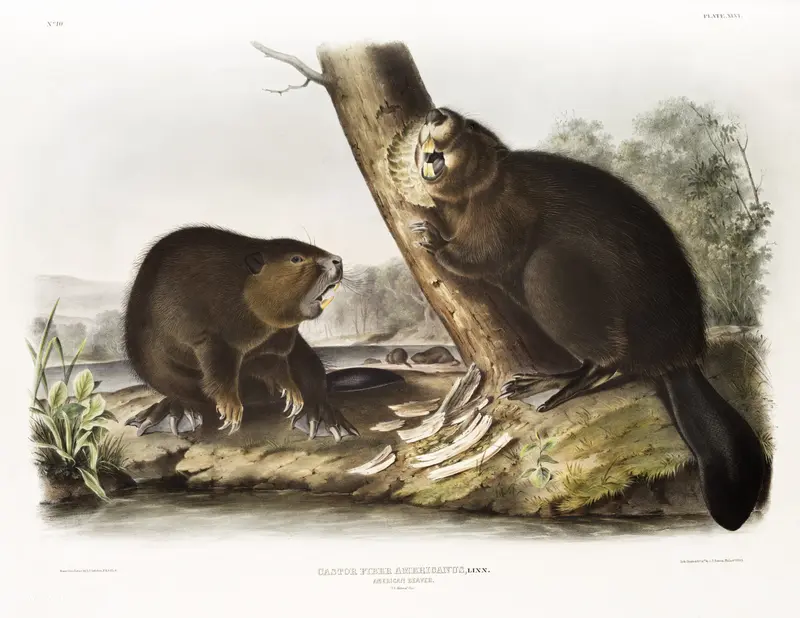
American Beaver
John James Audubon
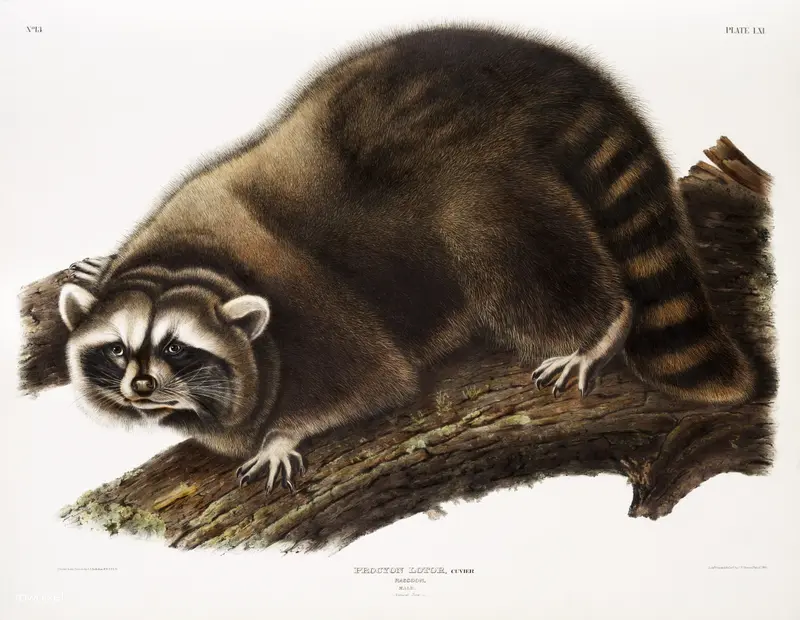
Raccoon
John James Audubon

Magnificent Frigatebird
John James Audubon
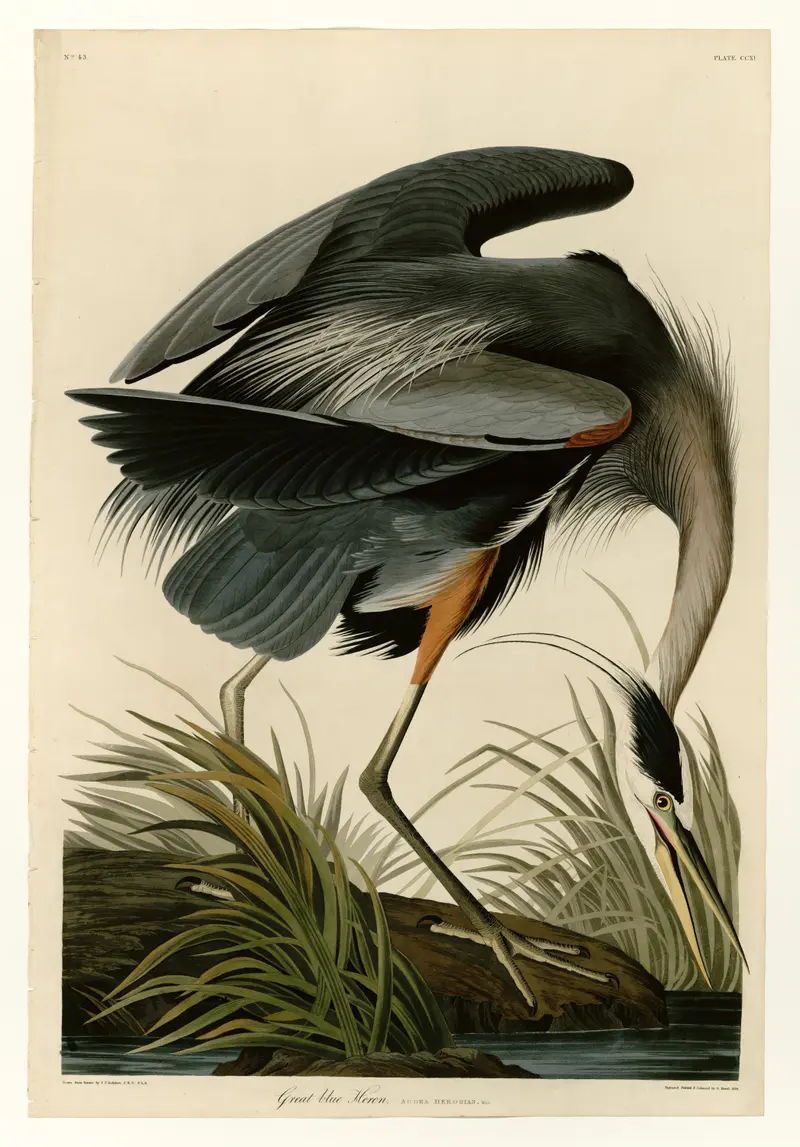
Great Blue Heron
John James Audubon
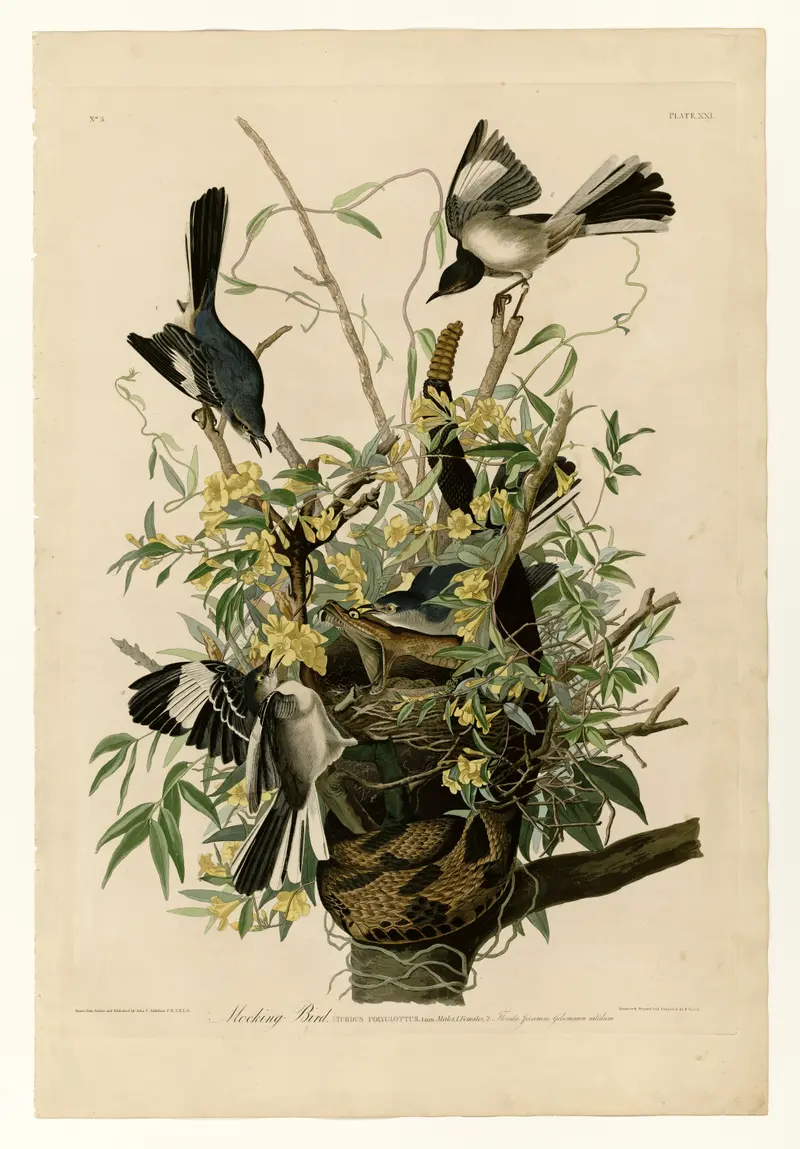
Northern Mockingbird
John James Audubon
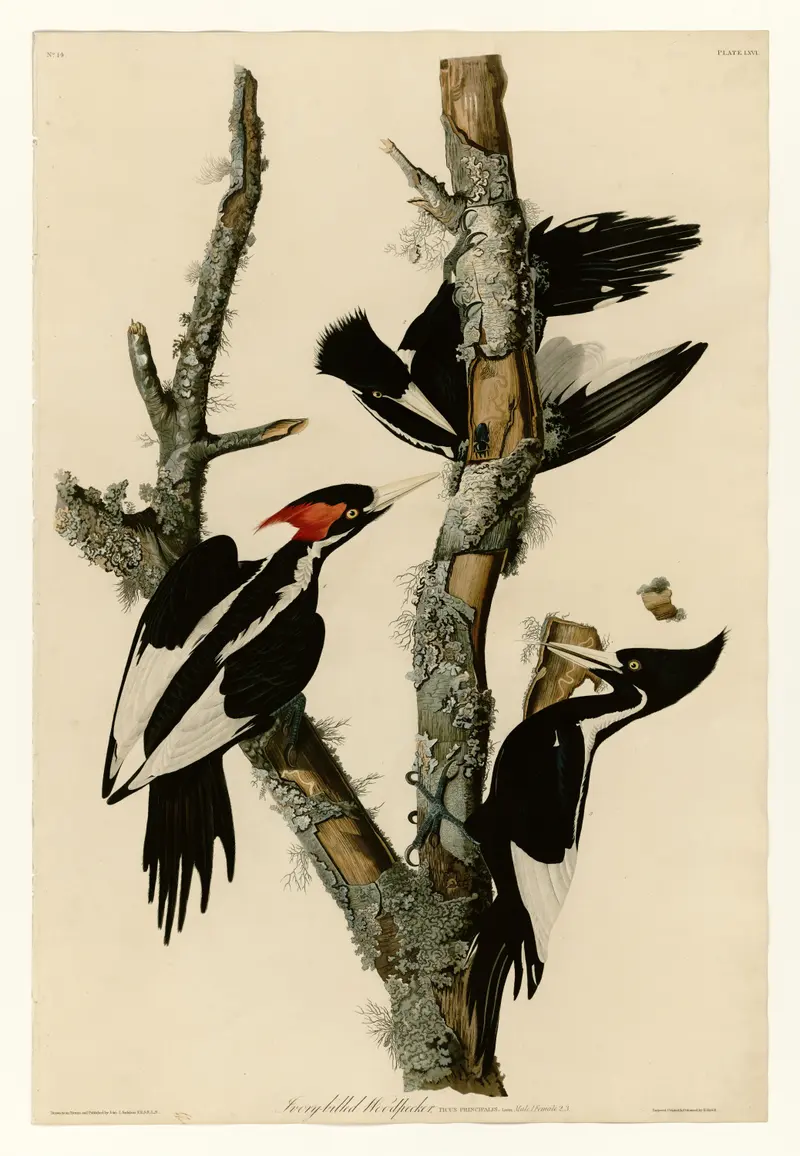
Ivory-billed Woodpecker
John James Audubon
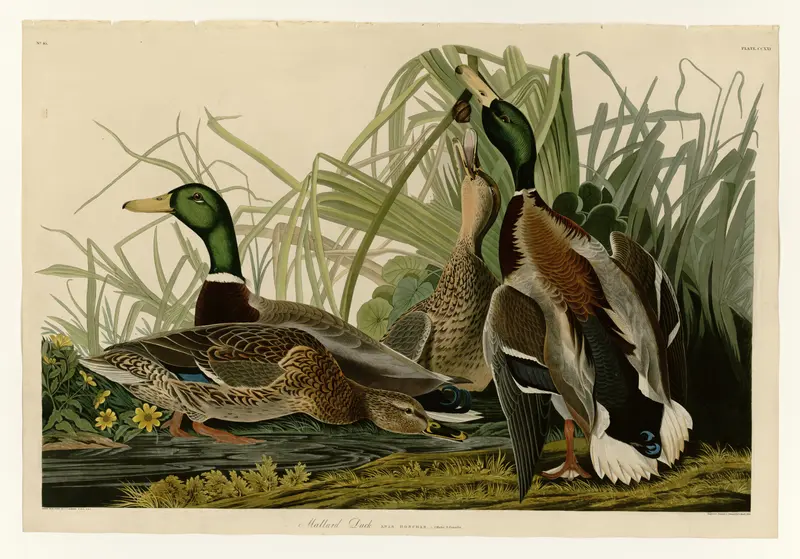
Mallard
John James Audubon
Ruby-throated Hummingbird
John James Audubon





