
Northern Mockingbird — History & Facts
A coil of danger sits at the heart of this scene, and every feather bristles with urgency. In Northern Mockingbird, John James Audubon captures a moment of high drama: four birds in a frantic ballet above their nest, wings flared and beaks open in alarm. The source of their distress is unmistakable—a thick, patterned snake winding through the branches, its head poised just beneath the rim of the nest.
The yellow blossoms and lush greenery do little to soften the tension; instead, they frame the confrontation, drawing the eye to the nest’s peril and the birds’ desperate defense. Light falls evenly across the scene, giving every detail—down to the glint in the birds’ eyes and the texture of the snake’s scales—a clarity that heightens the sense of immediacy. This plate, created between 1827 and 1838 for the monumental Birds of America, belongs to an era when naturalists sought to capture not just the appearance but the drama of the wild. Audubon’s approach was revolutionary: rather than static specimens, his birds are alive with intent, their gestures and postures telling a story of survival.
Such works were often commissioned by wealthy patrons or scientific societies eager to document the continent’s fauna in unprecedented detail. Today, this print resides in the University of Pittsburgh’s collection, a vivid reminder of both the artistry and the ambition that defined early American ornithology. The longer you look, the more you sense the stakes—the fragile line between life and death, played out in a tangle of leaves and wings.
More Artworks by John James Audubon
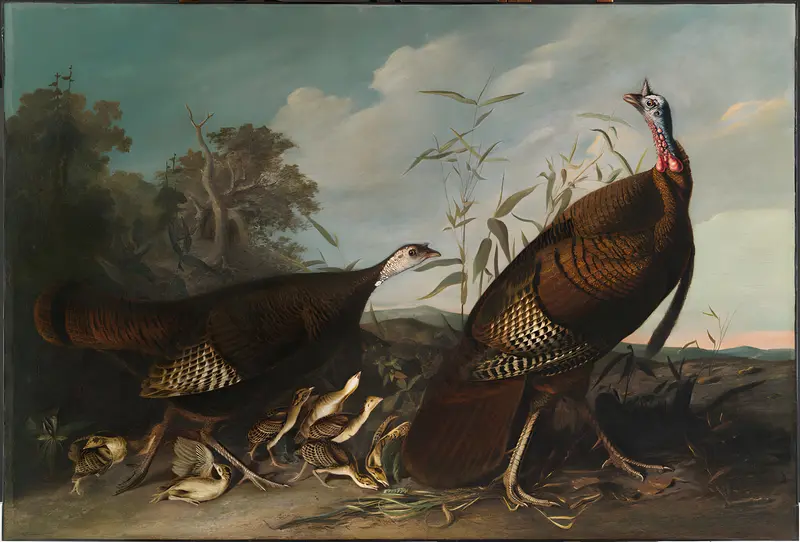
Wild Turkey Cock, Hen, and Chicks
John James Audubon
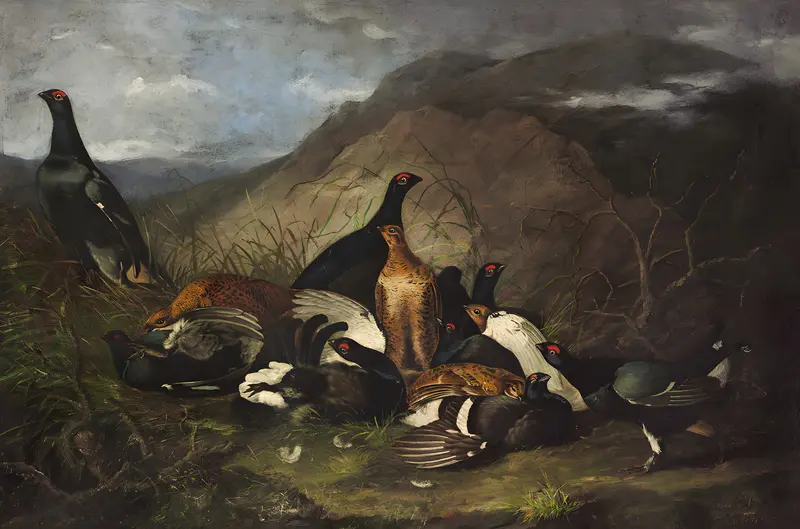
Scottish Black Grouse, Cocks and Hens
John James Audubon
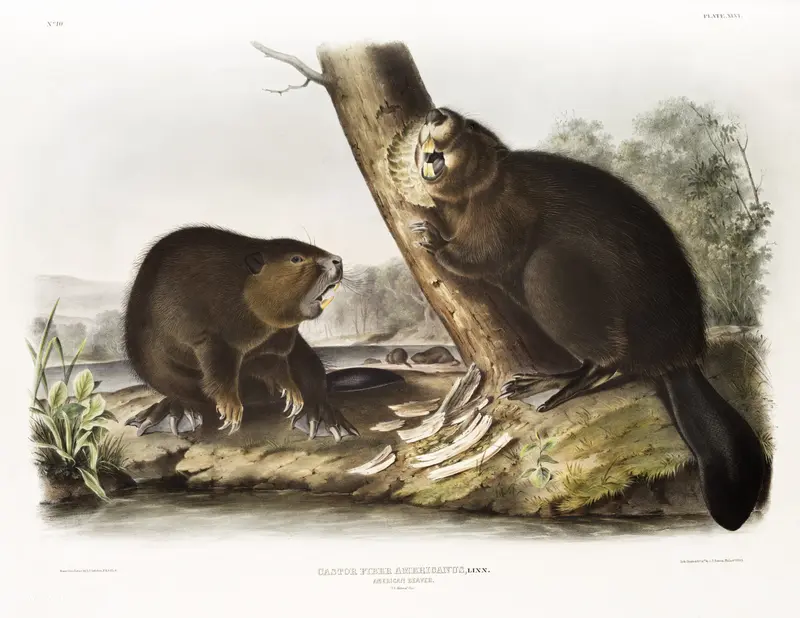
American Beaver
John James Audubon
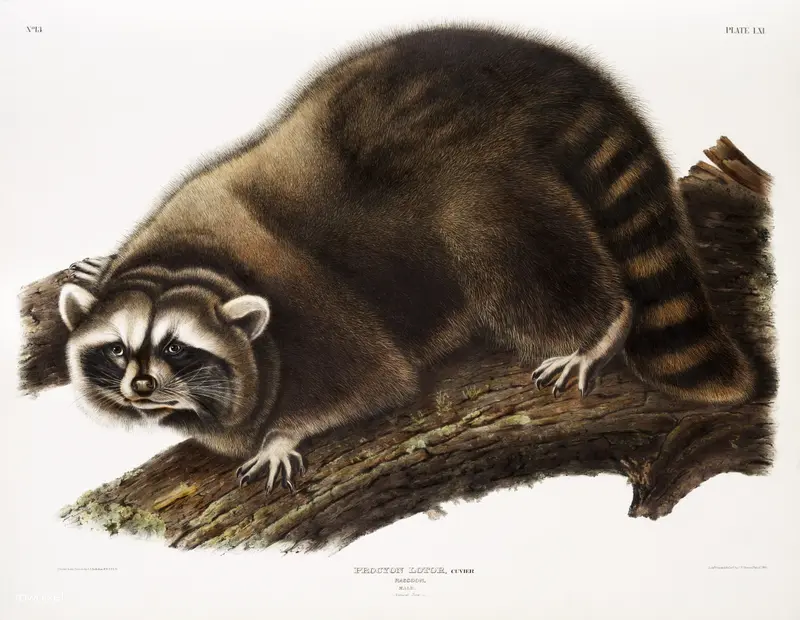
Raccoon
John James Audubon

Magnificent Frigatebird
John James Audubon
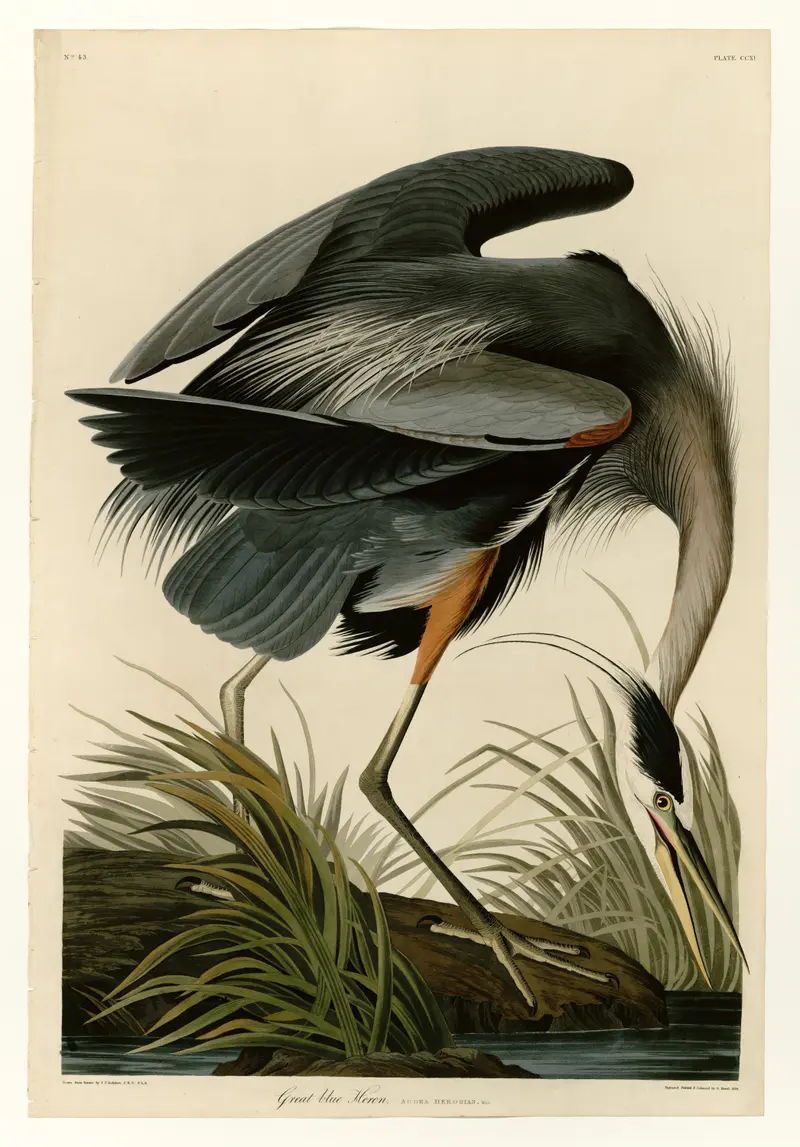
Great Blue Heron
John James Audubon
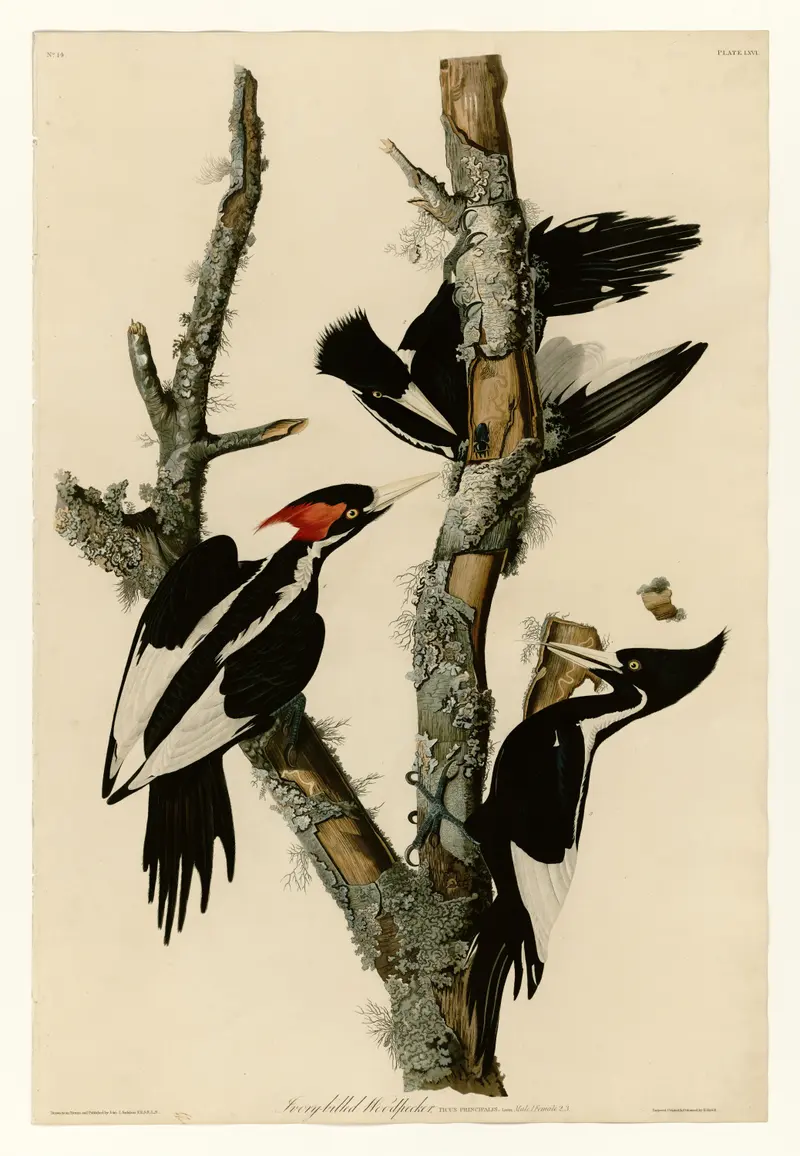
Ivory-billed Woodpecker
John James Audubon
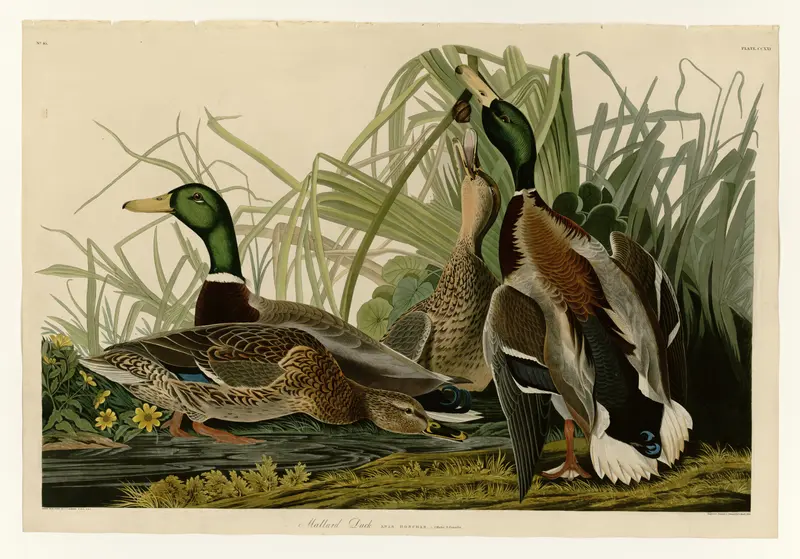
Mallard
John James Audubon
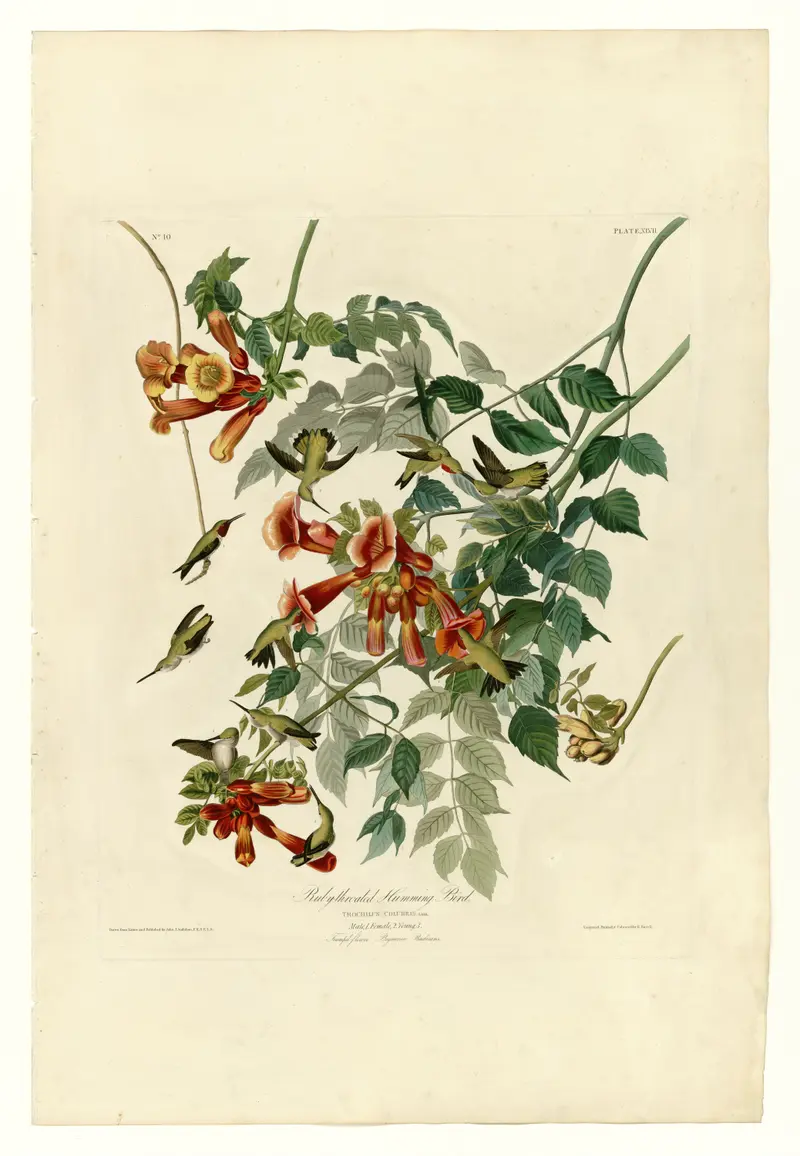
Ruby-throated Hummingbird
John James Audubon
Trumpeter Swan
John James Audubon





