
American Robin — History & Facts
What first seizes the eye in American Robin is the sense of bustling, urgent life: a nest brimming with open-beaked fledglings, wings half-spread in anticipation, while attentive adults dart and hover above, one bearing a bright red berry. The composition draws the viewer into the intimate drama of feeding, every feather and leaf rendered with crisp clarity. The tangle of twigs and the careful layering of leaves create a stage for the robins’ choreography, each gesture—beak to beak, wing outstretched—signaling the ceaseless labor of parenthood.
Light falls evenly, giving the scene a clarity that feels almost scientific, yet the energy and movement keep it from ever becoming static. Created between 1827 and 1838 as Plate 131 of Birds of America, this work stands at the crossroads of art and natural history, a testament to a time when the American wilderness was still being catalogued and celebrated. Such illustrations were not merely decorative; they were vital tools for scientists, collectors, and a public hungry for knowledge of the continent’s riches. John James Audubon’s meticulous attention to detail and dramatic staging set a new standard for ornithological illustration, making each plate as much a portrait as a record.
Today, housed in the University of Pittsburgh’s collection, this image invites us to linger not just on the robins’ vivid forms, but on the world of discovery and wonder from which they emerged.
More Artworks by John James Audubon
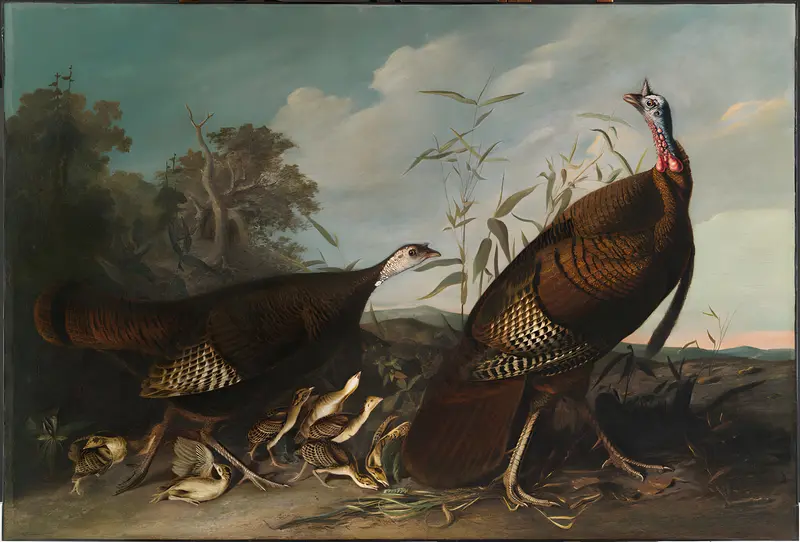
Wild Turkey Cock, Hen, and Chicks
John James Audubon
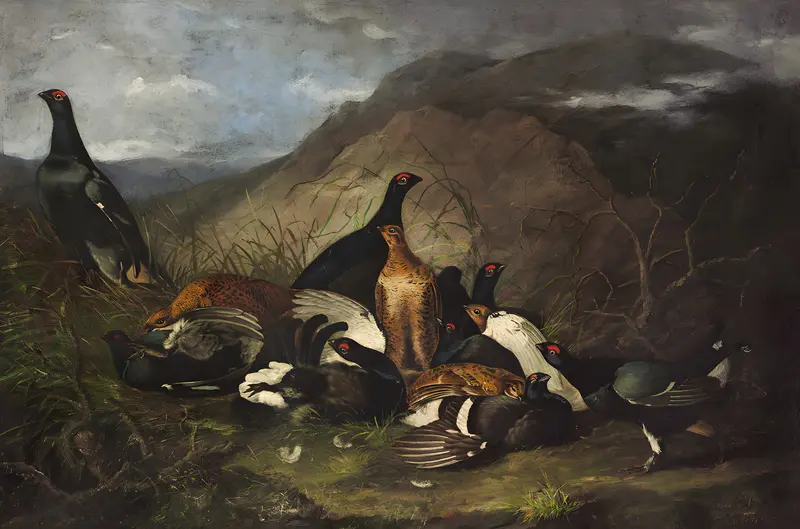
Scottish Black Grouse, Cocks and Hens
John James Audubon
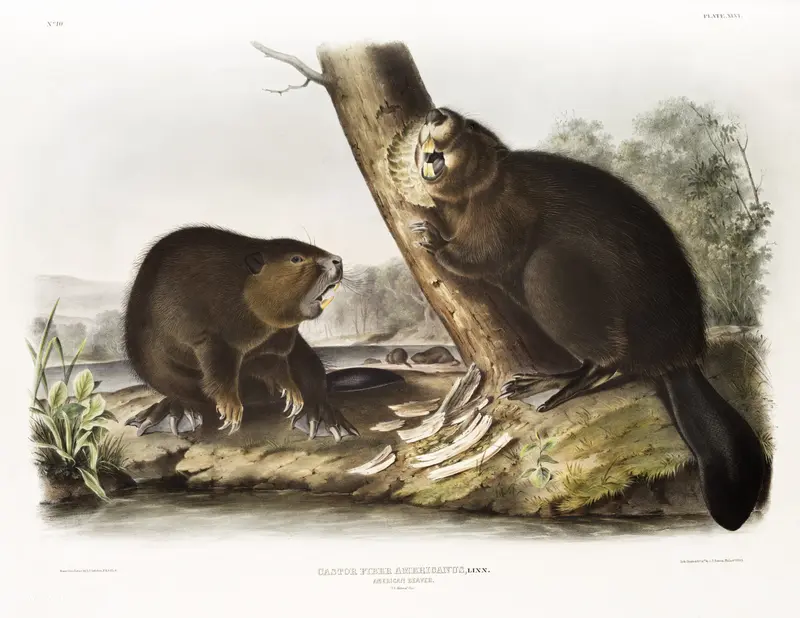
American Beaver
John James Audubon
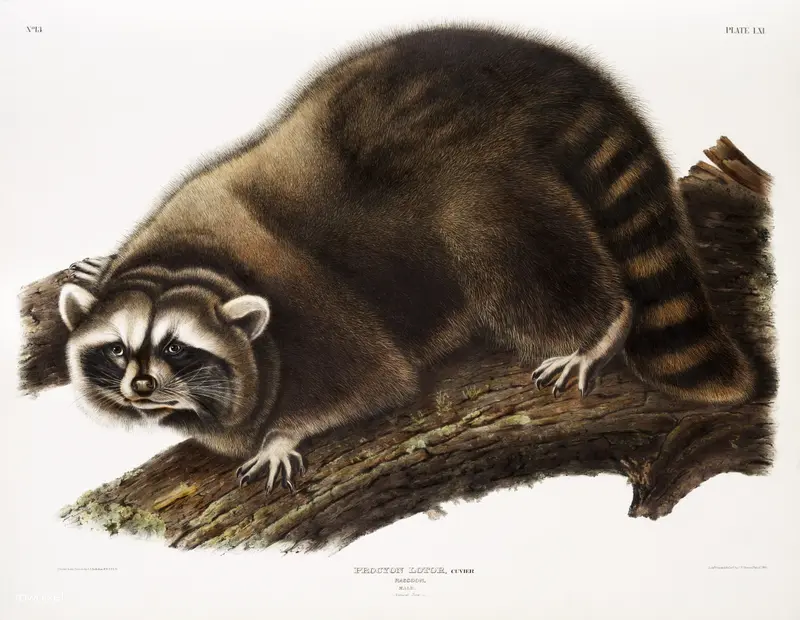
Raccoon
John James Audubon

Magnificent Frigatebird
John James Audubon
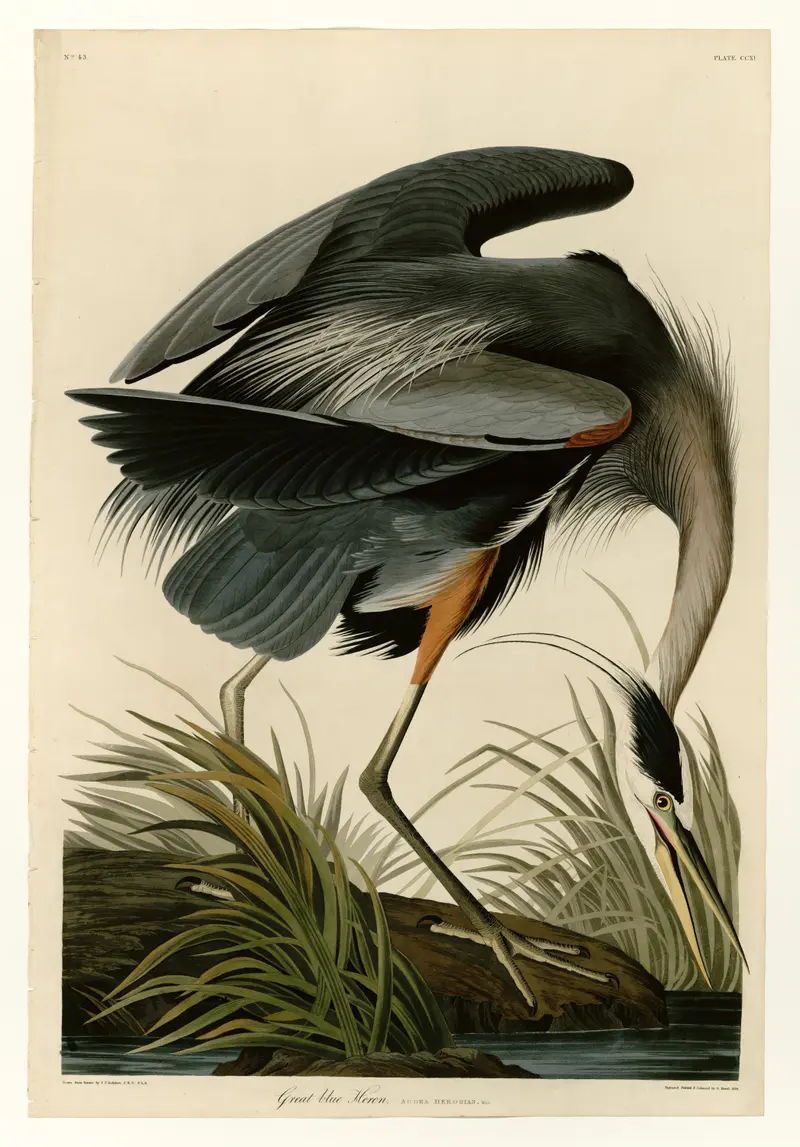
Great Blue Heron
John James Audubon
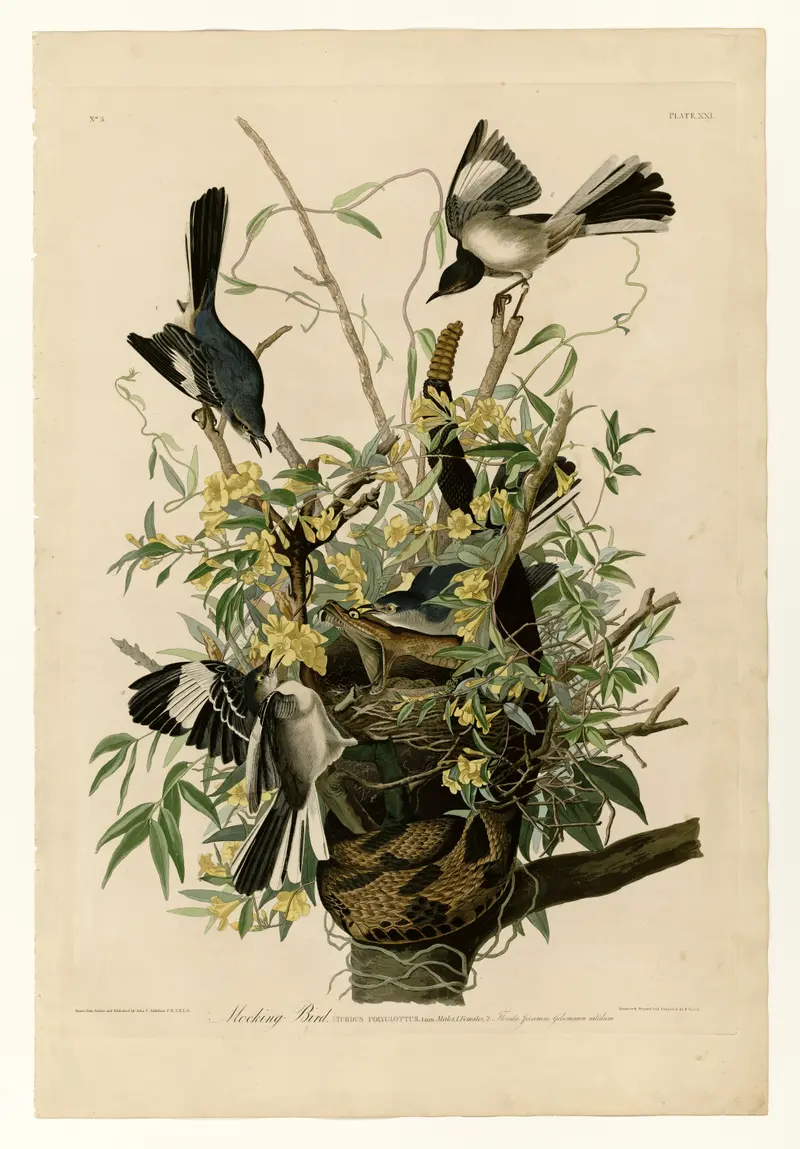
Northern Mockingbird
John James Audubon
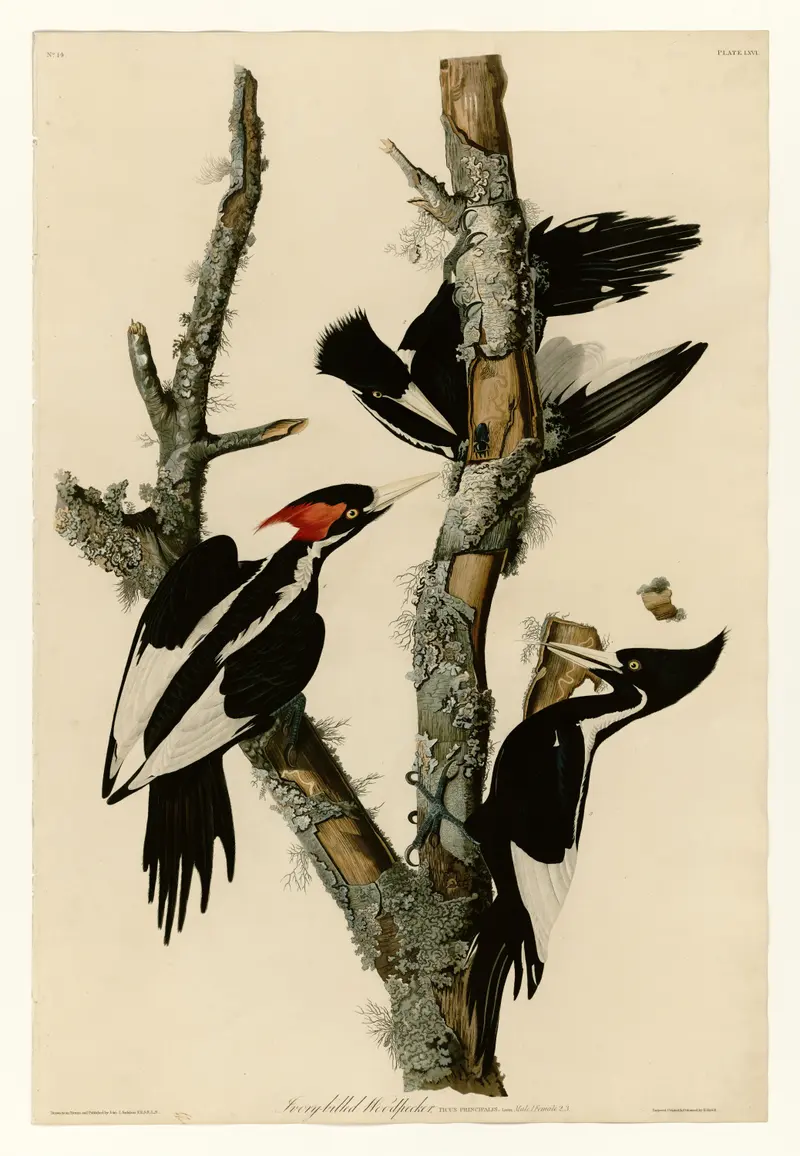
Ivory-billed Woodpecker
John James Audubon
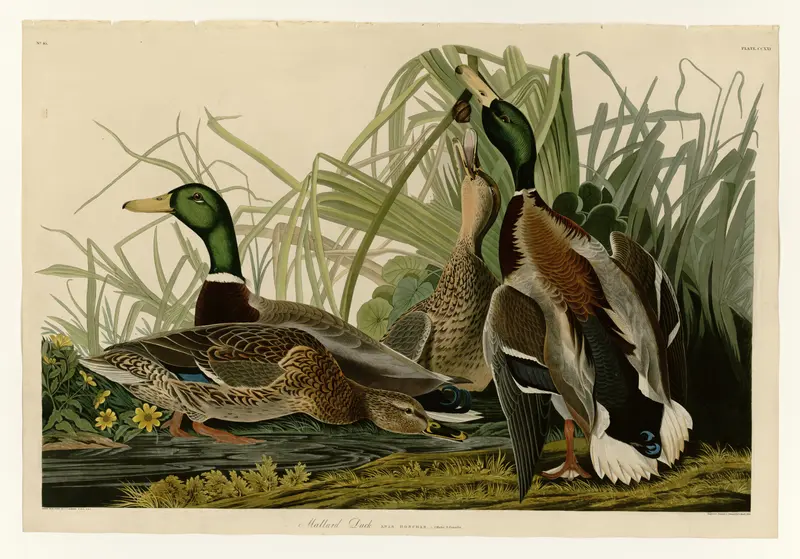
Mallard
John James Audubon
Ruby-throated Hummingbird
John James Audubon





