
Amoureux sur un banc — History & Facts
A pool of lamplight carves out a small world from the darkness, and in that world, two lovers cling to each other on a park bench, as if the night might swallow them whole. The eye is drawn first to their embrace—her face, pale and open, turned outward while his is pressed close, almost hidden, as if he is both protector and supplicant. The sweep of her arm, the way her hand dangles a closed book, suggests a moment interrupted, a conversation surrendered to silence.
The benches behind them recede into emptiness, and the blurred trees and lamps seem to pulse with the hush of a city at rest. The entire scene is built from soft, shadowy lines, the palette reduced to the language of dusk and secrecy, heightening the sense of intimacy and isolation. Created in 1902, Amoureux sur un banc belongs to a world on the cusp of modernity, when artists like Théophile Alexandre Steinlen captured the fleeting dramas of urban life in Paris. Such scenes—anonymous lovers in public parks, the city as a stage for private longing—were favored subjects for printmakers and illustrators of the Belle Époque, intended for collectors, journals, or simply as souvenirs of a rapidly changing world.
This particular work, once held by Raymond Koechlin and now preserved in the Bibliothèque nationale de France, stands as a quiet testament to the era’s fascination with the everyday poetry of the street. Let your gaze linger on the couple’s faces, and consider how the city’s vastness can make a single embrace feel both hidden and exposed.
More Artworks by Théophile Alexandre Steinlen

Village et charrette
Théophile Alexandre Steinlen
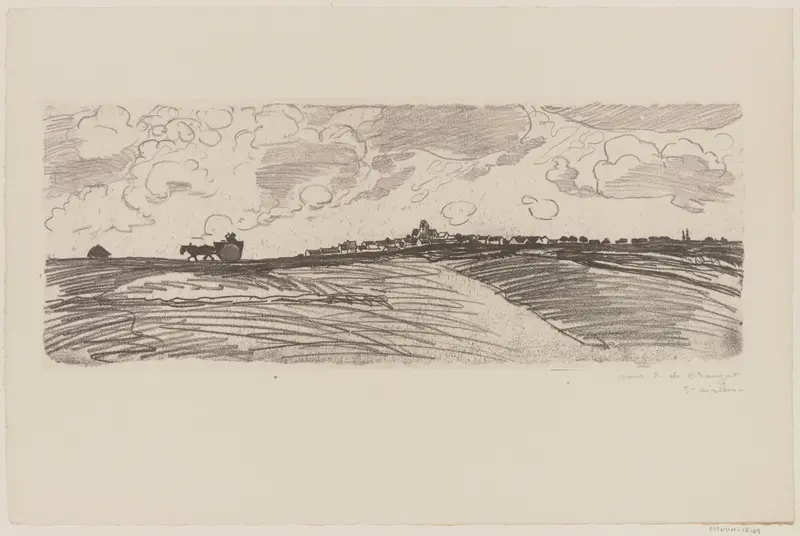
Village et charrette
Théophile Alexandre Steinlen
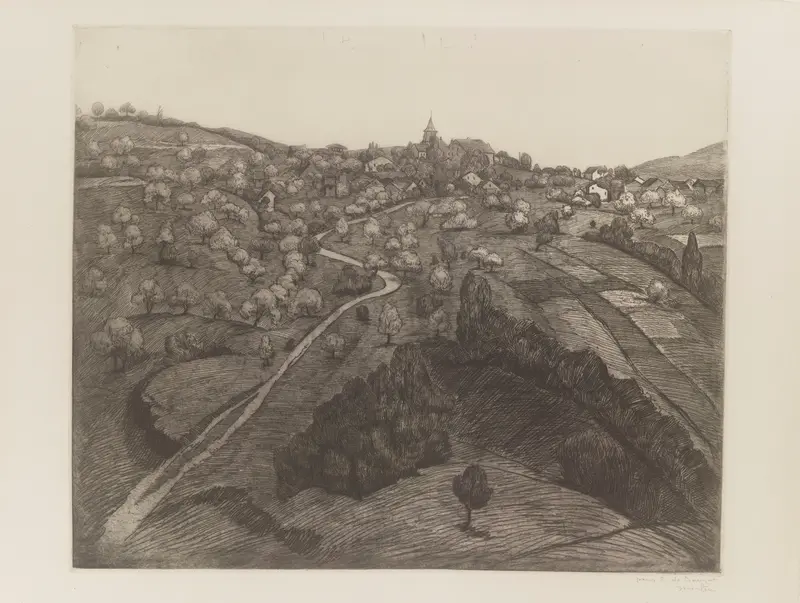
Vue de Belmont, près de Lausanne
Théophile Alexandre Steinlen
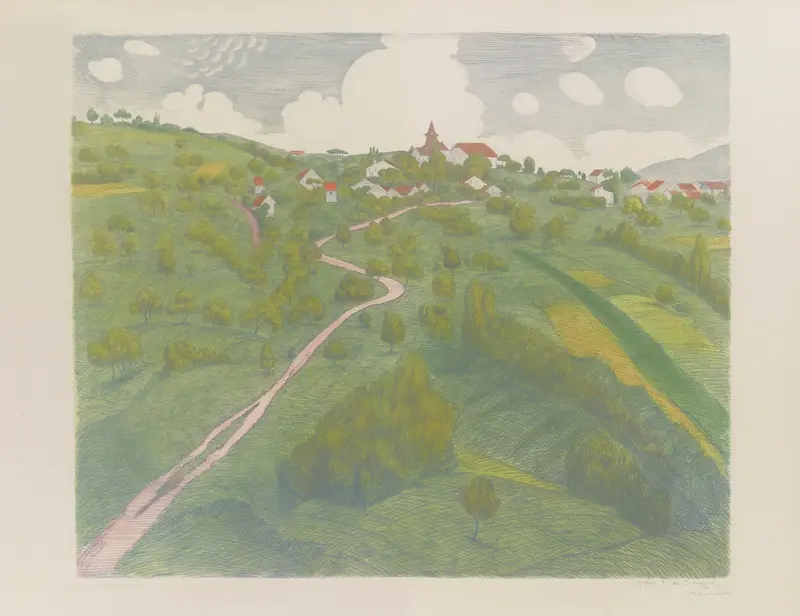
Vue de Belmont, près de Lausanne
Théophile Alexandre Steinlen
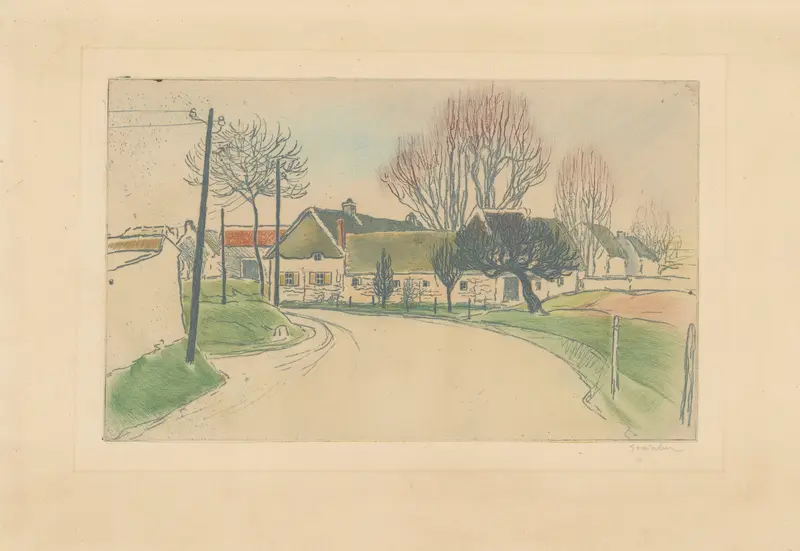
La maison à l’entrée du village
Théophile Alexandre Steinlen
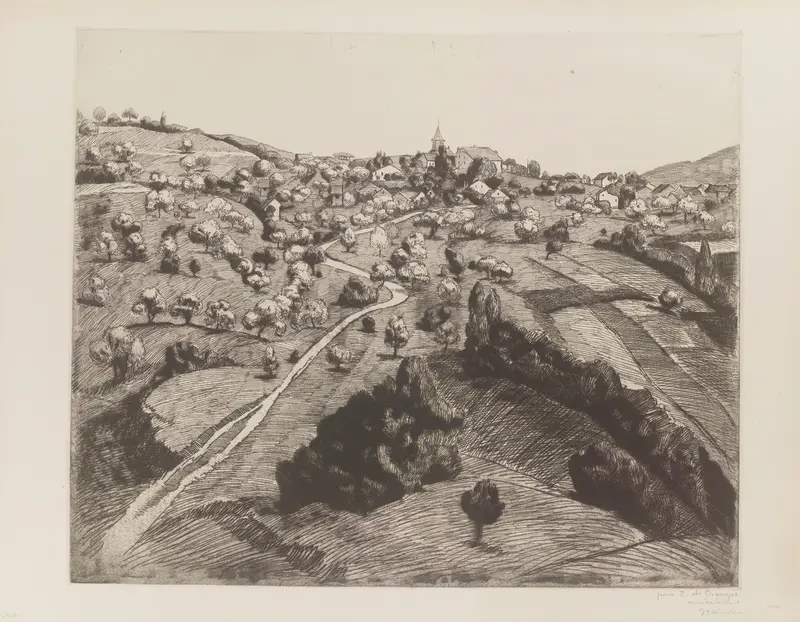
Vue de Belmont, près de Lausanne
Théophile Alexandre Steinlen
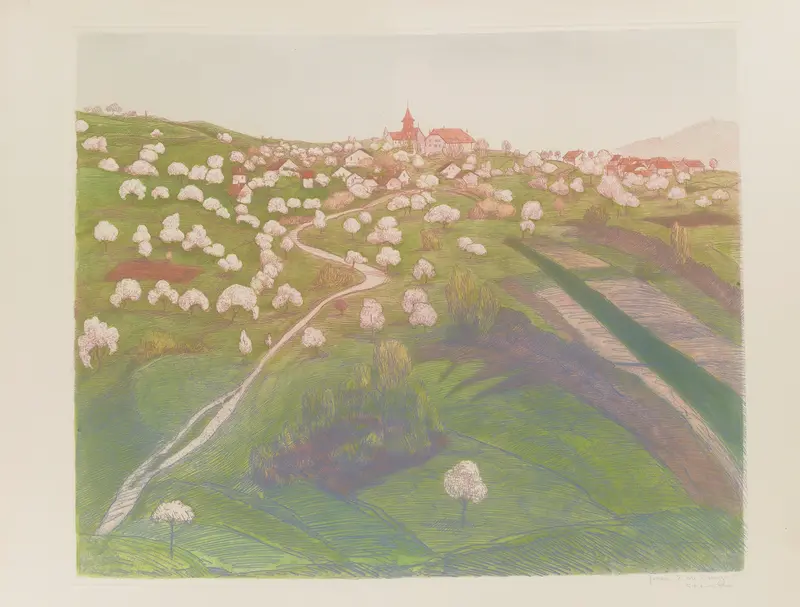
Vue de Belmont, près de Lausanne, n° 2
Théophile Alexandre Steinlen
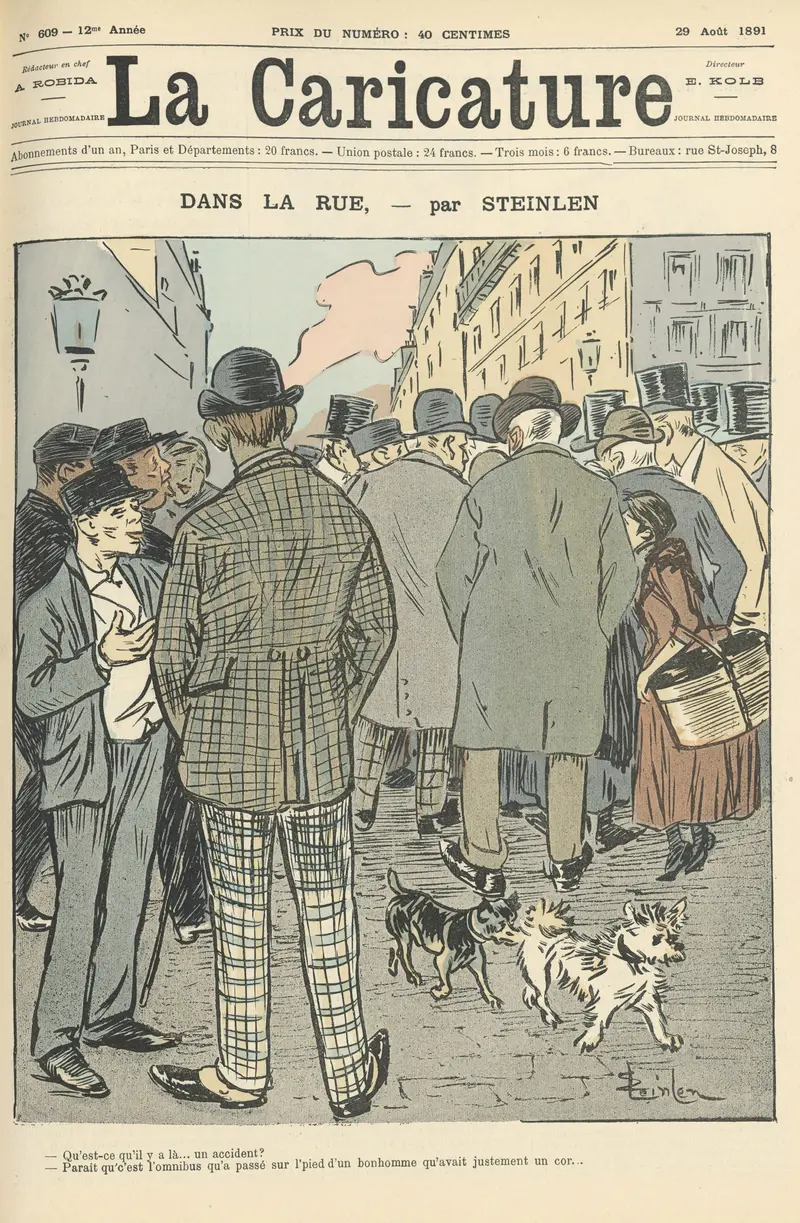
Dans la rue (La Caricature, 29 août 1891)
Théophile Alexandre Steinlen
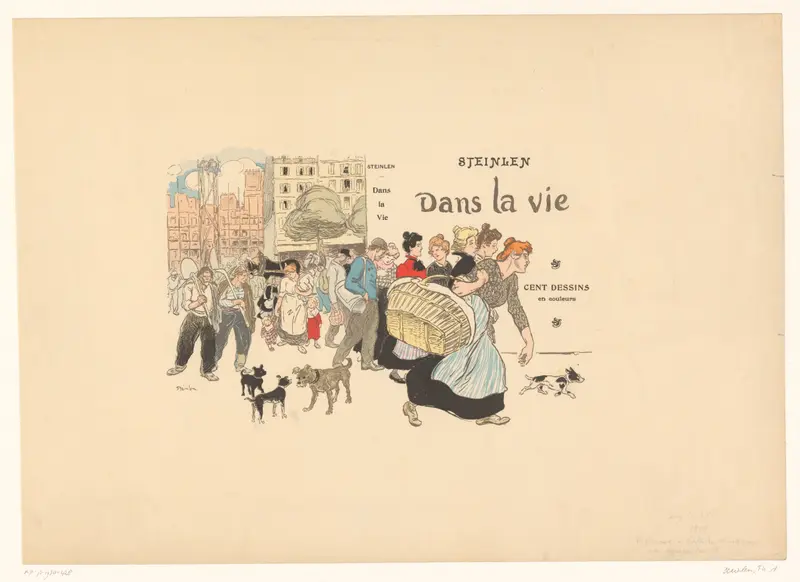
Dans la vie
Théophile Alexandre Steinlen
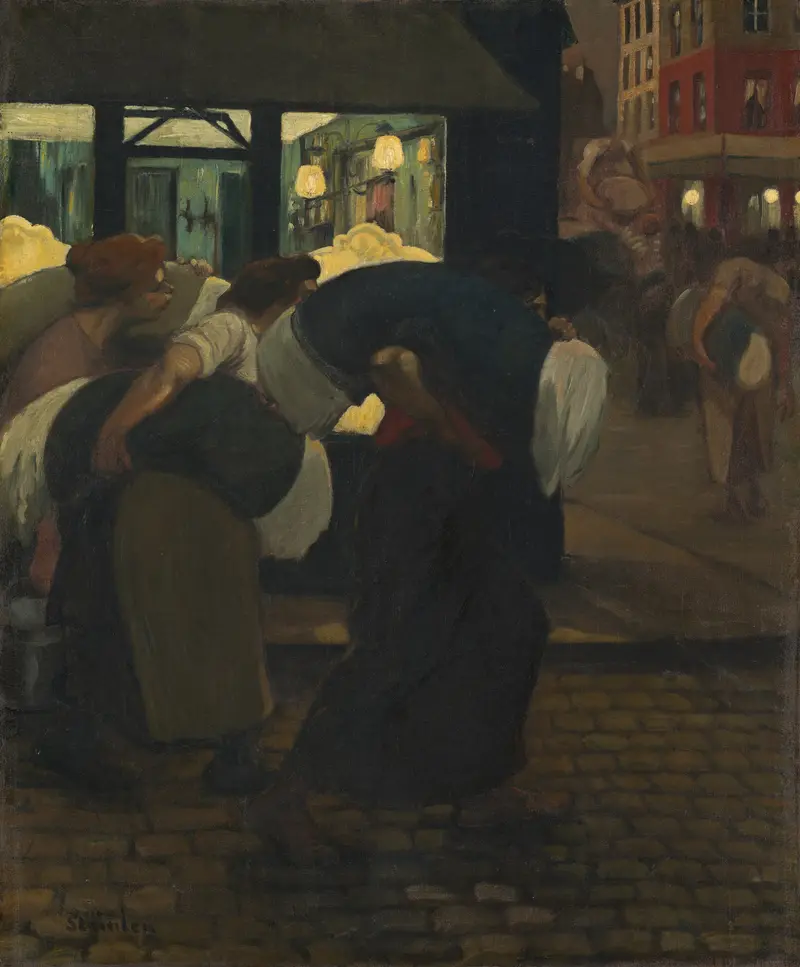
The Laundresses
Théophile Alexandre Steinlen
More Genre Scene Art

Banquet of the Officers of the St George Civic Guard
Frans Hals

Rembrandt and Saskia in the Scene of the Prodigal Son
Rembrandt van Rijn

Bal du moulin de la Galette
Pierre-Auguste Renoir

Quadrille at the Moulin Rouge
Henri de Toulouse-Lautrec

A Burial at Ornans
Gustave Courbet

When Will You Marry?
Paul Gauguin