
An Allegory — History & Facts
No painting by Sandro Botticelli dated as late as 1520 can be securely attributed to the Florentine master, who died in 1510. Yet An Allegory has long puzzled scholars, as its style echoes Botticelli’s late period, while its date and uncertain medium raise questions about authorship and origin. The painting’s ambiguous title and lack of documentation have fueled debates: is this a lost late work, a product of his workshop, or a later homage? Its very existence is a mystery, inviting viewers to look closer and consider the shifting boundaries between master and follower in Renaissance Florence. The scene unfolds with a group of idealized figures, their gestures and attributes layered with symbolic meaning.
A central female figure, draped in flowing robes, holds a laurel branch—a traditional emblem of virtue or poetic achievement—while a youth at her side offers a pomegranate, a fruit linked to abundance and resurrection. The background is sparse, directing attention to the interaction and the finely wrought details of hair and fabric. Botticelli’s characteristic linear grace is evident, recalling his earlier Primavera, yet the mood here is more contemplative, the allegory less explicit.
Unlike Leonardo da Vinci’s more enigmatic allegories, Botticelli’s figures seem poised between narrative and abstraction, their meaning hovering just out of reach. The physical history of An Allegory remains largely undocumented; no early inventories or letters mention it, and its provenance before the 19th century is obscure. Some art historians have suggested it was produced by Botticelli’s workshop or a close follower, perhaps as a private commission for a Florentine patron who valued the poetic ambiguity of allegorical art. Over the centuries, the painting has passed through several collections, sometimes attributed to Botticelli himself, other times to his circle.
Today, it stands as a testament to the enduring fascination with Botticelli’s style and the Renaissance taste for layered, enigmatic imagery, even as its authorship and original purpose remain open questions.
More Artworks by Sandro Botticelli
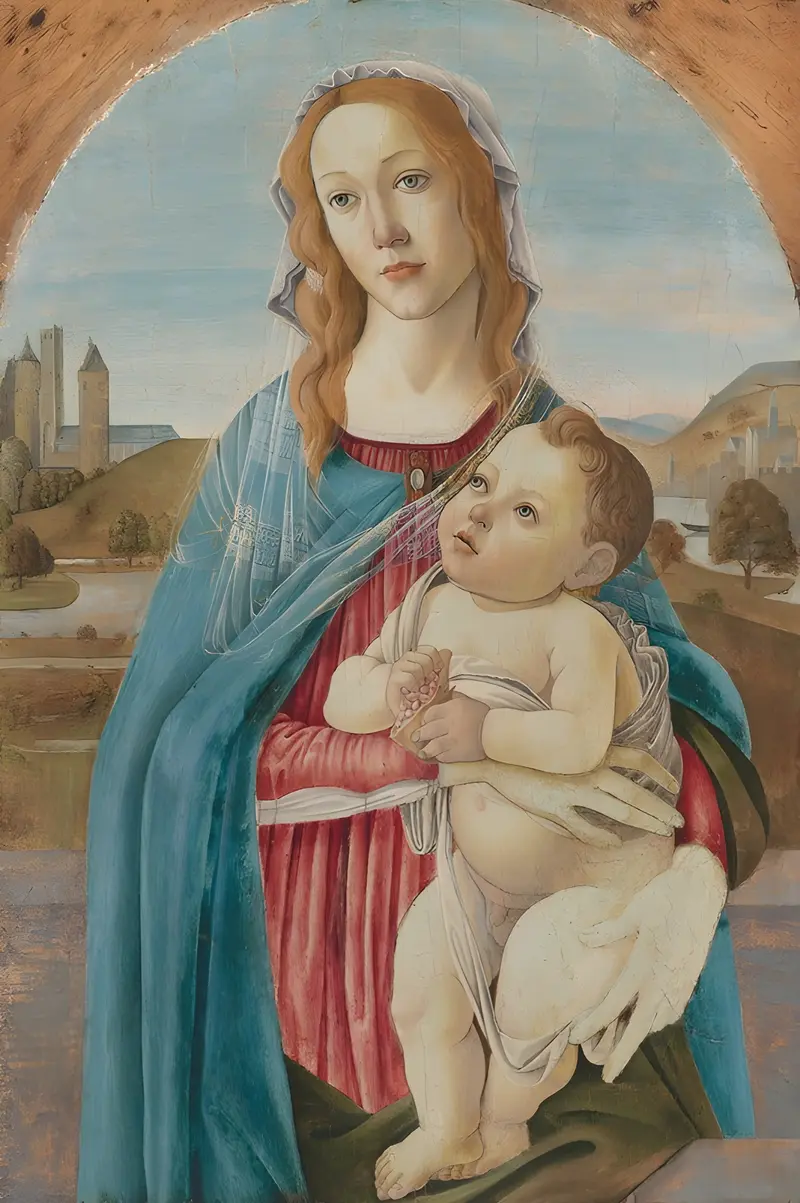
Virgin and Child
Sandro Botticelli
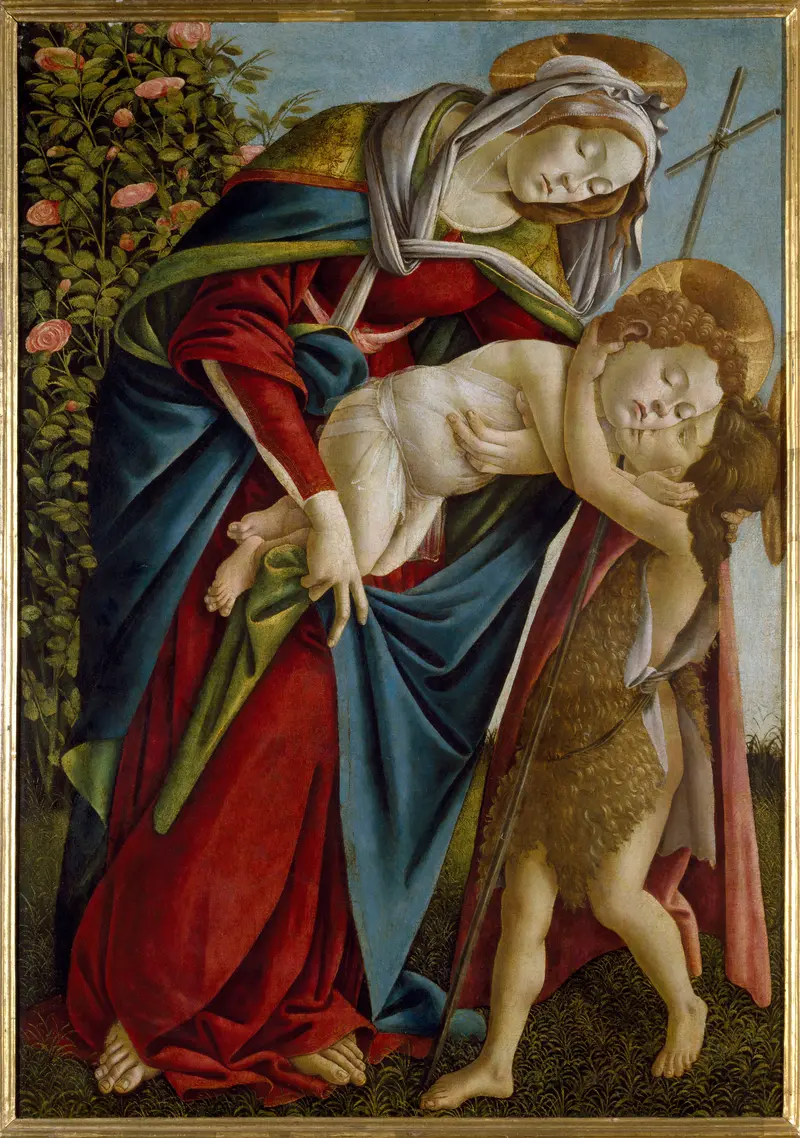
Madonna and Child and the Young St John the Baptist
Sandro Botticelli
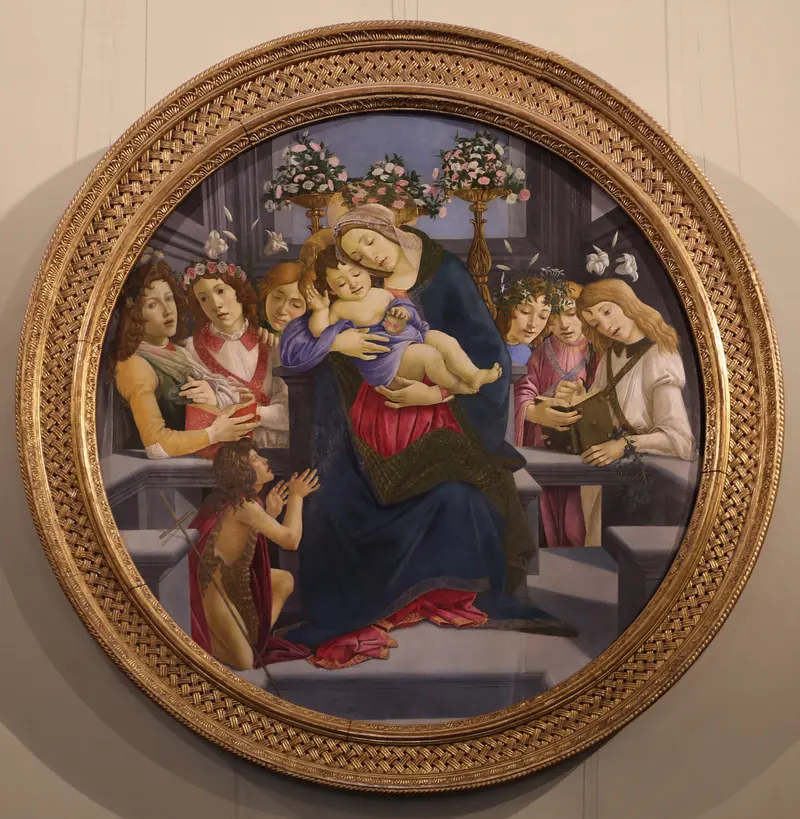
Madonna and Child with six angels and Saint John the Baptist as Child
Sandro Botticelli
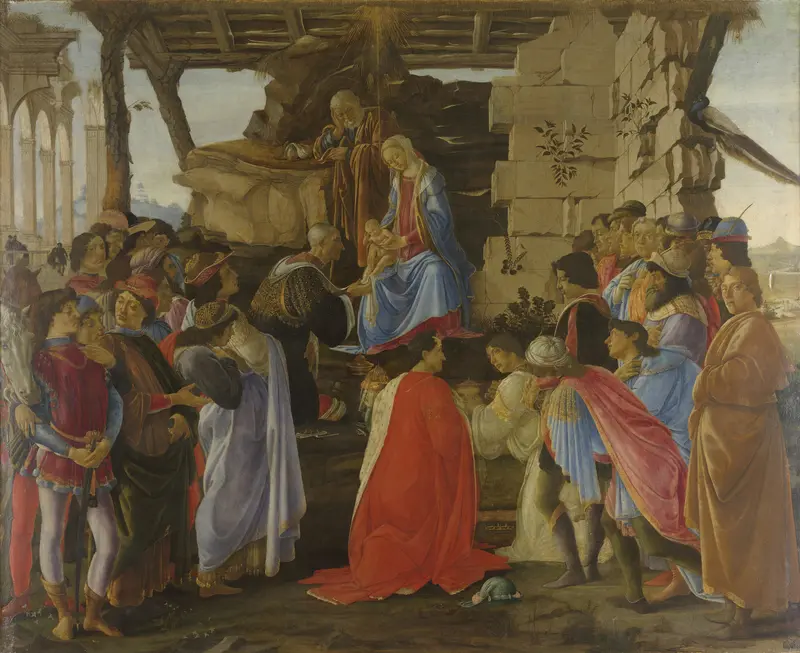
Adoration of the Magi
Sandro Botticelli

Virgin and Child with the Young Saint John the Baptist
Sandro Botticelli
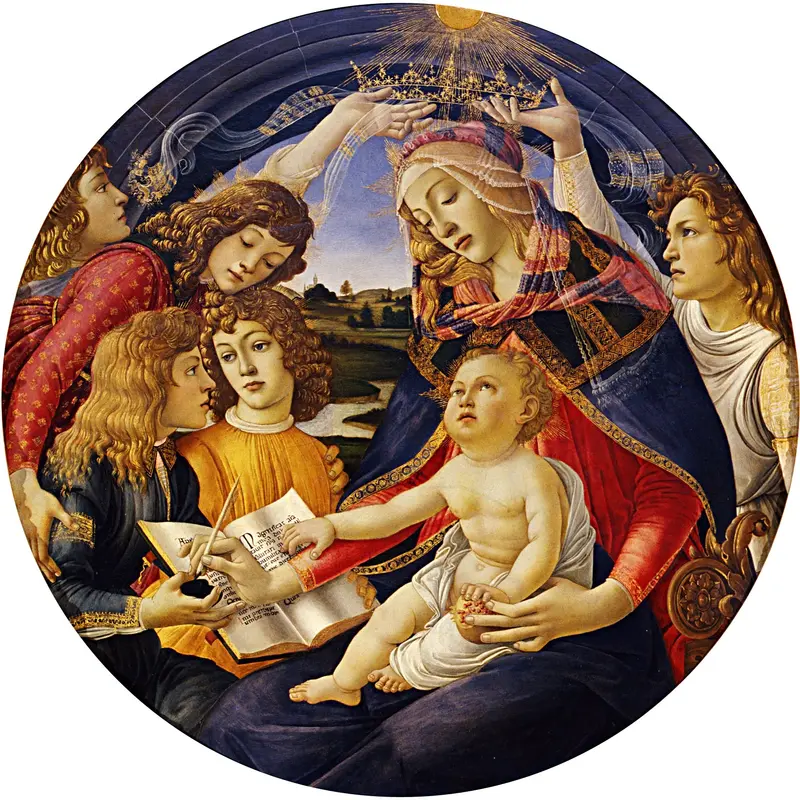
Madonna of the Magnificat
Sandro Botticelli
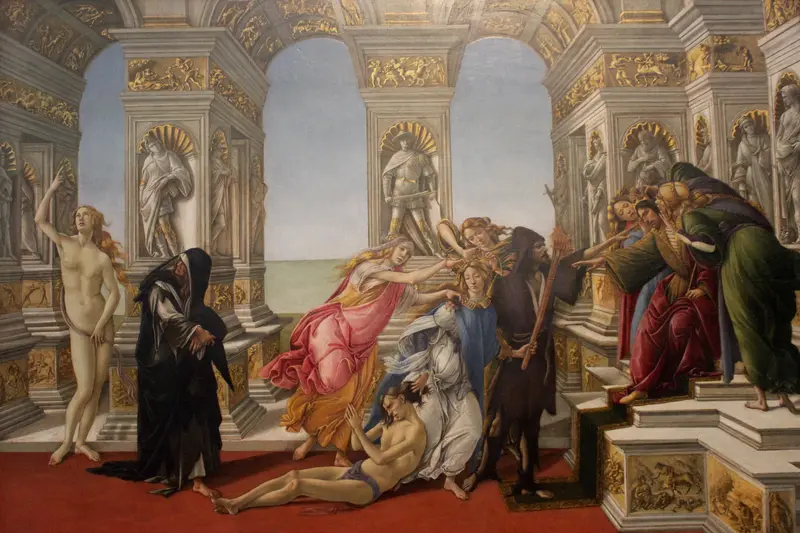
Calumny of Apelles
Sandro Botticelli
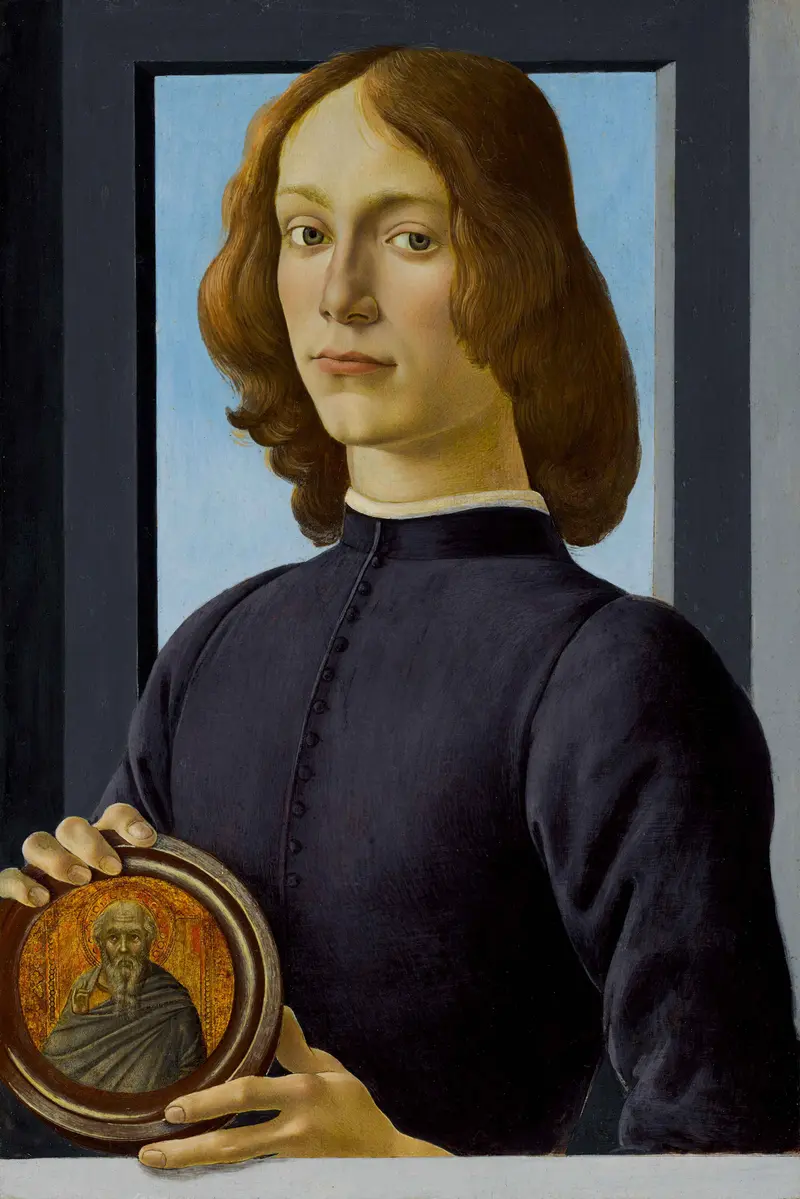
Portrait of a young man holding a roundel
Sandro Botticelli

The Trinity with Saint Mary Magdalene and Saint John the Baptist, the Archangel Raphael and Tobias
Sandro Botticelli
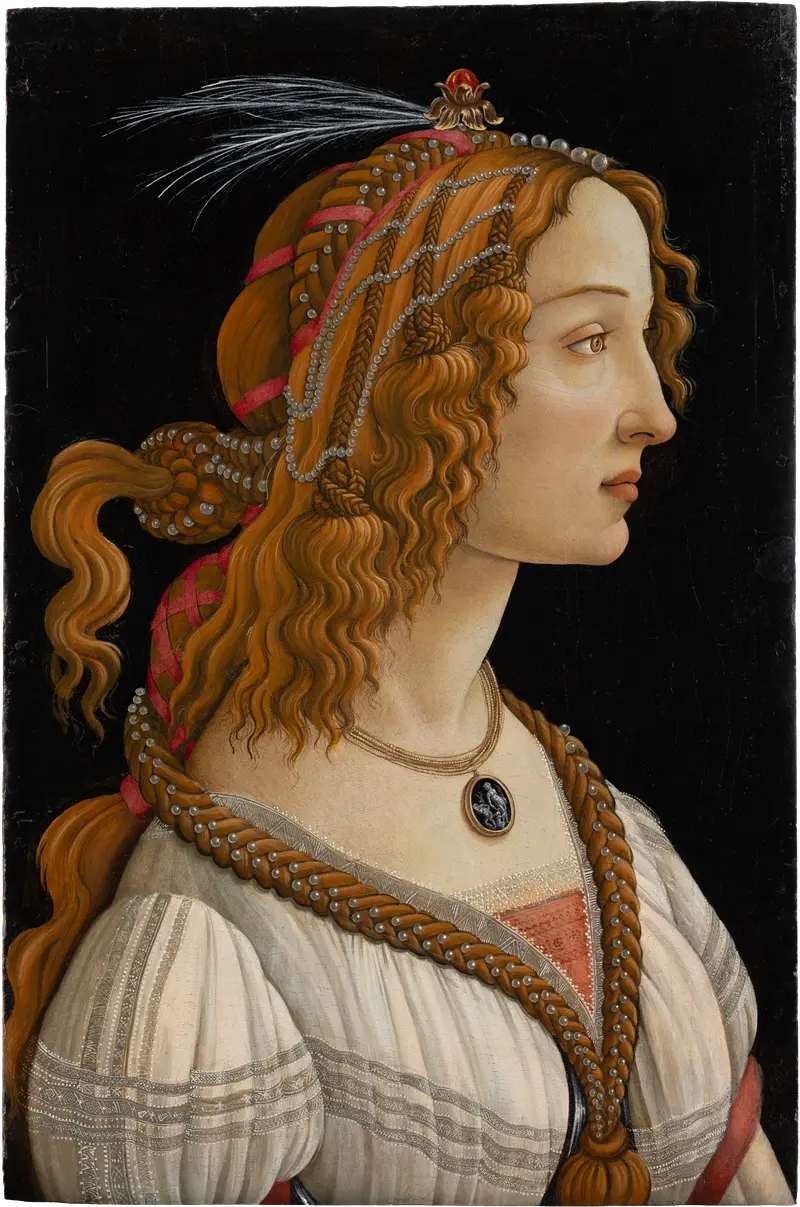
Idealized Portrait of a Lady (Portrait of Simonetta Vespucci as Nymph)
Sandro Botticelli





