
An Alpine Scene — History & Facts
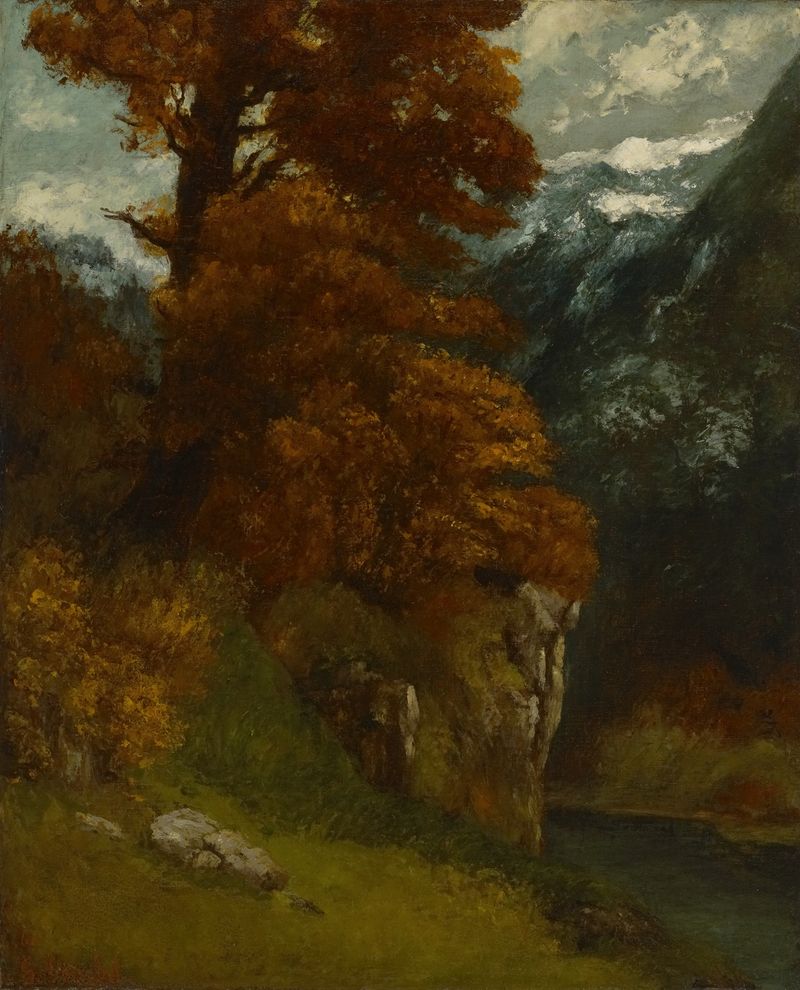
Where does light end, and longing begin? In a world painted in layers of color, emotions weave through the hues like whispers in a quiet room, inviting us to explore the depths of nature’s embrace. Look to the left at the towering peaks, their snow-capped summits contrasting sharply against the azure sky. The artist employs a palette of rich greens and earthy browns that cradle a vibrant blue river, guiding your eye through the composition. Notice how the light dances across the surface of the water, reflecting the sun's warmth while the shadows on the mountains hint at the hidden depths of the wilderness.
The brushwork, both deliberate and spontaneous, breathes life into the foliage, evoking a sense of movement and vitality. Yet beneath the serene beauty lies an undercurrent of tension. The juxtaposition of the calm river with the imposing mountains may reflect a struggle between human aspiration and nature’s grandeur. This tension is mirrored in the play of light and shadow, where the illuminating sun brings warmth but also casts dark recesses, suggesting the complexities of existence.
Each element, from the vibrant greenery to the distant peaks, speaks of longing—perhaps for adventure or for solace in the embrace of nature. Courbet painted this work in 1874 during a period of personal reflection and a shift in his artistic direction, having recently returned from a trip to Switzerland. At this time, he was embracing realism, capturing the raw beauty of the landscape while simultaneously challenging the conventions of academic art. This piece symbolizes not only the artist’s connection to nature but also his ongoing quest to depict truth through the lens of emotion and color.
More Artworks by Gustave Courbet
Browse all →
Marine
Gustave Courbet
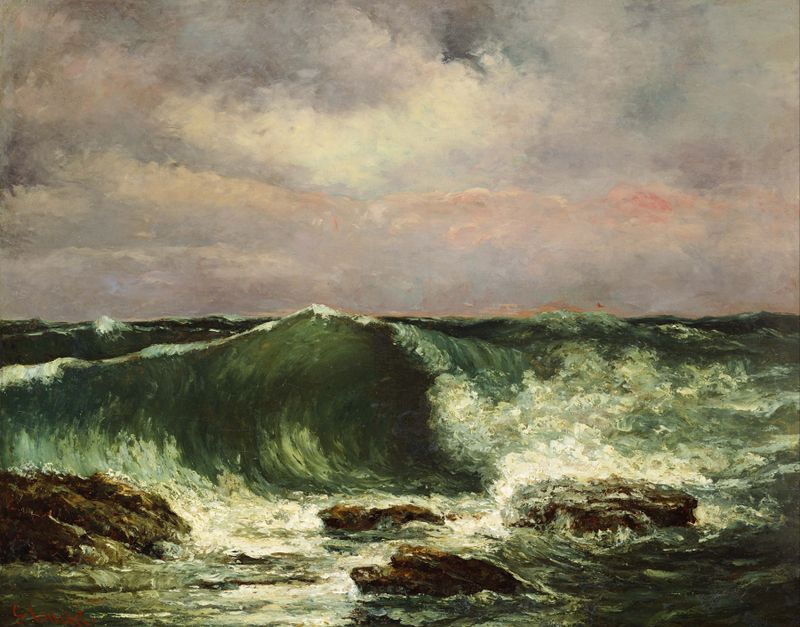
Waves
Gustave Courbet

Étretat; Les Falaises
Gustave Courbet
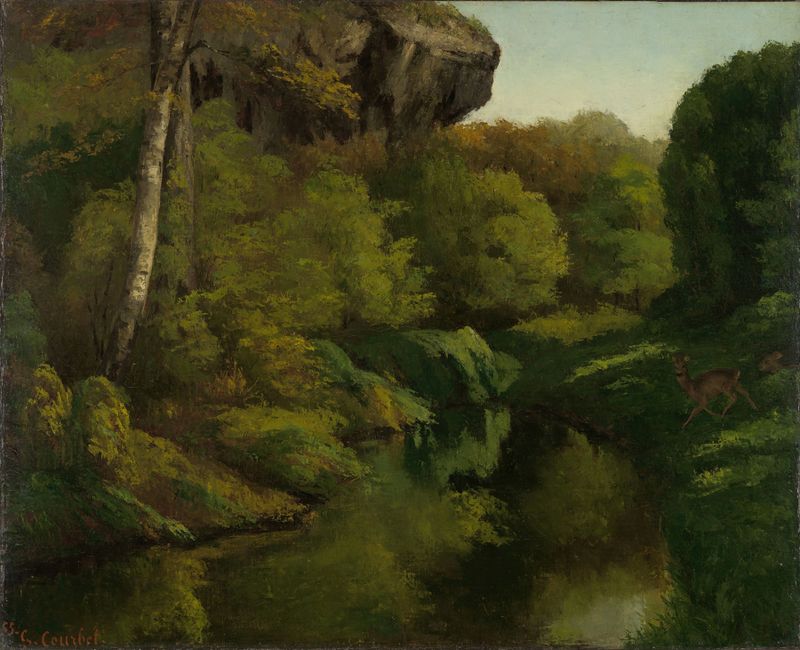
View in the Forest of Fontainebleau
Gustave Courbet
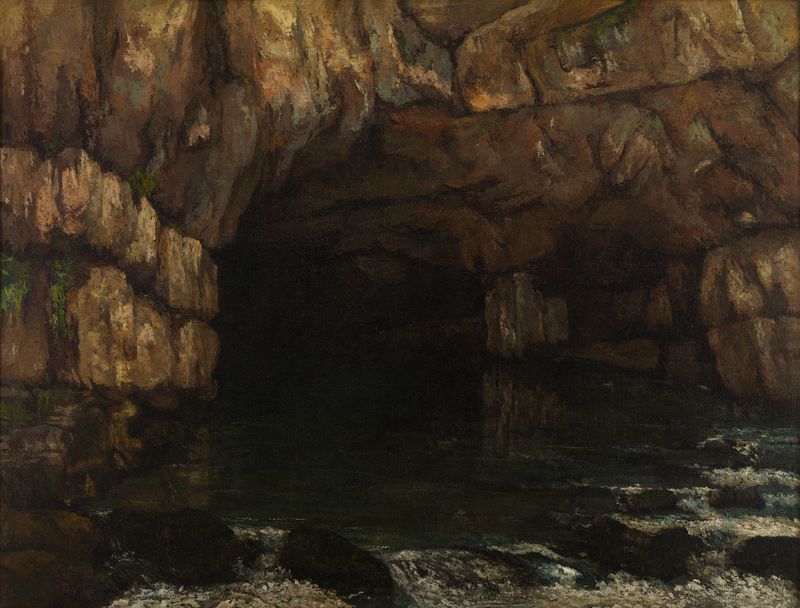
La source de la Loue (The Source of the Loue)
Gustave Courbet

Low Tide at Trouville
Gustave Courbet
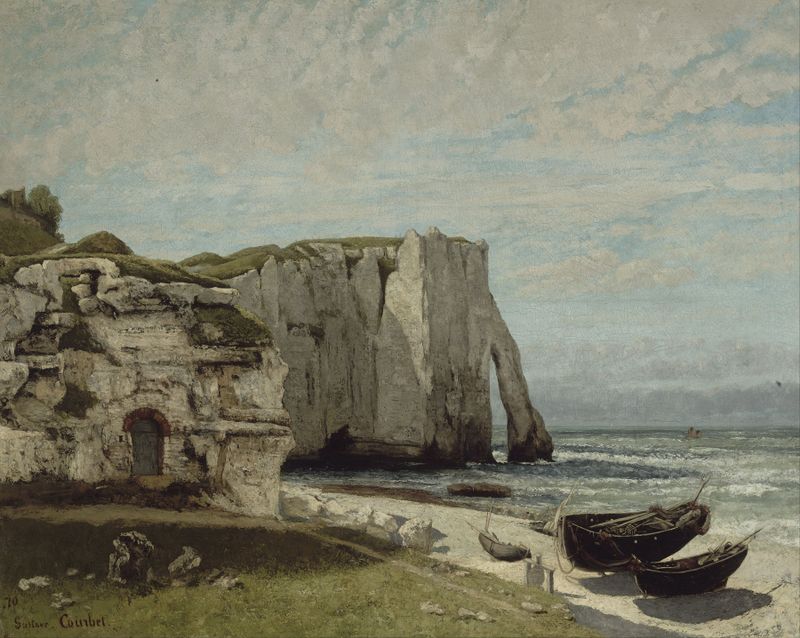
The Etretat Cliffs after the Storm
Gustave Courbet
The Glen at Ornans (Bords du Doubs; Effet d’Automne)
Gustave Courbet
Le Ruisseau de Puits Noir
Gustave Courbet
Landscape with a Waterfall
Gustave Courbet





