
An Egyptian Eunuque — History & Facts
What first draws the eye in An Egyptian Eunuque is the sense of quiet absorption—an intimate moment, caught mid-action, as the figure inspects a string of pearls with a jeweler’s precision. The sitter’s gold-embroidered robe glimmers against the pale, cracked wall, while the delicate play of light on fabric and skin draws attention to both the tactile luxury of the garments and the careful concentration of the subject. The low divan, with its patterned cushions and tasseled edge, roots the scene in a world of comfort and ceremony, but it is the sitter’s gesture—fingers poised, head slightly tilted—that holds the viewer in a moment of suspended narrative.
The single slipper, slipped off and resting on the patterned carpet, quietly hints at relaxation and privacy, as if the outside world has been set aside for this solitary task. Painted in 1882, this work belongs to the era when European artists like Theodoros Ralli found inspiration in the imagined East, weaving scenes of daily life, ritual, and luxury for audiences hungry for glimpses into distant cultures. Such paintings, often commissioned or collected by Western patrons, reflect both the curiosity and the fantasies of their time—blending observed detail with the conventions of Orientalist art. While history has kept few traces of this specific painting’s journey, its careful rendering and atmospheric detail speak to the tastes and fascinations of the late nineteenth century.
The viewer is left to wonder at the sitter’s story, returning again to the pearls, the textures, and the quiet dignity of the scene.
More Artworks by Theodoros Ralli

The Sleeping Concubine
Theodoros Ralli
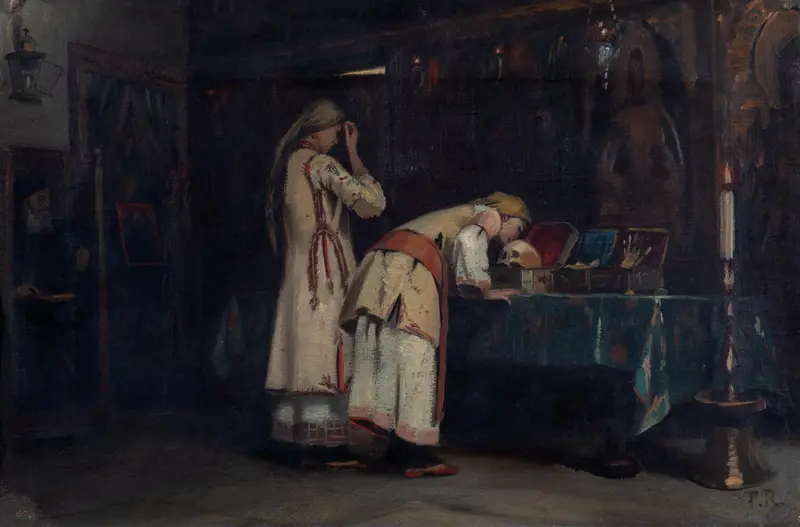
Holy Relics
Theodoros Ralli
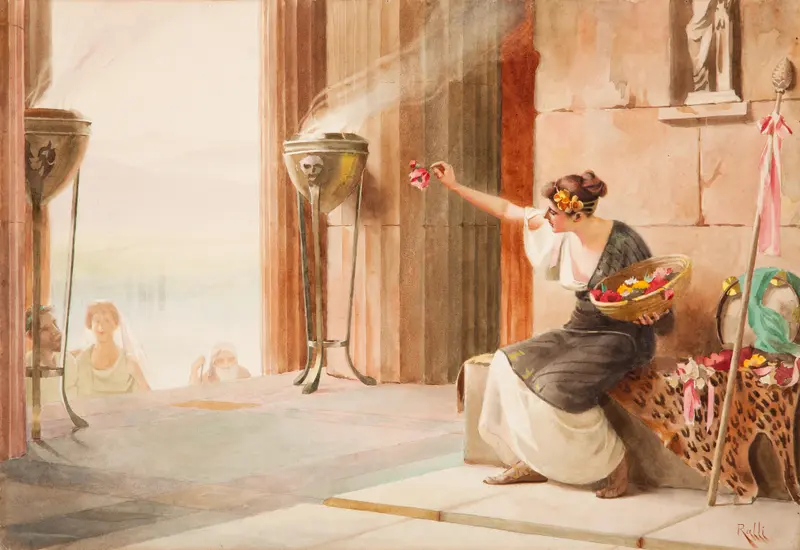
Flower Seller at the Parthenon
Theodoros Ralli
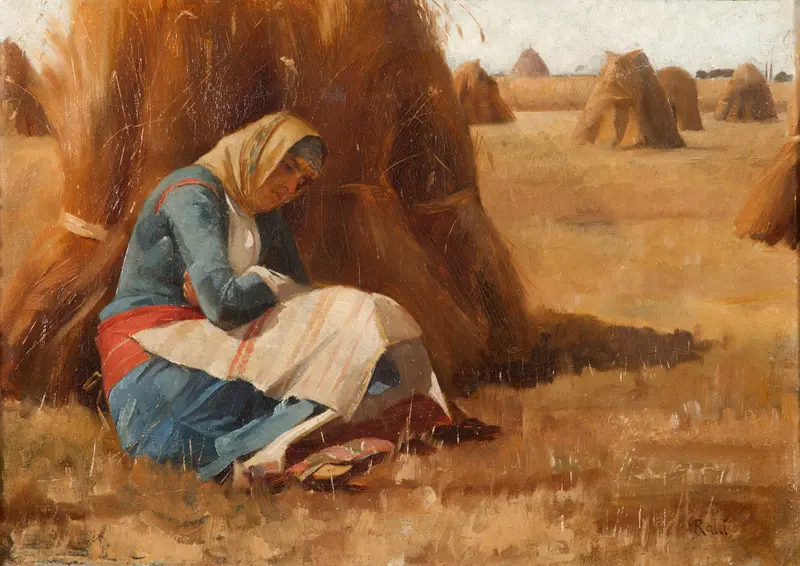
Resting by a Haystack
Theodoros Ralli
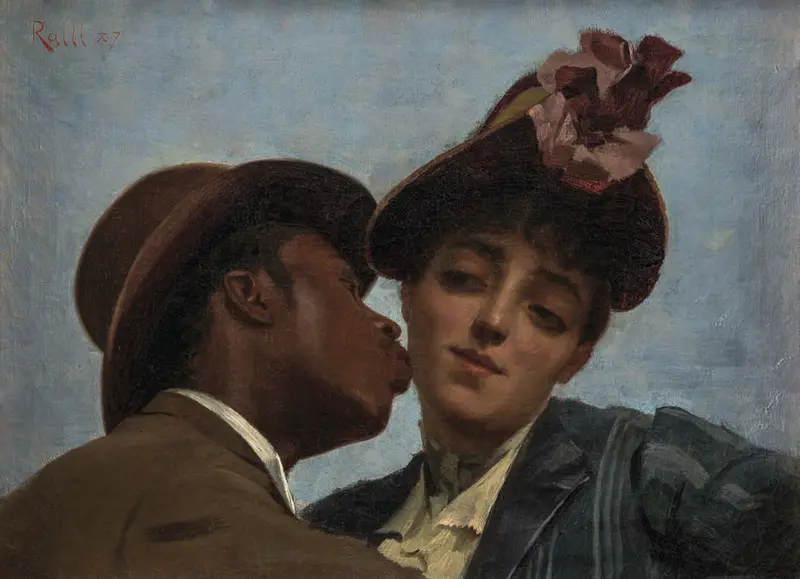
The Kiss (Ralli)
Theodoros Ralli
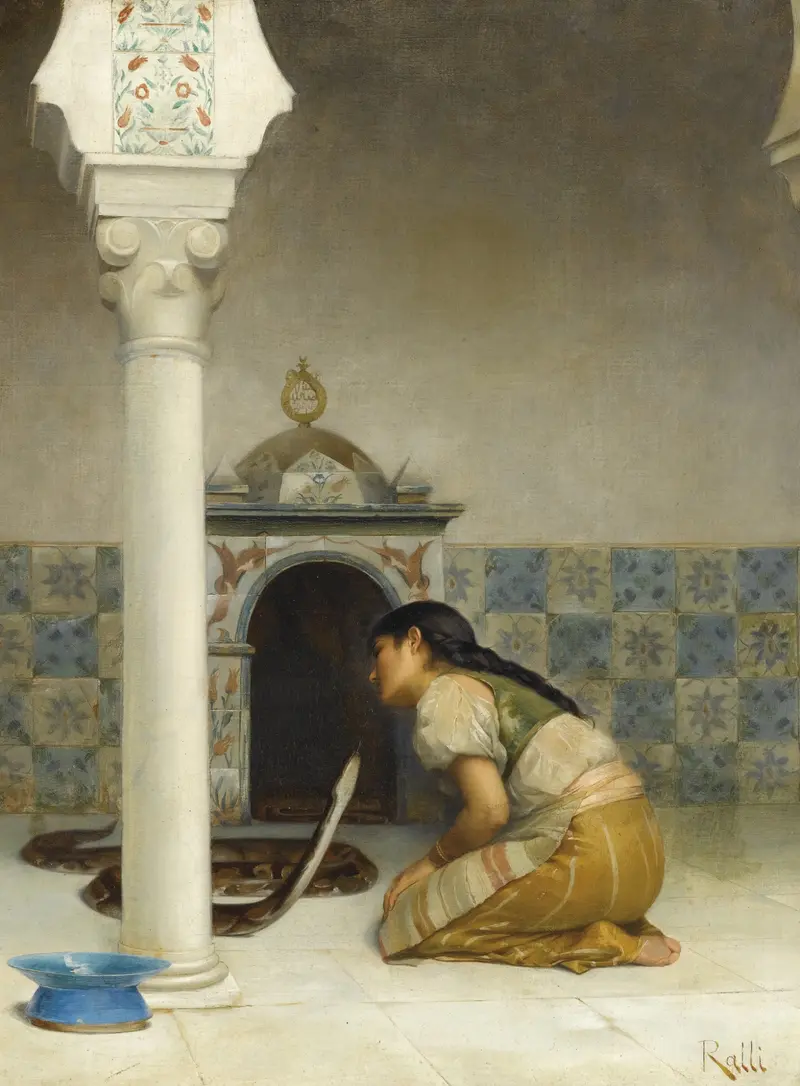
The Sacred Serpent
Theodoros Ralli
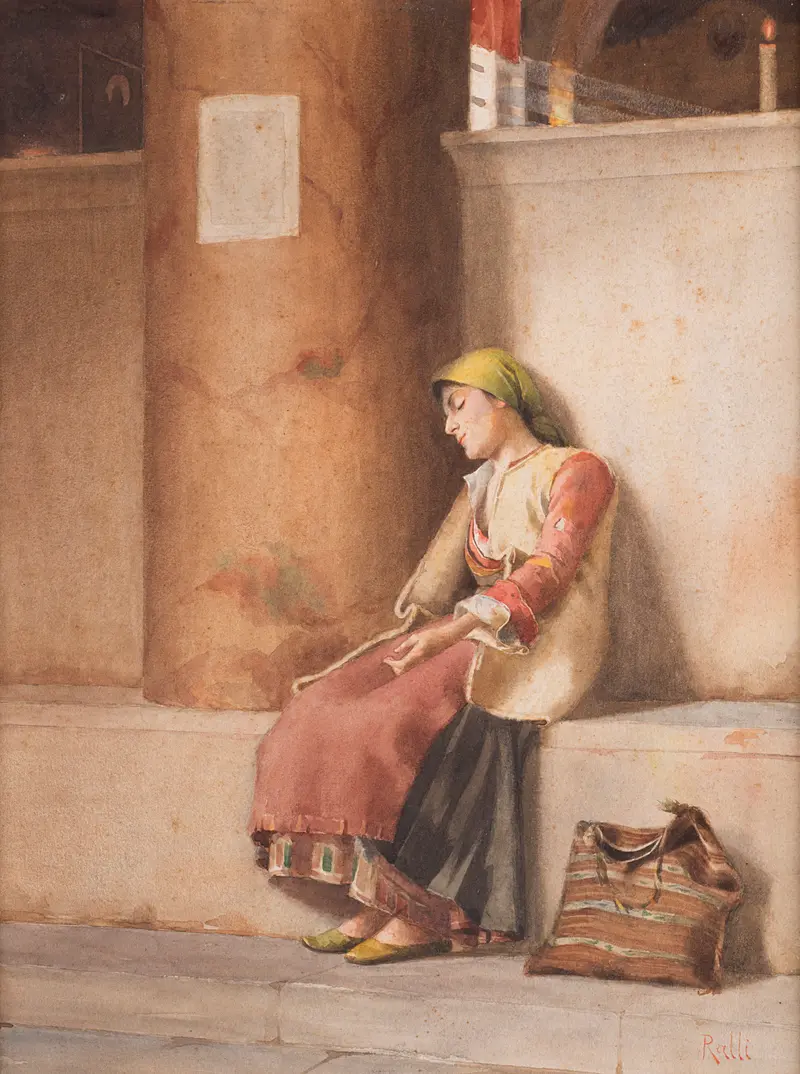
A Moment of Reflection
Theodoros Ralli
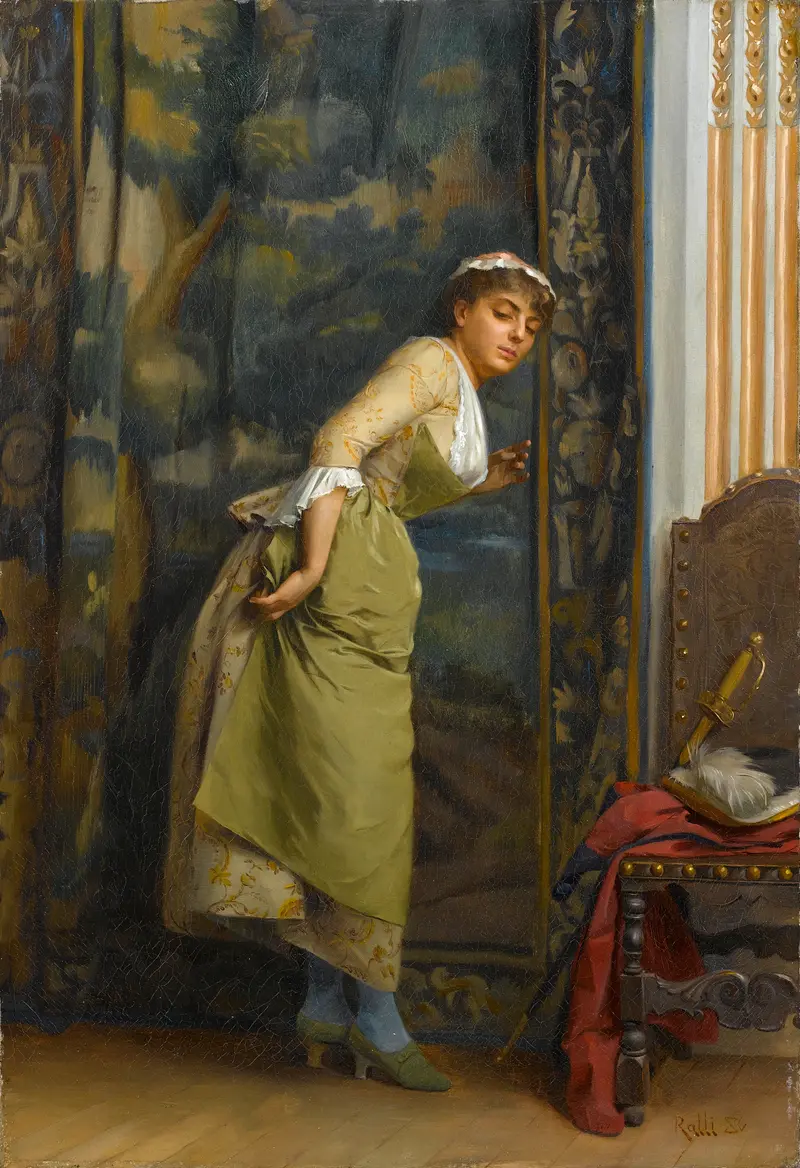
Eavesdropping (Ralli)
Theodoros Ralli
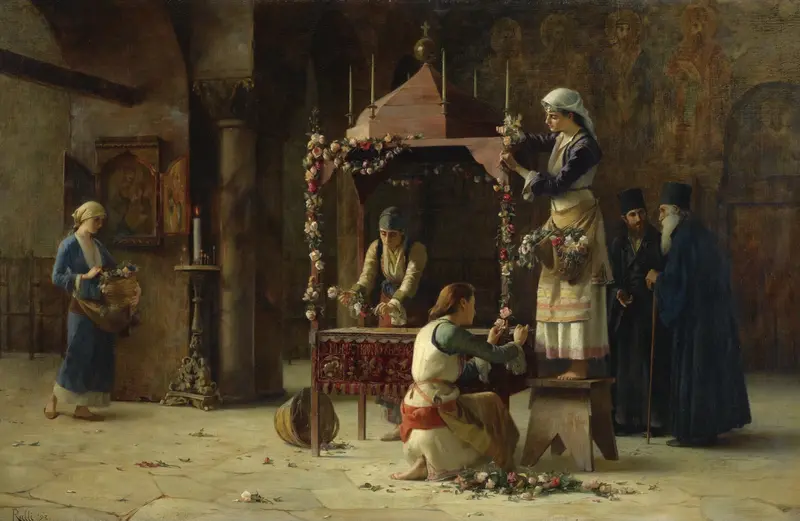
Holy Friday, Greece
Theodoros Ralli
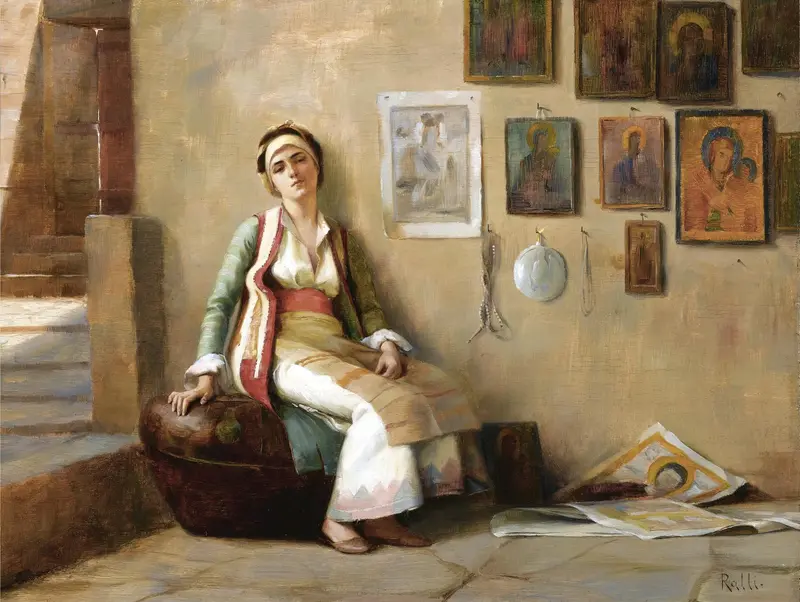
A Moment's Rest
Theodoros Ralli
More Genre Scene Art

Banquet of the Officers of the St George Civic Guard
Frans Hals

Rembrandt and Saskia in the Scene of the Prodigal Son
Rembrandt van Rijn

Bal du moulin de la Galette
Pierre-Auguste Renoir

Quadrille at the Moulin Rouge
Henri de Toulouse-Lautrec

A Burial at Ornans
Gustave Courbet

When Will You Marry?
Paul Gauguin