
Ansicht von Neapel vom Palazzo di Capodimonte (Im Vordergrund Ferdinand IV. als Kind mit Gefolge beim Ausritt) — History & Facts
What first seizes the eye in Ansicht von Neapel vom Palazzo di Capodimonte (Im Vordergrund Ferdinand IV. als Kind mit Gefolge beim Ausritt) is the sheer sweep of Naples itself, unfurling beneath a sky so broad it seems to promise endless possibility. The painter, Antonio Joli, draws us into a world where the grandeur of architecture and the bustle of courtly life meet the distant shimmer of the Bay of Naples.
The palace at the left anchors the scene, its massive façade casting cool shadows that contrast with the sunlit expanse where figures on horseback and on foot gather in clusters, each group a small drama of conversation, anticipation, or ceremony. The eye is led, almost inevitably, from these lively foreground episodes out across the city’s rooftops, past church domes and slender spires, to the pale blue horizon where mountains hover in the haze. This is a world of spectacle and order, where the presence of a young Ferdinand IV—surrounded by attendants and courtiers—signals both the privilege of royalty and the rituals that shape public life. The careful arrangement of riders and onlookers, the crisp uniforms and elegant dresses, all speak to a society intent on display and hierarchy.
Yet, there is a sense of openness here: the low horizon and expansive sky invite the viewer to imagine themselves among the crowd, witnessing not just a royal outing but the pulse of a city at the height of its confidence. The palette, dominated by clear blues and warm ochres, sets a mood of clarity and optimism, while the meticulous rendering of architectural and natural details hints at the painter’s roots in the veduta tradition, celebrated by artists like Canaletto and Bellotto. Works like this, now housed in the Kunsthistorisches Museum, were prized in the eighteenth century by aristocrats and travelers alike, eager to capture the memory of a grand tour or the splendor of a royal court. The veduta, or detailed city view, was both a souvenir and a statement—a testament to the power and beauty of place, and to the ambitions of those who commissioned or collected such images.
Though little is recorded about the specific journey of this painting, its presence in a major museum today is a reminder of the enduring allure of Naples and the skill of Antonio Joli, who could turn a moment of royal pageantry into a panorama that still invites the viewer to step inside. Let your gaze linger: every figure, every rooftop, every patch of sky is a fragment of a vanished world, brought vividly to life.
More Artworks by Antonio Joli

Monastery Di San Martino, Naples
Antonio Joli
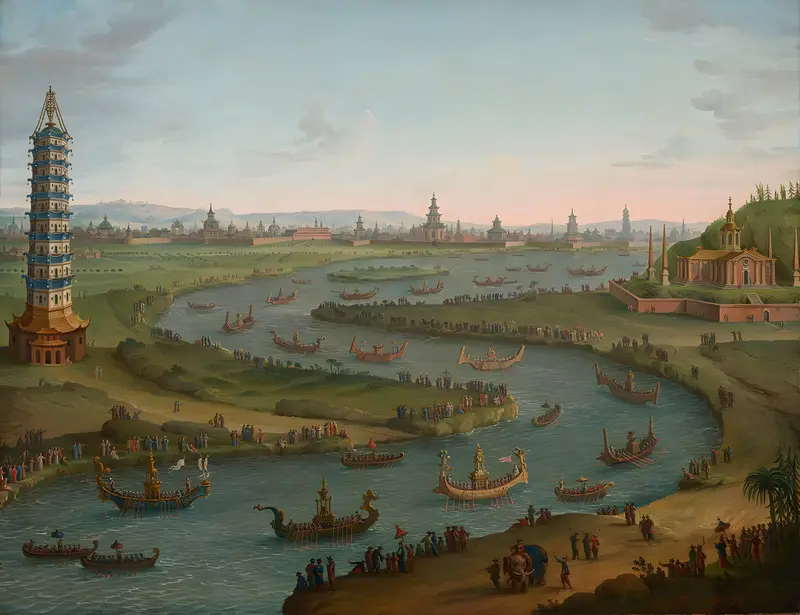
A capriccio with the French Ambassador approaching the King of Siam’s Palace in a state barge, in October
Antonio Joli
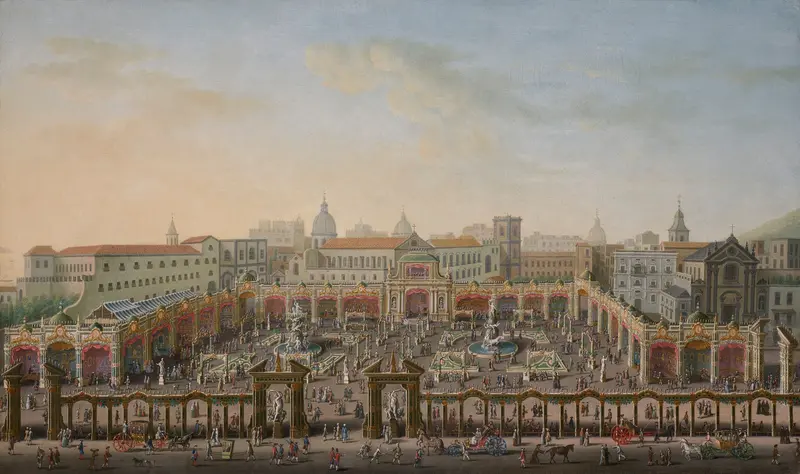
Naples, Piazza Trieste e Trento with a fair viewed from a balcony of the Palazzo Reale
Antonio Joli
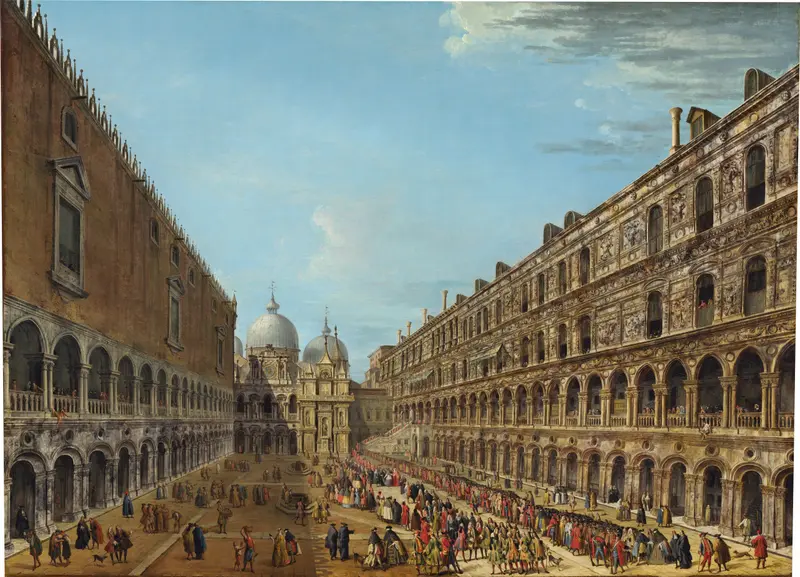
Procession in the Courtyard of the Ducal Palace,Venice
Antonio Joli
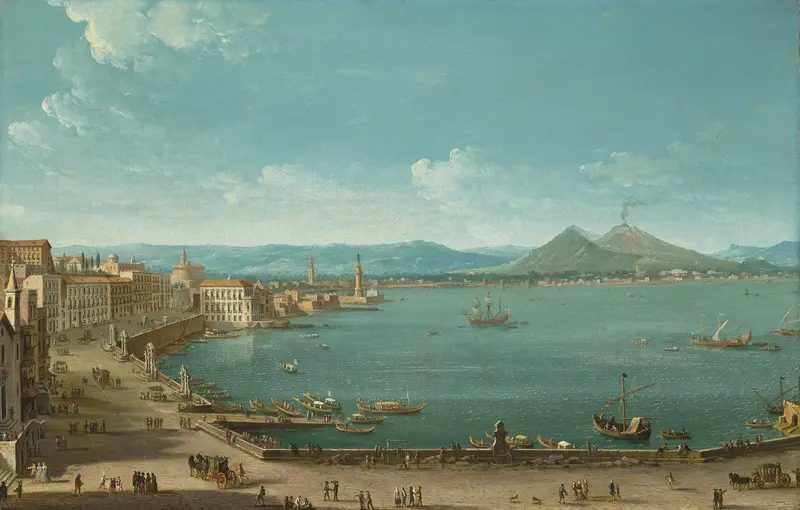
Naples with the Bay of Santa Lucia and Vesuvius beyond
Antonio Joli
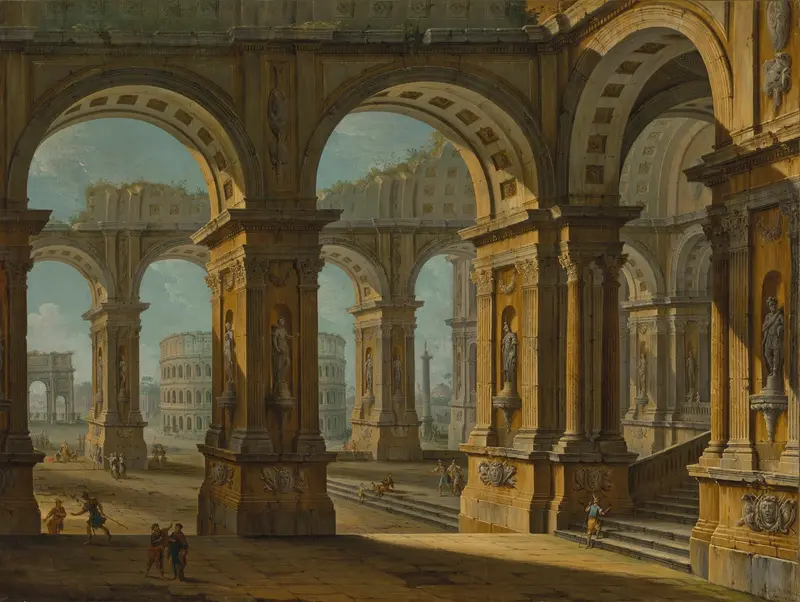
A capriccio of Rome with the Colusseum and Arch of Titus
Antonio Joli
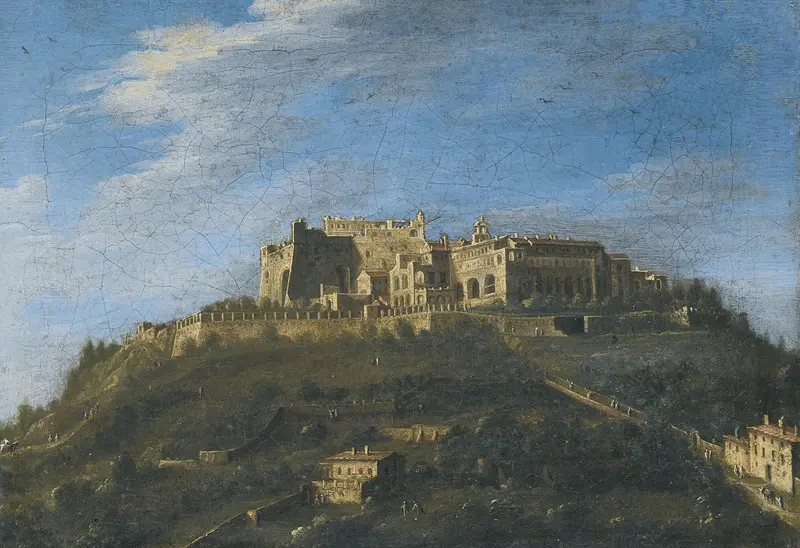
Monastery Di San Martino, Naples
Antonio Joli
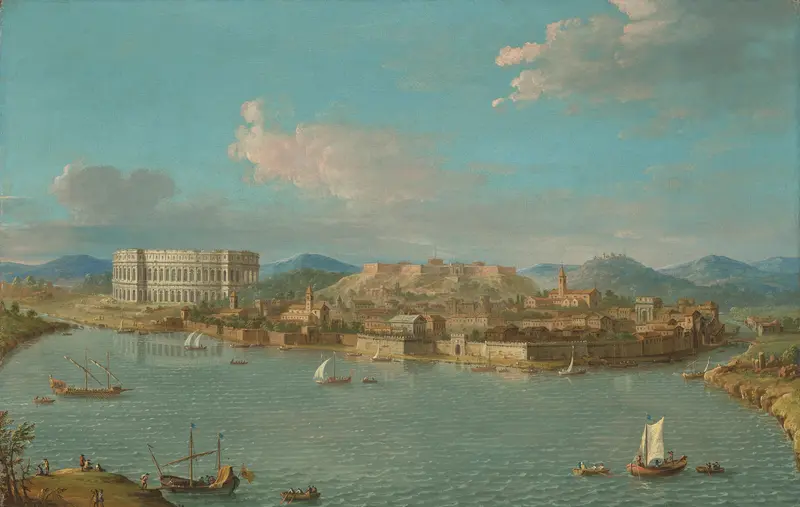
Pula, with the Pula Arena
Antonio Joli
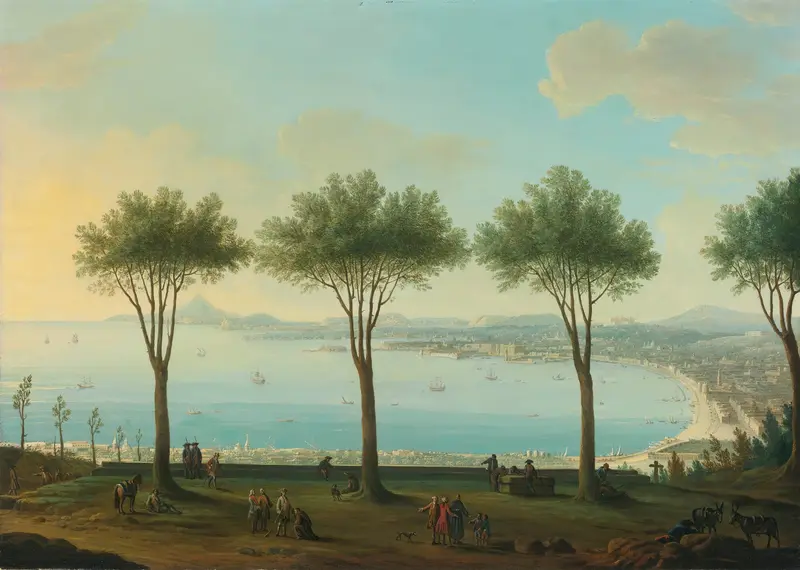
View Of The Bay Of Naples From The South (Possibly Poggioreale), Looking North With A King Of The Bourbon Family, Possibly Ferdinand Iv, In The Foreground
Antonio Joli
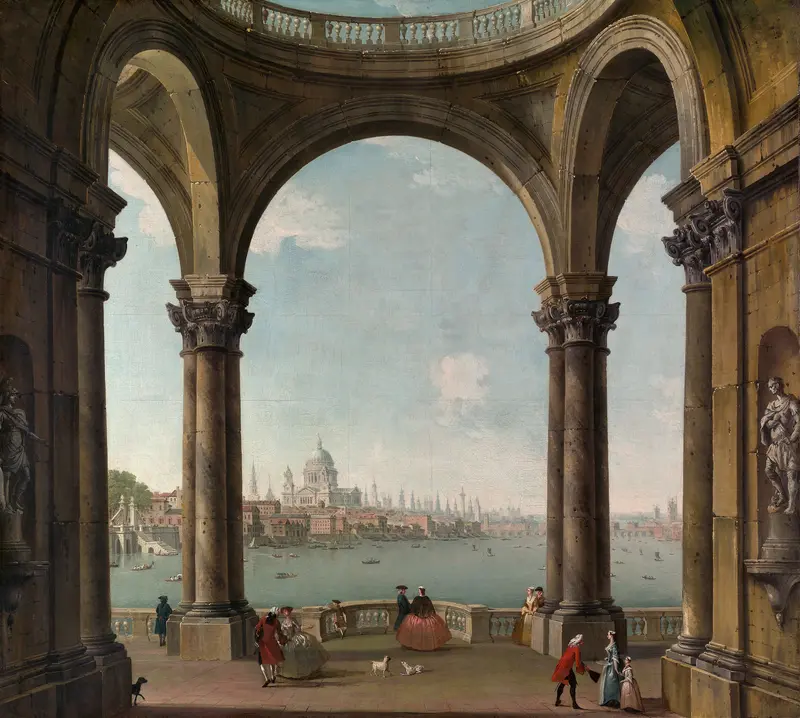
Capriccio with St. Paul’s and Old London Bridge
Antonio Joli
More Landscape Art

The Starry Night
Vincent van Gogh

View of Delft
Johannes Vermeer

Water Lilies
Claude Monet

The Grand Canal, Venice, looking north-west from the Ca' Corner to the Ca' Contarini degli Scrigni, with the campanile of Santa Maria della Carità
Canaletto

Windsor Castle
Canaletto

The Grand Canal looking North-East from the Palazzo Dolfin-Manin to the Rialto Bridge
Canaletto