
Antibes, la baie — History & Facts
In the fleeting moments of our existence, time can become both our ally and adversary, shaping the landscapes we cherish and the memories we hold dear. Look to the foreground, where the azure waters of the bay shimmer beneath a gentle sun, inviting the viewer into a serene embrace. Notice how the sandy beach, brushed with soft strokes of golden ochre and white, offers contrast against the vibrant hues of the sky. The atmospheric play of light reveals Boudin’s masterful technique; each wave’s crest is delicately rendered, capturing the essence of movement and the quietude of a coastal afternoon. Yet, beneath this tranquil surface lies a palpable tension.
The boats, moored yet restless, hint at the passage of time and the inevitability of change. In the distance, the silhouette of a town upon the hill suggests life beyond the canvas, evoking a sense of longing and nostalgia. These elements converge, creating an emotional landscape that teeters between bliss and melancholy, amplifying the beauty of the moment while acknowledging its transience. In 1893, Boudin painted Antibes, la baie while residing in the south of France, a period marked by his growing recognition as a precursor to Impressionism.
At this time, he was exploring the interplay of light and color, reflecting the vibrant life along the French coast. His commitment to capturing the ephemeral beauty of the natural world was a testament to the shifting artistic currents of the late 19th century, as he sought to immortalize the momentary in his canvases.
More Artworks by Eugène Boudin
Browse all →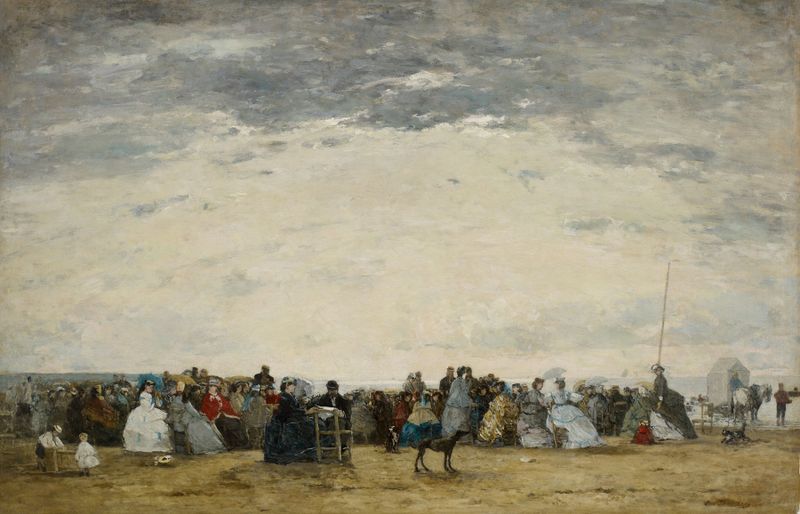
Vacationers on the Beach at Trouville
Eugène Boudin

Washerwoman near Trouville
Eugène Boudin
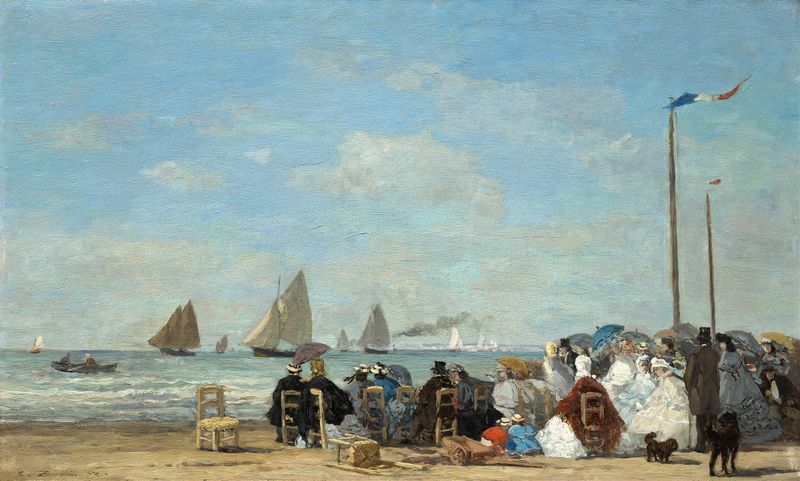
Beach Scene at Trouville
Eugène Boudin

Port aux environs d’Honfleur
Eugène Boudin

Le Faou, un coin du village
Eugène Boudin
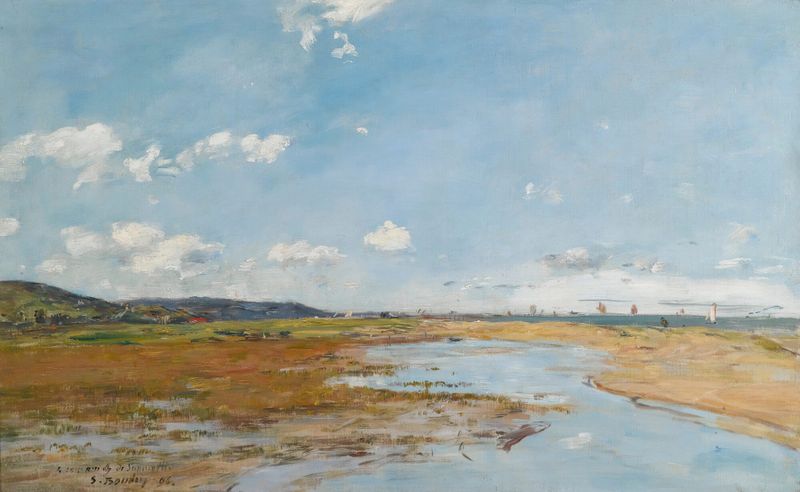
Deauville. Le Rivage
Eugène Boudin
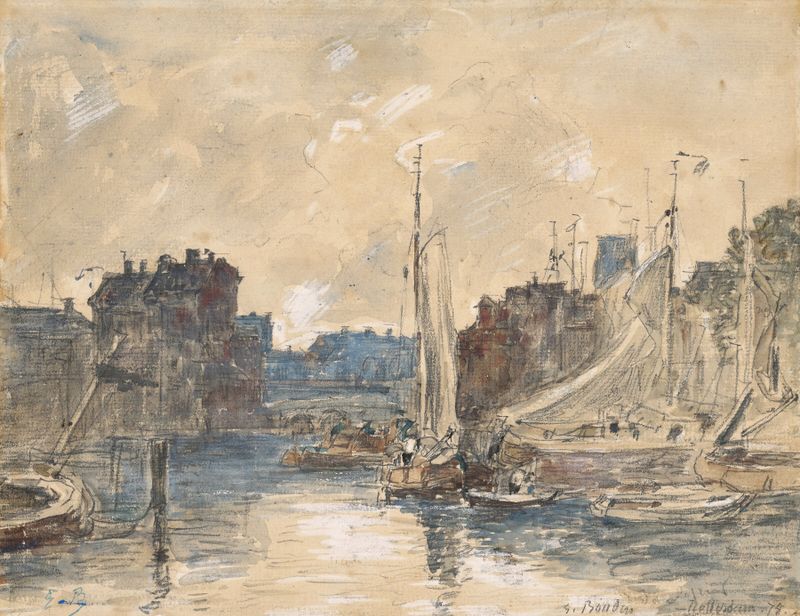
Port de Rotterdam
Eugène Boudin

View of Bordeaux, from the Quai des Chartrons
Eugène Boudin

Trouville, Scène De Plage
Eugène Boudin

Trouville, Le Port
Eugène Boudin





